Archive

August 2026

Browsing

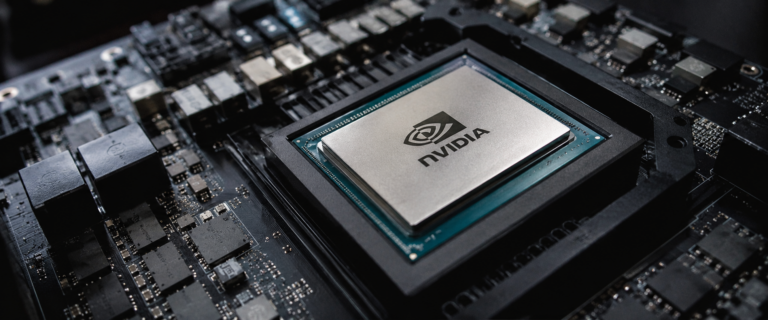
Nvidia (NVDA) stock is in focus on Friday after BMO Capital Markets said the chipmaker remains a “top pick” for those seeking exposure to the global artificial intelligence (AI) buildouts.  

Analyst Harsh Kumar announced an Outperform rating and $340 price target on the semiconductor behemoth heading into its fiscal Q2 earnings set to be released on August 26th (after market close).

Ahead of the earnings event, Nvidia stock is up over 30% versus its year-to-date low.  

Why BMO analyst is bullish on Nvidia stock

BMO’s bullish thesis starts with Nvidia’s unusually strong position across the AI computing stack.

Kumar said the giant’s AI systems are “fully booked for the next 12 months as demand exceeds supply,” a striking assessment heading into its earnings report.

That level of visibility matters because it suggests NVDA shares’ growth story is being supported by actual customer demand rather than simply elevated expectations around AI spending.

BMO also expects Nvidia’s next-gen Vera Rubin NVL72 system to begin ramping in the back half of the year.

The new platform could provide another leg of growth as hyperscalers and other large customers continue expanding AI infrastructure.

Kumar’s broader view is that AI remains in “the early innings,” with capital expenditures expected to rise for years as demand for AI tokens and computing capacity expands.

Is NVDA shares’ valuation justified?

Crucially, BMO does not believe Nvidia’s valuation has become excessive relative to its expected growth.

Kumar pointed to the stock’s 18x forward price-to-earnings (P/E) multiple – calling that valuation “a discount” when measured against the firm’s expected revenue growth.

According to him, NVDA could grow revenue by 84% in fiscal 2027 and another 50% in the year after.

His argument goes directly against one of the biggest concerns surrounding Nvidia shares: whether the stock already prices in too much of the AI boom.

At roughly $216, Nvidia remains below its $236 high and has recently struggled to regain its May peak.

The combination of a still-elevated growth rate, massive AI infrastructure demand and a valuation BMO considers compelling gives the bull case more substance than simply betting on another AI-driven rally.

What to expect from Nvidia’s Q2 earnings next week

Wall Street’s expectations for Nvidia Corp’s fiscal Q2 results are already enormous.

Consensus estimates call for about $92.16 billion in revenue and $2.09 in adjusted earnings per share, representing year-over-year growth of about 96% and 99%, respectively.

The underlying strength in Nvidia’s financials reflects sustained demand for its AI chips – as cloud providers and other major tech firms continue committing enormous sums to AI infrastructure.

Note that NVDA stock also currently pays a small dividend yield of 0.46%, which makes it even more attractive as a long-term holding.

The post Nvidia stock dubbed 'top pick' ahead of Q2 earnings appeared first on Invezz
On Friday, Samsung Electronics outlined a potential record shareholder payout as AI-memory demand boosts cash generation.

Bitcoin extended its strongest weekly rally in more than two years.

Oil prices climbed as fresh US sanctions threats against Iran raised concerns about further supply disruptions.

Gold also surged to a more than three-month high as Treasury buybacks pressured the dollar and boosted demand for the precious metal.

Samsung plans record shareholder returns

Samsung Electronics said shareholder returns could reach 90 trillion won to 110 trillion won, or roughly $64.5 billion to $78.9 billion, in 2026.

The potential payout would be around five times Samsung’s previous annual record and comes as the artificial intelligence boom drives strong demand for memory chips.

The announcement follows SK Hynix’s decision to buy back and cancel 40 trillion won of shares. 

SK Hynix has also raised its shareholder-return policy to at least 50% of cumulative free cash flow for 2025-2027.

Samsung’s existing 2024-2026 policy calls for returning 50% of free cash flow, including 9.8 trillion won in regular annual dividends. 

The company also plans to spend more than 110 trillion won on facilities and research and development in 2026, including investments in advanced semiconductor technologies.

KB Securities research head Kim Dong-won said Samsung’s free cash flow is rising rapidly because of the AI-memory boom. 

He added that future valuation gains could increasingly depend on how the company distributes its cash.

Bitcoin extends powerful weekly rally

Bitcoin was on track for its strongest weekly performance in more than two years, rising about 22% for the week and trading near $77,169.

The cryptocurrency has benefited from several catalysts, including the US Treasury’s decision to increase longer-duration debt buybacks. 

The move pushed bond yields lower initially, supporting risk-sensitive assets.

US President Donald Trump also called for Congress to pass legislation that would establish a regulatory framework for cryptocurrencies. The bill faces a procedural vote on September 15.

Short covering added to the rally, with more than $1.2 billion in Bitcoin short positions liquidated, according to Fundstrat.

The gains spread to crypto-related equities. Robinhood rose 13%, Coinbase gained 7.9% and Strategy advanced 6.2%.

Analysts said Bitcoin’s rally is also being supported by spot and exchange-traded fund demand, although some cautioned that the cryptocurrency would need to remain above $70,000 for the rally to demonstrate greater durability.

Oil rises as Iran tensions escalate

Brent crude rose 0.76% to $94.49 a barrel, while West Texas Intermediate gained 0.33% to $87.12.

Both benchmarks were heading for weekly gains, with Brent up more than 6% and WTI more than 5% during the week.

Oil prices have been supported by concerns about supply disruptions as tensions between the US and Iran persist. 

President Donald Trump threatened economic sanctions on Iran’s trading partners, while Tehran warned that its response to further US threats would be severe.

Shipping through the Strait of Hormuz also remained heavily disrupted. 

Seven commodity ships crossed the waterway on Thursday, according to Kpler data, down from the previous day’s tally.

However, alternative supplies from sources including US shale, pipelines and other producers have helped offset some of the disruption.

Gold reaches three-month high

Gold climbed 2.4% to $4,623.94 an ounce, after earlier touching $4,631.99, its highest level since May 15.

The metal was on track for a third consecutive weekly gain, with prices rising more than 5% during the week.

Gold has benefited from a weaker US dollar and expectations that the Federal Reserve’s policy outlook could remain less restrictive. 

The metal also moved above its 200-day moving average of around $4,513, a level viewed by technical analysts as significant.

TD Securities’ global head of commodity strategy Bart Melek said the move was driven partly by technical factors and the weaker dollar.

Goldman Sachs also pointed to stronger demand for gold call options and renewed interest in the metal as a hedge against macroeconomic and policy risks.

Silver, platinum and palladium also advanced on Friday and were heading for weekly gains.

The post Evening digest: Samsung buybacks rise as Bitcoin, oil rally appeared first on Invezz

The Dow Jones Industrial Average rose nearly 1% on Friday as US stocks recovered from a sharp sell-off in the previous session, while investors continued to monitor elevated Treasury yields, oil prices and tensions in the Middle East.

The S&P 500 and Nasdaq Composite also gained, although all three major indexes ended the week lower after breaking their recent winning streaks.

Dow leads Wall Street rebound

The Dow rose 517.80 points, or 0.98%, to close at 53,277.01. The S&P 500 gained 0.43% to 7,674.37, while the Nasdaq Composite advanced 0.43% to 26,180.45.

Healthcare stocks including Merck and Johnson & Johnson supported the Dow, while financials and materials also helped lift the broader market. The materials sector was the S&P 500’s best-performing sector on Friday, while utilities lagged.

Crypto-related stocks also rallied as Bitcoin extended its weekly gains. Robinhood shares jumped nearly 14%, while Coinbase gained 8%.

Despite Friday’s gains, the major indexes posted weekly losses.

The S&P 500 fell 1.4% for the week, ending a three-week winning streak. The Nasdaq declined 2%, also snapping a three-week run of weekly gains, while the Dow fell 0.9% for its second consecutive weekly decline.

Treasury yields remain key market driver

Investors continued to closely track movements in the Treasury market after higher yields contributed to Thursday’s sell-off.

The 10-year Treasury yield rose more than 3 basis points on Friday to 4.734%, while the 30-year yield also gained more than 3 basis points to 5.273%.

Stocks have recently moved in the opposite direction of Treasury yields, with equities falling when yields rise and gaining when yields decline.

Investors remain concerned that higher oil prices could contribute to inflation and keep borrowing costs elevated.

The US Treasury’s recent increase in bond buybacks has helped ease some pressure in the market.

Treasury Secretary Scott Bessent has also indicated that the government could increase the size of its buyback operations further.

Friday’s economic data provided some support for equities. The US services sector recorded its strongest growth in nearly two years in August, driving a sharp acceleration in overall business activity.

That strength offset slower manufacturing growth, which was affected by reduced stockpiling and supply disruptions linked to the Iran war.

Meanwhile, UBS Global Wealth Management raised its year-end target for the S&P 500 to 8,100, citing stronger earnings expectations and robust corporate profit growth.

Oil, Fed outlook and earnings in focus

Rising oil prices remain another source of concern for investors. Brent crude gained 6.39% over the week, while US crude rose 5.66%, after oil prices climbed for a sixth consecutive session.

Higher energy prices could add to inflationary pressure at a time when investors are assessing the Federal Reserve’s next policy moves.

Attention will turn to Federal Reserve Chair Kevin Warsh’s speech at the Jackson Hole Economic Policy Symposium next week. Investors are looking for greater clarity on interest rates and central bank policy.

The coming week will also bring quarterly results from Nvidia, Intuit, Salesforce and CrowdStrike.

Investors will additionally receive July’s Personal Consumption Expenditures price index, the Fed’s preferred inflation measure, which could influence expectations for monetary policy.

The post Dow closes 500 pts higher as Wall Street rebounds from Treasury yield-driven sell-off appeared first on Invezz

CrowdStrike (CRWD) shares fell 4.8% after Axios reported that Chief Technology Officer Elia Zaitsev is leaving the cybersecurity company to launch an AI-focused cybersecurity venture fund.

Zaitsev is departing after 13 years at CrowdStrike and will launch Cognition alongside former CrowdStrike corporate development executives Gur Talpaz and Tayler Sipperly.

The new firm is targeting a $170 million fund focused on cybersecurity startups developing technologies for the emerging AI threat landscape.

CrowdStrike has not publicly commented on Zaitsev’s departure or announced a successor.

The leadership change comes as investors are already taking some profits following a sharp rally in the stock. Shares had climbed to a 52-week high of $227.50 reached just days before the latest decline.

The stock was trading at $191.79 at the time of writing.

Cognition targets AI-driven cybersecurity risks

Cognition’s investment strategy is based on the view that the rapid adoption of AI and AI agents is creating new cybersecurity vulnerabilities and attack surfaces.

“We have this new attack surface that’s being brought on by AI and agents,” Zaitsev told Axios.

The venture firm plans to identify technical teams capable of developing broad cybersecurity platforms to address the changing threat environment.

It expects to lead or co-lead seed and Series A funding rounds, making three or four concentrated investments each year.

Cognition plans to invest an average of $6 million in seed-stage companies and $15 million in Series A rounds.

Talpaz told Axios that the expansion of enterprise AI adoption is creating demand for new security tools. “AI security didn’t exist five years ago… But as the adoption of AI dramatically ramps up in the enterprise, it requires a new set of tools,” he said.

Zaitsev and his co-founders will focus on companies they believe can respond to increasingly sophisticated threats associated with AI systems.

Analysts remain divided on CrowdStrike stock

The departure adds another consideration for CrowdStrike investors ahead of the company’s earnings report, although Wall Street views on the stock remain mixed.

Guggenheim reiterated its Neutral rating, citing limited upside to consensus annual recurring revenue expectations despite positive conditions across the cybersecurity industry.

Stifel, meanwhile, maintained its Buy rating and a $230 price target. The firm pointed to its reseller survey, which showed that 44% of partners reported results above expectations, the highest reading in nine quarters.

The leadership transition therefore comes as CrowdStrike continues to operate in a market benefiting from growing cybersecurity needs while investors assess the company’s valuation and future growth prospects.

For Cognition, Zaitsev’s departure represents a move from building cybersecurity technology at an established company to investing in startups seeking to address the security challenges created by AI.

The venture firm’s strategy will depend on identifying companies capable of developing new tools as enterprise adoption of AI continues to expand.

The post CrowdStrike stock falls as CTO leaves to launch AI fund appeared first on Invezz

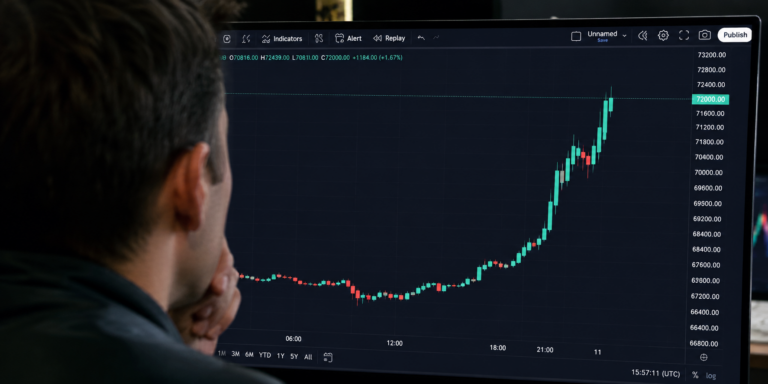
Bitcoin BTC surged above $72,500 on Thursday, reaching its highest level since late May, as President Donald Trump urged Congress to advance cryptocurrency legislation and broader market conditions supported digital assets.

Bitcoin rose 6.6% to $72,644, while Ethereum gained 11% and XRP advanced 19%. Hyperliquid’s token jumped 15% after Trump said Commodity Futures Trading Commission Chairman Mike Selig was working to bring the decentralized exchange to the US.

The gains followed calls from Trump, regulators and cryptocurrency executives for Congress to pass the Clarity Act.

The proposed legislation would place Bitcoin and other cryptocurrencies under commodity regulations rather than securities laws. The bill is scheduled for a procedural vote on Sept. 15.

In contrast, US stocks struggled on Thursday. The Dow Jones Industrial Average fell 624 points while the S&P 500 declined 0.71% and the Nasdaq Composite dipped over 1%.

Short squeeze and lower yields support Bitcoin

Bitcoin‘s latest advance came a day after crypto markets recorded their largest-ever short-liquidation event.

CoinGlass data showed that $664 million worth of Bitcoin short positions were liquidated in the last 24 hours.

The rally was also supported by expectations of lower long-term borrowing costs.

The Treasury said Wednesday that it would at least double the size of its longer-term bond buybacks, helping halt a recent rise in bond yields.

Lower yields can support cryptocurrencies by making interest-bearing assets less attractive and increasing liquidity in financial markets.

However, bond yields gained on Thursday putting pressure on US stocks. Cryptocurrencies seemed to shrug off the higher borrowing costs for now.

Gideon Hyams, chairman and co-founder of STS Digital, said the short squeeze was not the only factor behind the move.

“Squeezes start rallies, but they don’t sustain them, and this one has more behind it than forced buying,” Hyams said. He pointed to falling long-term yields, returning ETF flows and greater regulatory clarity as factors that could support a sustained trend.

Nansen senior research analyst Nicolai Søndergaard similarly said short covering accelerated the breakout but did not create it. He noted that stronger spot and ETF demand were also supporting Bitcoin’s move.

Bitcoin faces test above $70,000

Despite the rally, analysts are watching whether Bitcoin can maintain its gains after the short squeeze subsides.

Søndergaard said the cryptocurrency’s technical outlook had improved but warned that leveraged long positions had become crowded. Continued spot buying could therefore determine whether Bitcoin holds above $70,000.

“Sustained acceptance above $70,000 would keep the outlook constructive, while a pullback toward the 69,700–69,000 area would be a normal test of the breakout rather than an automatic trend reversal,” he said.

CryptoQuant founder Ki Young Ju said Bitcoin demand had turned positive in both spot and perpetual futures markets for the first time since the October 2025 all-time high. However, he cautioned that the scale remained modest.

“The scale remains modest, but if this holds for another month, it would be reasonable to conclude that the bear market is over and a new bull cycle has begun,” Ju said.

Bitcoin technicals

Bitcoin is also approaching a widely watched golden cross, with its 50-day simple moving average at $64,217 and its 200-day average at $68,975.

The cryptocurrency was trading above both averages, although the durability of the move will depend on continued demand.

The post Bitcoin breaches $72K: why BTC is surging 6% even as Wall Street stumbles appeared first on Invezz

Anthropic prepared for a potential IPO targeting a size comparable with SpaceX’s record offering, while Bitcoin climbed above $72,500 on renewed regulatory optimism.

Oil prices rose to their highest levels in more than three weeks as tensions surrounding Iran threatened further supply disruptions, while Walmart shares fell sharply despite the retailer raising its full-year financial outlook.

Anthropic aims to match SpaceX IPO valuation

Anthropic is preparing for a potential public listing that could rival the size of SpaceX’s record-setting initial public offering, reported Bloomberg, citing people familiar with the matter.

The Claude developer is considering an IPO that could raise $75 billion or more, although discussions remain ongoing and the eventual size could change.

SpaceX raised $75 billion at the outset of its IPO, with the figure reaching $86.2 billion after an overallotment option was exercised.

Anthropic could file publicly as soon as the end of August.

The company raised $65 billion in May at a valuation of $965 billion, surpassing OpenAI’s $852 billion valuation following its March funding round.

Anthropic’s preliminary second-quarter revenue exceeded $11.5 billion, compared with $787 million a year earlier.

Its revenue run rate reached $65 billion by the end of July.

However, the company continues to face substantial costs associated with AI development. Anthropic recorded a net loss of almost $42 billion in 2025, compared with about $8.3 billion the previous year.

The company is also working on a revolving credit facility expected to exceed its earlier $10 billion target and is working with Morgan Stanley, Goldman Sachs and JPMorgan on its potential IPO.

Bitcoin climbs above $72,500

Bitcoin surged 6.4% to $72,607, reaching its highest level since late May as President Donald Trump urged Congress to advance cryptocurrency legislation.

Ethereum gained 10%, while XRP rose 16%.

Hyperliquid’s token also climbed after Trump said CFTC Chairman Mike Selig was working to bring the decentralized exchange to the US.

The rally followed calls for Congress to pass the Clarity Act, which would place Bitcoin and other cryptocurrencies under commodity regulations rather than securities laws.

The legislation is scheduled for a procedural vote on Sept. 15.

Bitcoin’s advance also followed a major liquidation event. CoinGlass data showed that $664 million in Bitcoin short positions were liquidated over the previous 24 hours.

Analysts continued to watch whether Bitcoin could maintain its move above $70,000 as the impact of short covering fades.

Its 50-day simple moving average stood at $64,217, while the 200-day average was at $68,975.

Oil prices rise as Iran tensions persist

Oil prices climbed to their highest levels in more than three weeks as concerns about Middle Eastern supply disruptions intensified.

Brent crude futures rose 2.1% to $93.62 a barrel, while US West Texas Intermediate futures gained 2.7% to $88.15.

Both reached their highest levels since July 24.

The gains followed President Donald Trump’s warning of economic consequences for countries supporting Iran.

The conflict has disrupted oil and gas flows across the region, while shipping through the Strait of Hormuz remains far below pre-war levels.

UBS analyst Giovanni Staunovo said the elevated tensions could lead to further supply disruptions and tighter oil markets.

Before the war, the Strait of Hormuz handled shipments equivalent to about one-fifth of global oil consumption.

Walmart stock falls despite higher forecast

Walmart shares fell more than 9% in trading despite the retailer raising its full-year financial forecasts after reporting quarterly revenue and adjusted earnings above Wall Street expectations.

Revenue reached $187.9 billion, up nearly 6% year over year and ahead of the roughly $186 billion expected by analysts. Adjusted earnings per share came in at 81 cents, compared with expectations of 74 cents.

However, US comparable sales increased 2.6%, below the 3.8% expected by analysts. Average ticket growth slowed to 1.1%, while transactions increased 1.5%.

Walmart raised its fiscal 2027 net sales growth forecast to 4%-5% from 3.5%-4.5% and increased its adjusted EPS outlook to $2.80-$2.87.

Its third-quarter outlook was weaker, with adjusted EPS expected at 62-64 cents versus analysts’ 68-cent estimate. E-commerce sales rose 24%, while Walmart Connect revenue increased 43%, providing growth outside its traditional retail operations.

The post Evening digest: Anthropic IPO to match SpaceX valuation, BTC surges above $72K appeared first on Invezz

US stocks closed lower on Thursday as rising Treasury yields pressured equities, while higher oil prices and a sharp decline in Walmart shares added to investor concerns.

The Dow Jones Industrial Average fell more than 1%, while the S&P 500 and Nasdaq Composite also declined.

Rising Treasury yields pressure stocks

The Dow Jones Industrial Average dropped 703 points, or 1.32%, to 52,759. The S&P 500 fell 0.87%, while the Nasdaq Composite declined 1%.

The declines came a day after the Treasury Department announced plans to more than double its longer-term debt buybacks, initially targeting at least $4 billion of purchases of 10-, 20- and 30-year bonds.

The move had briefly eased pressure in the bond market, but Treasury yields resumed their upward trend on Thursday.

The 10-year Treasury yield rose more than five basis points to 4.706%, while the 30-year yield increased by more than five basis points to 5.251%.

The renewed rise in borrowing costs raised concerns about the ability of the Treasury’s buyback program to provide sustained relief to the bond market.

Higher yields can also put pressure on equities by increasing the relative attractiveness of fixed-income assets and raising financing costs.

The 30-year Treasury yield had reached its highest level in nearly 20 years earlier this week.

Oil prices add to inflation concerns

Rising oil prices provided another source of pressure for investors. West Texas Intermediate crude for October delivery gained about 2% to trade above $86 a barrel, while Brent crude rose about 2% to above $93.

Oil prices advanced for a fifth consecutive session as tensions between the United States and Iran remained elevated and efforts to resolve the conflict stalled.

The increase in crude prices added to concerns about inflation and consumer spending, particularly after recent economic data pointed to weaker retail sales and labor-market conditions in July.

Energy stocks benefited from the increase in oil prices, with the S&P 500 energy index among the sectors that outperformed.

However, companies sensitive to fuel costs, including cruise operators Royal Caribbean Group and Carnival, came under pressure.

The rise in energy costs also contributed to concerns about the resilience of US consumers as gasoline prices remain elevated.

Walmart selloff weighs on broader market

Walmart shares fell sharply after the retailer reported weaker-than-expected US comparable sales and provided a softer outlook for the third quarter. The stock dropped about 9%, in its worst session in more than four years.

The decline weighed on the broader consumer sectors, with retailers including Costco, Dollar Tree and Albertsons also falling.

Other individual stocks moved sharply on company-specific developments. Moderna gave up much of its gains from Wednesday, when the biotechnology company surged nearly 177%.

Deere shares rose after the farm-equipment manufacturer raised the lower end of its full-year net income forecast.

Coty shares declined after the CoverGirl owner projected current-quarter earnings below expectations and withheld its annual outlook.

Advance Auto Parts also fell after issuing a weaker annual sales forecast.

Meanwhile, cryptocurrency-related stocks including Strategy and Coinbase gained after President Donald Trump called on Congress to advance cryptocurrency legislation.

The post Dow Jones plunges 700 pts as Wall Street gets battered by rising Treasury yields appeared first on Invezz

Bitcoin (BTC) has charged back above the $72,000 threshold – igniting a fresh wave of optimism across the cryptocurrency market.

The sudden surge followed an unexpected liquidity decision by the US Treasury Department that catalyzed risk assets and sparked renewed fears over currency debasement.

Reacting to the sudden price movement, Matthew Sigel – the Head of Digital Assets Research at VanEck – said that in an environment characterized by interest rate pressures and structural dollar weakness, Bitcoin remains “one of the best hedges you can find.”

Bitcoin’s overall performance in 2026 nonetheless remains disappointing, with the world’s largest cryptocurrency by market cap currently down some 20% year-to-date.

What’s behind Sigel’s bullish remarks on BTC

Explaining the macro driver behind the rally, Sigel dismissed the notion that Bitcoin is trading on pending legislative efforts (Clarity Act).

Instead, he pointed directly to US Treasury issuance policy, warning that heavily relying on short-term T-bills – which currently make up roughly 23% of marketable debt, well above the Treasury Advisory Committee’s recommended 15% to 20% range – triggers severe fiscal dominance.

Speaking with CNBC, Sigel noted that short-end financing rapidly escalates budget deficit costs when interest rates stay elevated, forcing pressure onto the US dollar.

Pointing out that BTC’s primary 15-year correlation has been a negative relationship with USD, he highlighted that 8 out of 12 internal capitulation indicators have turned positive following a 10-month correction.

With a massive $3 billion in short positions liquidated within 24 hours, Vaneck’s expert maintained his price target of $100,000 in the near term and up to half a million dollars by 2029.

What else could drive Bitcoin higher in the near-term

While macro factors dominate Sigel’s analysis, legislative tailwinds are contributing to the positive market sentiment as well.

Coinbase chief executive Brian Armstrong expressed confidence earlier in the day regarding next month’s anticipated vote on the Clarity Act – predicting the bill will cross the 60-vote threshold in the Senate as both political parties have secured roughly 90% of their key objectives.

Although prediction platforms like Kalshi remain far more conservative, pricing in roughly a 23% probability of the bill becoming law before year-end, traders view regulatory progress as a potential secondary catalyst.

Clear statutory definitions for digital assets could unlock structural institutional inflows, offering an added layer of support alongside fiscal debasement narratives.

Sigel’s view is in stark contrast to Mark Cuban’s

Sigel’s strong defense of Bitcoin as a hedge stands in stark contrast to “high-profile skeptics” like billionaire investor Mark Cuban.

Cuban has repeatedly voiced disappointment regarding Bitcoin’s performance during periods of economic instability, arguing that narratives surrounding fiat debasement and inflation protection are largely marketing slogans.

According to him, BTC behaves more like a speculative tech asset driven purely by supply and demand rather than a stable harbor against currency devaluation.

However, pro-crypto research heads like Sigel maintain that when structural debt and falling real rates begin capping policy options, Bitcoin’s fixed supply makes it an indispensable tool for capital preservation.

The post Bitcoin dubbed 'one of the best hedges you can find' – again appeared first on Invezz

The post Pi Network PayPal Integration Remains Unconfirmed as KYB Listing Is Missing appeared first on Coinpedia Fintech News

PayPal has not yet been added to Pi Network’s KYB-verified business list, meaning reports of an official PayPal integration with Pi remain unconfirmed. Unofficial claims suggested that PayPal had added PI to its “Pay with Crypto” program alongside assets such as Bitcoin, Ethereum, Dogecoin and Solana. However, PayPal is not currently listed as a verified …

Tesla stock TSLA gained 3% on Wednesday, ending a two-session losing streak as investors looked ahead to a potential Cybercab launch event.

The company teased the event on X on Monday, saying customers who ride a Tesla robotaxi through Aug. 23 could have a chance to receive an invitation.

Tesla launched its AI-trained robotaxi service in Austin, Texas, in June 2025 using Model Y vehicles equipped with its Full Self-Driving software.

The service has since expanded to a handful of cities, while Tesla plans to eventually add its purpose-built Cybercab, which does not have a steering wheel, to the fleet.

Tesla stock is up about 2% for the week but remains below the levels reached during the initial excitement surrounding its previous robotaxi event.

Cybercab launch puts Tesla’s robotaxi plans in focus

Tesla events have historically attracted significant investor attention, particularly when the company unveils new vehicles, trucks or robotics products.

Shares were around $240 before CEO Elon Musk hosted a robotaxi event in October 2024 and climbed to about $350 a month later.

The upcoming Cybercab event could therefore be important for investors assessing Tesla’s plans for autonomous transportation.

The company began Cybercab production this year, and the vehicle is expected to eventually become part of its robotaxi fleet.

However, investors are still waiting for robotaxis to make a meaningful contribution to Tesla’s financial results.

Expansion has been relatively slow, while Tesla’s free cash flow is being used to develop robotaxis and AI-trained robots.

Musk has argued that both products could generate significant sales and earnings, but those benefits have yet to materialize.

Tesla faces competition and regulatory hurdles

Tesla is also competing with companies including Alphabet’s Waymo and Amazon’s Zoox for a share of the robotaxi market.

The eventual size of the market and which companies will capture the largest share remain uncertain.

Tesla is betting on lower-cost robotaxis as well as its experience with AI and driver-assistance technology.

The success of that strategy will depend in part on whether the Cybercab can be deployed at scale.

Regulatory restrictions could also slow expansion.

According to a Yahoo Finance report, Tesla requested 5,000 robotaxi permits from the Nevada Transportation Authority but was granted 10. Those vehicles would be restricted to one section of the Las Vegas Strip and could operate at speeds of no more than 45 miles per hour.

The vehicles would also be prohibited from traveling within a quarter-mile of the airport unless authorized by the airport operator and all required government approvals were obtained.

Roadster delay adds another question

Tesla’s product pipeline extends beyond the Cybercab. Former Tesla executive Jon McNeill offered an explanation for the delayed Roadster, pointing to technology developed by SpaceX that could potentially be incorporated into the vehicle’s demonstration.

McNeill also suggested that Tesla and SpaceX could become more closely connected.

He said the companies were “going to come together, probably sooner rather than later.”

For Tesla investors, the Cybercab remains the more immediate focus as the company attempts to expand its robotaxi operations.

Wall Street analysts currently have a Hold consensus rating on Tesla, based on 10 Buy, 15 Hold and three Sell ratings assigned over the past three months, according to TipRanks data.

The average price target of $385.04 implies about 10.33% upside from the share price.

The post Why Tesla stock is gaining 3% today appeared first on Invezz