Archive

August 11, 2026

Browsing

The post Curve DAO Token (CRV) Price Rallies Into Major Resistance Zone: Can it Break $0.3? appeared first on Coinpedia Fintech News

The Curve DAO Token (CRV) price has been rising since the start of the month, attracting nearly 25% in gains. With this, the rally has entered a key resistance area that could determine the next leg of recovery. While fresh positions are entering, it would be interesting to watch whether the price will break this …

The post Chainlink Price Surges 5% After Standard Chartered’s $200 Target: Can LINK Break $9? appeared first on Coinpedia Fintech News

Chainlink price finally have a reason to rise higher. LINK jumped nearly 5%, broke its descending trendline and is now approaching the critical $9 mark. At the same time, Standard Chartered has put a striking $200 target on LINK for 2030, betting on Chainlink’s role in the rapidly expanding tokenization economy. With a double-bottom recovery …

The post Litecoin (LTC) Price Prediction 2026, 2027 – 2030: How High Will LTC Price Go? appeared first on Coinpedia Fintech News

Story Highlights Litecoin price today Price predictions for 2026 range from $100 to $150.00. Long-term outlook suggests gradual growth potential toward $1000+ by 2030. Litecoin remains one of the most reliable payment-focused cryptocurrencies, known for fast transactions and low fees. As the market shifts toward practical use cases, LTC continues to hold relevance, especially in …

The post National Bank of Canada Reveals $330K XRP ETF and Bitcoin ETFs appeared first on Coinpedia Fintech News

National Bank of Canada has added another name to the growing list of traditional financial institutions gaining exposure to crypto through U.S.-listed ETFs. Its latest holdings disclosure shows positions in the Bitwise XRP ETF and several Bitcoin ETFs. The bank’s latest disclosure comes at a time when XRP ETF inflows have slowed for the last …

The post LINK Recovers From $7 Double Bottom: Can Chainlink Price Clear the $10 Barrier? appeared first on Coinpedia Fintech News

Chainlink (LINK) price has staged a strong recovery from its $7.00 double-bottom, climbing back toward a resistance zone that could determine whether the rally has further room to run. With momentum indicators turning positive and exchange inflows remaining subdued, the setup is improving, but LINK still faces a major hurdle before entering the $10 territory. …

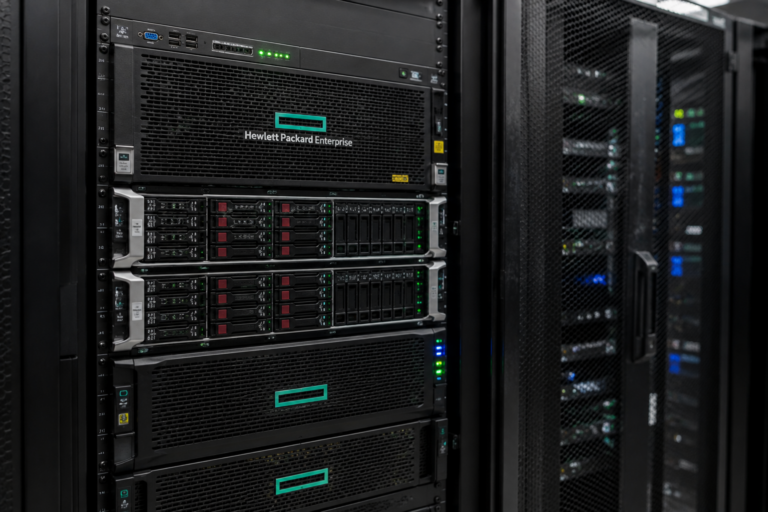
Hewlett Packard Enterprise (HPE) stock rose more than 4% on Monday after Morgan Stanley upgraded the company, citing continued strength in enterprise AI infrastructure spending and arguing that demand for servers and networking hardware remains resilient despite concerns about the sustainability of the AI investment cycle.

Morgan Stanley analyst Erik Woodring upgraded HPE shares to Overweight from Equal-Weight and raised his price target to $71 from $69.

The move came after HPE shares surged 130% this year and 169% over the past 12 months.

Despite the strong rally, Woodring noted that HPE continues to trade at 14.3 times expected earnings over the next 12 months, below the S&P 500’s multiple of 20 times.

Morgan Stanley sees continued AI infrastructure demand

Morgan Stanley identified HPE as its preferred original equipment manufacturer for investors seeking exposure to the enterprise infrastructure cycle.

“HPE is our preferred OEM [original equipment manufacturer] to play the enterprise infrastructure cycle, offering an attractive risk/reward,” Woodring wrote in a research note.

HPE develops servers and networking equipment that support artificial intelligence workloads.

As demand for AI computing continues to expand, the company has benefited from increased demand for its hardware, while higher memory prices have also contributed to stronger pricing for its products.

Although investors have questioned whether the AI hardware spending boom can continue, Morgan Stanley believes current industry trends remain supportive.

“Admittedly, we have been on the wrong side of the enterprise hardware trade, previously believing that record component inflation would quickly stymie a recovery in hardware spending,” Woodring wrote.

He added that AI demand continues to offset concerns about rising component costs.

“Together, these dynamics are supporting stronger revenue growth, greater pricing power and further earnings upside across enterprise hardware,” he said.

AI spending and memory prices support growth

According to Morgan Stanley, enterprise customers continue to invest in computing and storage infrastructure as AI adoption accelerates.

Rather than delaying purchases, higher memory prices are encouraging customers to move ahead with infrastructure investments, supporting revenue growth for hardware suppliers such as HPE.

The firm believes these trends are strengthening pricing power across the enterprise hardware industry while creating additional earnings upside for companies exposed to AI infrastructure.

HPE stock traded around $55.50, extending a rally that has seen shares more than double since February.

HPE’s rally this year has been notable enough that many retail investors have been tracking the stock closely through investment apps, alongside other AI infrastructure plays.

Morningstar forecasts further upside

Morningstar also maintained a positive long-term view on HPE, assigning the company a fair value estimate of $64 per share.

The research firm expects AI-optimized servers and growing demand for general-purpose servers driven by agentic AI applications to remain key growth drivers.

It also believes HPE’s acquisition of Juniper could strengthen its networking business.

Morningstar forecasts HPE’s AI-optimized server business will generate roughly $10 billion in revenue by 2028.

It also expects general-purpose server revenue to grow at a 16% compound annual growth rate over the next three years and projects networking revenue to expand at a 30% CAGR through 2028, with normalized margins reaching 27%.

The firm said additional upside could emerge if HPE’s AI-driven growth accelerates further.

Morningstar believes its fair value estimate could rise to $70 if investors assign a higher valuation to the company’s growth prospects, and $80 or more if AI-driven expansion continues at an accelerated pace.

The post HPE stock jumps as Morgan Stanley upgrades AI infrastructure outlook appeared first on Invezz

Microsoft MSFT shares rose 1.7% on Monday after a report said the software giant is preparing to unveil its next-generation Maia 300 artificial intelligence chip this fall, marking another step in its effort to reduce dependence on Nvidia’s processors as competition in custom AI silicon intensifies.

According to The Information, citing people familiar with the matter, Microsoft could introduce the Maia 300 as early as next month.

Separately, Bernstein SocGen Group also raised its price target on Microsoft shares to $660 from $647 while maintaining an Outperform rating, expressing confidence in the company’s long-term AI infrastructure strategy.

Nvidia shares were down about 1.8% during Monday’s session.

The broader S&P 500 was down by almost 0.1%.

Microsoft accelerates custom AI chip ambitions

Microsoft has been investing heavily in proprietary AI chips as hyperscale cloud providers increasingly seek greater control over the hardware powering artificial intelligence applications.

The company first introduced the Azure Maia AI Accelerator in November 2023 alongside its Cobalt central processing unit.

Earlier this year, it unveiled the Maia 200, manufactured by Taiwan Semiconductor Manufacturing Co. using its advanced 3-nanometer process.

The Maia 200 featured a large amount of SRAM, a high-speed memory technology designed to improve AI inference by enabling faster processing of user requests.

The upcoming Maia 300 represents Microsoft’s next step in expanding its custom silicon portfolio.

According to The Information, Microsoft is negotiating with TSMC to secure manufacturing capacity for more than 300,000 Maia 300 chips for delivery in 2027.

The report added that Microsoft ultimately hopes to secure production capacity exceeding one million Maia 300 units, although supply constraints and negotiations with TSMC could affect those plans.

The company is also reportedly attempting to convince major cloud customers, including Anthropic, to deploy the chips on Microsoft’s Azure platform.

Big Tech intensifies challenge to Nvidia

Microsoft’s efforts mirror a broader trend across the technology sector, where cloud providers are increasingly developing in-house processors to reduce reliance on Nvidia’s high-priced graphics processing units.

Alphabet recently began recognizing revenue from direct sales of its Tensor Processing Units, while Amazon has continued expanding adoption of its Trainium processors.

Last month, The Information reported that Alphabet is designing another custom AI server processor, internally known as “Frozen v2,” expected to launch in 2028.

According to the report, the chip could be six to ten times more power-efficient than Google’s existing AI processors when measured by tokens generated per unit of electricity.

Greater efficiency has become a strategic priority for AI companies seeking to lower infrastructure costs while addressing persistent shortages in advanced computing capacity.

Bernstein sees disciplined AI infrastructure spending

Bernstein said concerns about Microsoft’s data center spending appear overstated.

The brokerage noted that Microsoft has expanded data center capacity more slowly than cloud revenue growth while spreading future lease obligations across multiple years.

According to Bernstein, Microsoft’s purchase commitments for power, cooling infrastructure and hardware are concentrated over the next twelve months, with relatively limited obligations beyond that period.

The research firm argued that even if AI demand weakened unexpectedly, additional capacity could still support Microsoft’s traditional CPU-based cloud business.

Bernstein described Microsoft’s expansion strategy as measured and aligned with current customer demand, while acknowledging that hardware costs have increased despite improving equipment availability.

Long-term goal remains vertically integrated AI infrastructure

Microsoft has repeatedly stated that designing proprietary chips is central to its long-term AI strategy.

Speaking last year, Microsoft’s chief technology officer Kevin Scott said the company ultimately intends to rely primarily on internally designed processors across its data centers.

“Absolutely,” Scott said when asked whether Microsoft’s long-term objective was to use mostly proprietary chips.

He added that Microsoft is already deploying “lots of Microsoft” silicon across its infrastructure.

Scott emphasized that the strategy extends beyond processor design.

“It’s about the entire system design. It’s the networks and the cooling, and you want to be able to have the freedom to make the decisions that you need to make in order to really optimize your compute to the workload,” he said.

As generative AI becomes increasingly central to cloud computing, ownership of the underlying hardware has emerged as a key competitive differentiator.

The post Why is Microsoft stock climbing today? appeared first on Invezz

Monday.com shares fell sharply on Monday after the work management software company issued third-quarter revenue guidance that fell short of Wall Street expectations, overshadowing stronger-than-expected second-quarter earnings and continued momentum in its artificial intelligence business.

MNDY shares dropped more than 6% after the company projected third-quarter revenue of $368 million to $370 million, representing growth of 16% to 17%.

The forecast came in below analysts’ expectations of $372.8 million, according to FactSet.

The company maintained its full-year revenue guidance of $1.466 billion to $1.474 billion, broadly in line with Wall Street estimates at the midpoint.

Still, Monday.com reported adjusted second-quarter earnings of $1.48 per share, ahead of analyst estimates of $1.11, while revenue increased 22% year over year to $364.6 million, topping expectations of $355.6 million.

Guidance reflects restructuring and pricing changes

Management said the softer outlook reflects organizational changes following the company’s decision to reduce its global workforce by approximately 20% in late July, along with the impact of pricing adjustments.

Chief Financial Officer Eliran Glazer said on the earnings call:

“We always try to be responsible, but we do have a strong conviction on the trajectory and the moderation of the guidance reflect our discipline in the moment of transitioning the organization as we continue to move upmarket and also restructuring the organization.”

Co-CEOs Roy Mann and Eran Zinman said the restructuring is designed to accelerate the company’s long-term AI strategy.

“We made the difficult decision to restructure our organization, sharpen our product portfolio, and commit fully to the AI Work Platform in order to capture the largest opportunity we have ever seen in software,” Mann and Zinman said.

Mann also described the workforce reduction as “the hardest decision we have made since founding the company,” adding that the restructuring will reduce management layers, create smaller teams and shift the company’s go-to-market strategy toward AI.

AI adoption accelerates despite cautious outlook

Monday.com said it has spent the past nine months transforming its platform from a work management application into one where employees and AI agents collaborate.

The company has introduced an AI agent builder, tools that allow customers to create their own work applications and a pricing model based on AI usage rather than user seats.

Management said adoption of its AI products continued to strengthen during the second quarter.

“More telling than any single metric is that AI products adoption continues to accelerate, and customers respond to our new direction,” Mann said.

Annual recurring revenue from AI products doubled from the first quarter and represented 17% of net new ARR during the second quarter.

The company also said it surpassed $1.5 billion in annual recurring revenue in July while adding more than 105,000 customers during the quarter.

Large enterprise customers continue to grow

Monday.com also continued expanding its presence among larger enterprise customers.

The number of paid customers generating more than $500,000 in annual recurring revenue increased 68% year over year to 114, up from 68 a year earlier.

Even with those improvements, investors remained focused on the company’s near-term revenue outlook.

The post Monday.com stock drops as weak Q3 outlook overshadows AI progress appeared first on Invezz

A potential $500 billion AI infrastructure partnership involving Nvidia and major investment firms highlighted another day of aggressive spending on artificial intelligence.

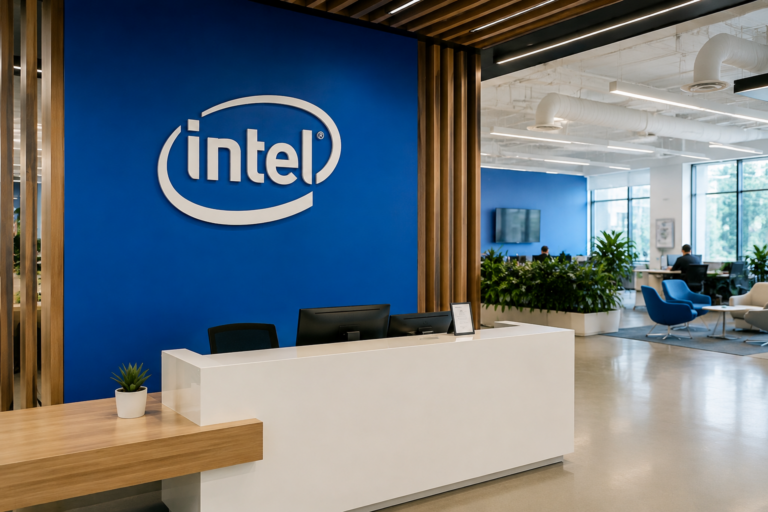
Intel unveiled plans for a $15 billion share sale to strengthen its balance sheet and fund AI initiatives.

Gold prices hovered near a seven-week high as investors awaited key US inflation data and assessed the Federal Reserve’s policy outlook.

Meanwhile, Bitcoin slipped below $64,500 as uncertainty surrounding the Strait of Hormuz weighed on broader market sentiment despite continued institutional inflows.

Nvidia reportedly in talks on $500 billion AI infrastructure funding

Nvidia is nearing a partnership with several of the world’s largest investment firms on a $500 billion funding initiative aimed at expanding artificial intelligence infrastructure, reported Bloomberg.

According to Bloomberg, Apollo Global Management, Blackstone, BlackRock, Brookfield Asset Management, Goldman Sachs and KKR are among the firms in discussions with Nvidia.

The report did not specify which AI projects or companies would receive the funding, nor whether the $500 billion represents entirely new commitments or includes existing investment plans.

The discussions come as Nvidia continues to expand its role in financing AI infrastructure beyond supplying chips.

Bloomberg previously reported that the company has been in talks to support up to $250 billion in financing to help OpenAI lease computing capacity at a planned $500 billion data center project in Ohio, while also discussing financing as much as $350 billion of OpenAI’s purchases of Nvidia chips.

Nvidia shares were down 2% in afternoon trading.

Intel launches $15 billion stock offering to fund AI growth

Intel announced plans to raise $15 billion through a common stock offering as the company seeks additional capital to expand its AI ambitions and strengthen its manufacturing business.

“The offering is intended to further enable Intel to pursue the growth opportunities ahead,” the company said.

Intel said proceeds from the offering will be used for general corporate purposes, including investments in artificial intelligence, purpose-built silicon and other growth initiatives.

The offering marks what could be Intel’s first public share sale since its 1971 listing.

Shares fell as much as 5.3% following the announcement, as equity offerings typically dilute existing shareholders.

Chief Executive Officer Lip-Bu Tan has prioritized improving Intel’s balance sheet while pursuing the company’s turnaround strategy.

Gold holds near seven-week high ahead of US inflation data

Gold prices remained near their highest levels in seven weeks as investors awaited US consumer and producer price inflation reports later this week for clues on the Federal Reserve’s next policy move.

Spot gold rose 0.94% to $4,382.42 an ounce after reaching $4,371.63 on Friday, its highest level since June 17.

US gold futures also gained 0.94% to $4,440.50.

China also continued supporting the precious metal after official data showed the country’s central bank recorded its largest monthly increase in gold reserves since October 2023.

Economists surveyed by Reuters expect US consumer prices to have increased 3.4% year over year in July, down from 3.5% in June.

Traders currently assign a 50% probability of a September rate hike and an 81% chance of another increase in December, according to CME FedWatch.

Bitcoin slips as Hormuz uncertainty weighs on markets

Bitcoin fell below $64,000 on Monday as geopolitical uncertainty surrounding the Strait of Hormuz weighed on risk assets.

The cryptocurrency dropped to $63,752.57, its lowest level since Friday, mirroring weakness in US equities after hopes for a near-term reopening of the strategic oil shipping route faded.

Despite the price weakness, on-chain data suggested institutional demand remains strong.

Glassnode said momentum had improved but cautioned that the recovery “remains tentative” as centralized exchange trading activity stayed relatively subdued.

The analytics firm also noted that US spot Bitcoin ETFs attracted net inflows of $865.3 million last week, while CryptoQuant data showed hedge funds had turned net long CME Bitcoin futures, a move the firm’s CEO Ki Young Ju described as “rare.”

The post Evening Digest: Nvidia's $500B AI talks, Intel's $15B share sale appeared first on Invezz

Wall Street closed slightly lower on Monday as investors weighed renewed uncertainty over the reopening of the Strait of Hormuz, rising oil prices and a busy week of inflation data that could shape expectations for Federal Reserve policy.

The Dow Jones Industrial Average fell 60.95 points, or 0.11%, to close at 53,975.98.

The S&P 500 slipped 0.06% to 7,753.11 after ending at a record high on Friday, while the Nasdaq Composite declined 0.32% to 26,605.36.

Investor sentiment remained cautious after hopes of a near-term breakthrough in Middle East negotiations faded, even as corporate earnings continued to provide support for equities.

Hormuz uncertainty lifts oil prices

Markets remained focused on developments surrounding the Strait of Hormuz after Iran reiterated that the United States must meet several conditions before the strategic shipping route can reopen.

Iran said it was nearing an agreement with Oman on new shipping lanes through the strait but maintained that Washington must meet its demands before traffic resumes.

At the same time, US President Donald Trump called for Iran to compensate the United States for losses related to previous conflicts, while signaling that negotiations remained limited.

The uncertainty pushed oil prices sharply higher.

US West Texas Intermediate crude settled 5% higher at $82.16 per barrel, while Brent crude rose 5% to settle at $87.74 per barrel.

The Strait of Hormuz remains a critical route for global energy supplies, and prolonged disruption has fueled concerns over higher energy costs and persistent inflation.

Investors are watching closely for any progress that could ease supply risks and reduce pressure on commodity prices.

Intel leads chip stocks lower as markets eye inflation data

Technology shares also weighed on the broader market, led by Intel after the chipmaker announced plans to raise $15 billion through a common stock offering to fund growth initiatives, including artificial intelligence investments.

Intel shares fell 4%, while Nvidia lost 2.9% and Apple declined 1.5%, contributing to weakness in the Nasdaq.

The proposed share sale comes as Intel seeks additional capital to strengthen its balance sheet and expand its AI and semiconductor manufacturing ambitions.

However, equity offerings typically dilute existing shareholders, prompting a negative market reaction.

Investors are also preparing for key inflation reports later this week, with the consumer price index due on Wednesday followed by producer price data on Thursday.

The readings are expected to provide fresh insight into the Federal Reserve’s interest-rate outlook.

Earnings remain a bright spot for equities

Despite Monday’s cautious session, Wall Street continues to receive support from a strong corporate earnings season.

Around 85% of the 436 S&P 500 companies that have reported quarterly results have exceeded analysts’ expectations, according to LSEG data.

The major indexes also entered the week after posting their strongest weekly gains since April, with the S&P 500 recording a fresh all-time closing high on Friday.

Markets were also supported by last week’s weaker-than-expected July employment report, which showed the US economy unexpectedly lost 23,000 jobs.

The data reduced expectations for an immediate Federal Reserve rate increase, with CME FedWatch showing traders now assign roughly a 52% probability of a September rate hike, down from 67% a week earlier.

The post Dow slips as Hormuz uncertainty, Intel share sale weigh on Wall Street appeared first on Invezz