
Archive

August 12, 2026

Browsing

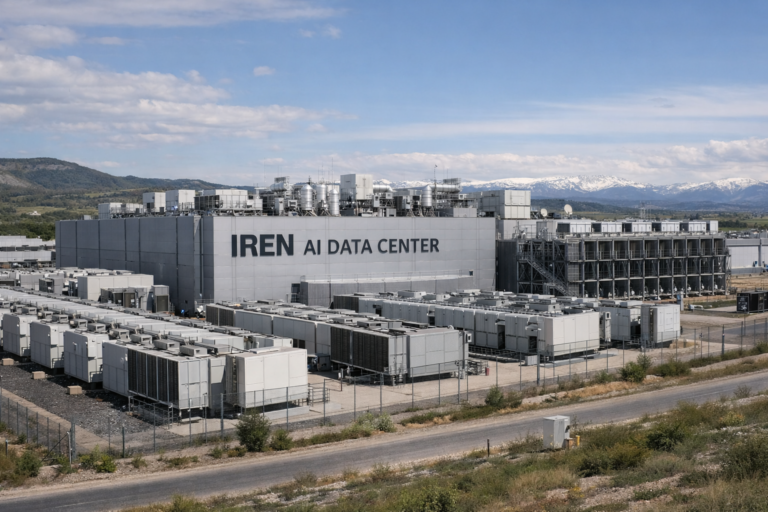
IREN stock rose by over 7.5% in the premarket session after a series of good news in the neocloud industry. It jumped to $43.3, up by nearly 50% from its lowest level on June 29 this year. 

IREN stock jumps after some positive neocloud news

IREN, a top company in the neocloud industry, has jumped this week after some notable news in the industry. First, Nvidia, a top shareholder, has inked a $500 billion deal with top companies like BlackRock and BlackStone to finance companies in the AI sector. 

This deal converts Nvidia’s chips into a new asset class, a move that will benefit IREN, a company that requires billions of dollars to actualize its AI ambitions. 

Second, there are signs that demand for neocloud companies continues growing this year. A good example of this is Riot Platforms, which inked a $9 billion deal with Anthropic. 

More signs of this demand came from CoreWeave, the biggest company in the industry, said that its revenue jumped to $2.57 billion in the second quarter from $1.2 billion in the same period last year. Its backlog jumped to $104 billion, a sign of strong demand for its products. 

Further, Goldman Sachs remains optimistic about some big names in the industry. It recently boosted its Nebius stock forecast. The Wall Street bank now expects that Nebius will have annual EBITDA of $30 billion by 2030. 

Analysts expect its growth will continue

IREN stock may benefit from the ongoing revenue growth. In a recent announcement, IREN said that it reached deals worth $2.8 billion with top AI developers like Perplexity, Figure AI, Together AI, and Fluidstack. As a result, the management decided to hike its ARR target to over $4 billion. 

The company will publish its financial results later this month. The average estimate among analysts is that its revenue dropped by 26% in the second quarter to $139 million. This decline will be because of its ongoing pivot from the Bitcoin mining industry.

For the year, however, its revenue is expected to jump from $510 million last year to $722 million. It will then jump to $3 billion next year, helped by its large deals, including the $9.3 billion one with Microsoft.

Still, there are some major challenges that may hurt its performance. One of them is the rising depreciation. For example, in its last earnings report, CoreWeave said that its depreciation and amortization jumped to $1.3 billion, a significant portion of its $2.5 billion revenue. IREN’s D&A jumped to $121 million in the first quarter. 

Another challenge is that the industry is getting highly competitive, as evidenced by Riot Platforms’ recent deal with Anthropic. More Bitcoin mining companies like MARA Holdings, Cipher Mining, and Core Scientific have moved into the industry.

Additionally, the cost of doing business is soaring, with memory and chip businesses seeing their prices jump. As a result, it will need more cash to boost its spending to meet its strong targets. This explains why the company has a short interest of 26%.

What’s next for IREN shares?

IREN stock chart | Source: TradingView

The weekly chart shows that the IREN shares dropped to a crucial support level of $29, which coincides with the 61.8% Fibonacci Retracement level. This is where most rebounds normally happen. 

The stock formed a doji candlestick pattern two weeks ago. This pattern is one of the most common bullish reversal signs in technical analysis. It also remains slightly above the lower side of the Andrew’s pitchfork tool. 

Therefore, the stock may rebound further in the near term. If this happens, the stock may continue rising, potentially to the psychological level of $50. 

The post IREN stock analysis after CoreWeave earnings and Anthropic deal appeared first on Invezz


US stock markets are standing at a crucial inflection point as investors brace for the release of the July Consumer Price Index (CPI) report.

Wall Street consensus estimates project headline inflation to cool slightly to 3.4% year-over-year – down from June’s 3.5% reading – while core inflation, excluding volatile food and energy costs, is expected to ease to 2.5%.

With a divided Federal Reserve weighing whether to pause or resume interest rate hikes following its July meeting pause at 3.50%–3.75%, a softer-than-expected inflation print would significantly reduce rate-hike fears and lower bond yields.

If inflation comes in cooler than anticipated, three key stocks stand to gain immediate upside momentum.

Tesla Inc (TSLA)

Tesla stock stands as one of the most immediate beneficiaries of a softer inflation report due to its dual sensitivity to consumer credit and long-duration growth valuations.

Because the vast majority of consumer vehicle purchases are financed through loans, elevated interest rates directly increase monthly payments, dampening vehicle demand and pressuring automotive profit margins.

A cooler CPI print provides immediate relief by pulling Treasury yields lower and easing broader borrowing costs across auto lenders.

Furthermore, as a high-beta growth stock, Tesla’s equity valuation expands significantly when discounted cash flow models factor in lower discount rates.

A soft inflation reading signals to the market that the Fed can stay on hold, giving buyers better financing terms and reigniting investor appetite for premium EV leadership.

D.R. Horton Inc (DHI)

As the nation’s largest residential homebuilder, D.R. Horton stock is hyper-sensitive to shifting bond yields and consumer price trends.

High interest rates have kept 30-year mortgage rates elevated, creating an affordability squeeze for prospective buyers and weighing on housing market activity.

However, if the July inflation numbers surprise to the downside, benchmark 10-year Treasury yields will likely slide, triggering an immediate drop in mortgage rates.

D.R. Horton is ideally positioned to capitalize on this shift thanks to its focus on entry-level, affordable single-family homes.

Lower mortgage rates expand the buyer pool almost instantly, reducing the need for costly builder incentives or rate buy-downs and directly boosting profit margins and order backlogs.

Apple Inc (AAPL)

Apple stock represents the quintessential mega-cap technology play that thrives when inflationary pressures abate.

Softer consumer inflation restores household purchasing power, leaving buyers with higher discretionary income to upgrade personal electronics, smartphones, and subscription services.

Operationally, stabilizing input costs and cooling logistics charges protect Apple’s industry-leading hardware margins.

From a capital markets perspective, Apple’s massive future cash flow generation becomes substantially more valuable in a lower-yield environment.

A cooler inflation reading reduces market volatility, encourages institutional equity inflows into quality mega-cap tech, and provides a powerful tailwind for Apple’s valuation ahead of its major autumn hardware refresh cycle.

The post Two mega-cap stocks and one more to rally on cooler CPI appeared first on Invezz

Rocket Lab stock rose to the important resistance level of $80 after the company reported strong financial results. RKLB has jumped by 37% from its lowest point this year, and analysts believe that it has more upside to go as it solidifies its role in the space industry. 

Rocket Lab published strong earnings

RKLB stock has jumped in the past few days, and this uptrend may continue in the coming months as its growth continues. Its results were better than expected, with its revenue rising by 62% YoY to $234 million and its backlog surging by 137% to $2.36 billion. 

The company also received an additional $800 million in contracts after the quarter ended. For example, it inked a Neutron deal with Kepler Communications this week. And last week, it was awarded a $397 million contract to build and launch flatellites for the US Space Force. 

It also received a major order worth $266 million from the US Space Force for its suborbital launches. This growth will likely continue as demand for satellite deployments gains steam. Also, the company has expanded to Germany, where it aims to take advantage of the growing European market.

Rocket Lab continued narrowing its losses, with its net loss coming in at $49 million in the second quarter from $66 million in the same period last year. 

The company also boosted its forward guidance. It now expects that its revenue will be between $250 million and $265 million. The upper side of the range is higher than the $253 million that analysts were expecting. Indeed, the most optimistic analyst expected the revenue to hit $260 million in Q3.

Other metrics are expected to improve. For example, the GAAP gross margin is expected to improve to between 29% and 31%, while its operating expenses are expected to be between $143 million and $149 million. 

Analysts have boosted their RKLB stock forecasts

These strong earnings and its recent acquisitions have boosted their forecasts. Andres Sheppard, a top analyst from Cantor Fitzgerald, hiked the target from $96 to $122. Trevor Walsh of Citizens Bank maintained the market outperform target of $130, while Needham and KeyCorp reiterated their buy and overweight ratings.

The consensus target among analysts is $110, representing a nearly 40% upside from the current level. A year ago, the consensus target was at $42, a sign that its business is improving.

In addition to the ongoing demand, analysts are citing the company’s recent acquisitions, including the $8 billion Iridium buyout. It also acquired Mynaric and Motiv to continue its vertically integrated business.

Rocket Lab stock price technical analysis

RKLB stock chart | Source: TradingView

The daily chart shows that the RKLB stock retreated from the year-to-date high of $151.04 on May 27 to a low of $58.58 earlier this month. It then bounced back to $86 and then pulled back to the current $77. 

The stock is hovering at the strong, pivot, reverse level of the Murrey Math Lines tool and the 200-day Exponential Moving Average (EMA). Most notably, it has formed a shooting star candlestick pattern, which normally leads to a steep reversal. 

Therefore, there is a risk that the stock will resume the downward trend, potentially to the ultimate support of $50. The bearish outlook will become invalid if it moves above the upper side of the shooting star candle of $87.

The post Analysts raise Rocket Lab stock targets after earnings: Why it could still hit $50 appeared first on Invezz

US consumer inflation rose modestly in July, matching economists’ expectations and potentially reducing the urgency for the Federal Reserve to raise interest rates next month as policymakers weigh easing price pressures against a weakening labour market.

The Consumer Price Index increased 0.1% in July from the previous month, according to data released Wednesday by the Bureau of Labor Statistics.

Core CPI, which strips out volatile food and energy prices, rose 0.2%.

Both readings matched estimates.

On an annual basis, headline CPI increased 3.4%, while core inflation rose 2.5%.

The figures were also in line with forecasts, although both measures remained well above the Federal Reserve’s 2% inflation target.

Energy prices provide relief

The latest figures suggest that some of the price pressures seen earlier in the year may be losing momentum.

The energy index fell 1.5% in July after declining 5.7% in June.

Gasoline prices were a major contributor, with the gasoline index falling 2.9% during the month.

Before seasonal adjustment, gasoline prices declined 2.1%.

Despite the recent monthly declines, energy prices remained substantially higher than a year earlier.

The energy index was up 14.7% over the past 12 months, while gasoline prices increased 24.6% over the same period.

Data from the US Energy Information Administration showed that average gasoline prices fell to $4.064 a gallon in July from $4.184 in June.

Prices had averaged $4.609 a gallon in May.

The combination of declining energy prices and another relatively subdued monthly core reading could give Fed policymakers additional time to assess whether inflation is genuinely moving towards the central bank’s target.

Markets see limited policy shock

US stock futures ticked higher following the inflation report.

S&P 500 futures were up about 0.5%, while Dow Jones futures gained 0.25%. Nasdaq futures rose roughly 1%, reflecting stronger sentiment toward growth and technology stocks.

JPMorgan’s trading desk had outlined several potential market reactions ahead of the release, with a core inflation reading between 0.2% and 0.25% seen as the most likely scenario.

Such a result was expected to lift the S&P 500 by between 0.25% and 0.75%.

Steve Ryder, senior fixed-income portfolio manager at Aviva Investors, said the report was unlikely to trigger an immediate policy shift.

“The report is likely to reassure policymakers that the sharp downside surprise seen in June was neither entirely noise nor the start of a much faster disinflation process,” he said.

Ryder said the data should keep expectations of a September rate hike alive but would provide little urgency for the Fed to act immediately.

Jobs data remains key

The inflation report comes days after a weak US payrolls report showed the economy unexpectedly shed jobs in July, prompting investors to scale back expectations for near-term monetary tightening.

The Federal Reserve held rates steady at its July meeting, although three of its 12 policymakers voted for an increase.

Since then, markets have been caught between evidence of persistent inflation and signs that the labour market is losing momentum.

According to the CME’s FedWatch gauge, traders see roughly a 50-50 chance of a rate increase at the Fed’s September meeting.

October and December are increasingly viewed as more likely windows for additional tightening if inflation remains elevated.

Ryder said investors may now focus more heavily on the next inflation and labour market reports before drawing conclusions about the Fed’s next move.

“Treasury yields and market pricing may see only a limited reaction, with investors continuing to debate whether inflation is converging towards target or stabilising at a pace that remains modestly above it,” he said.

The latest CPI figures therefore leave the Fed with room to wait, keeping the policy outlook finely balanced as officials assess whether price growth is slowing enough to justify patience or remains too high to rule out another rate increase later this year.

The post US CPI report: Inflation rises as per estimates as Fed rate hike bets ease for now appeared first on Invezz

US stock indexes opened higher on Wednesday after a largely in-line inflation report reinforced expectations that the Federal Reserve could leave interest rates unchanged next month, while strong earnings and upbeat guidance from artificial intelligence infrastructure companies boosted technology shares.

The Dow Jones Industrial Average gained 68 points while the S&P 500 climbed 0.35%. The Nasdaq Composite gained 0.59%.

The indices surged after the Labor Department reported that the consumer price index rose 3.4% year over year in July, matching economists’ expectations.

On a monthly basis, consumer prices increased 0.1%, also in line with forecasts.

The inflation data shifted market expectations for monetary policy, with traders increasing bets that the Federal Reserve will keep interest rates unchanged at its September meeting.

According to the CME FedWatch Tool, markets were pricing in roughly a 55% to 58% probability of no rate change following the report, compared with more evenly divided expectations before the data release.

Inflation data supports Fed pause expectations

The latest inflation reading suggested that price pressures continue to moderate, even as energy markets remain volatile because of geopolitical tensions in the Middle East.

Investors have been closely monitoring inflation after higher oil prices in recent weeks raised concerns that renewed energy-driven price pressures could prompt the Federal Reserve to tighten monetary policy further.

However, the July CPI report largely met expectations, easing immediate concerns over an inflation surprise.

Despite the encouraging inflation data, geopolitical risks remained elevated.

Oil prices traded above $83 per barrel as uncertainty surrounding the conflict in the Middle East persisted, with separate attacks on shipping reported by the United States and Yemen’s Iran-aligned Houthis.

Investors continue to assess how developments in the region could influence inflation and future interest-rate decisions.

AI infrastructure earnings drive technology stocks

Technology shares also supported broader market sentiment after several AI infrastructure companies reported stronger-than-expected results and optimistic outlooks.

CoreWeave surged 20% after beating second-quarter earnings expectations and raising its annual capital expenditure forecast.

The AI cloud infrastructure company also reported revenue that more than doubled from a year earlier, underscoring continued demand for AI computing capacity.

Super Micro Computer also advanced 15% after forecasting fiscal 2027 revenue above Wall Street estimates, signaling continued strength in demand for AI servers.

The positive results lifted other companies tied to AI infrastructure.

Data center operators IREN and Applied Digital gained more than 5%, while Nebius Group posted double-digit gains.

Nvidia also moved higher, reflecting continued investor interest in AI-related stocks.

Other semiconductor and infrastructure names participated in the rally, with Dell Technologies, Micron Technology and Cisco Systems also trading higher.

Corporate earnings continue to support markets

The latest batch of earnings reinforced the view that corporate America continues to benefit from robust technology spending despite macroeconomic uncertainty.

Strong results from AI infrastructure companies added to a broader earnings season that has helped push both the S&P 500 and the Dow Jones Industrial Average to record highs in recent sessions.

Outside the technology sector, restaurant chain Cava Group surged after reporting second-quarter sales and core profit that exceeded Wall Street expectations.

The post Dow rises as CPI meets estimates, AI earnings lift US stocks higher appeared first on Invezz