Archive

August 20, 2026

Browsing

The post Pi Network PayPal Integration Remains Unconfirmed as KYB Listing Is Missing appeared first on Coinpedia Fintech News

PayPal has not yet been added to Pi Network’s KYB-verified business list, meaning reports of an official PayPal integration with Pi remain unconfirmed. Unofficial claims suggested that PayPal had added PI to its “Pay with Crypto” program alongside assets such as Bitcoin, Ethereum, Dogecoin and Solana. However, PayPal is not currently listed as a verified …

Tesla stock TSLA gained 3% on Wednesday, ending a two-session losing streak as investors looked ahead to a potential Cybercab launch event.

The company teased the event on X on Monday, saying customers who ride a Tesla robotaxi through Aug. 23 could have a chance to receive an invitation.

Tesla launched its AI-trained robotaxi service in Austin, Texas, in June 2025 using Model Y vehicles equipped with its Full Self-Driving software.

The service has since expanded to a handful of cities, while Tesla plans to eventually add its purpose-built Cybercab, which does not have a steering wheel, to the fleet.

Tesla stock is up about 2% for the week but remains below the levels reached during the initial excitement surrounding its previous robotaxi event.

Cybercab launch puts Tesla’s robotaxi plans in focus

Tesla events have historically attracted significant investor attention, particularly when the company unveils new vehicles, trucks or robotics products.

Shares were around $240 before CEO Elon Musk hosted a robotaxi event in October 2024 and climbed to about $350 a month later.

The upcoming Cybercab event could therefore be important for investors assessing Tesla’s plans for autonomous transportation.

The company began Cybercab production this year, and the vehicle is expected to eventually become part of its robotaxi fleet.

However, investors are still waiting for robotaxis to make a meaningful contribution to Tesla’s financial results.

Expansion has been relatively slow, while Tesla’s free cash flow is being used to develop robotaxis and AI-trained robots.

Musk has argued that both products could generate significant sales and earnings, but those benefits have yet to materialize.

Tesla faces competition and regulatory hurdles

Tesla is also competing with companies including Alphabet’s Waymo and Amazon’s Zoox for a share of the robotaxi market.

The eventual size of the market and which companies will capture the largest share remain uncertain.

Tesla is betting on lower-cost robotaxis as well as its experience with AI and driver-assistance technology.

The success of that strategy will depend in part on whether the Cybercab can be deployed at scale.

Regulatory restrictions could also slow expansion.

According to a Yahoo Finance report, Tesla requested 5,000 robotaxi permits from the Nevada Transportation Authority but was granted 10. Those vehicles would be restricted to one section of the Las Vegas Strip and could operate at speeds of no more than 45 miles per hour.

The vehicles would also be prohibited from traveling within a quarter-mile of the airport unless authorized by the airport operator and all required government approvals were obtained.

Roadster delay adds another question

Tesla’s product pipeline extends beyond the Cybercab. Former Tesla executive Jon McNeill offered an explanation for the delayed Roadster, pointing to technology developed by SpaceX that could potentially be incorporated into the vehicle’s demonstration.

McNeill also suggested that Tesla and SpaceX could become more closely connected.

He said the companies were “going to come together, probably sooner rather than later.”

For Tesla investors, the Cybercab remains the more immediate focus as the company attempts to expand its robotaxi operations.

Wall Street analysts currently have a Hold consensus rating on Tesla, based on 10 Buy, 15 Hold and three Sell ratings assigned over the past three months, according to TipRanks data.

The average price target of $385.04 implies about 10.33% upside from the share price.

The post Why Tesla stock is gaining 3% today appeared first on Invezz

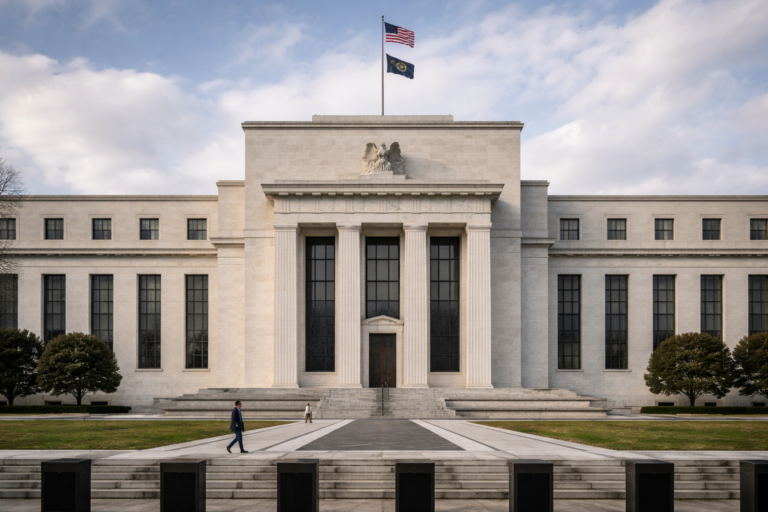
Several Federal Reserve officials favored raising interest rates at the central bank’s July meeting, while many others said further tightening could be necessary if inflation fails to decline, according to minutes released Wednesday.

The Federal Open Market Committee voted 9-3 to keep the federal funds rate in a range of 3.5% to 3.75% at its July 28-29 meeting.

Dallas Fed President Lorie Logan, Cleveland Fed President Beth Hammack and Minneapolis Fed President Neel Kashkari dissented in favor of a quarter-percentage-point increase.

Two other regional Fed presidents who were not voting members at the meeting, Kansas City’s Jeff Schmid and St. Louis Fed President Alberto Musalem, have since indicated they would also have supported a hike.

Inflation remains central to Fed debate

The minutes showed that inflation remained a major source of uncertainty for policymakers.

Most participants expected price pressures to ease through the rest of the year as the effects of tariffs and earlier energy price increases faded.

However, many officials warned that inflation could remain elevated for longer than expected.

Several policymakers who supported a rate increase argued that price pressures appeared broad-based and that a more restrictive policy stance was needed to maintain the Fed’s price-stability and employment objectives.

The minutes said some officials believed failing to tighten policy could result in “a steeper and potentially more costly sequence of tightening moves” later.

The Fed’s inflation outlook was described as “highly uncertain,” with the renewed escalation of the Iran war adding to concerns about energy prices and inflation.

The July meeting marked the fifth consecutive meeting at which the Fed left rates unchanged, following three rate cuts in late 2025. There was no mention in the minutes of support for cutting rates.

Weaker data complicate rate outlook

Economic data released since the July meeting have provided some relief for policymakers concerned about inflation while raising questions about the strength of the US economy.

Retail sales fell in July by the most in more than a year as consumers reduced spending at online retailers and auto dealers.

Core inflation was subdued during the month, while employers unexpectedly cut jobs and hiring figures for the previous two months were revised lower.

The softer data have reduced market expectations for a rate hike in September.

Federal funds futures pricing indicated about a 36% probability of an increase at the September meeting as of Wednesday morning, down from more than 70% at the end of July.

The Fed is currently expected to keep rates unchanged at its September 15-16 meeting, although investors are pricing in the possibility of a hike as soon as the October 27-28 meeting.

Warsh considers changes to Fed operations

The minutes also highlighted broader changes Fed Chairman Kevin Warsh is considering.

Warsh asked policymakers for their views on reducing the number of scheduled policy meetings from eight to six each year.

The minutes said six meetings, held roughly every two months, would allow more economic information to accumulate between decisions and give policymakers more time to consider strategic issues.

No decision was made, and the 2026 meeting schedule will not change.

Fed officials also discussed an upcoming review of the central bank’s balance sheet.

While the review could lead to a broader discussion of how the Fed manages its assets, many policymakers reiterated that changes to the federal funds rate should remain the primary tool for adjusting monetary policy.

The minutes come ahead of the Fed’s annual Jackson Hole gathering, where Warsh is expected to deliver his first speech since becoming chairman in May.

His comments could offer investors further clues about the central bank’s approach to inflation and interest rates.

The post Fed minutes show several officials favored July rate hike as inflation persists appeared first on Invezz

Tempus AI (TEM) stock ripped higher on August 19 as third-party clinical breakthroughs triggered a technical short squeeze.

As investors cheered TEM, it broke decisively above its major moving averages (MAs), indicating bulls have taken back control across multiple timeframes.

Following their meteoric run on Wednesday, Tempus AI shares are trading nearly 50% above their July low.

Why Moderna news is significant for Tempus AI stock

The primary spark behind the explosive move in TEM shares today didn’t even originate from the health-tech firm itself.  

It actually came from landmark Phase 3 trial results released by Merck and Moderna Inc for their personalized mRNA melanoma vaccine (intismeran autogene) paired with Keytruda.

Why? Because Moderna’s vaccine sequencing pipeline relies heavily on tech from Personalis Inc., a company Tempus AI agreed to acquire for about $1.5 billion last month.

When the acquisition was first announced, TEM suffered as investors worried about dilution and cost.

But Wednesday’s trial success has flipped that narrative – validating the strategic value of the Personalis sequencing infrastructure that Tempus is set to inherit.

Note that TEM’s relative strength index climbed into the mid-60s on August 19, indicating intense buying pressure that may sustain the upward momentum in the near-term.

Are TEM shares worth owning for the long-term?

Beyond third-party catalysts, Tempus AI stock’s recent “strength” is also anchored in fundamental momentum.

Just weeks ago, the company reported its first quarterly net profit of $5.6 million alongside a 22% year-on-year increase in revenue to $382.5 million – prompting management to raise its full-year revenue guidance to about $1.6 billion.

Confidence was reinforced earlier in August by a “Nature Medicine”study validating its PRISM2 pathology AI model, alongside a new oncology companion diagnostics partnership with CellCarta.

Combined with an elevated short interest at about 20% heading into August 19, the stage was set for a classic short squeeze that triggered a relentless increase in TEM share price today.

How to play Tempus AI at current levels?

From a chart perspective, Wednesday’s high-volume breakout cleared a major overhead resistance at $58, converting a former ceiling into fresh immediate support.

With the 50-day and 200-day MAs turning sharply upward, the broader technical structure favours continued upside toward the $65 mark, where profit-taking may temporarily cool momentum.

However, sustaining these multi-week highs will depend on “smooth” regulatory clearing for the Personalis transaction and flawless execution as revenue synergies materialize into late 2026.

If the broader market remains risk-on, TEM stock’s swing to profitability and expanding diagnostic footprint position it well to consolidate above $60 before testing its next leg higher.

According to The Wall Street Journal, the consensus rating on Tempus AI Inc sits at Overweight currently, with price targets going as high as $100 per share.

The post Tempus AI stock is soaring and it has Moderna to thank appeared first on Invezz

Moderna stock surged after its personalized mRNA cancer vaccine produced positive late-stage trial results with Merck’s Keytruda.

Marvell Technology shares gained as Google received a potential $12.2 billion stake in the chipmaker through a warrant tied to their expanding AI partnership.

Bitcoin climbed above $68,000 as lower Treasury yields and renewed accumulation by large holders supported the cryptocurrency.

Gold jumped 3% as US Treasury bond buybacks pushed longer-term yields and the dollar lower.

Moderna stock surges 170% after cancer vaccine shows promise in trial

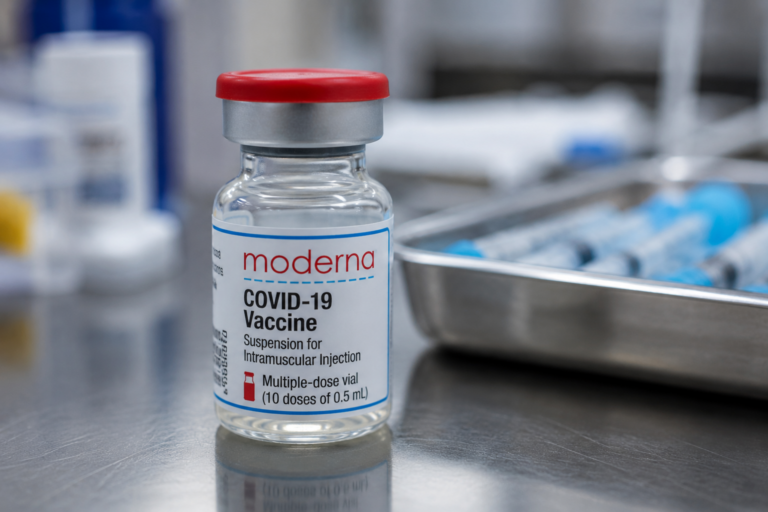
Moderna shares surged over 176% in trading on Wednesday after the company and Merck reported positive results from a late-stage trial combining Moderna’s personalized mRNA vaccine, Intismeran, with Keytruda for melanoma.

Merck shares also rose more than 12%.

The phase-three trial enrolled 1,137 patients with high-risk stage IIB to stage IV melanoma whose tumors had been surgically removed.

The companies said interim results showed that the treatment met its primary goal of reducing cancer recurrence and its secondary goal of preventing the cancer from spreading.

The treatment uses genetic information from a patient’s tumor to create a personalized mRNA vaccine designed to train the immune system to identify and attack cancer cells carrying specific mutations.

Professor Georgina Long, the study’s principal investigator, called the results “a landmark moment for adjuvant melanoma treatment.”

The trial remains ongoing, with Moderna and Merck planning to present the findings at a medical meeting and share the results with regulators.

Analysts at Barclays expect the melanoma treatment could eventually generate around $3 billion in annual sales by 2035.

Marvell stock jumps after Google deal

Marvell Technology stock gained 9% after the company expanded its relationship with Google amid growing demand for custom AI chips.

Under the agreement, Marvell issued Google a warrant to purchase up to 58.97 million shares at an exercise price of $206.58 per share.

If fully exercised, the warrant would be worth about $12.18 billion and represent roughly 7% of Marvell’s outstanding shares.

Most of the potential stake is linked to revenue generated through the partnership.

Only 1.36 million shares will vest during the first year, while the remaining shares are divided into 240 tranches. One tranche will vest for every $500 million in eligible custom-products revenue generated through Google’s business.

The partnership covers AI inference accelerators, storage controllers, network interface controllers, memory interface controllers and near-memory compute products.

Marvell is competing with Broadcom for a larger role in Google’s custom silicon requirements as technology companies increase AI infrastructure spending.

Bitcoin hits $68,000

Bitcoin climbed about 5.8% over 24 hours to $68,370, moving above $68,000 for the first time since June.

The cryptocurrency gained support from lower Treasury yields after the US Treasury announced plans to at least double its bond buyback operations to $4 billion or more per operation.

Large Bitcoin holders have also returned to accumulation.

CryptoQuant data showed that large holders accumulated about 43,000 tokens over the past 60 days, worth roughly $2.75 billion at current prices.

BlackRock described Bitcoin’s roughly 50% decline from its October 2025 peak as a “positioning correction rather than a change in its investment case.”

However, spot Bitcoin ETFs continued to experience outflows, with combined outflows reaching $267.2 million in the week through Aug. 14.

Gold reaches $4,500

Gold prices surged 4% to $4,509.54 an ounce, their highest level since June 4. US gold futures gained nearly 3% to $4,562.

The rally followed the Treasury’s decision to double the size of its liquidity-support buyback operations for longer-dated bonds.

The announcement pushed the 30-year Treasury yield down more than nine basis points to 5.19%, while the 10-year yield fell nearly six basis points to 4.645%.

The US Dollar Index also declined 0.8% to 98.84, making dollar-priced gold cheaper for buyers using other currencies.

Silver, platinum and palladium also advanced, gaining 4.3%, 5% and 3.1%, respectively.

The post Evening digest: Moderna stock surges, Bitcoin and gold rally appeared first on Invezz

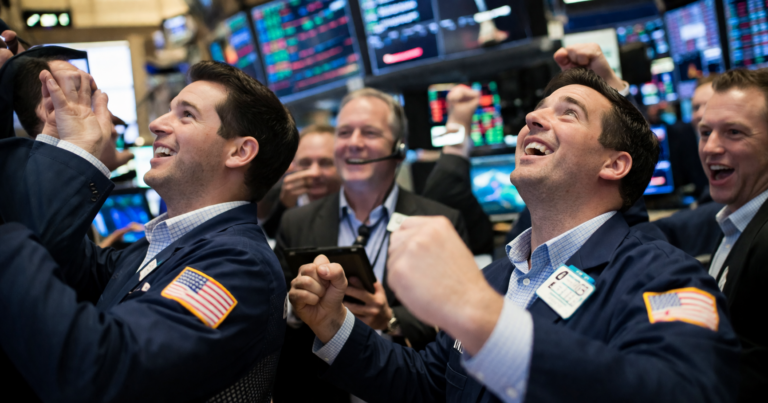
US stocks closed higher on Wednesday as falling Treasury yields improved risk appetite, while a sharp rally in Moderna shares boosted the healthcare sector.

The Dow Jones Industrial Average rose 0.22%, or 119.71 points, while the S&P 500 gained 0.22% and the Nasdaq Composite advanced 0.16%.

The gains moderated during the session after the major indexes had climbed more sharply earlier in the day.

The Dow had been up more than 300 points at its session high, while the S&P 500 and Nasdaq had gained as much as 0.7% and 0.6%, respectively.

The initial rally followed the US Treasury’s announcement that it would at least double the size of its debt buyback operations targeting longer-term government bonds.

Treasury buybacks push yields lower

The increased buybacks will focus on Treasury securities with maturities between 10 and 30 years, including 20-year debt. The announcement helped reverse some of the recent increase in long-term borrowing costs.

The 30-year Treasury yield fell nine basis points to 5.195%, after reaching more than 5.33% in the previous session, its highest level in 19 years.

The 10-year Treasury yield declined more than five basis points to 4.653%.

Lower yields supported rate-sensitive stocks, with Lowe’s gaining around 3% and Home Depot rising more than 2%.

However, investors remained cautious about the broader interest-rate outlook.

Federal Reserve minutes released Wednesday showed that several policymakers favored raising rates at the July meeting, while many said further tightening could be necessary if inflation failed to decline.

The Fed held its benchmark interest rate at 3.5% to 3.75% in July, with three officials dissenting in favor of a quarter-percentage-point increase.

Moderna leads healthcare sector higher

Moderna was among the biggest individual gainers, with its shares more than doubling and rising over 176% after the company reported positive late-stage trial results for a personalized mRNA cancer treatment developed with Merck.

The treatment met the trial’s primary goal of reducing melanoma recurrence and its secondary goal of preventing the cancer from spreading. Merck shares also climbed more than 12%.

The Moderna rally lifted other healthcare stocks, including Novavax and US-listed shares of BioNTech.

The S&P 500 healthcare sector reached a record high and provided the biggest boost to the benchmark among its 11 major sectors.

Marvell Technology also gained, rising 9% after announcing an expanded relationship with Google related to custom AI chips. The company issued Alphabet a warrant to purchase up to $12.2 billion of Marvell shares.

Tech stocks face AI and rate pressures

Not all technology stocks benefited from the decline in yields. Broadcom and Advanced Micro Devices fell around 4%, while the Philadelphia semiconductor index also ended lower.

The declines followed a report that OpenAI’s second-quarter results disappointed investors. Revenue increased 18% from the first quarter, but losses also widened.

Technology stocks remain sensitive to borrowing costs as companies continue to invest heavily in AI infrastructure. Rising yields had contributed to recent pressure on the sector, while Wednesday’s Treasury action provided temporary relief.

Investors also continued to monitor global inflation and geopolitical risks. Brent crude futures ended higher as uncertainty surrounding the Middle East remained elevated, with conflicting statements over the status of shipping through the Strait of Hormuz.

Overall, the major US indexes ended modestly higher, although the retreat from their session highs indicated that investors remained cautious about the longer-term path for interest rates.

The post Dow rises 110 pts as treasury buybacks lower yields and Moderna stock surges appeared first on Invezz