Archive

August 22, 2026

Browsing

The post How Low Can Bitcoin Price Drop After the Flash Crash? appeared first on Coinpedia Fintech News

Bitcoin is facing fresh correction risk after a sharp sell-off pushed BTC from above $79,000 toward $77,000. The move triggered roughly $547 million in crypto liquidations before buyers stepped back in. BTC was trading around $77,291, down 0.43%, at the time of writing. The pullback came after Bitcoin reached about $79,500, its highest level in …

The post Bitcoin, Ethereum, and XRP Crash as $1.7B Got Liquidated in 24 Hours appeared first on Coinpedia Fintech News

The crypto market just suffered its biggest flash crash since October 2025, wiping out $108 billion in just six minutes. The total market value fell from $2.68 trillion to $2.55 trillion as selling pressure increased. More than $1.71 billion in crypto positions were liquidated, hitting Bitcoin, Ethereum, and altcoins the hardest. Crypto Rally Halt Turned …

The post Pi Network Price Prediction: Can August 24 Catalyst Push PI Toward $0.15? appeared first on Coinpedia Fintech News

Pi Network (PI) is trading around $0.093 today, according to recent market data. Pi has recovered from its July lows, but the token is still struggling to turn that rebound into a confirmed breakout. Recent price history shows Pi closed around $0.095 on August 21 after reaching nearly $0.096. That puts the focus on the …

The post JD Vance Dodge XRP, Bitcoin Debt Plan as U.S. Debt Hits $40T appeared first on Coinpedia Fintech News

Bitcoin and XRP may be part of President Donald Trump’s broader crypto plans, but Vice President JD Vance is not backing them as a direct way to reduce the U.S. debt.  With national debt now above $40 trillion, Vance pointed to economic growth, foreign investment, and Treasury Secretary Scott Bessent’s plan instead. Vance Reveals Trump’s …

The post XRP Price Prediction: Banks Can Now Use XRP, and Pepeto Is the Bigger Win Before Listing appeared first on Coinpedia Fintech News

The XRP price prediction now builds from $1.40, with the token up nearly 30% this week, the 100-day line at $1.16 holding as support, and $1.50 sitting as the next target. XRPL version 3.3.0 passed its validator vote with 85.71% support this month, adding confidential transfers and batch processing to the ledger for the first …

Bloom Energy stock has slumped sharply in recent weeks, falling from its year-to-date high of $350 to around $200. The stock has declined for seven consecutive sessions, reaching its lowest level since August 3. Its technical indicators suggest that further downside may be ahead, while persistent valuation concerns continue to weigh on investor sentiment.

Bloom Energy is growing, but valuation risks persist

Bloom Energy has become one of the fastest-growing companies in the United States, helped by the ongoing data center boom. It has partnered with some of the biggest companies in the industry like Oracle and Nebius. Recently, it inked a $25 billion deal with Brookfield, one of the biggest private equity companies in the world.

The most recent earnings report showed that its revenue soared by 165% in the second quarter to $1.06 billion as it continued delivering onsite power to data centers. This growth will likely continue in the foreseeable future after the company continues to monetize its projects.

Its gross margins jumped from 26.7% in the second quarter of last year to the current 33.4%, with its profitability accelerating. KR Sridhar, the CEO, said:

“Today, all the major US hyperscalers and over a dozen US neoclouds, AI labs, and colocation data center operators have validated and approved our power solutions for their AI factories. Bloom is now a standard for AI onsite power.”

This growth will likely continue as the data center buildup gains steam. For example, Nvidia has reached a financing deal with OpenAI for a Ohio data center project valued at over $105 billion. 

It has also reached a $500 billion deal with several financial companies like BlackRock, BlackStone, Goldman Sachs, and Brookfield to fund data centers. Bloom Energy will be one of the top beneficiaries of these investments. 

Yahoo Finance data shows that analysts are upbeat about its growth prospects, especially after the company launched Power Connect, which can reduce its onsite power installation time by over 40%.

The average estimate is that its revenue will by 103% this year to $4.13 billion this year. After that, it will make over $6.77 billion next year. Its earnings-per-share is expected to move from 76 cents to $2.71 this year. It is expected to nearly double next year to $4.89.

The main challenge, however, is that it has become a highly overvalued company, with its forward price-to-earnings on a non-GAAP basis being 74, much higher than the S&P 500 Index average of over 20. As such, it needs to demonstrate strong revenue and profitability growth to justify this valuation.

Bloom Energy stock technical analysis

BE stock chart | Source: TradingView

The daily chart shows that BE stock has been in a strong freefall in the past few months. It has moved from the year-to-date high of $351 to the current $200. It is also in the process of erasing most of the gains it made after releasing its financial results earlier this month.

The stock has dropped below the 50-day and 100-day Exponential Moving Averages (EMA), a sign that bears remain in control. Therefore, the path of the least resistance for the stock is downwards, with the next key target to watch being at $180. In the long term, however, the stock will bounce back

The post Here’s why the Bloom Energy stock is losing momentum despite its growth appeared first on Invezz

SpaceX SPCX shares gained 1.4% on Friday as investors weighed the rapid expansion of its Starlink satellite network, upcoming share unlocks and the company’s significant capital spending requirements.

The stock had fallen 3% on Wednesday and declined 4.1% on Thursday as another 319 million shares held by employees, early investors and other insiders became eligible for trading.

Starlink network approaches 11,000 satellites

SpaceX launched another 24 Starlink satellites from California on Tuesday, bringing the constellation closer to 11,000 spacecraft in low Earth orbit.

Tracking data from astronomer Jonathan McDowell showed around 10,979 Starlink satellites in orbit as of Aug. 19, with about 10,963 operational.

SpaceX has launched more than 12,700 Starlink satellites since 2019, although roughly 1,700 have since deorbited.

The network now represents nearly two-thirds of all active satellites orbiting Earth.

SpaceX has approval to launch between 15,000 and 19,000 Gen-1 and Gen-2 Starlink satellites by 2031.

The company has also sought approval for a next-generation constellation of up to 100,000 satellites.

CEO Elon Musk said earlier this month that the Starlink system could eventually exceed 100,000 satellites.

He has also said the space economy will be significantly larger than Goldman Sachs’ current $1.8 trillion projection for 2035.

Starlink becomes a larger revenue driver

Starlink is already a major contributor to SpaceX’s financial performance.

The company’s Connectivity segment generated $4.3 billion in revenue during the second quarter of 2026, accounting for about 55% of SpaceX’s total $7.8 billion revenue.

The segment generated $1.7 billion in operating profit, up 66% year over year.

The growth was supported by a doubling of subscribers to 12 million.

SpaceX aims for Starlink to eventually carry most of the world’s internet traffic.

The company also sees potential applications in AI infrastructure, mobile connectivity and internet services for homes, businesses and governments.

Share unlocks and spending create risks

Investors are also monitoring the impact of additional shares becoming available for trading.

The Aug. 20 unlock made up to 319 million restricted shares eligible for trading. The shares represented about 2.4% of SpaceX’s outstanding stock and could increase the company’s tradable float by around 20%.

Additional unlocks are scheduled through the rest of 2026, while Musk’s large stake remains locked until June 2027.

Meanwhile, DZ Bank analyst Markus Leistner initiated coverage with a Sell rating and a $100 price target.

The bearish view contrasts with broader Wall Street sentiment, with about 75% of analysts covering SpaceX rating the stock Buy. The average analyst price target stands near $226.

The differing views partly reflect the scale of SpaceX’s future investment requirements.

FactSet estimates SpaceX revenue could exceed $100 billion in 2027, compared with about $44 billion in 2026.

However, Wall Street projects roughly $800 billion in cumulative capital spending by the end of the decade.

Much of that spending is expected to support AI and communications infrastructure.

SpaceX currently operates about 1.4 gigawatts of computing capacity at two terrestrial data centers and aims to reach 10 gigawatts by the end of 2027.

For investors, the company’s rapid Starlink growth offers significant revenue potential, but the scale of required investment and continued share unlocks remain important factors for the stock.

The post SpaceX stock rises as Starlink nears 11,000 satellites in orbit appeared first on Invezz

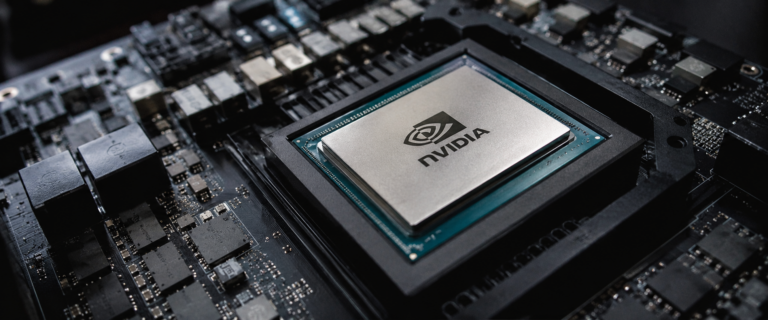
Nvidia (NVDA) stock is in focus on Friday after BMO Capital Markets said the chipmaker remains a “top pick” for those seeking exposure to the global artificial intelligence (AI) buildouts.  

Analyst Harsh Kumar announced an Outperform rating and $340 price target on the semiconductor behemoth heading into its fiscal Q2 earnings set to be released on August 26th (after market close).

Ahead of the earnings event, Nvidia stock is up over 30% versus its year-to-date low.  

Why BMO analyst is bullish on Nvidia stock

BMO’s bullish thesis starts with Nvidia’s unusually strong position across the AI computing stack.

Kumar said the giant’s AI systems are “fully booked for the next 12 months as demand exceeds supply,” a striking assessment heading into its earnings report.

That level of visibility matters because it suggests NVDA shares’ growth story is being supported by actual customer demand rather than simply elevated expectations around AI spending.

BMO also expects Nvidia’s next-gen Vera Rubin NVL72 system to begin ramping in the back half of the year.

The new platform could provide another leg of growth as hyperscalers and other large customers continue expanding AI infrastructure.

Kumar’s broader view is that AI remains in “the early innings,” with capital expenditures expected to rise for years as demand for AI tokens and computing capacity expands.

Is NVDA shares’ valuation justified?

Crucially, BMO does not believe Nvidia’s valuation has become excessive relative to its expected growth.

Kumar pointed to the stock’s 18x forward price-to-earnings (P/E) multiple – calling that valuation “a discount” when measured against the firm’s expected revenue growth.

According to him, NVDA could grow revenue by 84% in fiscal 2027 and another 50% in the year after.

His argument goes directly against one of the biggest concerns surrounding Nvidia shares: whether the stock already prices in too much of the AI boom.

At roughly $216, Nvidia remains below its $236 high and has recently struggled to regain its May peak.

The combination of a still-elevated growth rate, massive AI infrastructure demand and a valuation BMO considers compelling gives the bull case more substance than simply betting on another AI-driven rally.

What to expect from Nvidia’s Q2 earnings next week

Wall Street’s expectations for Nvidia Corp’s fiscal Q2 results are already enormous.

Consensus estimates call for about $92.16 billion in revenue and $2.09 in adjusted earnings per share, representing year-over-year growth of about 96% and 99%, respectively.

The underlying strength in Nvidia’s financials reflects sustained demand for its AI chips – as cloud providers and other major tech firms continue committing enormous sums to AI infrastructure.

Note that NVDA stock also currently pays a small dividend yield of 0.46%, which makes it even more attractive as a long-term holding.

The post Nvidia stock dubbed 'top pick' ahead of Q2 earnings appeared first on Invezz

On Friday, Samsung Electronics outlined a potential record shareholder payout as AI-memory demand boosts cash generation.

Bitcoin extended its strongest weekly rally in more than two years.

Oil prices climbed as fresh US sanctions threats against Iran raised concerns about further supply disruptions.

Gold also surged to a more than three-month high as Treasury buybacks pressured the dollar and boosted demand for the precious metal.

Samsung plans record shareholder returns

Samsung Electronics said shareholder returns could reach 90 trillion won to 110 trillion won, or roughly $64.5 billion to $78.9 billion, in 2026.

The potential payout would be around five times Samsung’s previous annual record and comes as the artificial intelligence boom drives strong demand for memory chips.

The announcement follows SK Hynix’s decision to buy back and cancel 40 trillion won of shares. 

SK Hynix has also raised its shareholder-return policy to at least 50% of cumulative free cash flow for 2025-2027.

Samsung’s existing 2024-2026 policy calls for returning 50% of free cash flow, including 9.8 trillion won in regular annual dividends. 

The company also plans to spend more than 110 trillion won on facilities and research and development in 2026, including investments in advanced semiconductor technologies.

KB Securities research head Kim Dong-won said Samsung’s free cash flow is rising rapidly because of the AI-memory boom. 

He added that future valuation gains could increasingly depend on how the company distributes its cash.

Bitcoin extends powerful weekly rally

Bitcoin was on track for its strongest weekly performance in more than two years, rising about 22% for the week and trading near $77,169.

The cryptocurrency has benefited from several catalysts, including the US Treasury’s decision to increase longer-duration debt buybacks. 

The move pushed bond yields lower initially, supporting risk-sensitive assets.

US President Donald Trump also called for Congress to pass legislation that would establish a regulatory framework for cryptocurrencies. The bill faces a procedural vote on September 15.

Short covering added to the rally, with more than $1.2 billion in Bitcoin short positions liquidated, according to Fundstrat.

The gains spread to crypto-related equities. Robinhood rose 13%, Coinbase gained 7.9% and Strategy advanced 6.2%.

Analysts said Bitcoin’s rally is also being supported by spot and exchange-traded fund demand, although some cautioned that the cryptocurrency would need to remain above $70,000 for the rally to demonstrate greater durability.

Oil rises as Iran tensions escalate

Brent crude rose 0.76% to $94.49 a barrel, while West Texas Intermediate gained 0.33% to $87.12.

Both benchmarks were heading for weekly gains, with Brent up more than 6% and WTI more than 5% during the week.

Oil prices have been supported by concerns about supply disruptions as tensions between the US and Iran persist. 

President Donald Trump threatened economic sanctions on Iran’s trading partners, while Tehran warned that its response to further US threats would be severe.

Shipping through the Strait of Hormuz also remained heavily disrupted. 

Seven commodity ships crossed the waterway on Thursday, according to Kpler data, down from the previous day’s tally.

However, alternative supplies from sources including US shale, pipelines and other producers have helped offset some of the disruption.

Gold reaches three-month high

Gold climbed 2.4% to $4,623.94 an ounce, after earlier touching $4,631.99, its highest level since May 15.

The metal was on track for a third consecutive weekly gain, with prices rising more than 5% during the week.

Gold has benefited from a weaker US dollar and expectations that the Federal Reserve’s policy outlook could remain less restrictive. 

The metal also moved above its 200-day moving average of around $4,513, a level viewed by technical analysts as significant.

TD Securities’ global head of commodity strategy Bart Melek said the move was driven partly by technical factors and the weaker dollar.

Goldman Sachs also pointed to stronger demand for gold call options and renewed interest in the metal as a hedge against macroeconomic and policy risks.

Silver, platinum and palladium also advanced on Friday and were heading for weekly gains.

The post Evening digest: Samsung buybacks rise as Bitcoin, oil rally appeared first on Invezz

The Dow Jones Industrial Average rose nearly 1% on Friday as US stocks recovered from a sharp sell-off in the previous session, while investors continued to monitor elevated Treasury yields, oil prices and tensions in the Middle East.

The S&P 500 and Nasdaq Composite also gained, although all three major indexes ended the week lower after breaking their recent winning streaks.

Dow leads Wall Street rebound

The Dow rose 517.80 points, or 0.98%, to close at 53,277.01. The S&P 500 gained 0.43% to 7,674.37, while the Nasdaq Composite advanced 0.43% to 26,180.45.

Healthcare stocks including Merck and Johnson & Johnson supported the Dow, while financials and materials also helped lift the broader market. The materials sector was the S&P 500’s best-performing sector on Friday, while utilities lagged.

Crypto-related stocks also rallied as Bitcoin extended its weekly gains. Robinhood shares jumped nearly 14%, while Coinbase gained 8%.

Despite Friday’s gains, the major indexes posted weekly losses.

The S&P 500 fell 1.4% for the week, ending a three-week winning streak. The Nasdaq declined 2%, also snapping a three-week run of weekly gains, while the Dow fell 0.9% for its second consecutive weekly decline.

Treasury yields remain key market driver

Investors continued to closely track movements in the Treasury market after higher yields contributed to Thursday’s sell-off.

The 10-year Treasury yield rose more than 3 basis points on Friday to 4.734%, while the 30-year yield also gained more than 3 basis points to 5.273%.

Stocks have recently moved in the opposite direction of Treasury yields, with equities falling when yields rise and gaining when yields decline.

Investors remain concerned that higher oil prices could contribute to inflation and keep borrowing costs elevated.

The US Treasury’s recent increase in bond buybacks has helped ease some pressure in the market.

Treasury Secretary Scott Bessent has also indicated that the government could increase the size of its buyback operations further.

Friday’s economic data provided some support for equities. The US services sector recorded its strongest growth in nearly two years in August, driving a sharp acceleration in overall business activity.

That strength offset slower manufacturing growth, which was affected by reduced stockpiling and supply disruptions linked to the Iran war.

Meanwhile, UBS Global Wealth Management raised its year-end target for the S&P 500 to 8,100, citing stronger earnings expectations and robust corporate profit growth.

Oil, Fed outlook and earnings in focus

Rising oil prices remain another source of concern for investors. Brent crude gained 6.39% over the week, while US crude rose 5.66%, after oil prices climbed for a sixth consecutive session.

Higher energy prices could add to inflationary pressure at a time when investors are assessing the Federal Reserve’s next policy moves.

Attention will turn to Federal Reserve Chair Kevin Warsh’s speech at the Jackson Hole Economic Policy Symposium next week. Investors are looking for greater clarity on interest rates and central bank policy.

The coming week will also bring quarterly results from Nvidia, Intuit, Salesforce and CrowdStrike.

Investors will additionally receive July’s Personal Consumption Expenditures price index, the Fed’s preferred inflation measure, which could influence expectations for monetary policy.

The post Dow closes 500 pts higher as Wall Street rebounds from Treasury yield-driven sell-off appeared first on Invezz