Archive

August 28, 2026

Browsing

The post Crypto Media’s Traffic Collapse Isn’t an AI Story. It’s a De-Indexing Story appeared first on Coinpedia Fintech News

The story crypto media tells itself is that AI search killed its traffic. Zero-click answers absorb the query, the reader never lands on the page, and the publisher eats the loss. It’s a clean narrative, and it’s the wrong diagnosis for most of what actually happened. ICODA’s two-year traffic analysis of 40 crypto news domains …

The post Will Bitcoin, Ethereum and XRP Prices Pump or Dump After Kevin Warsh’s Jackson Hole Speech? appeared first on Coinpedia Fintech News

Bitcoin is trading at $79,619.04, Ethereum at $2,504.89 and XRP at $1.42 as markets await Federal Reserve Chair Kevin Warsh’s debut Jackson Hole address, an event traders widely view as the catalyst for crypto’s next directional move. Current Market Snapshot Bitcoin: $79,619.04, up 2.2% over 7 days, market cap $1.6 trillion Ethereum: $2,504.89, up 4.3% …

The post Strategy Stock Surges 40% as Bitcoin Rally Lifts MSTR appeared first on Coinpedia Fintech News

Michael Saylor’s Strategy (MSTR) stock is making a strong comeback, jumping nearly 40% in one month from around $82 to $140. The rally comes as Bitcoin recovered from the $60,000 range to above $80,650, giving a major boost to one of the market’s biggest Bitcoin-linked stocks.  Strategy’s large BTC holdings have also turned earlier paper …

The post Circle Internet Group Inc. (CRCL) Stock Price Prediction 2026, 2027, 2030 – 2040 appeared first on Coinpedia Fintech News

Circle Internet Group Inc. (NYSE: CRCL) stock has entered a critical phase after falling nearly 44% from its $159.47 52-week high, but the long-term growth story remains intact. The pullback has brought CRCL stock back into focus as stablecoin adoption, USDC circulation and digital-asset payments continue to expand. With Circle building a broader financial infrastructure …

The post XMR Price Breaks $450: Is Monero on Track for $500? appeared first on Coinpedia Fintech News

Monero has extended its August rally with another decisive move higher. XMR price rose 5% and pushed above $450, breaking through a resistance zone that had capped multiple recovery attempts. The breakout gives bulls a cleaner technical setup heading toward $500, while renewed attention around Monero’s liquidity infrastructure adds weight to the broader market narrative. …

Affirm’s stock has traded sideways over the past few weeks, but that may change later today when the company releases its financial results, offering fresh insight into the business. AFRM was recently trading at $76.45, still within the range it has held during this period. This article explores why the stock could be on the cusp of a major breakout once the report is out.

Affirm stock has formed a bullish pattern

The daily chart shows that the AFRM stock has rebounded in the past few months, moving from the year-to-date low of $42 to the current $76. Most recently, however, the stock has consolidated, forming a symmetrical triangle pattern whose two lines are about to converge. 

The stock has remained above the 50-day Exponential Moving Average (EMA), a sign that bulls remain in control for now. At the same time, it has slowly formed a multi-month inverted head-and-shoulders pattern, a common bullish reversal pattern in technical analysis. 

Therefore, the stock will likely have a strong bullish breakout, potentially to the key resistance level of $86.90, its highest point in July. If this happens, the stock may jump to the psychological level of $99.90, its highest level in August last year. On the flip side, a drop below the key support level of $69, its lowest level on July 29, will invalidate the bullish forecast.

AFRM stock chart | Source: TradingView

Affirm earnings to show robust revenue growth

Affirm, a leading player in the Buy Now, Pay Later (BNPL) space, is thriving even as the US economy remains under pressure. With inflation still elevated and unemployment at 4.2%, demand for credit continues to rise.

Other top companies in the industry published strong financial results. Klarna, GMV jumped by 18% from last year to $36 billion, while its revenue soared by 27% to $1.2 billion. Its guidance, however, was weaker than expected because of its Germany business. Sezzle, on the other hand, reported a 51% annual growth rate, with its GMV rising by 37%.

Yahoo Finance data shows that analysts expect Affirm’s revenue rose by 26.3% in the second quarter to $1.1 billion. For the year, analysts expect the results to be $4.2 billion, up by 30% YoY.

Most importantly, Affirm’s focus on profitability is paying off. Its earnings-per-share is expected to come in at 85 cents, up sharply from the 53 cents it made in the same period last year. For the year, the EPS is expected to jump from $1.75 to $3.25. 

Its strong revenue and profitability growth may help to justify its valuation, something that Morgan Stanley noted when it slashed its outlook to equal-weight. The company trades at a forward price-to-earnings ratio of 25, more than double the financial sector median of 25. It is also higher than the tech sector average of 22.

On the other hand, Oppenheimer and BMO Capital Markets boosted their targets to $100 and $86, pointing to the ongoing growth in the BNPL industry and falling default rates among customers. Truist, Bernstein, and Cantor Fitzgerald also boosted their targets for the company.

The post Affirm stock is compressing: here’s why it may pop after earnings today appeared first on Invezz

Wall Street did not get the inflation report it wanted.

The July Personal Consumption Expenditures (PCE) price index rose 3.7% year-on-year, matching June but exceeding economists’ 3.6% forecast, while core PCE increased 3.3%.

Yet the report was not uniformly negative for stocks.

Personal income climbed 0.4% in July, disposable income rose 0.5%, and consumer spending went up 0.2%, suggesting the economy remains capable of absorbing higher prices.

The result is a market environment that favors companies with pricing power, resilient demand, and business models capable of benefiting from higher-for-longer rates. Here are three stocks that experts like.

JPMorgan Chase (JPM)

JPMorgan stock stands out as “one of the clearest beneficiaries” of the PCE report that keeps the Federal Reserve cautious.

Sticky inflation makes aggressive rate cuts harder to justify, potentially allowing banks to preserve stronger net interest income for longer.

That matters for JPM, whose Q1 net interest income reached $25.5 billion, up 9% year over year, while the bank’s second-quarter financials were even stronger, with earnings of $7.70 per share on $57.35 billion in revenue.

The PCE report also points to an economy that has not collapsed under higher borrowing costs.

That’s important for JPMorgan as healthy consumer and business activity supports loan demand, card balances, payments and investment banking.

Note that the bank also reported record Q2 profit in July, giving investors a solid earnings cushion as the rate outlook remains uncertain.

All in all, JPMorgan is positioned to turn “higher for longer” from a macroeconomic headache into an earnings advantage.

Dollar General (DG)

Dollar General stock offers a very different way to play the latest PCE figures.

Inflation at 3.7% means American households are still facing meaningfully higher prices than a year ago, while the 0.2% monthly increase in consumer spending suggests shoppers remain active but increasingly selective.

That backdrop can favour discount retailers as consumers look for ways to stretch their budgets without abandoning everyday purchases.

The timing is particularly interesting because DG just raised its full-year earnings guidance and announced a new share-repurchase plan. Its stock price jumped 6% following the announcement, according to Charles Schwab.

That combination of resilient demand and an increasingly value-conscious consumer gives Dollar General an attractive setup.

Unlike discretionary retailers dependent on consumers feeling wealthy, DG can potentially benefit when households become more price-sensitive. The latest PCE report therefore reinforces, rather than undermines, the investment case for the discount retailer.

ExxonMobil (XOM)

ExxonMobil stock is another compelling choice, although its PCE connection is more indirect.

A 3.7% inflation rate reinforces the value of owning businesses whose revenues are tied to essential commodities and whose assets can generate substantial cash flow when energy prices remain elevated.

Oil and gas companies can also provide a degree of protection against an inflationary environment because energy itself is a major component of household and business costs.

Exxon enters this environment from a position of considerable financial strength.

The company generated $23.6 billion in operating cash flow and $17.2 billion in free cash flow during the second quarter of 2026, while returning $9.4 billion to shareholders through dividends and buybacks.

Its Guyana production growth and integrated business model add further support. XOM was trading around $158.19 at the August 26 close, below its 52-week high of $176.41.

For investors worried that sticky inflation could keep rates elevated and pressure traditional growth stocks, Exxon offers a profitable, cash-generative alternative.

The post These three stocks are must-owns after the PCE data appeared first on Invezz

Nvidia’s blowout earnings gave semiconductor stocks a lift on Thursday, after the world’s leading AI chipmaker projected 70% revenue growth for fiscal 2028 and signaled that demand for artificial intelligence infrastructure remains well above current supply.

The Philadelphia Semiconductor Index rose about 1.7%, while shares of Marvell Technology, Arm Holdings, SK Hynix and Broadcom also gained.

The forecast provided investors with a fresh reason to believe the AI investment cycle has further to run, countering concerns in recent months that spending on data centers and AI computing infrastructure could eventually plateau.

But there was an interesting divergence among the three major US chipmakers competing across AI and data-center markets.

Intel shares INTC rose more than 3%, while AMD shares fell about 1%.

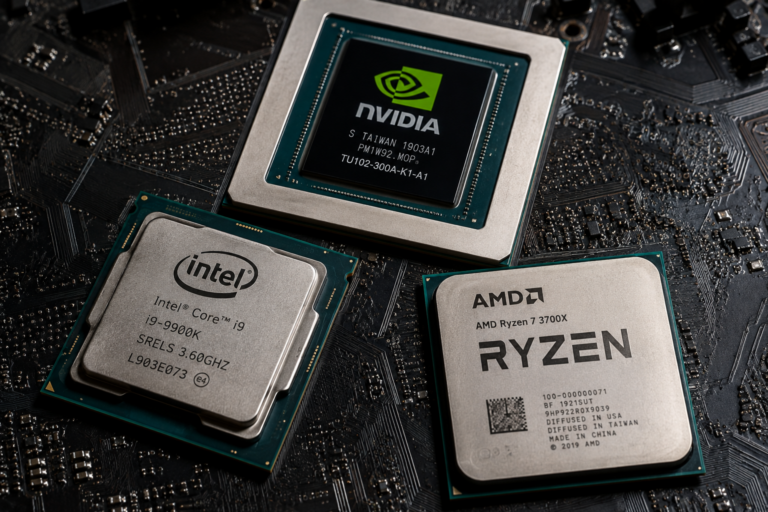
Nvidia, AMD, and Intel compete across the AI and data-center chip markets, with Nvidia leading in GPUs and AI accelerators, AMD challenging it with its Instinct accelerators, and Intel competing through its CPUs and Gaudi AI chips.

Nvidia’s deeper push into CPUs has heightened its competition with established players like Intel and AMD.

Intel and AMD have spent decades building relationships with cloud providers and hyperscalers, particularly in server CPUs.

Intel’s Nvidia partnership changes the equation

While AMD remains Nvidia’s most direct competitor in AI accelerators, Intel’s relationship with Nvidia is becoming more collaborative.

Nvidia has invested $5 billion in Intel for a roughly 4% stake.

More importantly, the companies have agreed to develop multiple generations of joint products that will connect Intel’s central processors with Nvidia’s AI and graphics chips using Nvidia’s proprietary NVLink interconnect technology.

That creates an unusual dynamic for Intel.

Rather than trying solely to displace Nvidia in AI accelerators, Intel can benefit from the growth of Nvidia’s AI systems by supplying the CPUs that sit alongside its GPUs.

This explains Intel’s Nvidia-led share price rise on Thursday.

Nvidia’s gains highlight AMD’s challenge

Alongside the earnings announcement on Wednesday, Nvidia also disclosed a deeper partnership with Amazon Web Services.

The company announced that Amazon plans to deploy 2 million additional Nvidia GPUs across AWS’s global infrastructure, while the companies will also expand their work across AI factories, CPUs, networking, open models, data processing and robotics.

In an interview with CNBC’s “Mad Money,” Nvidia CEO Jensen Huang said Amazon could also purchase “millions of CPUs” in addition to the GPUs.

Nvidia is ramping up its own CPU business with Vera, putting it into direct competition with Intel and AMD, the two established leaders in server processors.

This could have been the trigger for AMD’s stock movement on Thursday.

Gartner analyst Kevin Knox has previously said AMD is currently the company to beat in enterprise AI server CPUs.

AMD reportedly holds about 33% of the server CPU market, compared with 66.8% for Intel, although AMD has been gaining share and maintains relationships with major hyperscalers.

AMD’s stock has nevertheless remained sensitive to developments involving major AI customers.

Earlier this month, shares fell after Elon Musk said SpaceX had selected Nvidia as its exclusive AI infrastructure partner going forward.

AMD had also benefited from Amazon’s decision to increase its planned 2026 capital expenditure to about $220 billion from approximately $200 billion.

The latest AWS announcement could therefore have reinforced concerns about Nvidia’s ability to capture a growing portion of hyperscaler AI spending.

AMD’s AI ambitions continue to expand

Meanwhile, AMD is increasingly pitching itself as a provider of complete AI infrastructure rather than simply a maker of GPUs.

Its Helios platform combines Instinct accelerators, EPYC processors, Pensando networking and ROCm software in a rack-scale system.

The approach is intended to allow customers to deploy the infrastructure required to train and run advanced AI models without assembling individual components themselves.

AMD’s growing customer base is becoming an important part of that strategy.

Anthropic has committed to deploy up to 2 gigawatts of MI450-series GPUs in Helios systems.

OpenAI and Meta each have agreements covering up to 6 gigawatts of AMD GPUs, while Microsoft plans large-scale Helios deployments on Azure. Oracle is also listed among customers deploying AMD’s rack-scale infrastructure.

Benchmark responded by raising its AMD price target to $685 from $485, saying “the customer map is getting harder to dismiss.”

Roth MKM analyst Suji Desilva was similarly “encouraged by the technical advantages” of Helios.

The firm raised its target to $650 from $500, arguing that AMD’s combination of GPUs, CPUs and networking can support hyperscalers and frontier AI companies at scale.

The post Why is AMD stock falling while Intel stock rises after Nvidia's earnings? appeared first on Invezz


IREN stock jumped over 4%, mirroring gains at other neocloud companies like CoreWeave and Nebius following strong Nvidia earnings and guidance. Shares climbed to $43.25, but this rally will be put to the test when the company publishes its own earnings later today.

IREN’s revenue to drop on Bitcoin sell-off as pivot to AI continues

IREN, formerly known as Iris Energy, will publish its financial results later today, August 27, and analysts expect it to show that its revenue dropped in the quarter because of Bitcoin weakness. 

While IREN is now known for its role as an AI company, it is currently making most of its money through Bitcoin mining. Bitcoin remained in a deep bear market during the quarter, meaning that it was making less money for all coins it generated.

Yahoo Finance data shows that analysts expect the upcoming results to show that its revenue dropped by 28% to $135 million. The most optimistic analyst predicts that its revenue will come in at $185 million, still lower than the $188 million it made last year. 

On the positive side, there are signs that Bitcoin is doing well, which may help to boost its revenue this year. Bitcoin jumped to $80,200 today, up sharply from the year-to-date low of $57,300. 

Another positive sign is that analysts expect that its annual revenue metrics will continue thriving in the coming year. Its annual revenue is expected to jump to $669 million this year, followed by $2.33 billion next year. 

IREN has made progress

IREN has made some important progress in the past few months. It recently completed the acquisition of Mirantis, a deal that will help to manage AI workloads. It also inked a $2.8 billion deal with several AI labs, adding to revenue backlog. As part of the deal, the company added its AI Cloud annualized run-rate revenue target to $4 billion from the previous $3.7 billion. In a statement, the CEO said:

“Our vertically integrated AI Cloud platform is scaling at pace. In the past 12 months we have expanded from approximately 3MW of self-built AI Cloud capacity to 480MW being delivered this year, with 1.2GW targeted for 2027, broadening our customer base across hyperscalers, enterprises and AI developers.”

IREN will also benefit from the ongoing AI growth as evidenced by this week’s Nvidia earnings report. In a statement, the company said that its revenue jumped to $96 billion, higher than the expected $92 billion. The company also boosted its forward guidance, with its FY’28 growth being 70%, a sign that it expects the AI boom to continue.

There are signs that demand for computing is rising, which may benefit IREN. On Wednesday, Anthropic reached a $46 billion deal with Nscale, a competitor. 

Still, the risk is that the company will need to raise more cash in the future to boost its balance sheet. Its competitors like CoreWeave and Nebius have all raised substantial sums of money in the past few months.

IREN stock technical analysis: mixed signals

IREN stock chart | Source: TradingView

The daily chart shows that the IREN stock has remained in a bear market this month. It dropped from a high of $70.58 in June to the current $40. Most notably, it has slumped below the 200-day moving average, a sign that bears remain in control. 

On the positive side, the stock has remained above the crucial support level of $33.34. Also, the Supertrend indicator has turned green. Therefore, the stock will likely be highly volatile after earnings. The key support and resistance levels to watch will be at $33.35 and $50.

The post IREN stock jumps ahead of earnings as neoclouds cheer Nvidia's results appeared first on Invezz

Memory stocks fell on Thursday despite Nvidia’s strong earnings and outlook supporting the broader technology sector.

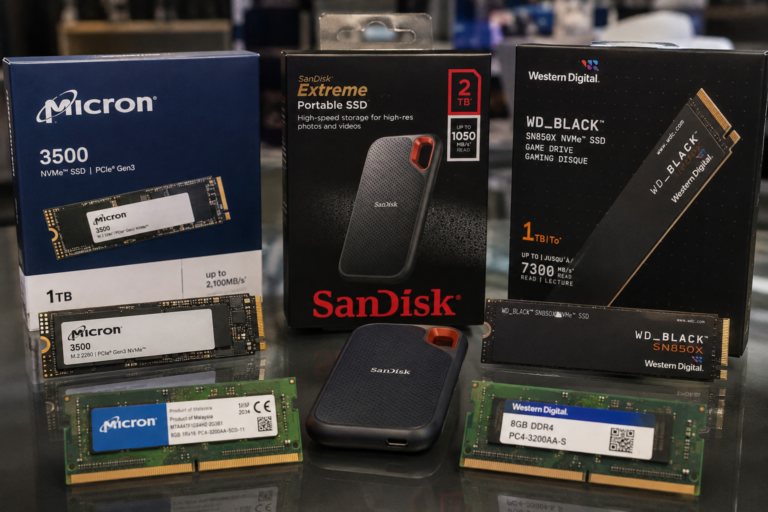
Micron Technology MU declined 2%, while SanDisk fell 1.7% and Western Digital dropped 2.7% as investors appeared to weigh company-specific factors alongside the continued strength in artificial intelligence demand.

Nvidia reported fiscal second-quarter revenue of $96.22 billion, up 106% from the prior year.

Data-center revenue reached $89 billion, while the company forecast current-quarter revenue of $108 billion, with a possible variance of 2%.

Micron faces test from Nvidia’s AI ramp

Nvidia’s results are particularly relevant to Micron because high-bandwidth memory (HBM) is used alongside AI accelerators to supply them with data.

Micron began volume shipments of its 36-gigabyte HBM4 during the first quarter for Nvidia’s Vera Rubin platform.

The component delivers more than 2.8 terabytes per second of bandwidth and is more than 20% more power efficient than Micron’s HBM3E.

Micron’s recent financial results also point to significant growth in the memory market.

Fiscal third-quarter revenue rose to $41.46 billion from $23.86 billion in the previous quarter. Operating cash flow more than doubled sequentially to $25.39 billion, while adjusted free cash flow reached $18.3 billion.

Despite these improvements, Micron shares declined on Thursday.

The movement suggests investors may be separating Nvidia’s strong AI demand outlook from expectations for Micron’s own ability to translate that demand into higher HBM shipments, pricing and margins.

Micron will need to scale shipments as Nvidia’s Vera Rubin racks enter full-scale production while also managing conventional memory capacity to avoid a potential surplus.

BMO initiated coverage of Micron with a $1,300 price target on August 20, while Mizuho lowered its target to $1,300 from $1,375 on August 25.

The average price target among 47 analysts surveyed by S&P Global stood at $1,515. Of those analysts, 43 had Buy or Strong Buy recommendations.

Kioxia, SanDisk plan $31B Japan investment

SanDisk stock faced pressure after the company announced massive investment plans.

Kioxia and SanDisk announced plans to invest more than $31 billion in Japan through 2032, subject to government support.

The investments are expected to support infrastructure expansion at Kioxia’s Yokkaichi Plant and Kitakami Plant, as well as related technology development.

The companies said the spending is intended to support multi-year flash memory supply growth and address demand for NAND flash memory.

Kioxia and SanDisk said they have invested more than $50 billion in Japan over the past 25 years through their joint venture partnership. In January, the companies extended their joint venture framework at the Yokkaichi Plant through December 2034.

Western Digital also faced pressure on Thursday. Its shares fell 3.6% to $452.

The stocks saw decline after an initial rally in memory and storage stocks after Nvidia’s strong forecast. Summit Insights also downgraded Western Digital to Hold from Buy, adding further pressure to the shares.

The post Why are memory stocks MU, SNDK, and WDC falling despite Nvidia’s results appeared first on Invezz