Archive

August 7, 2026

Browsing

SpaceX is approaching one of the biggest milestones since its blockbuster public listing, with its first lockup period expiring today, allowing up to 911.5 million insider-held shares to become eligible for sale.

The event is widely viewed as the company’s first major post-IPO test after its shares slumped following their earnings debut, raising questions about whether employees, early investors and company insiders will cash out or continue backing Elon Musk’s long-term vision.

SPCX shares were trading about 2.7% higher in premarket trading on Thursday ahead of the scheduled unlock.

Morgan Stanley analyst Adam Jonas estimates that nearly $100 billion worth of SpaceX shares could become eligible for trading- an unprecedented event.

A staggered unlock designed to reduce selling pressure

One of the reasons why SpaceX’s lockup expiry stands out is because of its staggered nature.

Unlike conventional lockups that expire all at once, SpaceX structured its post-IPO restrictions in multiple stages to reduce the impact of a sudden flood of shares entering the market.

Thursday marks only the first release.

Today’s release allows insiders to sell up to 20% of their restricted holdings, representing roughly 911.5 million shares.

A larger early release tied to the stock maintaining a price at least 30% above its $135 IPO price for five of ten consecutive trading days before earnings never materialized after shares retreated sharply.

The remaining insider shares will be released gradually over the coming months.

Smaller tranches of around 7% are scheduled for days 70, 90, 105, 120 and 135 after the June 12 IPO, followed by another major release after third-quarter earnings.

The final lockup expires on December 8.

The staggered approach is intended to avoid overwhelming the market, but each release is expected to inject fresh volatility into the stock.

Early investors still sit on enormous gains

Although SpaceX has lost much of its early momentum, insiders remain deeply profitable.

The stock has fallen roughly 25% from its IPO price of $135 and has shed well over $1 trillion from its peak market capitalization.

Shares last closed at $108.27 after falling 13% on Wednesday following the company’s first earnings report.

Yet for employees and early investors, the recent decline is largely irrelevant.

Many received equity years before the IPO at valuations far below today’s trading price.

An employee whose shares were granted when SpaceX was valued at $10 or $20 per share still stands to realize life-changing gains whether the stock trades at $130, $120 or even lower.

According to an earlier New York Times report, more than 4,400 current and former SpaceX employees were expected to become millionaires following the IPO, based on estimates from investment platform Hill.com.

Around 400 were projected to hold stakes worth more than $100 million.

The choice for them, then, is between witnessing the arrival of a sudden fortune by realising paper gains, or experiencing delayed gratification in the form of a potentially bigger fortune.

CNBC’s Jim Cramer has argued that investors should not judge SpaceX on quarterly results alone, and has already made a case for the stock being a multigenerational asset.

“SpaceX could be a 100-year piece of paper,” the “Mad Money” host said, comparing it with century-long railroad bonds that rewarded patient investors over generations.

“Maybe you put some away for the next generation or even the one after that.”

If the insiders sell today, they won’t be as well off as they could have been just a few weeks ago.

On the other hand, for many of them, financial advisers say diversification is the rational choice regardless of their long-term confidence in the company.

AI spending rattles investors

The lockup expiry comes just one day after investors reacted sharply to SpaceX’s first earnings report.

The company nearly doubled quarterly revenue to $7.8 billion from $4.1 billion a year earlier, comfortably beating Wall Street expectations compiled by LSEG.

Revenue from Starlink, which accounts for more than half of total sales, climbed 66%, while the company’s AI business recorded revenue growth of roughly 250%.

However, investors focused instead on spending, which led to a 13% fall in SPCX on Wednesday.

Capital expenditure surged to more than $18 billion from $2.8 billion a year earlier, with finance chief Bret Johnsen indicating that elevated investment levels would likely continue over the next several quarters.

Most of that increase came from AI-related investments, where quarterly spending jumped to $15.8 billion from $749 million a year earlier.

“I would never recommend SpaceX if Musk weren’t involved,” Cramer said.

“I’m confident that Musk can raise all of the money he needs.”

Analysts split over insider selling

Market participants remain divided over how many insiders will actually sell.

Robert Hackel, chief executive of brokerage firm RF Lafferty & Co., told Reuters he has received calls from pre-IPO investors looking to monetize part of their holdings to reinvest in private AI companies including Anthropic, OpenAI and defence startup Anduril Industries.

“You’re going to see a lot of exits,” he said.

Morningstar analyst Nicolas Owens similarly expects substantial selling.

Others are less convinced.

Gabriel Shahin, founder of Falcon Wealth Planning, told Reuters that conversations with SpaceX employees suggest many remain committed to the company’s long-term future.

“They’re long-term believers in SpaceX, and as a result we tend to be more bullish on insiders also not selling and what that says about the stock,” he said.

But Shahin acknowledges that each of the upcoming lockup expiry dates is likely to make trading more turbulent.

JPMorgan analyst Doug Anmuth also believes investors have largely prepared for Thursday’s event.

“We recognize the upcoming lock-up expiration on Thursday, August 6 of 911.5 million shares, potentially increasing the current float of 639 million shares by 143%, but we also believe there has already been significant pre-positioning ahead of this first expiration, the largest of many over the next several months,” he wrote.

Meanwhile, heavy short positioning has added another layer of uncertainty.

If insider selling proves lighter than feared, analysts say short sellers may be forced to cover positions, potentially triggering a relief rally.

Adam Jonas described the lockup expiry as an opportunity rather than a risk, calling SpaceX “a potential generational compounder that converts energy into a networked/swarming intelligence at scale.”

He added, “SPCX has the pieces to build an industry-leading intelligence per watt, per dollar, per second.”

Jonas has a $300 price target on SpaceX, with more than half of that valuation attributed to the company’s AI operations.

The post SpaceX stock rises ahead of first lockup expiry: here's what investors should know appeared first on Invezz

US stocks gained on Thursday as Wall Street was optimistic about a potential deal to reopen the Strait of Hormuz. 

However, technology stocks were weak following the latest corporate earnings reports. 

The Dow Jones Industrial Average rose 0.1% or 47 points, while the S&P 500 was almost unchanged after both indexes reached record highs earlier this week. 

The Nasdaq Composite fell 0.42% as semiconductor and software stocks came under pressure despite generally upbeat financial results.

Investors also assessed fresh labor market data ahead of Friday’s closely watched nonfarm payrolls report, while continuing to monitor developments in the Middle East that could influence energy prices and expectations for Federal Reserve policy.

Chip and software stocks slide despite strong outlooks

Semiconductor stocks led declines after investors reacted negatively to quarterly forecasts from several technology companies.

Western Digital fell more than 18% after issuing quarterly revenue guidance that exceeded Wall Street expectations but failed to satisfy investors following the stock’s sharp rally this year. 

Sandisk dropped more than 11% despite also forecasting revenue above estimates, as the company continued to benefit from artificial intelligence-driven demand.

The weakness spread across the broader semiconductor sector. 

Micron Technology declined about 5%, while Advanced Micro Devices, Marvell Technology and Intel fell in trading.

Software stocks also traded lower following a series of earnings releases. 

AppLovin plunged about 18% after missing quarterly revenue expectations, while Datadog fell roughly 15.8% after reporting second-quarter results.

Among megacap technology companies, Meta Platforms and Amazon posted modest gains, while Apple advanced about 1%. 

Alphabet gained slightly even after reports that the company is seeking to raise as much as $25 billion through a US bond offering. 

The stock had already fallen 4% in the previous session following its artificial intelligence leadership restructuring.

SpaceX shares rose about 0.9% ahead of the expiration of the first tranche of its post-IPO lock-up period, which could significantly increase the number of publicly tradable shares.

Middle East developments remain market focus

Investor sentiment continued to be influenced by diplomatic developments surrounding the Strait of Hormuz.

Reports indicated that Iran and Oman were moving closer to an agreement that could reopen the strategic waterway, a route through which a significant share of global oil shipments passes. 

Under a temporary arrangement, shipping through the strait would reportedly not be subject to fees or tolls.

Brent crude traded near $80 per barrel as markets awaited further details on any potential agreement between Iran and the United States.

The improving outlook for energy supplies has helped support broader equity markets this week after lower oil prices eased concerns about inflation and interest rates.

Economic data and Fed outlook in focus

Markets also digested fresh economic data ahead of Friday’s employment report.

The Labor Department reported that initial jobless claims totaled 199,000 for the latest week, below economists’ expectations of 202,000, suggesting the labor market remains relatively resilient.

With Federal Reserve Chair Kevin Warsh offering little forward guidance, markets remain divided over the September policy meeting. 

According to CME FedWatch data, expectations for a rate hike and for rates to remain unchanged have moved closer to even, reflecting continued uncertainty over the path of monetary policy.

The post Dow opens 40 pts higher as chip stocks tumble despite Hormuz deal optimism appeared first on Invezz

Datadog shares DDOG dropped nearly 18% at market open on Thursday despite the cloud monitoring and analytics company reporting better-than-expected second-quarter earnings and raising its full-year financial outlook.

The sharp decline came after the stock had reached a record closing high earlier this week, with analysts pointing to profit-taking and elevated investor expectations for 2H revenue as key reasons behind the selloff.

Some market participants cited management’s third-quarter guidance, which, although above Wall Street estimates, implied a notable sequential slowdown in revenue growth compared with the first half of the year, as reason behind the stock price decline.

The software company reported adjusted earnings of 65 cents per share for the second quarter, compared with 46 cents a year earlier and ahead of analysts’ expectations of 58 cents, according to FactSet.

Revenue rose 36% year over year to $1.12 billion, surpassing consensus estimates of $1.08 billion.

Full-year outlook raised, but Q3 guidance disappoints

Looking ahead, Datadog expects third-quarter adjusted earnings of between 63 cents and 65 cents per share, with revenue projected in the range of $1.135 billion to $1.145 billion.

Those figures remain above Wall Street expectations of 61 cents per share and $1.11 billion in revenue.

However, investors focused on the implied slowdown in growth after a strong first half of the year.

“Datadog just showed how expensive one quarter of deceleration can be,” AInvest wrote on X.

“Q3 guidance points to roughly 29% growth. After a 94% six-month rally, the stock is down about 21% premarket. The same reset is hitting $APP (-19%), $HUBS (-23%), and $FIG (-14%). Strong results can still meet unforgiving valuations when acceleration is already priced in,” the post added.

For the full fiscal year, the company raised its outlook, forecasting adjusted earnings of $2.50 to $2.54 per share and revenue between $4.45 billion and $4.47 billion.

The revised guidance is higher than its previous forecast and comfortably ahead of analysts’ estimates of $2.42 per share on revenue of $4.35 billion.

Datadog has been one of the strongest-performing software stocks this year, with shares gaining more than 110% in 2026 before Thursday’s decline.

The strong rally had left investors with little room for disappointment.

Evercore ISI analysts said the market reaction appeared excessive.

“The initial reaction seems a bit extreme as the company delivered solid F2Q results, and while the lack of revenue acceleration in 2H may weigh on the uber bull case, DDOG remains one of the best growth stories in software,” they said.

AI demand continues to support business

Datadog remains closely tied to the expanding artificial intelligence market, providing monitoring and observability tools for AI chips, coding agents and cloud infrastructure.

Its customer base includes AI developers and major cloud providers such as OpenAI and Amazon Web Services.

The company also reported continued expansion among its largest customers.

Datadog ended the quarter with approximately 4,720 customers generating annual recurring revenue of more than $100,000, compared with 3,850 customers a year earlier.

Chief Executive Olivier Pomel said AI adoption continues to drive customer demand for the company’s platform.

“Our customers are building and deploying with AI, and they are using the Datadog platform to observe, secure, and act on their AI-enabled solutions,” Pomel said in the earnings release.

“We are innovating rapidly to help our customers manage rising complexity, and increasingly build autonomy into their operations.”

The post Why is Datadog stock down 18% despite a Q2 earnings beat and guidance raise? appeared first on Invezz

Duolingo DUOL shares fell about 15% on Thursday after the language-learning platform issued a third-quarter revenue forecast that fell short of Wall Street expectations, overshadowing better-than-expected second-quarter results and stronger user growth.

The company reported second-quarter revenue of $298.5 million, an 18% increase from a year earlier and above analysts’ expectations of $295.6 million, according to LSEG data.

Adjusted core profit also exceeded estimates.

However, investors focused on Duolingo’s guidance for third-quarter revenue of about $302 million, below analysts’ expectations of roughly $304 million.

The company maintained its full-year revenue forecast despite the softer quarterly outlook.

Daily active users (DAUs), a key measure of engagement, rose 23% year over year to 58.7 million during the second quarter, ahead of Visible Alpha estimates, although paid subscriber growth came in slightly below consensus.

User growth strategy takes priority over monetization

Management said the company continues to prioritize expanding its user base over maximizing near-term revenue from subscriptions.

Chief Executive Officer Luis von Ahn said Duolingo now expects daily active user growth to remain above 20% for the rest of the year, supported by product improvements, stronger user retention and marketing initiatives.

Chief Financial Officer Gillian Munson said the company is allowing teams to focus more heavily on growing engagement rather than immediate monetization, believing that strategy will help Duolingo reach its long-term goal of 100 million daily active users.

The company also credited broader deployment of AI-powered features, including Video Call, along with more disciplined marketing efforts, for boosting engagement during the quarter.

Management noted that a one-time “Streak Revival” campaign helped bring millions of inactive users back to the platform.

However, executives said future growth is expected to come primarily from improvements in retention and learning outcomes rather than temporary promotional campaigns.

AI efficiency improves margins

Lower artificial intelligence costs also contributed to stronger profitability during the quarter.

Munson said Duolingo has increasingly adopted open-source AI models for features that do not require its most advanced systems, helping reduce operating costs and improve gross margins.

The company raised its adjusted EBITDA outlook for the full year to 26.5%, up from the 25% target announced earlier this year.

It also increased its gross margin forecast, with Munson stating, “For gross margin, we now expect to end the year closer to 70% as compared to the 69% we initially expected.”

Full-year guidance remains unchanged

Despite the softer third-quarter revenue outlook, Duolingo reaffirmed its annual financial guidance.

Munson said the company continues to expect bookings growth of about 11% and revenue growth of roughly 16% for the full year.

For the third quarter, the company expects bookings of approximately $307 million alongside revenue of about $302 million.

Management also disclosed that employees could receive a cash bonus if fourth-quarter daily active user growth reaches at least 25%.

According to BarCharts data, Duolingo currently holds a consensus Hold rating from analysts, including two Buy ratings, 18 Hold ratings and two Sell ratings.

Thursday’s decline erased part of the stock’s recent gains as investors weighed the company’s long-term user growth strategy against expectations for near-term revenue expansion.

The post Duolingo stock sinks 15% as Q3 revenue forecast misses expectations appeared first on Invezz

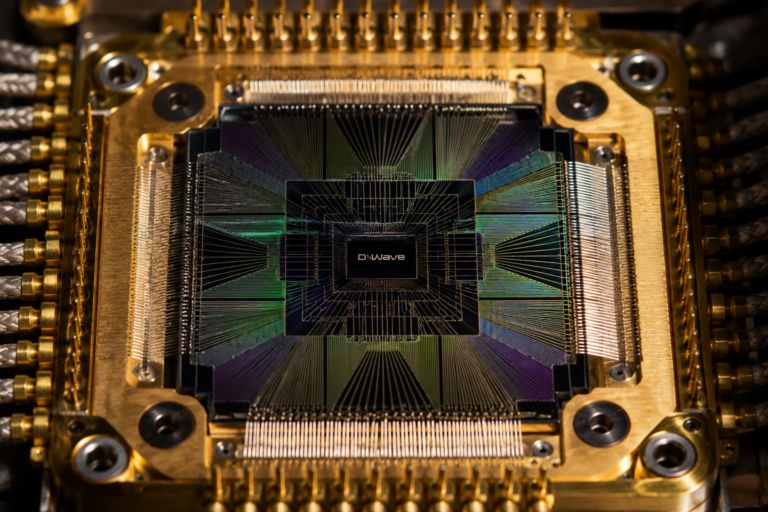
D-Wave Quantum shares QBTS fell about 5% on Thursday after the quantum computing company reported second-quarter revenue and earnings that missed Wall Street expectations, overshadowing a sharp increase in customer bookings.

The Florida-based company reported second-quarter revenue of $3.08 million, below analysts’ estimates of approximately $4.08 million.

Adjusted loss per share narrowed to 13 cents from 42 cents a year earlier but missed the consensus forecast for an 8-cent loss.

Net loss improved to $48 million from $167 million in the prior-year period.

However, operating loss widened to $53.3 million from $26.5 million as the company increased spending on product development and commercial expansion.

Management said higher operating expenses reflected investments in the company’s “accelerated product development and go-to-market initiatives.”

Following the results, D-Wave shares declined in early trading, putting the stock on track for its biggest one-day drop since June.

Revenue misses despite strong bookings growth

While quarterly revenue disappointed investors, bookings continued to show strong momentum.

Bookings reached $35.5 million during the first half of the year, representing an increase of more than 1,120% from the same period last year.

The company defines bookings as customer orders expected to generate future revenue.

As of June 30, bookings had increased from $33.4 million at the end of March.

Analysts expect a significant improvement in revenue during the third quarter, with current estimates pointing to approximately $14.1 million, representing year-over-year growth of about 277%.

Despite the strong bookings pipeline, investors remained focused on the company’s current revenue performance, highlighting the uneven commercialization cycle that continues to characterize the quantum computing industry.

Investment strategy and expanding quantum platform

D-Wave attributed higher operating costs partly to investments supporting product development as well as non-recurring expenses related to its acquisition of Quantum Circuits earlier this year.

The company acquired Quantum Circuits in January for $550 million, including $250 million in cash, accelerating its expansion into gate-based quantum computing while continuing to develop its existing quantum annealing platform.

Founded in 1999, D-Wave is regarded as one of the earliest pure-play quantum computing companies and is widely recognized for pioneering commercial quantum annealing technology.

The company sold its first commercial quantum computing system to Lockheed Martin in 2011.

In recent years, D-Wave has expanded beyond annealing systems by developing general-purpose gate-model quantum computers capable of running a broader range of quantum algorithms.

Enterprise partnerships and government support

The company continues to expand its commercial and government relationships as it seeks broader adoption of quantum computing.

Its customer and partner roster includes defense contractor Anduril Industries, while D-Wave recently expanded its collaboration with AT&T to further deploy its optimization-focused quantum technology.

The company has also strengthened ties with the US government.

It was among a group of publicly traded quantum companies that reached tentative agreements with the Commerce Department involving federal funding in exchange for minority equity stakes.

Although investors reacted negatively to the latest quarterly report, the strong growth in bookings and continued investment in technology development underscore D-Wave’s focus on expanding its position in the emerging quantum computing market, where revenue is expected to remain uneven as commercialization progresses.

The post Why is D-Wave stock falling 5% today? appeared first on Invezz