Archive

July 2026

Browsing

The post AI Boom Sparks $1 Trillion Asian Stock Rebound, Is Bitcoin Next? appeared first on Coinpedia Fintech News

Asian markets staged one of their strongest rebounds in history as the market turned positive around artificial intelligence (AI) returned following blockbuster earnings from Microsoft and Amazon. Nearly $1 trillion was added to Asian stock in a single session, with semiconductor stocks leading the rally after investors regained confidence that AI spending remains strong despite …

The post New York Hits Kalshi With $36B Lawsuit Over Gambling Claims appeared first on Coinpedia Fintech News

The largest prediction market, Kalshi, has been sued by New York state for allegedly running illegal gambling operations in the state. The state is demanding at least $36 billion in damages over alleged illegal gambling.  The lawsuit comes days after Kalshi failed to block the state’s gambling rules, putting its federal regulatory defense under fresh …

The post Why Is Momentum (MMT) Token Price Up By 77% Today? appeared first on Coinpedia Fintech News

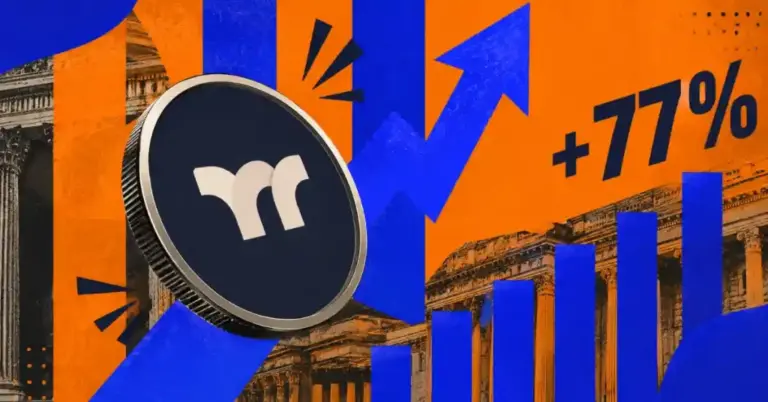
Momentum, a DeFi ecosystem built on the Sui blockchain, is seeing its native MMT token outperform the broader crypto market, jumping more than 77% in the last 24 hours. The sharp rally pushed MMT to around $0.35, lifting its seven-day gain above 90%.So, what is driving this sudden rally? MMT Trading Volume Explodes on Binance …

The post XRP News Today: Expert Calls CLARITY Act ‘Theater,’ Points to Real XRP Catalyst appeared first on Coinpedia Fintech News

XRP is positioned at the center of a much larger shift in how money moves globally, according to analyst Versan Aljarrah, who argues that shift, not the CLARITY Act, is what will eventually restructure the token’s price. A Migration Already Underway Aljarrah frames XRP’s opportunity around the early stages of a broader move toward regulated, …

The post Crypto News: USDC Issuer Circle Gets New York Trust Charter Approval appeared first on Coinpedia Fintech News

Circle Internet Group has picked up a fresh regulatory milestone in New York, one of the states most closely watched in the digital asset space. A New Charter, a Decade in the Making Circle’s new trust charter comes from New York’s financial regulator, the NYDFS, which issued the approval for a limited purpose trust entity …

The US economy expanded at a slower-than-expected pace in the second quarter while inflation remained well above the Federal Reserve’s target, underscoring the difficult balancing act facing policymakers after they opted to keep interest rates unchanged this week.

Gross domestic product, the broadest measure of economic activity, rose at an annualized rate of 1.5% between April and June, according to Commerce Department data released on Thursday.

Economists surveyed by Dow Jones had expected growth of 1.8%, following a 2.1% expansion in the first quarter.

Separate data showed that the personal consumption expenditures price index, the inflation measure most closely watched by the Federal Reserve, declined 0.1% on a monthly basis in June.

This was the weakest reading since April 2020, after climbing 0.5% in May.

However, annual headline inflation remained at 3.7%, in line with market expectations but still significantly above the central bank’s 2% objective.

Core PCE, which excludes volatile food and energy prices and is viewed by many policymakers as a better indicator of underlying inflation trends, increased 0.1% during the month.

The annual core inflation rate stood at 3.3%, matching expectations.

The minor relief in inflation is unlikely to last long, though, as renewed hostilities in the Middle East raise oil prices.

Consumer spending offsets broader weakness

Although overall economic growth slowed, consumer spending remained a key source of resilience.

Household spending, which accounts for more than two-thirds of US economic output, accelerated to a 3.2% annualized pace during the quarter after growing just 0.5% in the January-March period.

The strength in consumption came despite elevated energy prices linked to the ongoing conflict in the Middle East.

Economists said larger tax refunds this year helped cushion households from higher fuel costs, while wealthier consumers continued spending as rising asset prices supported their finances.

Additional support came from President Donald Trump’s “One Big Beautiful Bill,” which boosted disposable income through larger tax refunds.

Spending related to the recently concluded FIFA World Cup and midterm election campaigns also contributed to overall demand.

The GDP estimate was compiled before the release of June’s advance economic indicators, which showed a moderate narrowing in the goods trade deficit and unchanged retail inventories.

That data prompted several economists to revise their GDP forecasts lower, with some cutting estimates to around 1.5%, in line with Thursday’s official reading.

AI investment continues to support the economy

Investment linked to artificial intelligence remained another pillar of growth despite mounting concerns over lofty valuations across the technology sector.

Businesses have continued expanding spending on AI infrastructure, helping sustain domestic investment even as investors increasingly question how quickly companies will generate returns from the massive capital outlays.

Still, economists warned that geopolitical risks remain elevated.

The US-led conflict with Iran, now entering its sixth month, has kept upward pressure on global energy prices and could weigh on consumer demand and business activity later this year if oil prices remain elevated.

The labour market has also helped support the economy.

Employers have added an average of 92,000 jobs a month in 2026, compared with fewer than 10,000 jobs per month during 2025, when higher interest rates and uncertainty surrounding trade policy discouraged hiring.

Inflation remains the Fed’s biggest challenge

The latest data follows the Federal Reserve’s decision on Wednesday to leave its benchmark interest rate unchanged at 3.50% to 3.75%.

The decision was not unanimous, with three policymakers voting in favour of a quarter-percentage-point rate increase, reflecting growing concern that inflation could remain elevated for longer.

Although monthly inflation readings have shown some moderation, higher energy prices continue to cloud the outlook.

The post US GDP slows to 1.5%, missing estimates; June inflation cools appeared first on Invezz

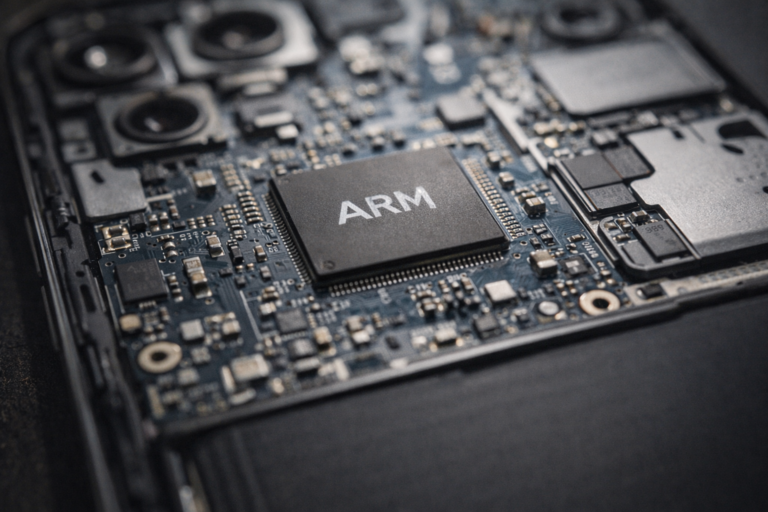
Arm Holdings shares climbed about 8% in trading on Thursday after the British chip designer reported fiscal first-quarter results that topped Wall Street expectations and issued stronger-than-expected guidance. 

Analysts broadly welcomed the results, highlighting accelerating demand for Arm’s artificial intelligence-focused processor roadmap despite continued supply constraints.

The company reported fiscal first-quarter revenue of $1.29 billion, up 22% from a year earlier and above analysts’ estimates of $1.26 billion, according to FactSet.

Adjusted earnings came in at 45 cents per share, beating expectations of 40 cents.

Profit rose to $270 million, or 25 cents per share, from $130 million, or 12 cents per share, a year earlier.

Royalty revenue increased 22% to $715 million, driven by more than doubling of data center royalties, while licensing revenue climbed 23% to $574 million.

For the second quarter, Arm forecast adjusted earnings between 43 cents and 51 cents per share on revenue of $1.33 billion to $1.43 billion, ahead of analyst expectations of 44 cents per share on revenue of $1.34 billion.

AGI CPU demand continues to strengthen

The company’s AI strategy remained the focal point for investors.

Arm said demand for its Arm AGI CPU has exceeded initial expectations, with customer demand now surpassing $2 billion across fiscal 2027 and 2028.

The company added that it has secured manufacturing capacity for initial deployments while continuing to expand production with partners.

Arm also said the transition toward Arm-based AI infrastructure continued during the quarter, citing expanding adoption among major technology companies including Nvidia, Amazon Web Services, Google, Microsoft and Qualcomm.

The company added that shipments of its Neoverse data center processors have surpassed 1.5 billion cores.

Speaking about the growth of AI workloads, Chief Executive Rene Haas told Reuters, “The more inference workloads you run, that creates work that only CPUs can do.”

Haas also said, “We have new customers in North America and China,” adding, “I feel better about (supply) than I did 90 days ago.” Oracle has also agreed to purchase the company’s AGI CPU, although Arm did not disclose the value of the agreement.

The company noted that smartphone royalty growth remains softer due to memory shortages, with finance chief Jason Child forecasting second-quarter smartphone royalty growth of roughly 10% to 15%.

Analysts remain positive despite mixed views on valuation

Jefferies reiterated its Buy rating and maintained a $320 price target, saying Arm’s quarterly performance and outlook came in ahead of expectations.

The brokerage said, “Arm’s FYQ1 results and FYQ2 guidance are above expectations,” adding that the company is increasingly confident of generating more than $1 billion in AGI CPU revenue by FY28. Jefferies noted that while smartphone-driven royalty growth has softened, stronger licensing revenue has offset that weakness. It added that higher average selling prices should help preserve gross margins and said it continues to view Arm as an attractive long-term investment, citing “>40% Agentic AI-led growth to FY31.”

J.P. Morgan maintained its Overweight rating and extended its price target timeframe, describing the quarter as “a clean beat across the P&L” that supports a modest increase to Arm’s full-year FY27 outlook. The bank also said the company’s AGI merchant silicon CPU strategy continues to gain traction following its Arm Everywhere event.

The brokerage said it expects upside to Arm’s initial $1 billion AGI CPU revenue framework to emerge, potentially by the third-quarter earnings report, as the company works to expand manufacturing capacity and finalize customer allocations. J.P. Morgan also highlighted management’s view that the “$100B FYE30 CPU TAM framework… may have been conservative,” suggesting there could be further upside to the company’s long-term AI CPU opportunity.

HSBC, however, remained more cautious. The brokerage lowered its price target to $230 from $315 while maintaining a Hold rating, saying, “Management has not actually raised their AGI CPU revenue guidance despite more bullish tone given ongoing uncertainty over foundry capacity constraints.” HSBC added that it still sees higher AGI CPU revenue as “the biggest catalyst to earnings upside” and the key issue investors will continue to monitor.

The post Arm stock jumps as Q1 beats estimates, AGI CPU demand tops $2 billion appeared first on Invezz

Adidas shares plunged as much as 19% on Thursday, putting the German sportswear giant on course for its biggest one-day decline on record after higher marketing costs linked to the FIFA World Cup overshadowed record quarterly sales and a solid rise in earnings.

The company reported net profit from continuing operations of €398 million for the second quarter, up 6% from a year earlier but below analysts’ expectations of €430 million.

The earnings miss came after Adidas increased marketing expenditure by 30% year over year as it ramped up spending on campaigns surrounding this summer’s football tournament in North America.

The weaker-than-expected profit offset otherwise strong operating performance, with quarterly revenue reaching a record €6.7 billion, representing 14% growth at constant currencies.

Record sales fail to satisfy investors

The second-quarter revenue growth was supported by strong demand for football and running products, as well as continued momentum in Latin America and China, where Adidas has been gaining market share while rival Nike struggles with declining sales.

Despite the record sales, investors were disappointed that the company chose not to raise its operating profit outlook for the full year.

RBC Capital Markets analyst Piral Dadhania said both the earnings miss and the decision to leave profit guidance unchanged were likely to weigh on investor sentiment.

Chief executive Bjørn Gulden, however, expressed surprise at the market’s reaction.

“We have delivered what we promised,” Gulden said, adding that the second quarter had been “stronger than we expected.”

The executive defended the company’s aggressive World Cup marketing strategy, saying Adidas deliberately chose to capitalize on the tournament after assembling a strong portfolio of sponsored teams and products.

“We decided that, given the teams and products we had for the World Cup, we should spend real money on it,” Gulden said, adding that marketing expenditure would normalize in the coming quarters.

Football investment boosts sales

The strategy helped Adidas generate approximately €1.5 billion in World Cup-related sales during the quarter.

The company said it sold four times as many national team jerseys and twice as many footballs compared with the Qatar World Cup four years ago.

Mexico’s jersey emerged as the best-selling national team shirt, while the tournament final between Spain and Argentina featured two Adidas-sponsored teams, further strengthening the brand’s visibility.

The company also benefited from a broader fashion trend, with football apparel increasingly crossing into mainstream streetwear.

Clothing sales climbed 35% during the quarter as consumers embraced football-inspired fashion beyond the tournament itself.

Footwear sales rose a more modest 1%, reflecting a more promotional environment across the lifestyle footwear market.

Nevertheless, Adidas said demand for its flagship Samba and Gazelle sneakers remained healthy.

Gulden acknowledged that the explosive growth previously seen in those retro styles was unlikely to continue indefinitely but argued that collaborations with artists such as Bad Bunny had broadened the appeal of the franchise.

Guidance remains cautious

Adidas modestly upgraded its sales outlook for the full year, saying it now expects currency-neutral revenue growth of between 9% and 10%, compared with its previous forecast of high-single-digit growth.

However, it maintained its operating profit target of around €2.3 billion, a decision that many investors viewed as conservative.

Gulden himself suggested the guidance could prove cautious, noting that the company had not assumed its direct-to-consumer business would continue expanding at the current pace.

Sales through Adidas-owned stores and online platforms increased 25% during the quarter, providing an important boost to margins despite the higher marketing spend.

Analysts at Deutsche Bank said the results represented “a good quarter in absolute terms” but argued that expectations had risen sharply ahead of the World Cup, making it difficult for the company to impress investors.

Analysts see long-term turnaround intact

Not everyone viewed the sharp share-price decline as justified.

Writing for Reuters Breakingviews, columnist Jennifer Johnson argued that the market reaction may reflect lingering concerns stemming from Adidas’ past strategic setbacks rather than its current operating performance.

“All things equal, this shouldn’t matter much. Adidas is still targeting a 10% operating margin in 2027, a person familiar with the situation told Breakingviews. On that reading, it’s hard to see why a temporary dip in profitability should be taken as a sign of longer-term stress,” she wrote.

Johnson said investors may still be influenced by memories of Adidas’ difficult split with rapper Ye in 2022, which forced the company to write down inventory and navigate reputational challenges.

However, she noted that Gulden has engineered a significant turnaround since taking charge, with Adidas delivering shareholder returns that have comfortably outperformed rivals such as Puma and Nike.

“A simple way for Adidas to stop the rot would be to show in the next few quarters that the margin dip was a one-off. If so, investors may see Gulden’s World Cup campaign as more of a triumph than they currently do,” Johnson added.

The post Why did Adidas stock fall 19% despite record sales, FIFA World Cup boost? appeared first on Invezz


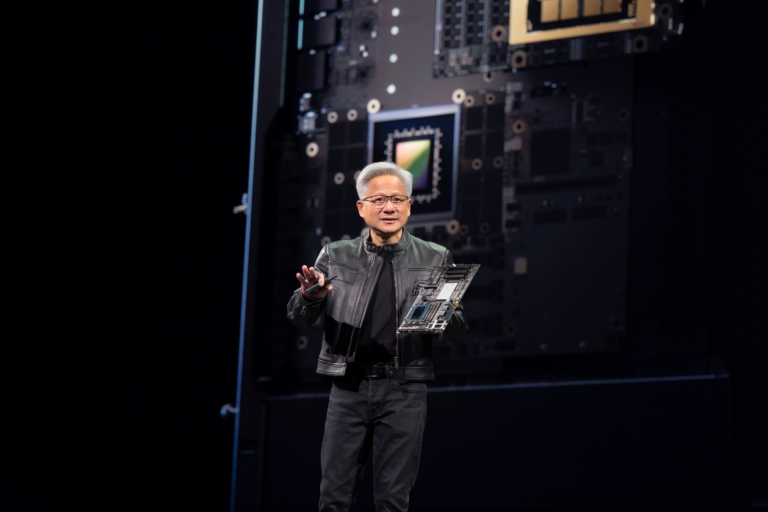
Nvidia stock (NVDA) rebounded around 3% on Thursday as strong results from Microsoft reignited optimism around artificial intelligence infrastructure spending, lifting semiconductor stocks after a week of heavy selling.

The stock traded around $195.50 in early trading. Intel rose about 12%, while Advanced Micro Devices gained roughly 13%.

The broader market also advanced after Wednesday’s selloff following the Federal Reserve’s decision to leave interest rates unchanged.

The Nasdaq Composite rose 2%, the S&P 500 gained 1%, and the Dow Jones Industrial Average added 308 points, or 0.6%.

Microsoft drives chip sector rebound

Semiconductor stocks rallied after Microsoft reported strong growth in its Azure cloud business, easing investor concerns that hyperscale technology companies could begin pulling back on artificial intelligence investment.

The iShares Semiconductor ETF climbed more than 7% in early trading, while the PHLX Semiconductor Index looked set to snap a five-session losing streak.

Microsoft also reassured investors by keeping its calendar 2026 capital expenditure plans unchanged, avoiding another sharp increase in spending after several quarters of aggressive AI investment.

Meta Platforms, by contrast, fell about 8% after issuing a softer-than-expected revenue forecast and reporting a 91% decline in second-quarter free cash flow.

The company modestly increased the lower end of its 2026 capital expenditure guidance to a range of $130 billion to $145 billion, compared with its previous outlook of $125 billion to $145 billion.

The mixed results highlighted a shift in investor focus from simply rewarding higher AI spending toward evaluating whether companies can balance investment with profitability and cash generation.

Nvidia recovers after recent selloff

Thursday’s gains followed several weeks of pressure on Nvidia shares.

The stock recently lost its position as the world’s most valuable listed company to Apple after a sharp decline driven by concerns over AI spending, financing structures, and rising competition in the semiconductor industry.

Investor sentiment was also weighed down by reports that a Chinese company had begun mass-producing key chipmaking equipment, raising questions about future competitive dynamics.

In addition, The Wall Street Journal reported that Nvidia is discussing a roughly $250 billion financing guarantee to support OpenAI’s lease of a large data centre project in Ohio.

The proposed arrangement would help OpenAI secure more favourable financing while supporting long-term demand for Nvidia’s AI chips.

However, the report also prompted concerns among some investors that financing agreements between Nvidia and its customers could resemble the circular financing structures that emerged during the dotcom era.

Thursday’s rally suggested investors were once again focusing on the underlying outlook for AI infrastructure demand, with Microsoft’s cloud performance helping restore confidence that spending by the industry’s largest customers remains resilient despite growing scrutiny over capital allocation.

The post Why Nvidia stock is rebounding around 3% after Big Tech earnings appeared first on Invezz

Nebius Group (NBIS) shares are soaring on Thursday morning after the company said a Vera Rubin compute rack has officially gone live at its data center facility in Mäntsälä, Finland.

As investors cheer the announcement, NBIS is challenging its 20-day moving average (MA), with a decisive break above the $197 level expected to sustain bullish momentum in the near-term.

Today’s rally brings a much-needed reprieve to Nebius stock that’s been under immense pressure amidst a broader tech rout in recent weeks.

Significance of Vera Rubin news for Nebius stock

While the Vera Rubin news sounds like an incremental milestone only, the market has gotten into the habit of treating deployment speed as a critical metric for neocloud providers.

Getting next-gen architecture powered up and operational proves Nebius isn’t just sitting on GPU allocations – it’s turning hardware into revenue-generating compute in real time.

Being among the first neoclouds to market with functional Vera Rubin architecture positions NBIS strongly for the AI inference era, enabling it to secure top-tier hourly GPU rental rates from frontier lab clients before broader supply catches up.

In short, in a business where liquid-cooled clusters cost hundreds of millions to deploy, every week saved between chip delivery and going live drastically lowers burn rate and accelerates annualized recurring revenue (ARR) generation.

That’s what is primarily behind NBIS shares’ rally on July 30th.

NBIS shares rally ahead of Q2 earnings release

Nebius shares are ripping higher this morning also because management scheduled the company’s Q2 earnings for Wednesday, August 12th (before market open).

Lock-in dates for earnings calls often trigger institutional positioning – as funds set up for what is expected to be a key update on revenue backlog conversion, utilization rates, and capex execution.

Note that the consensus is for NBIS to record roughly $578 million in revenue for its second fiscal quarter – a 5.5x increase on a year-over-year basis.

Heading into the earnings release, Nebius’s relative strength index (RSI) is hovering around 45 – indicating significant upside room before the stock hits “overbought” territory.  

How to play Nebius ahead of the quarterly print

All in all, institutional buyers remain anchored to Nebius’s multi-year structural moat.

Nvidia’s recently disclosed 9.3% stake – stemming from a $2 billion strategic partnership – provides a major vote of confidence, validating NBIS as a preferred cloud operator for next-generation GPU deployments.

This endorsement is backed by explosive commercial momentum, headlined by a $1 billion-plus compute deal with Reflection AI and significant capacity commitments from tech giants like Meta and Microsoft.

Following a recently secured $775 million asset-backed credit facility, NBIS stock offers both the capital flexibility and execution speed needed to capture outsized market share in the AI infrastructure land grab.

Note that Wall Street currently has a consensus Moderate Buy rating on Nebius Group with a mean price target of $255.

The post Nebius stock soars on achieving an incremental milestone: find out more appeared first on Invezz