Archive

August 1, 2026

Browsing

SpaceX (SPCX) shares slipped on Friday as investors looked ahead to the company’s first earnings report as a public company and an upcoming insider share lock-up expiration.

The stock was down about 2.5% in early trading, changing hands near $109.

It has endured a volatile week, briefly falling to an all-time low of $107.01 before recovering.

For the week, the shares were down roughly 5% and have declined nearly 30% since their market debut at $150 last month.

The stock remains about 50% below its record high of $225.64.

Earnings and lock-up remain in focus

Investor attention is centered on SpaceX’s second-quarter earnings report, scheduled for Aug. 4, which will provide the first detailed update on the company’s performance since its public listing.

Another key event follows two days later, when the first lock-up expiration will allow eligible shareholders to sell up to 20% of their restricted holdings under the company’s lock-up plan.

The prospect of a significant increase in tradable shares has weighed on sentiment in recent weeks, with investors concerned that additional supply could put further pressure on the stock.

Tesla merger report sparks fresh questions

The Wall Street Journal reported on Friday that Tesla executives have discussed options for separating the company’s China business in the event of a future merger with SpaceX.

According to the report, advisers have considered alternatives including a spin-off, sale, or closure of Tesla’s China operations, although the newspaper said the plans remain preliminary and could change.

The report said a merger between the two companies would likely face significant regulatory and geopolitical scrutiny because SpaceX is a major US defense contractor, while Tesla operates wholly owned manufacturing facilities in China.

The newspaper also reported that Chinese authorities could be concerned about a combined company gaining access to data from Tesla’s customers in China.

Musk rejects report

Elon Musk denied the report, calling it “absurdly fake news” in a post on X.

“This has never even come up in a discussion ever,” Musk wrote in response to the Journal’s report.

Speculation about a combination of Tesla and SpaceX has intensified since SpaceX’s initial public offering.

Last week, Musk declined to rule out a future merger, saying the two companies have become increasingly interconnected.

According to the Journal, Musk had previously instructed Tesla executives to maintain a clear separation between the company’s US and China operations as a precaution against rising geopolitical tensions.

Tesla’s Shanghai Gigafactory remains the automaker’s largest manufacturing facility and a major export hub, with annual production capacity exceeding 950,000 vehicles.

The plant has historically accounted for more than half of Tesla’s global vehicle deliveries.

With earnings approaching and the first major lock-up expiration days away, investors are expected to focus on management’s outlook for growth, capital spending, and insider selling as the newly public company navigates its first major test in the public markets.

The post Why SpaceX stock is falling another 2% on Friday appeared first on Invezz

Palantir stock price remained under pressure this week as traders waited for the second-quarter earnings. PLTR was trading at $122.26, down by over 40% from its highest point this year, erasing some of the gains it made last year. This retreat will be put to the test as it publishes its financial results.

Palantir Technologies to publish its earnings on Monday

PLTR stock has plunged in the past few months as investors sold software companies and continued booking profits, following its strong bull run last year. At its peak last year, it was up by over 3,200% from its lowest level in 2023.

The stock will be in the spotlight as the management publishes its financial results for the second quarter. Analysts expect these numbers to show that its revenue growth accelerated in this period as companies and governments continued to spend.

Yahoo Finance data shows that the average estimate is that its revenue jumped by 80% YoY to $1.81 billion. This growth will make it one of the fastest-growing companies in the software industry.

For the third quarter, analysts expect the revenue will grow by 70% YoY in the third quarter to $1.91 billion. As a result, for the year, the company is expected to make over $7.72 billion, up by 72% YoY.

Palantir’s business has benefited from the ongoing demand from companies that are interested in its Foundry product, which is an operating system for data that lets firms integrate, model, and act on their data across the organization. Demand for the Artificial Intelligence Platform (AIP), which layers large language models (LLMs) and AI on top of Foundry.

Most importantly, its government business is continuing its growth as the US and its allies boost their spending. The Trump administration has requested over $1.5 trillion defense budget, with some of these funds flowing to Palantir. In its last results, the company said that its government revenue jumped by 85% to $1.67 billion. Its commercial revenue rose by 133% to $595 million. 

Palantir has become undervalued

On paper, Palantir seems like a highly overvalued company as its forward price-to-earnings ratio has moved to 83. However, the multiple is much lower than the five-year average of 127. 

Most notably, as a software company, one way of assessing its valuation is the Rule-of-40, which looks at its revenue growth and margins. It has a Rule-of-40 multiple of 145%, making it a bargain. This multiple suggests that its revenue and margins are continuing.

In addition to the valuation, the options market points to a rebound. Options expiring next week shows that its call open interest stands at 71,463 against puts of 40,276, giving it a put/call open interest ratio of 0.56. Based on the volume, the company has a multiple of 0.40.

Palantir stock price technical analysis

PLTR stock chart | Source: TradingView

The weekly chart shows that the PLTR stock bottomed at $106, a notable level that coincides with the 50% Fibonacci Retracement level. It has now rebounded slightly above the 100-week Exponential Moving Average (EMA).

The stock has formed a falling wedge pattern, which is made up of two descending and converging trendlines. These two lines are nearing their confluence, which may lead to a rebound. 

This likely explains why analysts have maintained their bullish outlook. Rosenblatt Securities reiterated the target to $225, while Citigroup has a target of $200. The consensus target among analysts is $190, higher than where it is today.

The post Palantir stock holds steady: why Monday could be the turning point appeared first on Invezz

Reddit (RDDT) stock is under immense pressure this morning, even though the forum social media platform reported an impressive Q2 and offered upbeat future guidance.

Investors are bailing on RDDT not because of the quarterly print itself, but more due to concerns about the company’s long-term traffic growth.

Following today’s decline, Reddit shares are down more than 40% versus the start of this year.

Why is Reddit stock tumbling on Friday?

Reddit’s second-quarter financials were excellent; sales went up 61% year-on-year to $805 million on $1.25 a share of earnings (EPS) – both ahead of Street estimates.

Advertising revenue soared 64% in Q2, bringing management sufficient confidence to offer better-than-expected guidance as well.

Still, RDDT shares are experiencing a sell-off mostly because investors are worried about Google’s artificial intelligence (AI) search changes.

In the earnings release, management acknowledged that Alphabet Inc search referrals have become “choppy” or volatile.

Since RDDT has historically relied on Google Search to bring new visitors to the platform, market fears that the titan’s AI-generated answers could reduce traffic over time.

It’s actually why reports emerged last week that Reddit wants to renegotiate the terms of its deal with Google or walk away from it entirely.

What else is hurting RDDT shares today?

Reddit shares are slipping also because US user growth disappointed in its fiscal Q2.

While global daily active users (DAUs) increased to 130.3 million, US growth stood at about 6%.

International markets drove most of Reddit’s user growth in the second quarter, accounting for 85% of net new users.

That shift is significant because Reddit generates substantially more revenue from users in the United States.

The company reported average revenue per user of about $11.85 in the US, compared with just $2.26 for international users, highlighting the gap in monetisation outside its home market.

Investors should also note that algorithmic selling is in play on Friday as well. Reddit Inc crashed through its 50-day and 100-day moving averages (MAs) today, which tends to accelerate bearish momentum in the near-term.

How to play Reddit after Q2 earnings?

Investors are recommended to exercise caution in buying RDDT stock on the post-earnings dip because AI is creating an existential question for the social media firm.

Analysts increasingly worry that AI assistants can summarize Reddit discussions without users ever visiting the platform itself.

Even though Reddit licenses data to companies like OpenAI and Alphabet, investors wanted more evidence that these licensing deals can offset any decline in search-driven traffic.

But there were no major new updates on those agreements on the earnings call, which is why they are unloading RDDT despite an otherwise strong quarterly print today.

That said, Wall Street was largely bullish on Reddit heading into the earnings report.

The consensus rating on the NYSE-listed firm stood at Moderate Buy, with the mean price target of $224 signalling massive upside potential from here.

The post Reddit earnings: why are investors concerned despite solid headline numbers appeared first on Invezz

It was an overwhelming week for Apple, to say the least, as the iPhone maker saw its fortunes whipsaw throughout the week—becoming the world’s most valuable company, briefly exceeding the $5 trillion market capitalization mark, and then suffering one of the biggest single-day declines in its history after issuing a cautious outlook.

Investors had increasingly been viewing Apple as a safe harbour amid mounting uncertainty surrounding artificial intelligence spending.

While rivals such as Microsoft, Amazon, Alphabet, and Meta have poured hundreds of billions of dollars into AI infrastructure, Apple largely avoided the capital-intensive race by relying on partners such as Google to power new AI features.

That positioning helped Apple’s shares outperform much of Big Tech this year.

However, the company’s latest earnings report showed that Apple is not immune to the ripple effects of the AI boom.

Shares fell nearly 10% on Friday after management forecast slower-than-expected revenue growth for the current quarter and warned that shortages of key components were limiting its ability to meet demand.

Softer-than-expected services revenue and weaker sales in Greater China added to investor concerns.

The selloff threatened to erase nearly $500 billion in market value, marking Apple’s worst one-day decline since the pandemic-driven market crash in March 2020 and handing the title of the world’s most valuable company back to Nvidia.

From market leader to market loser in five days

The week had begun on a very different note.

On Monday, Apple overtook Nvidia to reclaim the position of the world’s most valuable listed company for the first time since April 2025.

Nvidia’s shares dropped 5% as investors questioned whether hyperscalers’ enormous AI spending would ultimately generate sufficient returns.

The decline reduced Nvidia’s valuation to $4.77 trillion.

Apple, meanwhile, gained 1%, lifting its market capitalization to $4.95 trillion.

A day later, the optimism intensified as Apple’s market value briefly crossed the $5 trillion milestone, making it only the second company, after Nvidia to achieve the feat.

The company had benefited from strong demand for its products and, more importantly, from investor preference for businesses that were not directly exposed to the soaring costs of building AI infrastructure.

Apple shares had climbed roughly 25% this year before earnings, comfortably outperforming several members of the so-called Magnificent Seven.

“There’s a battle in the market, and right now Apple is benefiting because it isn’t in the storm that the rest of the AI trade is in,” Mark Bronzo, chief investment strategist at Rye Strategic Partners, told Bloomberg earlier this month.

“People are concerned about what kind of return hyperscalers could get from their AI spending, and there are also arguments that semis have gotten ahead of themselves. As a result, investors have gravitated back to Apple as a steady-eddy name without those risks.”

Apple’s strategy has been notably different from its peers.

Rather than building massive AI computing infrastructure, the company has leaned on Google’s AI models to power new products such as its upgraded Siri assistant, allowing it to avoid much of the capital expenditure weighing on other technology companies.

Earnings beat expectations but guidance disappoints

The quarterly numbers themselves painted a healthy picture.

Revenue for Apple’s fiscal third quarter ended June 27 rose 16.4% to $109.42 billion, ahead of analysts’ expectations for 15.5% growth, according to LSEG.

Adjusted earnings also topped forecasts.

The company reported profit of $2.02 per share, including 11 cents from US government tariff refunds.

Even excluding those refunds, earnings exceeded Wall Street estimates of $1.89 per share.

Driving the performance was another standout quarter for the iPhone.

Sales of Apple’s flagship device climbed 21.7% to $54.25 billion, beating expectations of $53.86 billion and marking the strongest third-quarter iPhone performance in the company’s history.

The results reflected continued consumer demand even as smartphone prices increased across the industry.

Yet investors quickly looked beyond the headline figures.

Apple’s services business, widely viewed as its highest-margin growth engine, generated $30.74 billion in revenue, up 12.1% but below expectations of $31.22 billion.

DA Davidson analyst Gil Luria said investors were increasingly concerned about that slowdown.

“Investors are concerned that if services are decelerating while iPhone is growing more than 20%, it may slow down even more as iPhone sales come back down to earth,” he said.

The bigger disappointment came from management’s outlook.

Apple forecast September-quarter revenue growth of between 9% and 11%, below Wall Street expectations of roughly 12%.

That guidance suggested supply constraints—not demand—were becoming the company’s biggest challenge.

AI boom creates new supply-chain headaches

Apple acknowledged that cost pressures and component shortages would weigh on profitability over the coming months.

The company projected gross margins of between 47% and 48% for the September quarter, compared with roughly 50% in the June quarter.

Although tariff refunds will continue to provide about one percentage point of support, that benefit is smaller than in the previous quarter.

Chief Executive Tim Cook acknowledged that supply-chain flexibility had largely disappeared.

“We’re seeing some very significant constraints currently with limited flexibility in the supply chain to remedy it,” Cook said during the earnings call.

The comments surprised investors because Cook has long been regarded as one of the industry’s foremost supply-chain managers.

Speaking on his final earnings call as chief executive before handing leadership to John Ternus in September and moving into the role of executive chairman, Cook described the shortages as unusually severe.

The constraints stem largely from the AI investment boom sweeping across Big Tech.

Cloud providers have aggressively secured advanced semiconductor manufacturing capacity and high-bandwidth memory chips to power AI data centres, driving up prices and limiting availability for other industries.

“If even at Apple’s scale they are saying they are out all supply chain flexibility, it’s really bad for everyone,” Ben Bajarin, CEO of technology consultancy Creative Strategies, told Reuters.

Apple had previously softened the impact of rising memory prices by drawing down inventory accumulated earlier.

Cook indicated that buffer was now running out.

He said shortages of processors were preventing Apple from fully meeting demand for iPhones and Macs despite robust consumer appetite.

Investors now focus on what comes next

Analysts say the company’s near-term outlook now hinges on whether current demand reflects sustainable growth or merely customers rushing to buy devices before anticipated price increases.

This year, consumers accelerated purchases as memory shortages pushed Apple to increase prices for Macs and iPads.

The company has so far avoided raising iPhone prices, though many analysts expect changes around September’s product launch.

Evercore ISI analyst Amit Daryanani said investors were likely to focus on Apple’s margins over the coming quarters, although he believes management’s outlook could ultimately prove conservative.

Bob O’Donnell, chief analyst at TECHnalysis Research, said in a Reuters report that markets were questioning whether recent demand represented a temporary surge.

“I do think it’s possible people are going to continue to buy the existing phones, because of the price increases,” he said.

“The big question is, what’s going to happen on Macs in this quarter, when the new prices are fully there?”

Despite Friday’s sharp decline, Apple’s stock remains up about 11% this year, outperforming companies such as Meta, whose shares have fallen 16%, and Tesla, which is down nearly 30%.

Microsoft, Amazon and Alphabet have all recovered strongly following their earnings reports, though investors remain focused on whether the AI investment cycle can continue generating sufficient returns.

Apple’s turbulent week suggests that even companies sitting outside the centre of the AI spending race are increasingly being pulled into its orbit.

The company may have avoided the massive infrastructure bills weighing on its rivals, but it can no longer escape the supply-chain strains those investments have created.

The post How Apple went from Wall Street's AI haven to its biggest earnings loser in a week appeared first on Invezz


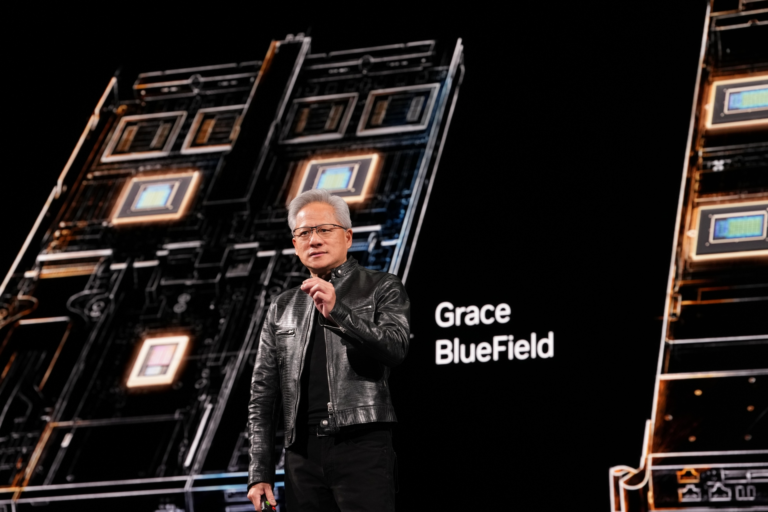
Nvidia stock (NVDA) rose on Friday after Amazon reaffirmed its commitment to the chipmaker’s artificial intelligence processors and increased its capital spending plans, reinforcing investor confidence in continued demand for AI infrastructure.

The stock gained 2.6% to $199.07 in midday trading, building on Thursday’s more than 2% advance.

The rally put Nvidia on track to reclaim its position as the world’s most valuable listed company from Apple, whose shares tumbled following its latest earnings report.

Amazon reinforces Nvidia partnership

Amazon provided another boost to sentiment after raising its full-year capital expenditure forecast to $220 billion from $200 billion, underscoring its continued investment in AI infrastructure.

Chief Executive Andy Jassy also reiterated Amazon Web Services’ long-term commitment to Nvidia’s processors despite the company’s ongoing development of custom AI chips.

“We…continue to have a deep partnership with Nvidia and will continue making AWS the best place to run Nvidia chips, as we have customers who will run on Nvidia for as long as we can foresee,” Jassy said during the company’s earnings call.

His comments helped ease concerns that Amazon’s Trainium processors could rapidly displace Nvidia’s products across AWS.

At the same time, Jassy acknowledged that Amazon is exploring additional ways to commercialize its in-house chips.

“We do have an increasing number of customers who are interested in us providing the training and chips to them separate from our cloud,” he said.

“We’re actively having those conversations and exploring. And I expect there’s a real chance we’ll do that in the future.”

While Amazon continues expanding its custom silicon strategy, its comments suggested Nvidia’s graphics processors are expected to remain central to AWS’s AI offerings for the foreseeable future.

Stock rebounds after recent pressure

Friday’s gains extended Nvidia’s recovery after several weeks of pressure driven by concerns over AI spending, financing arrangements, and rising competition in the semiconductor industry.

Investor sentiment had also weakened following reports that a Chinese company had begun mass-producing key chipmaking equipment, raising questions about the competitive landscape.

Separately, The Wall Street Journal reported that Nvidia is discussing a roughly $250 billion financing guarantee to support OpenAI’s lease of a large data centre project in Ohio.

The proposed arrangement would help OpenAI secure more favourable financing while supporting long-term demand for Nvidia’s AI processors.

However, the report also prompted concerns among some investors that financing agreements between Nvidia and its customers resemble the circular financing structures seen during the dotcom era.

Burry expands bearish bets

Investor skepticism over AI valuations has also been highlighted by Michael Burry, the investor best known for predicting the US housing market collapse.

Burry expanded his bearish positions across the semiconductor sector, increasing his put options tied to Nvidia while also adding to short positions linked to Micron Technology, the iShares Semiconductor ETF, and the Invesco QQQ Trust.

https://twitter.com/michaeljburry/status/2082323545263055275

In recent posts on X, he has argued that Nvidia’s long-term revenue outlook is becoming increasingly dependent on financing arrangements and recently said the company’s five-year credit default swaps were going “parabolic” because of what he described as “circular spending to biblical proportions.”

The post Why Nvidia stock is rebounding another 2% on Friday appeared first on Invezz