Archive

August 16, 2026

Browsing

The post SUI Bears Take Control as Price Tests Crucial Support — Can Bulls Reclaim $1? appeared first on Coinpedia Fintech News

Sui price has been trading under significant selling pressure for quite some time, while bulls have managed to defend the support zone over the past few weeks. However, the selling pressure has intensified lately, dragging the token closer to its yearly lows. SUI is now hovering near the crucial $0.65–$0.68 support zone, putting bulls at …

Artificial intelligence has become one of the biggest investment themes in global markets, fueling an unprecedented wave of spending on chips, data centers and computing infrastructure. 

But as billions of dollars flow into the sector through increasingly sophisticated financing structures, investors are beginning to ask a new question: is leverage becoming the biggest risk behind the AI boom?

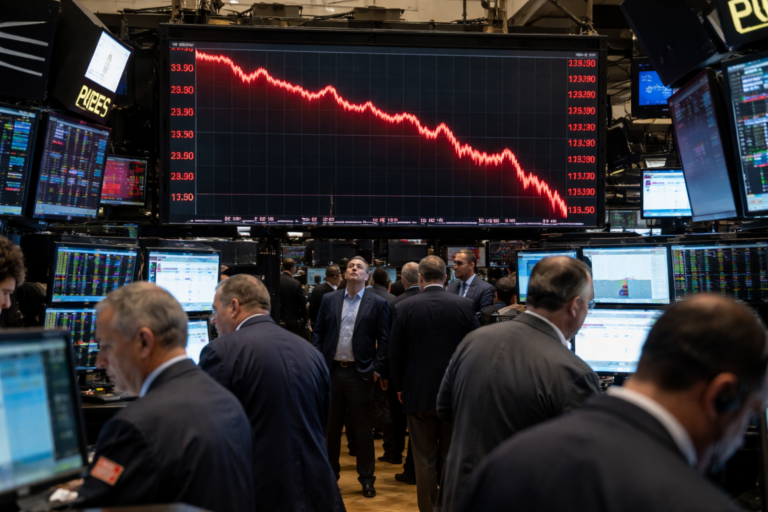
The debate has intensified following the collapse of AI-focused hedge fund Situational Awareness, whose highly leveraged bets unraveled after a sharp selloff in technology stocks. 

While many market participants argue the episode was an isolated case of poor risk management, others say it has highlighted how borrowing, derivatives and off-balance-sheet financing are quietly becoming central to the AI investment story.

Nvidia’s infrastructure push highlights the scale of AI spending

The discussion comes as Nvidia works with some of Wall Street’s largest financial institutions to unlock more than $500 billion of third-party capital for AI infrastructure.

The chipmaker has partnered with firms including Apollo, Blackstone, BlackRock, Brookfield, KKR and Goldman Sachs to finance the next generation of AI data centers and computing platforms. 

Nvidia CEO Jensen Huang recently described the company’s chips as an “investable infrastructure asset,” underscoring how AI hardware is increasingly being treated like long-term infrastructure rather than traditional technology equipment.

Financing these projects is becoming increasingly complex.

Rather than relying solely on conventional borrowing, hyperscalers are using joint ventures, leasing structures and asset-backed financing to fund massive capital expenditure programs. 

Some of these obligations do not immediately appear on company balance sheets.

Goldman Sachs estimates that hyperscalers now have approximately $1.5 trillion in combined lease commitments covering data centers, research facilities, offices and equipment, up from roughly $200 billion five years ago.

About $1 trillion of those commitments are classified as “uncommenced” leases, meaning they have not yet been recognized in financial statements but will eventually translate into contractual payment obligations.

Goldman analysts warned that this accounting treatment “can understate leverage and future liquidity needs” because these commitments ultimately become recognized liabilities as projects commence.

AI investment cycle reaches historic proportions

The sheer scale of AI investment has prompted comparisons with some of history’s largest infrastructure booms.

Lotfi Karoui, multi-asset credit strategist at PIMCO, said the current AI capital expenditure cycle is, after adjusting for inflation, on track to become the largest investment cycle since the railway construction boom of the nineteenth century.

In commentary published on Aug. 11, Karoui noted that consensus forecasts now expect hyperscaler capital spending alone to exceed $1 trillion annually from 2027, adding that there are “no clear signs of moderation.”

As borrowing requirements expand, technology companies are increasingly issuing debt beyond traditional US dollar markets.

Karoui said issuers have tapped euro, sterling, yen, Swiss franc and Canadian dollar bond markets to diversify funding sources.

He also observed that euro-denominated bonds issued by companies such as Amazon and Alphabet have outperformed comparable dollar-denominated debt, potentially indicating growing demand fatigue among investors in US credit markets.

According to Karoui, continued AI-related debt issuance in the United States could eventually push credit spreads wider for heavily exposed issuers.

Situational Awareness becomes Wall Street’s cautionary tale

While infrastructure financing has attracted attention, leverage inside equity markets has also come under scrutiny following the collapse of Situational Awareness.

Founded by former OpenAI researcher Leopold Aschenbrenner, the hedge fund rapidly became one of Wall Street’s most closely watched AI investors after generating extraordinary returns during its early months.

Aschenbrenner, who previously worked on OpenAI’s Superalignment team after graduating from Columbia University at age 19, built the firm’s investment strategy around his conviction that artificial intelligence would fundamentally reshape the global economy.

His 2024 essay, Situational Awareness, attracted significant attention across Silicon Valley and helped secure backing from prominent technology investors including former GitHub chief executive Nat Friedman and Stripe founders Patrick and John Collison.

The fund reportedly delivered returns exceeding 400% during the first half of the year, with assets eventually swelling to roughly $24 billion.

Its portfolio included concentrated positions in companies viewed as major AI beneficiaries, including CoreWeave, Broadcom, Intel, Bloom Energy and SanDisk.

However, the same concentration that amplified gains also magnified losses.

Bloom Energy and SanDisk each fell about 40% between late June and early August, while the Wall Street Journal reported that the fund lost approximately 67% during July.

According to Reuters, mounting losses eventually forced Situational Awareness to sell most of its public equity portfolio.

Ken Griffin’s Citadel purchased the leveraged portion of those holdings, with Goldman Sachs, JPMorgan Chase, Bank of America and Citigroup helping facilitate the transaction.

The fund is expected to retain roughly $10 billion of assets, including private investments such as its stake in Anthropic.

Analysts differ on whether leverage is the real threat

The collapse has divided market observers over whether leverage poses a broader systemic risk.

JPMorgan CEO Jamie Dimon recently told CNBC that margin debt is “pretty high,” warning that elevated borrowing can amplify market volatility during periods of stress.

Sahil Mahtani, director of the investment institute at Ninety One, argued that leverage is not currently the market’s biggest concern.

Instead, he said the greater risk lies in investors’ “high and rising earnings” expectations for AI companies.

Mahtani also pointed to historically elevated concentration within major equity indices, particularly in US technology stocks. 

While not traditional financial leverage, he argued that concentration can behave similarly by amplifying declines when heavily weighted stocks come under pressure.

He described the Situational Awareness episode as largely a case of poor risk management rather than evidence of broader financial instability, adding that its effects have remained relatively contained.

The Alternative Investment Management Association also defended the industry’s use of borrowing.

A spokesperson said leverage is “a core tool” for hedge funds that helps enhance returns and provide liquidity, arguing that available evidence does not support treating hedge fund leverage as an inherent systemic threat.

The association further noted that previous market disruptions linked to leverage—including the collapse of Archegos Capital Management and the United Kingdom’s liability-driven investment crisis—involved fundamentally different structures and investors.

Borrowing remains elevated despite recent selloff

Although the correction in AI stocks forced some investors to reduce leverage, borrowed money remains deeply embedded across markets.

South Korean margin debt had declined only about 10% by the end of July despite a sharp selloff that triggered margin calls for an estimated 3.5% of Korean adults with investment accounts, according to Goldman Sachs.

Meanwhile, Goldman prime brokerage data cited by Bloomberg showed borrowing by equity-focused hedge funds has retreated only to the middle of its recent historical range.

That suggests many institutional investors continue to maintain significant exposure to the AI trade even after recent volatility.

The post Nvidia's AI financing push raises new questions over market leverage appeared first on Invezz

A standout three-month trade comes from an old-school commodity rather than semiconductors, memory chips or the wider AI boom.

Coffee futures have gained about 13% over that period, compared with a 2.2% rise for the VanEck Semiconductor ETF and a 4.1% advance for the S&P 500. The Roundhill Memory ETF has been little changed.

Prices are climbing even as Brazil heads towards what could be a record 2026/27 crop, despite improving long-term supply.

Coffee is beating the AI trade despite a record crop

USDA forecasts Brazil’s 2026/27 coffee production at 71.9 million 60-kilogram bags, which would be a record crop. Ordinarily, that kind of supply outlook would pressure prices.

Instead, Arabica has rebounded roughly 30% since June.

Brazil’s harvest has moved more slowly than a year ago. Cooxupé, the country’s largest coffee cooperative, said members had harvested 74.6% of their crop by August 7, compared with 80.4% at the same point last year.

That slower pace is colliding with tight nearby inventories and uncertainty over export availability.

Jefferies analyst Kaumil Gajrawala highlighted the move this week, noting that Arabica had risen about 30% since June while the earthquake in Colombia introduced another supply concern.

Brazil may eventually deliver volumes, but traders care about whether enough exportable coffee is available in the right place at the right time.

Colombia has added another problem for a tight market

The August 10 earthquake in Colombia has made that near-term question harder.

The 7.4-magnitude quake disrupted a road carrying about 60% of Colombia’s coffee exports and temporarily interrupted operations at Buenaventura, the country’s key Pacific port, according to the Financial Times.

Shipments have been redirected through Caribbean routes while damage is assessed.

Colombia matters because it is the world’s leading producer of high-quality mild-washed Arabica, a key input for global roasters.

That does not mean the world is running out of coffee. The longer-term supply picture is improving, particularly in Brazil.

But futures markets price immediate availability as well as future production. A record crop sitting on farms cannot instantly replace beans delayed by weather, infrastructure damage or transport bottlenecks.

The bearish case is straightforward. If Brazil’s harvest accelerates and Colombian logistics normalise quickly, the scarcity premium could disappear as fast as it arrived.

Wall Street is looking beyond futures for the next winners

The coffee theme is also drawing attention to listed companies, although higher bean prices are not automatically positive for roasters.

HSBC recently upgraded Keurig Dr Pepper to Buy from Hold and raised its price target to $40 from $37.

Analyst Sorabh Daga cited strong refreshment-beverage trends and an improving outlook for the company’s US coffee business in the second half of 2026.

Starbucks is another name attracting attention and its shares are up about 29% this year.

Frank Cappelleri, founder of CappThesis, said the stock is approaching the top of a long-running trading range. He sees a move towards $125 as potentially opening the door to stronger momentum and a challenge to previous highs.

For both companies, elevated raw-coffee costs can still squeeze margins, so the equity story is not simply a bet on higher futures.

Coffee’s outperformance shows how quickly capital can rotate away from crowded themes when a physical commodity develops its own supply catalyst.

The next phase depends on which force wins: temporary shortages and logistics problems, or Brazil’s looming record crop.

The post This 2026 trade is quietly beating AI stocks: the rally may have further to run appeared first on Invezz

OpenAI has reshuffled its executive ranks once again, replacing its chief revenue officer just eight months after her appointment, as the ChatGPT maker races to strengthen its enterprise business ahead of a potential stock market debut.

The leadership change comes amid a broader wave of executive departures across the artificial intelligence industry, where competition for top talent has intensified even as frontier AI companies battle for customers, revenue growth and investor confidence.

The company announced Thursday that Denise Dresser, who joined OpenAI in December to help expand its enterprise business, will leave the company “for other opportunities.”

She will be succeeded by Dali Rajic, the former president and chief operating officer of cybersecurity company Wiz, which was acquired by Google last year.

The transition comes as OpenAI continues to reorganize its leadership team while scaling its commercial operations and enterprise business, areas that have become increasingly important as the company competes with rivals including Anthropic and Google.

“Denise has led our revenue organization through a formative period for the business and has worked tirelessly to get the team to where it is today,” OpenAI co-founder and President Greg Brockman said in a statement.

“Dali will turn what we’ve learned into repeatable execution as we build out the full system to make AI broadly useful for people and businesses.”

Executive departures at OpenAI gather pace

Dresser’s exit adds to a growing list of high-profile leadership departures at OpenAI over the past year.

Earlier this week, Brad Lightcap, one of the company’s earliest executives and former chief operating officer, announced his departure after eight years.

Lightcap joined OpenAI in 2018 and spent four years as chief financial officer before becoming chief operating officer in 2022.

Earlier this year, he transitioned to overseeing special projects following an executive restructuring.

Before OpenAI, he worked alongside Chief Executive Sam Altman at startup accelerator Y Combinator.

Several other senior leaders have also stepped away from the company in recent months.

Chief Marketing Officer Kate Rouch departed in April to focus on recovering from cancer, while Kevin Weil, who oversaw the company’s science organization, also left that month.

In July, Fidji Simo, who played a central role in building OpenAI’s commercial operations, stepped away from her full-time position for health reasons but continues to advise the company on a part-time basis.

The turnover has extended beyond the executive suite.

Bill Peebles, who previously led OpenAI’s now-discontinued Sora video generation project, has also left the company.

The departures follow another wave of attrition in 2025, when OpenAI lost its chief people officer, communications chief, a senior researcher who later founded an AI science startup, and at least seven researchers recruited by Meta.

AI talent war reshapes the industry

While OpenAI has experienced significant executive turnover, industry observers note that such movement has become commonplace across the rapidly evolving artificial intelligence sector.

Competition for elite researchers and executives has intensified dramatically as technology companies race to develop increasingly capable foundation models.

In many cases, executives are moving between rival frontier AI laboratories rather than leaving the industry altogether.

OpenAI itself has also attracted high-profile hires over the past year.

Earlier this month, the company confirmed that Lilian Weng would return after leaving to co-found Mira Murati’s Thinking Machines Lab.

Weng, who cited health reasons for stepping down from her startup role, previously served as OpenAI’s Vice President of AI Safety Research.

The move was widely viewed as a significant gain for OpenAI given Weng’s standing in AI safety research.

Google has also lost prominent researchers to competitors.

In June, Noam Shazeer left Google to join OpenAI, a hiring that many researchers viewed as one of the industry’s biggest recruitment victories.

Shazeer co-authored the landmark 2017 paper introducing the transformer architecture that underpins modern generative AI systems, including ChatGPT.

That same month, Nobel Prize-winning researcher John Jumper departed Google for Anthropic.

Meanwhile, Dean Ball, who helped shape the Trump administration’s early artificial intelligence policies, joined OpenAI in June to lead a new Strategic Futures team focused on frontier AI policy and internal governance.

Alphabet also recently announced a broader leadership overhaul of its AI division, with AI chief Demis Hassabis stepping back from his primary managerial responsibilities while several senior Gemini leaders, including veteran engineer Jeff Dean, also exited the company.

Enterprise growth becomes the priority

The latest management changes come as OpenAI increasingly shifts its focus from building cutting-edge AI models toward scaling its enterprise business and commercial infrastructure.

The company says its products now reach more than one billion weekly active users and two million business customers.

Despite that extraordinary growth, executives have acknowledged both publicly and privately that revenue has not yet met every internal target, according to TechCrunch.

This has increased pressure to strengthen the enterprise business before an IPO.

That challenge was one of Denise Dresser’s primary responsibilities after joining OpenAI late last year.

According to Axios, Brockman has taken a much more active role across the organization as the company prepares for its next phase of growth.

A source familiar with the matter told the publication that Brockman is becoming increasingly involved with customers and internal teams as he seeks to build a leadership structure capable of helping OpenAI overtake Anthropic in enterprise adoption.

In May, Anthropic overtook OpenAI’s most recent $852 billion valuation in March by announcing a $65 billion Series H financing round that valued the company at $965 billion.

“Brockman is ‘a founder in founder mode,'” Axios quoted one source as saying, describing his increased engagement across the company.

Another source told the publication that the recent executive departures represent a long-overdue clearing of underperforming leadership rather than signs of instability.

Brockman has presented the leadership changes as part of OpenAI’s evolving business priorities rather than a sign of instability.

“Denise has led our revenue organization through a formative period for the business,” Brockman said in the blog post announcing the personnel changes.

“The way we’re deploying this technology is changing rapidly, and Dali will turn what we’ve learned into repeatable execution as we build out the full system to make AI broadly useful for people and businesses.”

IPO ambitions take center stage

The leadership changes come at a critical juncture for OpenAI as it prepares for what could become one of the biggest technology listings in history.

The company confidentially filed a draft registration statement with the US Securities and Exchange Commission on June 8, formally beginning the IPO process just one week after rival Anthropic submitted its own confidential filing.

While OpenAI has not announced a listing timeline, reports suggest the company is weighing whether to go public in late 2026 or delay its debut until 2027 in pursuit of an even higher valuation.

The New York Times reported in June that advisers presented executives with two options: proceed with an earlier listing at a lower valuation or wait until 2027 to target a valuation of $1 trillion.

According to the report, Chief Executive Sam Altman rejected any reduction in that valuation target as a “non-starter.”

Even so, no IPO date has been confirmed, and the trillion-dollar valuation remains based on media reports citing unnamed sources rather than company guidance.

The decision carries financial implications.

OpenAI’s projections reportedly show it expects to remain cash-flow negative until 2030, meaning a delayed listing could require another year of financing from private investors at its current valuation.

Revenue growth accelerates

Despite leadership turnover, OpenAI’s business continues to expand at a rapid pace.

Bloomberg reported that the ChatGPT maker is on track to generate annualized revenue of more than $40 billion based on its current performance, roughly double its revenue run rate at the end of 2025.

People familiar with the matter told the publication that growth has accelerated in recent months, driven by increasing adoption of OpenAI’s AI coding software alongside continued momentum in subscriptions, enterprise products and its emerging advertising business.

The company’s consumer business also continues to grow.

According to an internal announcement cited by Bloomberg, Brockman told employees that OpenAI’s annual revenue run rate increased by more than 20% month-over-month in July.

Chief Financial Officer Sarah Friar had previously said the company ended 2025 with annualized revenue exceeding $20 billion.

OpenAI also recently completed a secondary share sale worth roughly $7 billion, allowing current and former employees to sell shares at the company’s $852 billion valuation.

The tender offer followed OpenAI’s record-breaking $122 billion funding round completed in March and provides liquidity for employees ahead of a potential public listing.

Anthropic rivalry raises the stakes

OpenAI’s preparations for public markets are unfolding alongside intensifying competition with Anthropic, whose own IPO ambitions have raised expectations across the AI sector.

According to the Financial Times, Anthropic investors expect the Claude developer to seek a valuation of at least $2 trillion in a potential October listing.

Investors also expect Anthropic’s annualized revenue to reach between $100 billion and $120 billion by the end of 2026, underscoring the extraordinary growth projected for frontier AI companies.

If Anthropic proceeds first, it could become the first publicly traded pure-play frontier AI laboratory, potentially providing investors with the sector’s first meaningful valuation benchmark.

Morningstar said that scenario would place additional pressure on OpenAI if it delays its own listing.

“It will arrive with something OpenAI cannot show: a profitable quarter. (Though Anthropic reportedly is warning that it may not repeat those numbers anytime soon.) Its first weeks of trading will be the closest thing to a verdict on valuations for the category,” the research firm said.

Morningstar also pointed to differences in how the two companies report annualized revenue.

“One accounting question shapes all this. OpenAI is valued at about 34 times its sales rate, Anthropic at 20 times, but they count sales differently,” the firm said.

“Anthropic includes revenue flowing through its cloud partners, while OpenAI counts only its share. Anthropic’s figure would have to be roughly 40% too high for that gap to close. Its prospectus, public weeks before an October listing, will settle it.”

For now, both companies remain privately held, and key details surrounding their IPOs—including valuation targets and listing dates—remain subject to change.

Still, OpenAI’s latest executive reshuffle illustrates the balancing act facing the company as it simultaneously scales its enterprise business, manages leadership transitions, competes aggressively for AI talent, and prepares for a public market debut that could redefine investor expectations for the artificial intelligence industry.

The post Behind OpenAI's exits and hires as it ramps up enterprise growth ahead of IPO appeared first on Invezz

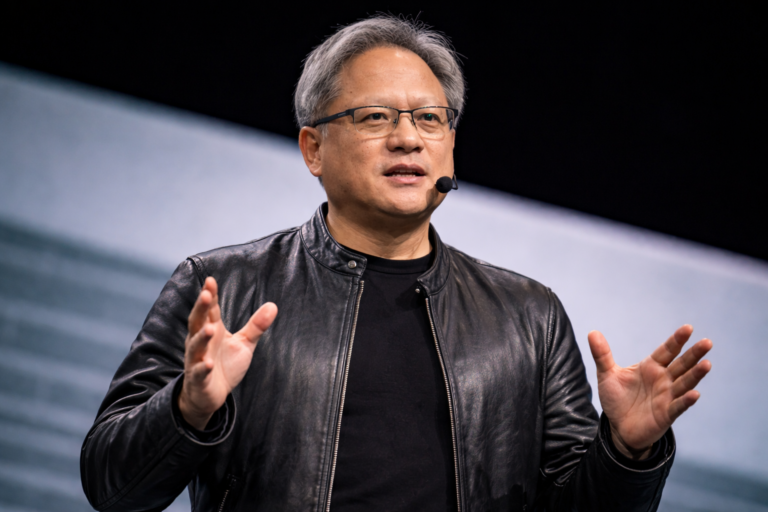
US stocks have been charging higher with remarkably little resistance in 2026, repeatedly shrugging off inflation worries, geopolitical risks and elevated borrowing costs.

The benchmark S&P 500 index climbed above 7,800 for the first time intraday on Thursday before finishing at a record 7,798.99, extending a rally that has pushed the benchmark roughly 14% higher year to date.

Yet Bank of America strategist Michael Hartnett sees two increasingly important threats that could eventually challenge Wall Street’s seemingly unstoppable advance: an exploding US national debt burden and persistently high Treasury yields.

Neither has derailed stocks so far, but both are becoming harder for investors to ignore.

A US debt burden approaching $40 trillion

The first threat is the sheer scale of US government borrowing. The national debt is on the verge of crossing $40 trillion, with Hartnett warning that it could reach $50 trillion by 2029.

The speed and cost of that accumulation matter for stocks because increasingly large interest payments can consume government resources while forcing the Treasury to keep issuing enormous amounts of debt.

The latest fiscal figures offer little reassurance. The federal government recorded a $432.3 billion deficit in July, its largest monthly shortfall since March 2021. Medicare spending was among the major contributors, while rising interest costs added to the pressure.

The Congressional Budget Office had already estimated that the federal deficit reached roughly $1.4 trillion during the first nine months of fiscal 2026.

For stocks, the concern is less about the debt number itself than what it could eventually do to inflation, interest rates and investor confidence.

Treasury yields are becoming a bigger problem

The second threat is the rising cost of borrowing. Long-term Treasury yields have remained stubbornly high even as recent inflation data have reduced expectations for another immediate Federal Reserve rate increase.

On Thursday, the Treasury sold $25 billion of 30-year bonds at a 5.216% yield – the highest rate at a 30-year auction since 2001. That is an uncomfortable backdrop for stocks trading near record valuations.

Higher Treasury yields increase the return investors can obtain from relatively low-risk government debt while simultaneously raising the discount rate applied to future corporate earnings.

That can be particularly painful for growth and technology stocks, whose valuations depend heavily on profits expected years into the future.

The problem could become even more pronounced if heavy government borrowing keeps long-term yields elevated regardless of what the Fed does with short-term rates.

Reuters reported Friday that inflation-adjusted borrowing costs have reached their highest levels in more than a decade across major economies, highlighting how broader bond-market pressures are emerging alongside government and corporate investment.

Can debt and yields really break the rally?

For now, investors appear willing to look past both risks. Thursday’s record close came after July producer-price data showed no monthly increase, helping reinforce expectations that the Federal Reserve may avoid another rate hike in the near term.

The Nasdaq also reached a record, while the Dow and Russell 2000 advanced.

Hartnett’s broader argument is that investors have few attractive alternatives to US stocks. His description of the current environment, “Anything but Bonds,” “Anywhere but China,” “Anything but the US Dollar,” and an all-in approach to AI, captures why stocks can continue climbing despite uncomfortable fiscal and bond-market signals.

But that logic has a limit. If Treasury yields rise far enough, the opportunity cost of owning stocks becomes harder to ignore.

At the same time, a rapidly expanding debt load could make investors demand an even larger premium for holding US assets. That combination could compress stock-market valuations even if corporate earnings remain healthy.

The immediate threat, therefore, is not necessarily a sudden fiscal crisis. It is a gradual shift in the market’s calculation of risk. As long as earnings, AI optimism, and expectations for stable monetary policy overpower concerns about debt and yields, the bull market can keep running.

But if borrowing costs continue climbing while Washington’s debt trajectory worsens, the two forces Hartnett has identified could finally give Wall Street’s relentless rally a serious obstacle.

The post These two developments can stop US stocks relentless surge in 2026 appeared first on Invezz

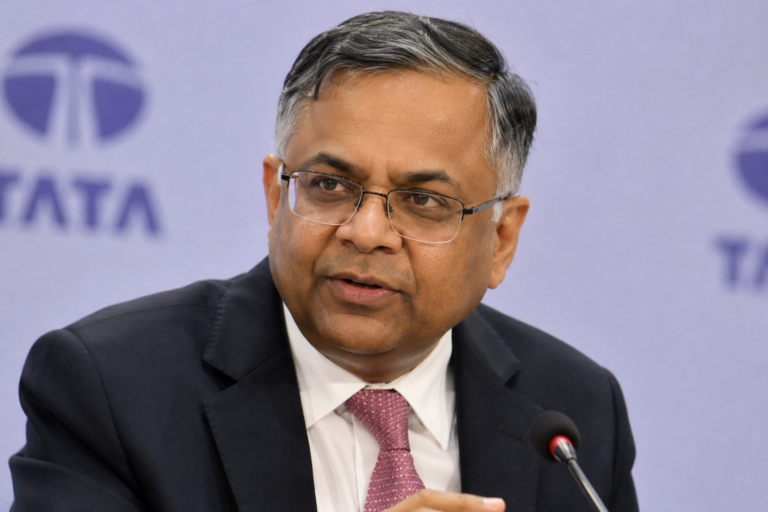
N Chandrasekaran’s decision not to seek another term as chairman of Tata Sons has triggered one of the biggest leadership questions in Indian corporate history, opening the door to a succession battle at a time when the 158-year-old conglomerate is navigating some of its most ambitious and capital-intensive projects.

Tata Sons, which is the holding company of its 31 group companies which include Tata Consultancy Services, Tata Steel, and others is also facing pressures to list on the bourses.

The surprise announcement, made earlier this week, comes amid reports of a prolonged disagreement between Chandrasekaran and Tata Trusts over the group’s strategic direction, capital allocation and leadership succession.

It also raises uncertainty over the future of investments ranging from Air India and semiconductor manufacturing to electronics and Apple’s expanding supply chain in India.

Chandrasekaran cites need for leadership clarity

In a statement issued on Wednesday, Chandrasekaran said his current tenure as chairman ends on February 20, 2027.

He revealed that while the Dorabji Tata Trust and Sir Ratan Tata Trust had unanimously recommended extending his tenure by another five years, one member of the Tata Sons board did not support the proposal.

“It has been 6 months since that Board meeting, and no resolution has been reached till date,” Chandrasekaran said.

He added that Tata Sons was overseeing several strategic projects at critical stages of execution and argued that prolonged uncertainty over leadership was not in the interests of the group.

“It is not only necessary to have a leader in place to lead the Group beyond Feb 2027, but also clarity on leadership is important for employees, investors, partners and other stakeholders.”

“Under these circumstances, earlier today, I have communicated to the Tata Sons Board, that I have decided not to offer myself for reappointment when my term ends on Feb 20, 2027. I have asked the Board to decide on the succession soon to ensure a proper transition.”

The announcement immediately intensified speculation over who will eventually lead India’s largest conglomerate, which currently has no deputy chairman or publicly identified successor.

Boardroom differences come into focus

According to multiple media reports, Chandrasekaran’s decision follows months of disagreements with Tata Trusts, the charitable entities that control the Tata Group.

The Financial Times reported, citing people familiar with the matter, that the differences culminated after nearly a year of boardroom tensions between Chandrasekaran and Noel Tata, chairman of Tata Trusts.

The report said Noel Tata wants his son, Neville Tata, to assume a more prominent role within the group.

Until early this year, Chandrasekaran had been widely expected to receive another five-year mandate.

However, the FT reported that Noel Tata expressed reservations during a February board meeting despite the trusts having earlier backed Chandrasekaran’s extension.

According to people familiar with the matter, Chandrasekaran could also have faced a confidence vote at Tata Sons’ annual meeting scheduled for next week.

Leadership change comes during heavy investment cycle

The timing of the succession debate is particularly significant because Tata Group is in the middle of one of the largest investment phases in its history.

Under Chandrasekaran’s leadership, Tata acquired Air India in 2022, entered large-scale iPhone manufacturing through the acquisitions of Wistron and Pegatron’s India operations, and announced India’s first semiconductor fabrication plant in partnership with Taiwan’s Powerchip Semiconductor Manufacturing Corp.

The conglomerate has also expanded aggressively into electronics manufacturing and artificial intelligence-related infrastructure as part of India’s broader ambition to become a global manufacturing hub.

In his latest shareholder letter, Chandrasekaran described these investments as some of the group’s “largest capital commitments” and key building blocks for India’s goal of becoming a developed economy by 2047.

However, many of those businesses remain in investment mode and have yet to generate meaningful profits.

Financial pressures have intensified

The group’s expansion has coincided with growing financial challenges across several businesses.

According to Tata Sons’ latest annual report, consolidated net profit declined 35% to 266 billion rupees during the financial year ended March 2026 as losses mounted at Air India, Tata Digital and Tata Electronics.

Meanwhile, Tata Consultancy Services, traditionally the group’s largest profit generator, has come under pressure from the rapid adoption of artificial intelligence.

Shares of TCS have fallen roughly 20% over the past year amid concerns about long-term demand for traditional IT services, with the stock dropping another 5% following Chandrasekaran’s announcement.

Air India continues to face operational and financial headwinds after last year’s fatal crash that claimed 260 lives.

Separately, Tata Sons is awaiting a decision from the Reserve Bank of India over whether the holding company will be required to list publicly because of its classification as one of the country’s largest non-banking financial companies.

Pressure to list has also mounted this year from stakeholders including the second-largest shareholder, Shapoorji Pallonji Group (SP Group).

Reports suggest Tata Trusts has opposed such a listing and has sought additional clarity from Tata Sons on business performance, long-term strategy, capital expenditure and the rationale for remaining privately held.

Experts point to differences over capital allocation

Analysts believe the disagreement reflects differing views on how aggressively Tata Group should continue investing while its most profitable businesses face mounting pressure.

Anil K. Sood, professor and co-founder of Mumbai-based Institute of Advanced Studies in Complex Choices, told CNBC that Tata Trusts, which relies on dividends from Tata Sons to fund its charitable activities, has adopted a more conservative approach toward capital allocation.

He said Air India’s turnaround continues to consume significant capital while operational challenges risk damaging the Tata brand.

At the same time, TCS is confronting AI-driven disruption while the group continues investing heavily in businesses that remain largely commoditized or loss-making.

Echoes of the Cyrus Mistry era

Corporate governance experts note that the latest dispute once again highlights the longstanding dual power structure within Tata Group, where Tata Sons manages operations while Tata Trusts ultimately controls leadership decisions.

The arrangement previously led to the dramatic removal of Cyrus Mistry as chairman in 2016 following a public disagreement with the late Ratan Tata.

Ramesh Vaidyanathan, managing director at law firm BTG Advaya, told CNBC that the current episode carries an element of irony.

During Mistry’s tenure, he focused on “maximizing return on equity” and adopting a more disciplined investment approach, while Ratan Tata advocated bold long-term investments.

“Now,” Vaidyanathan said, “the roles have reversed.”

He added that Chandrasekaran’s eventual successor will inherit the difficult task of satisfying Tata Trusts’ desire for greater financial discipline while simultaneously reassuring investors that the group remains committed to executing its long-term growth strategy.

Focus turns to succession

Attention is now shifting to Tata Sons’ annual shareholder meeting on August 18, where succession planning is expected to dominate discussions.

The incoming chairman will inherit responsibility for some of India’s most strategically important corporate projects, including the country’s first semiconductor fabrication facility, the continued expansion of Apple’s manufacturing ecosystem, Air India’s turnaround and the group’s response to AI-driven disruption across its technology businesses.

Suhel Seth, a former adviser to Tata Group, told the Financial Times that Chandrasekaran took over in 2017 when the conglomerate “needed a lot of hand-holding.”

He added that concerns previously raised by Noel Tata over spending on Air India and Tata Digital would likely become key priorities for whoever succeeds Chandrasekaran.

For investors, employees and policymakers alike, the coming months are likely to determine not only who leads India’s biggest business house next, but also whether the conglomerate maintains the aggressive investment strategy that has defined Chandrasekaran’s tenure or adopts a more cautious approach under new leadership.

The post The succession and strategy questions facing Tata Sons as N Chandrasekaran resigns appeared first on Invezz