Archive

July 2026

Browsing

The post Can Shiba Inu Price Recover as SHIB Burn Rate Surges? appeared first on Coinpedia Fintech News

Shiba Inu price is approaching another make-or-break moment as improving on-chain activity begins to challenge months of persistent bearish sentiment. While fresh data points to growing community participation behind the scenes, the meme coin continues to trade beneath a critical technical barrier that has repeatedly capped every recovery attempt this year. The coming sessions could …

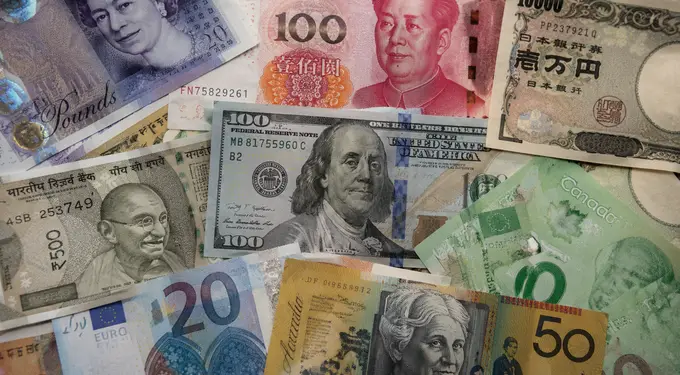
Major currency pairs remained within familiar trading ranges early Tuesday as investors avoided taking large positions while closely monitoring developments surrounding the Middle East crisis.

Market attention remained focused on geopolitical headlines, with ongoing military activity between the United States and Iran continuing to influence sentiment.

Investors were also assessing the potential economic and market impact of renewed tensions in the region.

Oil prices moved lower early Tuesday after a volatile session on Monday.

West Texas Intermediate crude fell about 0.5% on the day and traded near $82 per barrel.

Dollar holds gains as markets await further signals

The US Dollar Index began the week on a stronger footing, gaining more than 0.2% on Monday.

During the European morning session on Tuesday, the index moved sideways and traded slightly below 101.00.

The dollar’s performance came as investors continued to monitor geopolitical developments alongside economic data from major economies.

In the UK, data from the Office for National Statistics showed that the ILO Unemployment Rate remained unchanged at 4.9%.

Average Earnings Excluding Bonus increased by 3.4% year-on-year during the period.

The figure was below the market expectation of 4.5%.

GBP/USD held on to small gains around 1.3450 after declining for three consecutive days.

Investors will turn their attention to the ONS again on Wednesday, when June inflation data is scheduled for release.

New Zealand dollar gains after higher inflation data

The New Zealand dollar strengthened after Statistics New Zealand reported a stronger-than-expected increase in consumer inflation.

The Consumer Price Index rose 4.1% year-on-year in the second quarter.

The figure accelerated from a 3.1% increase in the first quarter and exceeded the market expectation of 4%.

Following the release, NZD/USD gathered bullish momentum.

The currency pair traded above 0.5850, reaching its highest level since early June.

Euro and Canadian dollar remain under pressure

EUR/USD moved sideways around 1.1420 after recording marginal losses on Monday.

USD/CAD remained in a consolidation phase above 1.4050 after closing higher in the previous session.

Statistics Canada reported that annual CPI inflation eased to 2.8% in June from 3.2% in May.

Yen trades steady as Japan focuses on Fiscal sustainability

USD/JPY held steady near 162.50 during the European morning session on Tuesday.

Japan’s Prime Minister Sanae Takaichi said earlier in the day that the government would guide economic and fiscal policy while paying close attention to fiscal sustainability.

The prime minister also said the government would focus on maintaining market trust.

With no major US economic releases scheduled for the second half of Tuesday, investors are likely to remain focused on geopolitical headlines and developments in the Middle East.

Oil price movements and shifting expectations around energy supply risks could also influence currency markets as traders assess the potential for further escalation.

The post Forex markets stay cautious as oil prices ease and inflation data emerges appeared first on Invezz

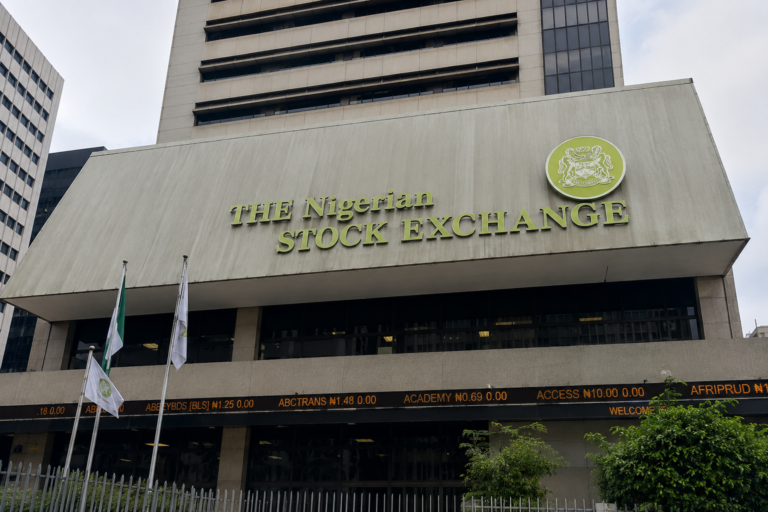
Nigerian stocks and the naira, the local currency, have soared this year, helped by elevated oil prices and the reforms made by Bola Ahmed Tinubu. 

Nigerian stocks and naira have jumped this year

Data shows that Nigeria’s NSE All Share Index has jumped by 58% this year and by 86% in the last 12 months. Some of the biggest companies in the country have soared this year.

NSE All Share Index chart | Source: TradingEconomics

Dangote Cement has soared by 112%, while MTN Nigeria, BUA Cement, and Seplat have soared by more than 100% this year. Other top gainers in the index are companies like Gunness Nigeria, First HoldCo, Airtel Africa, and Lafarge Africa.

Meanwhile, the Nigerian naira has jumped this year, with the USD/NGN pair dropping by 4.52% since January. The pair has dropped by over 10% from its highest point last year as Nigeria’s forex reserves have jumped to a 17-year high of $52 billion.

USD/NGN chart | Source: TradingView

Nigerian stocks and currency have done well as the economy has proven to be fairly resilient this year because of Dangote’s oil refinery. The most recent data showed that the economy expanded by 3.90% in the first quarter, slightly lower than the 4.07% experienced in the fourth quarter.

Analysts predict that the economy will grow further over time, with some predicting that it will hit 7%, helped by Tinubu’s reforms. After being elected, he removed the petrol subsidy and took more economic reforms. As a result, S&P Global has said that it may upgrade Nigeria to the frontier market status, which may attract more institutional investments in the country.

Nigeria Central Bank to cut interest rates

At the same time, the central bank is expected to start easing monetary conditions. It has already slashed rates two times to 26.5%, and analysts see it continuing to cut at its meeting next week. 

In a recent note, analysts at Standard Chartered predicted that the bank would deliver 150 basis points of cuts this year. This cutting cycle will be a bit slower since inflation has started climbing recently because of the impact of the war. Historically, stocks normally do well when a central bank is cutting rates.

The ongoing Nigerian stock market rally has also been fueled by soaring retail participation, with apps like Bamboo, Trove, and Chaka gaining substantial market share. 

Traders are also waiting for the upcoming Dangote Petroleum IPO, which will value it at between $40 and $50 billion. The company recently raised $2.5 billion in private placement ahead of the IPO. 

Still, there are potential risks to be aware of. One of them is that, as we have seen in South Korea, retail investors have become highly active in trading Nigerian stocks. The risk is that a small dip may see them panic sell, a move that will drag stocks lower.

Another risk is what happened after the recent SpaceX IPO. Top US stocks jumped before the IPO, and then plunged after that. SpaceX has already plunged to a record low, erasing over $1 trillion in value.

The post Here’s why Nigerian stocks and the naira (NGN) are soaring this year appeared first on Invezz

Nigerian stocks and the naira, the local currency, have soared this year, helped by elevated oil prices and the reforms made by Bola Ahmed Tinubu. 

Nigerian stocks and naira have jumped this year

Data shows that Nigeria’s NSE All Share Index has jumped by 58% this year and by 86% in the last 12 months. Some of the biggest companies in the country have soared this year.

NSE All Share Index chart | Source: TradingEconomics

Dangote Cement has soared by 112%, while MTN Nigeria, BUA Cement, and Seplat have soared by more than 100% this year. Other top gainers in the index are companies like Gunness Nigeria, First HoldCo, Airtel Africa, and Lafarge Africa.

Meanwhile, the Nigerian naira has jumped this year, with the USD/NGN pair dropping by 4.52% since January. The pair has dropped by over 10% from its highest point last year as Nigeria’s forex reserves have jumped to a 17-year high of $52 billion.

USD/NGN chart | Source: TradingView

Nigerian stocks and currency have done well as the economy has proven to be fairly resilient this year because of Dangote’s oil refinery. The most recent data showed that the economy expanded by 3.90% in the first quarter, slightly lower than the 4.07% experienced in the fourth quarter.

Analysts predict that the economy will grow further over time, with some predicting that it will hit 7%, helped by Tinubu’s reforms. After being elected, he removed the petrol subsidy and took more economic reforms. As a result, S&P Global has said that it may upgrade Nigeria to the frontier market status, which may attract more institutional investments in the country.

Nigeria Central Bank to cut interest rates

At the same time, the central bank is expected to start easing monetary conditions. It has already slashed rates two times to 26.5%, and analysts see it continuing to cut at its meeting next week. 

In a recent note, analysts at Standard Chartered predicted that the bank would deliver 150 basis points of cuts this year. This cutting cycle will be a bit slower since inflation has started climbing recently because of the impact of the war. Historically, stocks normally do well when a central bank is cutting rates.

The ongoing Nigerian stock market rally has also been fueled by soaring retail participation, with apps like Bamboo, Trove, and Chaka gaining substantial market share. 

Traders are also waiting for the upcoming Dangote Petroleum IPO, which will value it at between $40 and $50 billion. The company recently raised $2.5 billion in private placement ahead of the IPO. 

Still, there are potential risks to be aware of. One of them is that, as we have seen in South Korea, retail investors have become highly active in trading Nigerian stocks. The risk is that a small dip may see them panic sell, a move that will drag stocks lower.

Another risk is what happened after the recent SpaceX IPO. Top US stocks jumped before the IPO, and then plunged after that. SpaceX has already plunged to a record low, erasing over $1 trillion in value.

The post Here’s why Nigerian stocks and the naira (NGN) are soaring this year appeared first on Invezz

The Japanese yen remained under intense pressure today, July 23, as traders rushed to the US dollar amid the rising tensions in the Middle East. The USD/JPY pair was trading at 163.07, a few pips below this week’s high of 163.2. 

Japanese yen crash is continuing

The Japanese yen has continued falling this month, even as the country’s central bank has launched several defensive measures. 

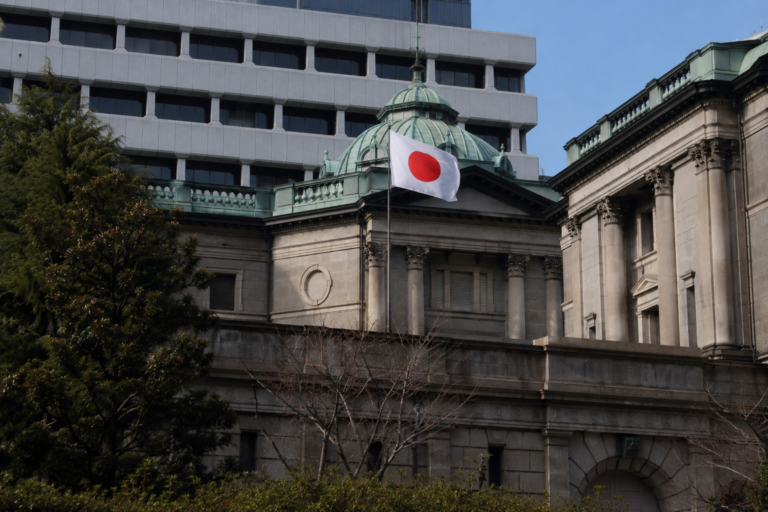
The Bank of Japan has hiked interest rates to the highest level since 1995, and hinted that it may deliver more increases. 

At the same time, the bank has spent more than $73 billion on foreign exchange market interventions. While these interventions typically trigger a stronger yen, the gains have historically been short-lived.

The Japanese yen has mostly dropped because of the significant gap that exists between the US and Japanese interest rates.

Japanese rates have jumped to 1%, while in the United States, the Fed has left them unchanged between 3.50% and 3.75%.

Economists and traders now expect the Fed to hike rates further this year as inflation concerns remain. Odds of a Fed hike have jumped to over 67% on Polymarket.

Higher interest rates in the United States have made the US dollar more attractive than the Japanese yen.

They have also fueled the popularity of the USD/JPY pair among carry traders, who borrow in low-interest-rate currencies to invest in higher-yielding ones.

The ongoing crisis in the Middle East has contributed to the ongoing Japanese yen sell-off because the country depends substantially on oil coming from the region. In a statement, an Iranian official said that the crisis would escalate. He said:

“If the Americans target a bridge or a power plant in Iran, Iran will, in turn, strike infrastructure and bridges in the region, including energy facilities where the United States has interests.”

Data shows that Brent and the West Texas Intermediate (WTI) continued rising overnight as the crisis continued.

Also, Houthis hit an oil tanker attempting to cross the Bab El-Mandab Strait. Brent jumped to $96, while the West Texas Intermediate (WTI) approached the key resistance at $90. These events have fueled the US dollar gains as investors rush to its safety.

USD/JPY technical analysis

USD/JPY chart | Source: TradingView

The daily chart shows that the USD/JPY pair has continued rising in the past few months. These gains have been supported by the 50-day Exponential Moving Average (EMA). 

The pair has recently crossed the important resistance level of 162.82, its highest level on July 1. It also remains above the Supertrend indicator. 

Therefore, the path of the least resistance for the pair is bullish, with the next key level to watch being at 164. A move above that price may see it hit the resistance at 165 over time.

The post USD/JPY forecast: what next for the falling Japanese yen? appeared first on Invezz

Financial markets remained cautious heading into the weekend as investors assessed the impact of a new wave of tariffs imposed by the United States.

Market participants are also keeping a close watch on developments coming out of the Middle East.

Oil pulls back after strong gains

Oil prices moved lower early Friday after posting strong gains in the previous session.

West Texas Intermediate crude traded slightly below $90 per barrel after rising by about 6% on Thursday.

The move in oil markets came as investors continued to assess broader market risks.

The decline early Friday represented a correction following the sharp rise seen during the previous trading session.

Meanwhile, the US Dollar Index moved sideways near 101.40.

The index had climbed above 101.50 late Thursday, reaching its highest level in three weeks before easing back.

The dollar’s performance remained a key focus for currency markets.

Traders continued to assess the impact of fresh US tariff measures alongside broader economic and geopolitical developments.

US announces new tariffs

The United States announced late Thursday that it had imposed new tariffs on more than 50 trading partners.

The announcement came shortly before a temporary levy on global imports was due to expire.

According to a US official, the latest tariffs are not simply a replication of tariffs that were struck down by the Supreme Court in February.

The official said the measures are instead aimed at addressing forced labor in the production of goods.

The announcement has added another layer of uncertainty for financial markets.

Investors are now assessing the potential implications of the new trade measures while also monitoring developments in other major economic regions.

ECB holds rates steady

The European Central Bank left its key interest rates unchanged following its July policy meeting.

During the post-meeting press conference, ECB President Christine Lagarde did not indicate whether policymakers were likely to consider a rate hike in September.

Lagarde noted that the ECB still had important economic data to assess before its next meeting.

The euro weakened against the US dollar following the ECB decision.

EUR/USD fell about 0.3% on Thursday and entered a consolidation phase below 1.1400 on Friday.

The pair was trading around 1.1377 after the euro weakened against the dollar.

The decline came despite the ECB keeping rates unchanged and Lagarde acknowledging that there had been some calls for a rate hike.

Yen faces fresh intervention warning from Japan

USD/JPY rose nearly 0.5% on Thursday and reached a fresh four-decade high.

The currency pair was relatively calm during the early European session on Friday and traded near 163.80.

Investors continued to monitor official statements as USD/JPY remained at elevated levels.

Pound recovers slightly

GBP/USD recovered modestly on Friday but remained below 1.3350 during the European morning.

The move followed a sharp decline in the previous session.

The pound’s recovery remained limited as investors continued to assess broader currency market developments and the impact of the latest US tariff announcements.

Investors are now looking ahead to the preliminary July PMI figures from the Eurozone, the UK and the US for fresh indications about economic activity and the potential direction of financial markets.

The post Dollar holds firm as investors assess new US Tariffs and Middle East risks appeared first on Invezz

Oracle stock rose by 2% in the premarket session as the company reached a deal with the US government in a major win for Larry Ellison, a close friend of Donald Trump. Still, it remains near its lowest level since April 2025. It has fallen by 65% from its all-time high.

Oracle reaches a $7 billion contract

Oracle, a large database, software, and cloud computing company, has reached a big $7 billion deal with the Pentagon. This deal will see the company provide its software in ten years.

Oracle will provide it with its software in on-premises data centers for the military, intelligence community, and the Coast Guard. The government believes that the deal will help it save over $444 million.

Ellison has cultivated a relationship with President Trump. He contributed $45 million in his campaign and took part in a large data center project in collaboration with OpenAI and Softbank. 

Trump also brokered a deal that allowed the company to own TikTok’s US business. It owns a 15% stake in the company, while Silver Lake, MGX, and ByteDance own 15%, 15%, and 19.9%, respectively.

Oracle faces major risks ahead

Still, despite the deal, Oracle faces major challenges even as its revenue backlog jumped to over $638 billion. Its revenue jumped by 21% to $19.2 billion, while the earnings-per-share soared by 21% to $1.45. The net revenue jumped to over $4.5 billion.

Analysts expect the business to continue growing, with the average estimate for the last quarter being $19.12 billion. If this is correct, it will represent a 28% increase from the same period last year. Its annual revenue is expected to be $90 billion and $130 billion next year.

Still, the biggest challenge the company faces is its balance sheet as its debt jumps. The company’s short-term debt jumped to over $7.2 billion, while its long-term debt soared to over $122 billion. It also expects that it will raise over $40 billion in a combination of debt and equity. 

This soaring debt, and its exposure to OpenAI, explain why the stock has plunged in the past few months. 

On the positive side, the company has become highly undervalued. Its forward price-to-earnings ratio has dropped to 14.9, lower than the sector median of 23. Its five-year average was 22. 

The company also has a highly positive rule-of-40 multiple. Its forward revenue growth is about 17%, while its net income margin jumped to 45%. This means that the company is prioritizing its growth and margins.

READ MORE: Oracle stock slips on AI spending concerns, why analysts still see upside

Oracle stock technical analysis

ORCL stock chart | Source: TradingView

The weekly chart shows that the ORCL stock has plunged in the past few months. It slumped below the important support level of $136, its lowest level in February and March this year. Moving below that level confirmed that bears are in control.

The stock has dropped below the 50-week Exponential Moving Average (EMA). at the same time, the Relative Strength Index (RSI) has continued falling and is nearing the oversold level.

The RSI suggests that the stock will continue falling as it gets to the oversold level. If this happens, it may drop to the key support level of $100 and then bounce back.

The post Here’s why Oracle stock may still hit $100 despite the Pentagon contract appeared first on Invezz

JPMorgan’s Equity Premium ETF (JEPI) has done well in the past few years, with its assets soaring to $45 billion. Its inflows have jumped by over $4.1 billion as investors rushed to buy it for its 8% yield. 

Still, another little-known fund by Goldman Sachs is making waves. Goldman Sachs S&P 500 Premium Income ETF (GPIX) has gone from nowhere to $4.1 billion in assets, with the year-to-date inflows hitting $2 billion. So, which covered call ETF should one buy?

What is the JEPI ETF?

JEPI, while not the first covered call ETF, has become the biggest in the industry. It has become a popular fund among investors seeking monthly payouts that are higher than those offered by passive funds like SCHD and VYM. 

The fund uses a fairly simple approach. It uses the covered call strategy, where it invests in about 115 companies in the S&P 500 Index through equity-linked notes (ELNs). It then writes call options on the S&P 500 Index.

This investment generates returns by making money as the stocks it invests in rise and make their dividend payments. At the same time, the fund receives a monthly premium from its call options. JEPI has an expense ratio of 0.35%, which is quite affordable for an active fund. 

What is the GPIX ETF?

Goldman Sachs created the GPIX ETF after observing JEPI’s success. While the two funds have a similar approach, they have some differences in how they are calculated. 

For example, GPIX focuses on the whole S&P 500 Index and has stakes in all its companies. Instead of uses ELNs, the fund focuses on S&P 500 call options. It also has an expense ratio of 0.29%, making it more affordable than JEPI.

Also, the fund has a higher dividend yield than JEPI. It has a yield of 8.12%, while JEPI pays a 8.05% return.

GPIX is doing better than JEPI

Historical data shows that GPIX ETF is doing better than JEPI, possibly because it maintains a higher equity beta. In bull markets, it is designed to capture more returns than the more conservative JEPI.

Data shows that GPIX has had a better performance than JEPI ETF. Its total return this year has risen to 8.9% this year, while JEPI has jumped by just 2.68%. 

JEPI vs GPIX ETF | Source: TradingView

The same has happened in the last 12 months, with GPIX soaring by 18% and JEPI jumping by 6.80%. Since its launch in 2023, GPIX has jumped by 75%, while JEPI has jumped by 28%.

These numbers mean that GPIX is a better performer than JEPI by far. It also has a higher dividend yield and a smaller expense ratio than JEPI. 

To be clear, past performance is never an indicator of what will happen in the future. But it can give a better indication of what will happen in the future, making GPIX a better buy than JEPI for now.

The post JEPI vs GPIX: Which covered call ETF actually wins on returns? appeared first on Invezz

SanDisk stock price has slumped into a bear market after falling by 33% from its highest point this year. It dropped to $1,610, mirroring the performance of other memory and semiconductor companies. Still, despite this retreat, analysts are highly optimistic about the company ahead of its earnings release on August 13.

Top analysts are bullish on SanDisk stock

Aaron Rakers, a Wells Fargo analyst, boosted his target for SanDisk shares from $1,250 to $1,620 this week. He joined other analysts who have either boosted their targets or maintained.

EverCore ISI set a price target of $3,100, representing a big jump from the current level. Matt Bryson, a Wedbush analyst, hiked his target for the stock from $1,200 to $2,000, while Wamsi Mohan, a Bank of America analyst, hiked the target to $2,500.

Other analysts who boosted their targets recently were from companies like Bernstein, Citigroup, and Cantor Fitzgerald. 

The general view among these analysts is that the artificial intelligence boom is still going on and there is no need for investors to panic. 

To a large extent, recent earnings by some of the biggest companies shows that their revenue and earnings growth is surging. For example, Intel stockis soaring today after the semiconductor company published strong results. 

Micron, the third-biggest player in the high-bandwidth memory (HBM) industry showed that its revenue jumped by over 300%. In another note, Samsung Electronics also released strong numbers.

Most notably, big-tech companies are still committed to their spending. For example, Alphabet predicts that it will spend over $205 billion this year. More big-tech companies may continue this spending when they release their numbers next week.

Most importantly, SanDisk has entered several long-term supply agreements with its biggest customers. This approach is aimed at helping to reduce the boom and bust cycles that have been associated with the memory industry. 

Three of these deals are worth at least $42 billion, with the contracts ranging between 1 and five years. Notably, these contracts include floors and ceilings, limiting downside and upside volatility.

SanDisk earnings are coming up

The next important catalyst for the SNDK stock price will be its August 8 earnings, which will provide details of its performance. 

These earnings are expected to show that the company had the best quarter ever, with its revenue coming in at $8.40 billion, up by 349%. This is a big milestone for a company that made $7.3 billion in the last financial year. 

If this view is correct, then its annual revenue will be $19.8 billion, up by 170% from the same period last year. Its annual revenue in the next financial year will be $50.3 billion. Judging by the recent tech earnings, chances are that it will publish stronger results than expected.

A key risk facing SanDisk is that big tech companies may start reducing their spending in the coming months or years. If this happens, demand will likely wane, affecting memory companies. 

READ MORE: Micron stock gets an unexpected clue from China’s latest AI experiment

SNDK stock technical analysis

SanDisk stock chart | Source: TradingView

SanDisk is also facing some technical risks. It has slipped below the 50-day Exponential Moving Average (EMA) and the 23.6% Fibonacci Retracement level.

The stock has also formed what looks like a head-and-shoulders pattern, a common bearish sign. There are also signs that the stock is moving from the markup phase of the Wyckoff Theory into the distribution stage.

Therefore, the stock will likely resume the downtrend, potentially to the psychological level of $1,000.

The post SanDisk stock down 33% from YTD high: Experts predict upside before Aug. 13 appeared first on Invezz

One of South Korea’s most closely watched legal battles has ended with a record divorce settlement, but the implications stretch well beyond the personal lives of SK Group chairman Chey Tae-won and his former wife Roh Soh-yeong.

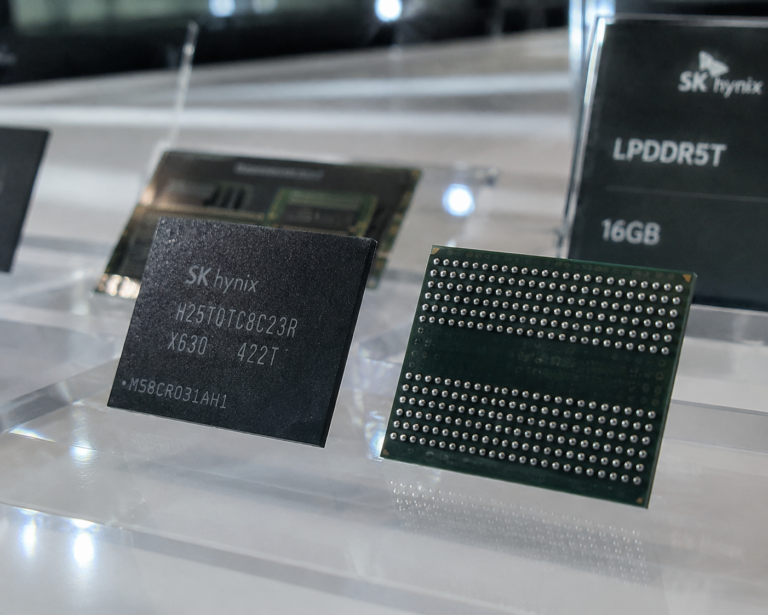
The ruling has renewed attention on the ownership of one of Asia’s most valuable technology groups at a time when its semiconductor arm, SK Hynix, is emerging as one of the biggest beneficiaries of the global artificial intelligence boom.

A Seoul court on Friday ordered Chey to pay Roh 944 billion won, or about $640 million, in cash.

Although the amount is lower than the 1.38 trillion won awarded by an appeals court in 2024, it remains the largest divorce settlement ever ordered in South Korea.

Why the case attracted global attention

The dispute has become one of South Korea’s highest-profile legal cases because it involves one of the country’s largest family-controlled conglomerates, or chaebols.

SK Group began as a textile company in 1953 before expanding into energy, telecommunications, chemicals and semiconductors.

Today it is South Korea’s second-largest chaebol after Samsung.

Millions of South Koreans use SK Telecom’s mobile services, fuel their vehicles at SK gas stations and rely on businesses across the group’s industrial network.

In recent years, however, the group’s international reputation has been driven primarily by SK Hynix, which has become a critical supplier of high-bandwidth memory chips used alongside Nvidia’s AI processors.

The explosive demand for AI hardware has transformed SK Hynix into one of the world’s fastest-growing semiconductor companies.

Its recent $26.5 billion US listing marked the largest share sale ever completed by a foreign company in the United States.

That success has significantly boosted the value of SK Group and Chey’s own fortune, making the divorce battle increasingly significant for investors.

How the divorce dispute unfolded

Chey and Roh were married for 35 years before their relationship collapsed after Chey publicly admitted to fathering a child with another woman.

His public announcement seeking what he described as a “clean end” to the marriage ended a union once referred to as South Korea’s “wedding of the century.”

Roh is the daughter of former South Korean president Roh Tae-woo, who led the country between 1988 and 1993.

During earlier proceedings, Roh’s legal team argued that her father’s political influence and financial support had helped lay the foundations for SK Group’s later expansion.

A lower court accepted arguments that Roh Tae-woo had provided approximately 30 billion won from a political slush fund to assist Chey during the early years of the business.

That finding contributed to the appeals court’s record-breaking 1.38 trillion won settlement in 2024.

However, South Korea’s Supreme Court later overturned that aspect of the ruling, concluding that illegally obtained political funds could not legally be treated as marital assets.

Roh’s assessment would have meant a payout of billions of dollars, inflated by an AI boom that’s boosted demand for the memory chips made by SK Hynix, a subsidiary of SK Group.

On Friday, the court ruled that Chey’s stake in SK Inc. and other assets formed part of the marital estate because they were accumulated during the marriage and both spouses contributed to preserving and increasing their value.

It said Roh’s contributions extended beyond managing the household and raising their children to supporting activities related to SK Group

Why valuation became the key battleground

Although the Supreme Court removed the issue of the alleged political funds, another question became even more important: when should Chey’s assets be valued?

Chey argued that the court should use an earlier valuation before the AI boom dramatically increased the value of SK Hynix and related SK Group companies.

Roh wanted the court to calculate the settlement using much higher, current market valuations after SK Hynix’s AI-driven rally.

The court ultimately chose April 16, 2024, the date when the original appeal completed fact-finding, as the formal valuation point.

However, judges also acknowledged that the subsequent increase in SK Group’s value reflected Chey’s management of the business and considered that appreciation when determining how the marital assets should be divided.

The court ultimately awarded Roh one-third of the marital estate, down from the 35% share granted in the earlier appeals ruling.

The panel explained, “Although the stock price rose significantly, it cannot be said that Chey’s managerial contribution had no effect on that rise.”

“Since shares are assets with high price volatility, the value of the joint property can vary greatly depending on when the closing date of arguments is set,” it said, adding that it is difficult to conclude that even profits or losses arising from whether the shares are disposed of after the divorce becomes final must all be shared with the former spouse.

Why investors were closely watching

The case has raised repeated concerns that Chey might be forced to sell shares in SK Group’s holding company to finance the settlement.

Chey does not directly own SK Hynix shares.

Instead, he is the largest shareholder of SK Inc., the group’s holding company, which owns a 32% stake in SK Square, itself the largest shareholder of SK Hynix.

He holds a 17.9% stake in SK Inc., and his wealth is estimated at $5.4 billion, according to Forbes.

Any forced sale of those holdings could potentially weaken Chey’s influence over South Korea’s second-largest conglomerate.

Friday’s ruling eased some of those concerns.

Rather than ordering Chey to transfer shares, the court ruled that he should retain ownership while satisfying the settlement entirely through a cash payment.

Judges specifically cited the importance of preserving management stability at SK Group.

That means Chey may still need to raise funds through borrowing, pledging shares as collateral or selling other assets, but analysts believe the ruling makes a loss of management control considerably less likely.

Corporate governance research firm Leaders Index said the decision is unlikely to materially alter control of SK Group despite the substantial financial obligation, Reuters reported.

What happens next?

The ruling does not necessarily end the legal battle.

Lawyers representing Chey said they would review the judgment before deciding whether to appeal again.

Either party can still return the case to South Korea’s Supreme Court.

For investors, however, attention is likely to shift back toward SK Hynix’s AI-driven growth rather than courtroom developments.

As demand for advanced AI memory chips continues to accelerate globally, SK Hynix remains central to Nvidia’s supply chain and South Korea’s ambitions to strengthen its position in the global semiconductor industry.

While the divorce settlement represents one of the largest personal financial awards in South Korean history, the court’s decision to preserve Chey’s ownership structure has largely removed fears of an immediate disruption to the management of one of the world’s most strategically important chip suppliers.

The post How SK Hynix's surge played a role in South Korea's $640M divorce settlement appeared first on Invezz