Archive

July 29, 2026

Browsing

Global markets remained cautious on Tuesday as investors assessed conflicting signals over potential US-Iran ceasefire talks and looked ahead to the Federal Reserve’s monetary policy meeting.

The relief rally sparked by the decision to pause strikes faded quickly.

Oil prices also remained under pressure following a sharp decline in West Texas Intermediate crude, while weakness in technology stocks added to the cautious mood across markets.

Technology stocks weigh on market sentiment

Selling pressure surrounding technology stocks added to the cautious tone during the second half of Monday’s session.

The weakness in technology shares contributed to a deterioration in broader market sentiment.

The cautious mood continued into Tuesday’s early European trading session.

Nasdaq futures were down about 1% in early European trade.

At the same time, the US Dollar Index remained steady at around 101.50.

Investors are also awaiting the release of the Conference Board’s Consumer Confidence Index data for July.

The data is scheduled to be published later on Tuesday and could provide additional insight into consumer sentiment.

Euro and pound remain under pressure

EUR/USD turned lower during the second half of Monday’s session before ending the day flat.

The pair remained relatively quiet during the European morning on Tuesday.

It traded sideways below the 1.1400 level as investors continued to assess the broader market environment.

GBP/USD also struggled to maintain its earlier bullish momentum.

The pair ended Monday in negative territory and was consolidating around 1.3300 during the early European session on Tuesday.

The movements in both currency pairs reflected the cautious tone across markets.

Investors continued to monitor developments in the US Dollar as well as broader risk sentiment.

Yen tracks fiscal policy comments

USD/JPY declined below 163.50 during Monday’s European session before recovering in the second half of the day.

The pair remained steady at around 163.70 early Tuesday.

Japan’s Finance Minister Satsuki Katayama said earlier on Tuesday that authorities needed to communicate with financial markets and the Japanese Government Bonds market ahead of the budget compilation.

Katayama also said that the government needed to explain the administration’s intentions regarding its fiscal policy stance.

The comments came as investors continued to monitor developments in Japan’s financial markets.

The yen pair remained relatively stable in early Tuesday trading following its recovery from Monday’s decline.

Australian dollar under pressure

The Australian dollar also remained on the back foot early Tuesday.

Reserve Bank of Australia Governor Michele Bullock said earlier in the day that the central bank remained ready to raise the policy rate if necessary.

Her comments came as markets continued to assess the outlook for Australian monetary policy.

The remarks kept attention focused on inflation and the potential direction of interest rates.

AUD/USD traded below 0.7000 early Tuesday.

The pair remained under pressure as investors responded to the latest comments from the RBA governor.

The post Dollar holds steady as markets assess US-Iran tensions and Fed meeting appeared first on Invezz


Financial markets turned cautious midweek as escalating tensions in the Middle East pushed investors toward safer assets.

Market participants also remained on the sidelines ahead of the Federal Reserve’s interest rate decision and accompanying policy statement, due later in the American trading session.

The cautious approach has kept major currency pairs within relatively narrow trading ranges during the European session.

The US Dollar (USD) Index struggled to gain from the broader risk-averse mood.

The index remained steady at around 101.30 during the European session.

The dollar’s limited reaction came as investors waited for the Federal Reserve’s policy announcement.

The decision is expected to provide further direction for currency markets.

Euro holds near 1.1400

EUR/USD traded in a narrow channel at around 1.1400 early Wednesday.

The currency pair followed small gains recorded on Tuesday.

The euro remained relatively stable as investors avoided making significant moves before the Federal Reserve’s announcement.

The pair’s limited movement reflected the broader caution across financial markets.

GBP/USD also moved higher during the early European session.

The pair corrected higher and traded a few pips above the 1.3300 level.

The movements in the euro and British pound came as markets remained focused on the upcoming Fed decision and developments in the Middle East.

Australian inflation data weighs on the Australian dollar

Data from Australia also influenced currency market movements on Wednesday.

Annual inflation, measured by the change in the Consumer Price Index (CPI), declined to 3.8% in June from 4% in May.

The reported figure came in below the market expectation of 4%.

The Australian dollar remained under bearish pressure following the inflation data.

AUD/USD traded at a fresh two-week low near 0.6950 on Wednesday.

The decline in the currency pair came as the Australian dollar faced pressure during the European session.

The weaker inflation reading was among the key developments affecting the currency’s performance.

Indian rupee trades lower against the US dollar

The Indian Rupee (INR) traded marginally lower against the US Dollar on Wednesday.

The move came after the rupee recorded gains for three consecutive days.

USD/INR rebounded to near 95.85, which marked the intraday high.

The pair’s recovery came as oil prices rebounded strongly amid renewed geopolitical risks.

The rise in oil prices added pressure to the Indian Rupee.

USD/JPY trades near 163.50

USD/JPY edged lower during the European morning session on Wednesday.

The currency pair traded at around 163.50.

The move came as investors continued to monitor developments in the Middle East and awaited the Federal Reserve’s interest rate decision.

The pair remained relatively close to this level as the market adopted a cautious stance ahead of the Fed announcement.

Middle East tensions push oil prices higher

Geopolitical developments in the Middle East added to market uncertainty on Wednesday.

The attacks came in retaliation for drone attacks by the Islamic Revolutionary Guard Corps (IRGC) on Saudi oil facilities.

Meanwhile, Iran claimed an attack on a US military base located in Jordan.

The latest developments have increased concerns about the widening regional conflict.

The renewed geopolitical risks have also contributed to a sharp recovery in crude oil prices.

Following a two-day decline, crude oil prices moved higher on Wednesday.

West Texas Intermediate (WTI) crude traded above $81 per barrel.

WTI prices rose nearly 4% on the day as markets reacted to the latest developments in the Middle East.

The increase in oil prices also influenced currency movements, including the Indian Rupee’s performance against the US Dollar.

The post Markets turn cautious as geopolitical risks rise before Fed rate decision appeared first on Invezz

The JPMorgan Nasdaq Equity Premium Income ETF (JEPQ) has grown to become one of the biggest active funds in the United States, with over $39 billion in assets under management (AUM). Its assets have jumped because of the elevated inflows and its performance over time. 

Investors have flocked to JEPQ because of its strong performance, high dividend yield, and its exposure to companies in the Nasdaq 100 Index like Apple, Nvidia, and Alphabet. It has a 10.85% dividend yield. 

The same is true with other active funds. The NEOS Nasdaq-100 High Income ETF (QQQI) has also accumulated over $13 billion in assets. It has a dividend yield of 14.50%, much higher than that offered by JEPI and JEPQ ETFs

Meanwhile, the Goldman Sachs Nasdaq-100 Premium Income ETF (GPIQ) has grown to become a $4.9 billion fund with a dividend yield of 10.4%. These funds offer a higher yield than other dividend ETFs like the Schwab US Dividend Equity (SCHD) and the Vanguard Dividend Appreciation Index Fund (VIG). 

Why GPIQ is better than the JEPQ and QQQI

JEPQ, GPIQ, and QQQI have a similar objective: to give investors exposure to the companies in the Nasdaq 100, while giving them substantial returns. They do this by using the covered call strategy, which involves buying an asset and writing calls, collecting premiums. 

There are a few differences in how these funds achieve this. GPIQ ETF holds Nasdaq 100 Index companies and layers on a flexible, actively managed covered call strategy. Because it writes calls on only a portion of the portfolio, it retains more upside participation than the other funds.

JEPQ, on the other hand, holds a portfolio of top Nasdaq 100 Index companies and generates income through equity-linked notes (ELNs) tied to the out-of-the-money Nasdaq 100 call options. QQQI ETF uses index options and leverages tax efficiency, including tax-loss harvesting techniques. 

History shows that Goldman Sachs’ GPIQ ETF is a better fund. For one, it has a lower expense ratio than the other two. Its expense ratio is just 0.29%, lower than JEPQ’s 0.35% and QQQI’s 0.68%. While the difference is not all that big, it can add up over time. For example, a $100,000 investment in GPIQ will cost about $290 a year, while a similar investment in QQQI will cost $680 a year.

Further, the ETF has historically done better than the other two because it writes calls on a portion of the portfolio, retaining more upside when the Nasdaq 100 Index is in an uptrend. History shows that, despite regular pullbacks, the index always goes up. 

Data shows that the GPIQ ETF has had a total return of 9.67% this year. JEPQ and QQQI have jumped by 4.14% and 4.95%, respectively. The same has happened in the longer term. Its total return jumped by 87% in the last three years, while the other two have jumped by 59% and 49%, respectively.

JEPQ vs GPIQ vs QQQI ETFs one-year performance | Source: SeekingAlpha

To be clear. Past performance is not always a good indicator of future performance. In some instances, some companies that have underperformed the market tends to outperform. However, analysts often recommend investing in assets that have done well in the past. 

The post Love the JEPQ and QQQI ETFs? Here’s why Goldman Sachs GPIQ is better appeared first on Invezz

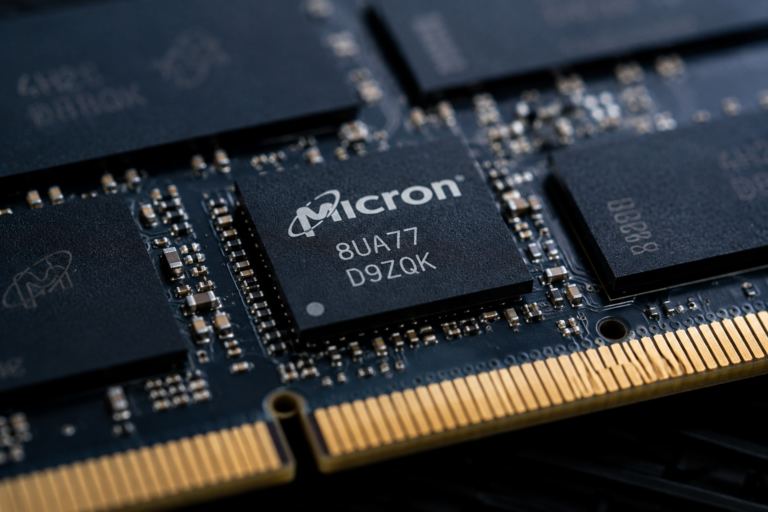
Micron Technology (MU) shares held firm in premarket trading on Wednesday, even as South Korean memory giant SK Hynix suffered a sharp selloff following its second-quarter earnings.

The move suggests investors may be distinguishing between short-term earnings disappointment and the longer-term outlook for artificial intelligence-driven memory demand.

SK Hynix shares plunged more than 9% in Seoul after the company reported record quarterly earnings and revenue but failed to meet the exceptionally high expectations that had been built into one of the market’s biggest AI beneficiaries.

The weakness spread across South Korea’s semiconductor sector, with Samsung Electronics falling more than 5% and dragging the broader Kospi index sharply lower.

Yet Micron, the largest US memory-chip maker, largely escaped the selling pressure.

Its shares fluctuated between modest gains and losses in premarket trading on Wednesday, and were up about 0.5% around 7:25 am ET.

After two days of heavy selling, some investors appeared to buy the dip, helping keep Micron shares relatively resilient.

Investors appear to be buying the dip

Micron has lost about 13% over the past five trading sessions and roughly 28% over the last month, although the stock remains about 160% higher for the year.

The recent decline has prompted several analysts to argue that investors are overreacting to concerns surrounding AI infrastructure spending.

Kumquat Research on Seeking Alpha on Wednesday upgraded Micron from Buy to Strong Buy, arguing that the recent weakness presents a buying opportunity rather than signalling deterioration in the company’s business.

The analyst pointed to Micron’s latest quarterly guidance, noting that the company projected fourth-quarter revenue of $50 billion, gross margins of 86%, and adjusted earnings per share of $31, all comfortably ahead of Wall Street expectations.

According to the analyst, the AI boom has fundamentally altered the industry’s earnings profile.

“Because of the AI supercycle, the company is earning a decade’s worth of profits in just one quarter,” the report said.

AI demand continues to outpace supply

While semiconductor companies continue investing heavily in new manufacturing capacity, analysts argue that memory demand is still growing faster than supply.

Capital expenditure is accelerating across Micron, Samsung Electronics, and SK Hynix, but new fabrication facilities require years to build and ramp up production.

As a result, the market continues to face constrained supplies of advanced memory products required for AI servers.

The analyst argued that the recent correction has done little to alter the industry’s underlying fundamentals.

“In fact, if anything, the demand case has been reaffirmed.”

The report highlighted Nvidia’s recently announced long-term memory supply agreement with SK Hynix, valued at approximately $750 billion, including roughly $500 billion tied to Nvidia and another $250 billion allocated to other US companies involved in AI infrastructure.

It also pointed to Alphabet’s latest earnings, where the Google parent increased its 2026 capital expenditure guidance to roughly $200 billion, reinforcing expectations that hyperscalers continue expanding AI infrastructure despite investor concerns about returns.

The conclusion, according to the report, is that demand remains robust while supply remains tight, making the recent correction more reflective of changing investor sentiment than weakening industry fundamentals.

SK Hynix’s miss masks a strong quarter

Despite the market reaction, SK Hynix delivered one of the strongest quarters in its history.

Operating profit surged more than sixfold from a year earlier to a record level, supported by booming demand for high-bandwidth memory used in AI systems.

However, revenue and operating profit still fell short of elevated analyst forecasts.

The company said delays in shipments of certain advanced products weighed on pricing gains for its core DRAM business.

Melvin, an AI analyst at Milk Road AI, argued that investors had focused too heavily on the earnings miss while overlooking the broader picture.

“The headline numbers aren’t pretty, but revenue came in at $54.6B against estimates of $57.7B, a miss of about 5.4%, and operating profit landed at $41.6B versus the $44.2B expected, even with a still massive 76.3% operating margin. But here’s why I’m not losing sleep over it…,” he said.

He noted that average selling prices for DRAM rose roughly 30% quarter over quarter, while NAND flash prices climbed by the mid-50% range.

“That’s not a company losing pricing power but rather a company still riding one of the strongest pricing cycles memory has ever seen,” he said.

Analysts remain confident in long-term outlook

SK Hynix also projected mid-20% annual DRAM demand growth next year and high-teen growth for NAND memory.

Management added that smartphone and PC shipments were constrained largely because manufacturers could not obtain sufficient memory supplies, rather than because end-market demand had weakened.

Melvin said that distinction was crucial.

“That’s a supply constraint story, not a demand problem and supply constraints are exactly what keeps pricing power intact.”

He added that major cloud companies continue expanding AI infrastructure and increasing memory procurement, while SK Hynix already has long-term supply agreements with ten customers.

“Hyperscalers aren’t pulling back, they’re fighting each other for the same limited memory supply.”

“A miss against inflated estimates during a supply constrained, price surging market is a very different animal than a miss because nobody wants the product,” he concluded.

Industry analyst Patrick Moorhead, chief executive of Moor Insights & Strategy, also dismissed concerns over the earnings miss.

“I think we’ve lost our minds to think that this performance wasn’t a blowout performance,” he wrote on X.

“Revenue +257% and profits +557% and this is bad? Estimates are BS when you are in mega growth.”

“The decade-long AI build out thesis still stands,” he added.

The post Why is Micron stock rising today despite SK Hynix's earnings-led selloff? appeared first on Invezz

Reddit RDDT stock attracted fresh attention from Wall Street ahead of its second-quarter earnings report, after KeyBanc Capital Markets initiated coverage of the social media company with an Overweight rating and a $225 price target.

The target implies roughly 26% upside from Tuesday’s closing price. Shares were up about 1.2% in premarket trading.

KeyBanc said Reddit’s platform is well positioned to benefit from the growth of artificial intelligence, citing its large online community and the increasing value of user-generated content for AI models.

Analyst Justin Patterson wrote that Reddit’s platform has become a trusted destination for online discussions and information.

“We believe this makes Reddit complementary to search, social, web, and LLMs, providing the Company with a durable source of traffic,” Patterson said. “In turn, Reddit’s content can be monetized via ads and data licensing.”

The analyst believes Reddit remains on track to achieve its long-term target of reaching one billion users, with AI-generated citations expected to become an additional driver of user growth.

AI opportunity and advertising seen driving long-term growth

KeyBanc expects Reddit’s investments in community engagement and advertising monetization to support sustained annual revenue growth of more than 30%.

The brokerage also forecasts that the company could eventually achieve an EBITDA margin of around 50%, supported by its asset-light business model and relatively low capital expenditure requirements.

Reddit currently operates more than 100,000 Subreddits, with KeyBanc arguing that the platform’s community-driven discussions have become increasingly valuable for large language models and AI training.

“RDDT is a unique way to participate in AI growth with an asset-light business model,” Patterson wrote in the note.

The firm also noted that Reddit’s capital expenditures account for less than 1% of revenue, giving it confidence that improving EBITDA margins could translate into stronger free cash flow generation over time.

KeyBanc forecasts Reddit’s revenue reaching $3.24 billion in 2026, rising to $4.30 billion in 2027 and $5.46 billion in 2028, while EBITDA is projected to increase from $1.43 billion to $2.73 billion over the same period.

Despite the positive outlook, Reddit shares remain down about 22.4% year to date, although the stock has gained more than 20% over the past three months.

According to LSEG data, 20 of the 30 analysts covering Reddit currently rate the stock either Buy or Strong Buy.

Google AI deal remains a key risk ahead of earnings

While KeyBanc highlighted Reddit’s AI opportunity, investors are also monitoring uncertainty surrounding the company’s AI licensing agreements.

The Wall Street Journal recently reported that Reddit is reviewing its 2024 agreement that allows Google to access Reddit content for AI training.

The report prompted several brokerages to flag potential risks.

RBC Capital Markets said ending the arrangement “would be a significant step backward,” while Wells Fargo warned it could pressure user growth, revenue and valuation, including a potential $500 million impact on AI licensing revenue.

DA Davidson also cautioned that limiting AI access could weigh on daily active user growth, particularly among logged-out users.

Reddit is scheduled to report second-quarter results after the market closes on Thursday.

According to Koyfin, Wall Street expects the company to report revenue of approximately $730 million, up from $499.6 million a year earlier.

Earnings per share are projected to more than double to $0.97 from $0.45 in the prior-year period.

The post Reddit stock gains as this analyst backs company ahead of results appeared first on Invezz

The Roundhill Memory ETF (DRAM) has been in a free fall this week, reaching its lowest level since May 7 this year. It has plunged by over 43% from its highest point this year. This retreat may continue after the latest SK Hynix earnings, which pushed its stock to its lowest level since April 30th. 

DRAM ETF at risk as SK Hynix stock drops

The Roundhill Memory ETF has been in a strong sell-off this month as top memory companies continued plunging. This retreat may continue after SK Hynix, a top constituent, continued its downfall in South Korea.

SK Hynix stock dropped to 1.25 million won, its lowest level since April, after publishing its financial results. Its stock plunged after the company signalled a surge in capital expenditure, which will hit $31 billion, a 50% surge. 

The company said that its revenue and margins jumped, even as the profit came short of expectations. This growth is happening because of the ongoing demand of its memory products, which analysts expect will continue in the near term. 

SK Hynix’s stock has also plunged amid the ongoing deleveraging in South Korea, where many retail and institutional investors have borrowed heavily. Indeed, a senior South Korean minister apologized as many South Koreans who have lost a fortune in the past few weeks.

SK Hynix has a major influence on the DRAM ETF since it is the third-biggest constituent, with a 22% stake. Micron and Samsung, the other large companies in the fund account for 27% and 24%. 

Top memory stocks have plunged ahead of their earnings

The ongoing DRAM ETF crash is happening as other top companies in the memory space drop ahead of their earnings report. Kioxia Holdings stock plunged to 38,380 yen, down by 65% from its highest level this year. This sell-off accelerated ahead of its earnings report.

In South Korea, Samsung Electronics stock has plunged because of the ongoing deleveraging and focus on other companies. It has dropped ahead of its final second-quarter results, which will provide more details than the preliminary one.

Micron stock has dived by 35% from its peak, while other top names like Sandisk, Western Digital, and Seagate Technologies have fallen by double digits. 

DRAM ETF inflows continue

Still, despite these jitters, investors have continued allocating capital to the Roundhill Memory ETF. Data shows that the fund has had $160 million in inflows on July 27. It has added over $7.4 billion in inflows in the last month, with only a single day of outflows in this period.

DRAM inflows | Source: ETF Db

One reason for this optimism is that analysts have maintained their bullish outlook about the top names in the fund. For example, DA Davidson and Susquehanna analysts have boosted their Micron stock target to $2,000, a big increase from the current $820. The average estimate among analysts is $1,268, up by 54% from the current level.

All analysts tracking SanDisk have a buy rating, with Susquehanna having a target of $3,050, much higher than the current $1,278. Wells Fargo targets $1,620, while Evercore seeing it rising to $3,100. 

The general view among analysts is that the artificial intelligence industry has more room to run as more companies continue spending. The estimate is that companies like Amazon, Google, and Microsoft will spend over $750 billion in capital expenditures this year. It is estimated that these firms will spend over $5 trillion by 2030, with some of these funds going to memory companies.

The post DRAM ETF at risk as SK Hynix, Micron, SanDisk stocks plunge despite inflows appeared first on Invezz

US stocks opened lower on Wednesday as investors awaited the Federal Reserve’s latest interest rate decision while monitoring renewed geopolitical tensions in the Middle East and another round of major technology earnings.

Dow Jones Industrial Average fell more than450 points, pressured in part by weakness in Procter & Gamble after the consumer products company missed quarterly revenue expectations.

The S&P 500 was little changed, while the Nasdaq Composite slipped about 0.19%.

Markets remained focused on whether the Federal Reserve would leave interest rates unchanged and on any signals from Chair Kevin Warsh regarding the path of monetary policy.

At the same time, investors continued to assess whether heavy spending on artificial intelligence infrastructure by major technology companies would translate into stronger financial returns.

Chip stocks remain under pressure ahead of Big Tech earnings

Semiconductor stocks continued to struggle after several days of selling as investors questioned the sustainability of AI-related capital spending and weighed rising competition from China.

The weakness extended from Asia into US trading after South Korean chipmaker SK Hynix reported quarterly results that failed to meet elevated investor expectations.

US-listed shares of SK Hynix was up by 0.56%, while Applied Materials declined more than 1.7% and Sandisk slipped over 1.14%. Nvidia fell 0.32%, while Intel edged 0.27% higher.

The iShares Semiconductor ETF remained under pressure after four consecutive losing sessions and was down nearly 7% for the week.

Technology stocks have been weighed down by concerns that billions of dollars invested in AI infrastructure may take longer to generate returns.

Investors are now awaiting quarterly earnings from Microsoft and Meta Platforms after Wednesday’s closing bell, followed by Amazon and Apple later in the week.

Their results are expected to provide fresh insight into AI investment plans and demand for semiconductor infrastructure.

Despite the weakness in technology shares, Seagate Technology gained 5.6% after issuing quarterly guidance above market expectations.

Ford Motor climbed 4.3% after raising its full-year profit outlook for the second time this year, while Procter & Gamble fell more than 3.9% after forecasting slower revenue growth.

The second-quarter earnings season has continued to produce broadly positive results, with more than 85% of S&P 500 companies that have reported earnings exceeding analyst expectations, according to LSEG data.

That compares with a historical average of about 68%.

Fed policy decision and oil prices remain in focus

The Federal Reserve is scheduled to announce its policy decision Wednesday afternoon, with investors widely expecting interest rates to remain unchanged.

Fed funds futures indicate markets continue to assign a high probability that policymakers will hold rates steady this week, although traders still expect at least one quarter-point rate increase later this year.

Attention will also center on Chair Kevin Warsh’s comments for clues about inflation, economic conditions and the future direction of monetary policy, particularly as elevated energy prices continue to influence inflation expectations.

Oil prices climbed sharply after President Donald Trump said the United States would respond to attacks on US forces in the Middle East.

West Texas Intermediate crude rose nearly 7% to around $89.90 per barrel after US Central Command reported that multiple ballistic missiles launched toward US forces were intercepted.

The rise in oil prices added another layer of uncertainty for markets already balancing inflation risks with expectations for future monetary policy.

The post Dow drops 450 points as Fed decision, chip selloff weigh on US stocks appeared first on Invezz