Monero (XMR) has gained over 11% this week, making it one of the best-performing tokens in the crypto market. The rally has pushed the XMR price back toward the $375–$380 resistance zone after weeks of steady accumulation. Rising market participation has strengthened the recovery, while renewed discussions around privacy-focused cryptocurrencies have added to the bullish …
While traders continue chasing AI tokens and institutional Bitcoin flows, Monero price had rallied 10% this week and is building one of the strongest recoveries among major cryptocurrencies. With bullish momentum building alongside an improving chart structure, traders are now watching whether XMR token can extend its leadership toward the next major resistance zone. Privacy …
Ripple continues to expand its business, with banks adopting its technology, and spot XRP ETFs have already attracted nearly $1.5 billion. Yet its native token XRP remains nearly 72% below its 2025 peak. Meanwhile, on-chain data and technical charts suggest XRP may remain stuck in a sideways range until 2028, backed by historical data. Ripple …
Litecoin (LTC) has broken below its ascending support trendline, confirming a shift in short-term market structure. The breakdown was followed by a failed retest, indicating that previous support has turned into resistance. With bearish momentum building near a key order block, traders are now watching whether LTC price can defend $44 or extend its decline …
Shiba Inu price is approaching another make-or-break moment as improving on-chain activity begins to challenge months of persistent bearish sentiment. While fresh data points to growing community participation behind the scenes, the meme coin continues to trade beneath a critical technical barrier that has repeatedly capped every recovery attempt this year. The coming sessions could …
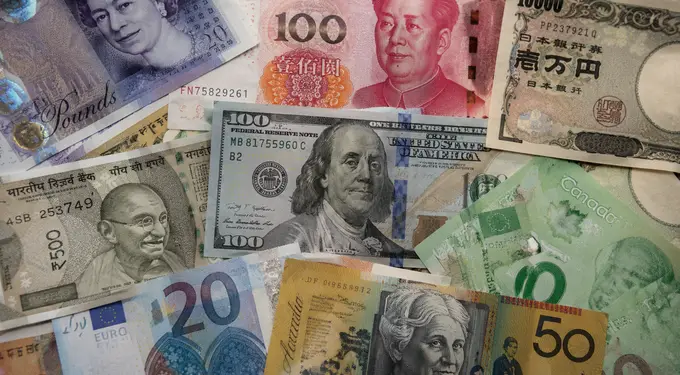
Major currency pairs remained within familiar trading ranges early Tuesday as investors avoided taking large positions while closely monitoring developments surrounding the Middle East crisis.
Market attention remained focused on geopolitical headlines, with ongoing military activity between the United States and Iran continuing to influence sentiment.
Investors were also assessing the potential economic and market impact of renewed tensions in the region.
Average Earnings Excluding Bonus increased by 3.4% year-on-year during the period.
The figure was below the market expectation of 4.5%.
GBP/USD held on to small gains around 1.3450 after declining for three consecutive days.
Investors will turn their attention to the ONS again on Wednesday, when June inflation data is scheduled for release.
New Zealand dollar gains after higher inflation data
The New Zealand dollar strengthened after Statistics New Zealand reported a stronger-than-expected increase in consumer inflation.
The Consumer Price Index rose 4.1% year-on-year in the second quarter.
The figure accelerated from a 3.1% increase in the first quarter and exceeded the market expectation of 4%.
Following the release, NZD/USD gathered bullish momentum.
The currency pair traded above 0.5850, reaching its highest level since early June.
Euro and Canadian dollar remain under pressure
EUR/USD moved sideways around 1.1420 after recording marginal losses on Monday.
USD/CAD remained in a consolidation phase above 1.4050 after closing higher in the previous session.
Statistics Canada reported that annual CPI inflation eased to 2.8% in June from 3.2% in May.
Yen trades steady as Japan focuses on Fiscal sustainability
USD/JPY held steady near 162.50 during the European morning session on Tuesday.
Japan’s Prime Minister Sanae Takaichi said earlier in the day that the government would guide economic and fiscal policy while paying close attention to fiscal sustainability.
The prime minister also said the government would focus on maintaining market trust.
With no major US economic releases scheduled for the second half of Tuesday, investors are likely to remain focused on geopolitical headlines and developments in the Middle East.
Oil price movements and shifting expectations around energy supply risks could also influence currency markets as traders assess the potential for further escalation.
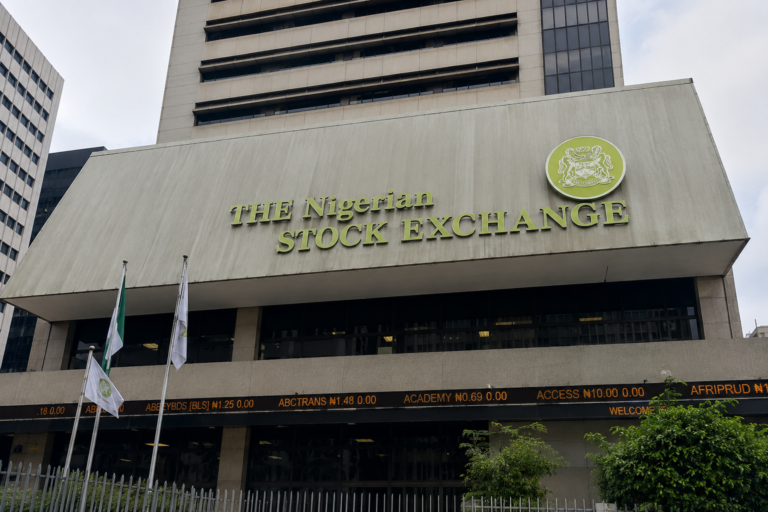
Nigerian stocks and the naira, the local currency, have soared this year, helped by elevated oil prices and the reforms made by Bola Ahmed Tinubu.
Nigerian stocks and naira have jumped this year
Data shows that Nigeria’s NSE All Share Index has jumped by 58% this year and by 86% in the last 12 months. Some of the biggest companies in the country have soared this year.
NSE All Share Index chart | Source: TradingEconomics
Dangote Cement has soared by 112%, while MTN Nigeria, BUA Cement, and Seplat have soared by more than 100% this year. Other top gainers in the index are companies like Gunness Nigeria, First HoldCo, Airtel Africa, and Lafarge Africa.
Meanwhile, the Nigerian naira has jumped this year, with the USD/NGN pair dropping by 4.52% since January. The pair has dropped by over 10% from its highest point last year as Nigeria’s forex reserves have jumped to a 17-year high of $52 billion.
USD/NGN chart | Source: TradingView
Nigerian stocks and currency have done well as the economy has proven to be fairly resilient this year because of Dangote’s oil refinery. The most recent data showed that the economy expanded by 3.90% in the first quarter, slightly lower than the 4.07% experienced in the fourth quarter.
Analysts predict that the economy will grow further over time, with some predicting that it will hit 7%, helped by Tinubu’s reforms. After being elected, he removed the petrol subsidy and took more economic reforms. As a result, S&P Global has said that it may upgrade Nigeria to the frontier market status, which may attract more institutional investments in the country.
Nigeria Central Bank to cut interest rates
At the same time, the central bank is expected to start easing monetary conditions. It has already slashed rates two times to 26.5%, and analysts see it continuing to cut at its meeting next week.
In a recent note, analysts at Standard Chartered predicted that the bank would deliver 150 basis points of cuts this year. This cutting cycle will be a bit slower since inflation has started climbing recently because of the impact of the war. Historically, stocks normally do well when a central bank is cutting rates.
The ongoing Nigerian stock market rally has also been fueled by soaring retail participation, with apps like Bamboo, Trove, and Chaka gaining substantial market share.
Traders are also waiting for the upcoming Dangote Petroleum IPO, which will value it at between $40 and $50 billion. The company recently raised $2.5 billion in private placement ahead of the IPO.
Still, there are potential risks to be aware of. One of them is that, as we have seen in South Korea, retail investors have become highly active in trading Nigerian stocks. The risk is that a small dip may see them panic sell, a move that will drag stocks lower.
Another risk is what happened after the recent SpaceX IPO. Top US stocks jumped before the IPO, and then plunged after that. SpaceX has already plunged to a record low, erasing over $1 trillion in value.