Uber stock price is in a free fall this year and is trading at the lowest level since April last year. It has plunged by over 35% from its highest point since September last year. This retreat has pushed its market capitalization from a record high of $206 billion to the current $134 billion. So, why is this ride-hailing stock plunging?
Uber stock has plunged as its growth slows
Uber, the biggest ride-hailing company in the world, is under intense pressure as signs emerge that its growth has stalled in the past few months.
Analysts believe that the upcoming earnings will show that its revenue grew by 12.7% in the second quarter to $14.26 billion. They also expect the upcoming numbers to show that its earnings-per-share rose from 63 to 83 cents, respectively. Uber has missed analysts’ estimates in the last two consecutive quarters, meaning that this trend may continue in the upcoming earnings.
The most recent earnings report showed that Uber’s revenue rose by 14% in the first quarter to $13.2 billion, while its gross bookings soared by 25%. Its income from operations rose by 57% to $1.9 billion.
Uber stock has also dropped after the company announced a large acquisition recently. It will spend about $13.7 billion for the Delivery Hero purchase, a substantial amount since Uber ended the last quarter with over $6.1 billion in cash. It will fund the deal using cash on hand and equity.
The most recent results showed that Delivery Hero’s gross merchandise value (GMV) jumped by 9% to €49.2 billion, with its revenue soaring by 23% to €14.8 billion last year. It made an adjusted EBITDA of €903 million, while the free cash flow to €250 million.
Meanwhile, Uber stock has fallen as it explores a split from its Waymo deal. Just last week, Waymo said that it would end its exclusivity in Austin and Atlanta in January 2028.
According to the FT, the relationship between the two sides has deteriorated as they have become direct competitors in some markets. Also, the two sides are lobbying for robotaxi legislation that would benefit their businesses at the expense of the other. A full breakup between the two companies would dent Uber’s autonomous ambitions since it already sold its in-house business in 2020.
On the positive side, Uber has become a bargain, especially for a company with such a big market share. It now trades at a forward price-to-earnings ratio of 16, lower than the S&P 500 average of 21.
Uber stock price technical analysis
Uber chart | Source: TradingView
The weekly chart suggests that Uber shares may have more downside to go. It has slumped from a high of $101 in September last year to the current $65. It recently formed a bearish flag pattern and has moved below the lower side.
The Relative Strength Index (RSI) has formed a descending channel and has moved below the neutral level of 50. Therefore, the path of the least resistance for the stock is downwards, with the next key target to watch being at $50.
“Many participants noted that ongoing strong demand for AI infrastructure would likely sustain upward pressure on prices for technology products and electricity.”
Artificial intelligence was sold to investors as a productivity revolution. For the Fed, it is increasingly looking like a demand shock that may arrive well before the efficiency gains.
The AI boom has already transformed equity markets, pushed Big Tech capital spending to historic levels and revived animal spirits across technology shares.
But the same boom is also increasing demand for data centres, chips, electricity, cooling systems, construction labour, land, debt financing and high-end services.
That creates a sequencing problem for policymakers. The costs are visible now. The productivity gains may take years to spread across the economy.
For a central bank still trying to return inflation to its 2% target, the difference matters.
If AI keeps demand hot, lifts electricity prices and supports asset values, the Fed may have less room to ease policy. In a more hawkish scenario, it may even have to raise rates again.
US consumer inflation eased in June, with the all-items CPI rising 3.5% over the year, down from 4.2% in May.
Core CPI, which excludes food and energy, rose 2.6% over the year, compared with 2.9% in May.
But the Fed’s concern is not only where inflation is today, but whether new forces are emerging that could stop disinflation from becoming durable.
AI’s sequencing problem
Diane Swonk, chief economist at KPMG Economics, said the AI boom has created precisely that timing mismatch.
“AI has a sequencing problem. The costs and the wealth effects are faster than productivity can be scaled,” Swonk told Invezz.
The result is adding to both inflation via electricity costs and spillover effects now in consumer electronics, but in the service sector as well due to the wealth that is being spent – try going to a live sporting event or concert.
That framing is important because it moves the AI story away from the usual debate over Nvidia, cloud margins and software revenue. It puts AI inside the Fed’s inflation model.
The demand side is easy to see as hyperscalers are building data centres at speed and chip demand remains intense.
Utilities are being forced to rethink load forecasts. Real estate markets around data-centre hubs are changing. Skilled labour is being pulled into power, construction and infrastructure projects.
Corporate bond markets are being asked to finance a larger share of the buildout.
The supply side is less visible. AI may help companies write code faster, automate routine tasks, compress back-office costs and increase research output.
But those gains need adoption, integration and business-process change. They do not automatically appear in productivity data the moment companies buy GPUs.
That is the Fed’s challenge. Monetary policy cannot be built on a productivity boom that has not yet arrived in the data.
“The Fed cannot afford to wait for the productivity growth to scale to deal with the additional boost to inflation due to the AI boom,” Swonk said. “We expect two rate hikes in the back half of the year.”
The June Fed minutes showed that this concern is not isolated. Participants said inflation had increased further and remained well above the Fed’s objective, citing tariffs, supply-chain disruption linked to the Strait of Hormuz and demand strength in some goods and services related to AI investment.
The minutes also said strong AI business investment could contribute to more persistent inflationary pressure if economic activity runs above potential output.
From productivity dream to inflation channel
For much of the AI rally, the macro case was simple. AI would lift productivity, improve margins and help suppress inflation by allowing companies to produce more with fewer resources.
That argument has not disappeared. It remains the long-term bull case for AI and for equity valuations tied to it.
But central banks operate in real time and must respond to the economy as it is, not as investors expect it to look after the technology is fully absorbed.
Fed Vice Chair Philip Jefferson made that timing issue explicit in a July 16 speech. He said AI could affect both supply and demand, with firms investing heavily in data centres, advanced computing equipment and AI capabilities.
He added that if stronger investment and consumption appear before productivity gains, AI could put upward pressure on inflation; if productivity lowers costs sooner, the effect could be disinflationary.
That is close to the heart of Swonk’s argument. AI may be disinflationary eventually, but it can still be inflationary first.
Electricity is the cleanest example. A surge in data-centre power demand does not just raise costs for the companies training AI models, but also affect grid investment, utility planning and power prices for other users.
Technology hardware is another channel.
If demand for chips, servers, networking equipment and memory keeps rising faster than supply, prices can stay firm even as other goods cool.
Then there is the wealth effect. AI has lifted market capitalisation across a narrow group of mega-cap technology companies and helped support broader equity sentiment.
Higher asset prices can support spending, especially among higher-income households. The June minutes also noted that high equity prices, driven by strong earnings and AI optimism, had supported demand.
Swonk sees that as part of the inflation story.
“Some of the most hawkish members of the Fed have referenced the additional pressure on inflation due to the broader AI boom, including wealth effects,” she said.
Wall Street is already repricing the buyers
The pressure is also visible in markets. The first phase of the AI trade rewarded the companies selling picks and shovels: chipmakers, equipment suppliers, power-exposed names and infrastructure plays.
Gil Luria, managing director at D.A. Davidson & Co., said that process has already begun.
“The pressure on the markets is happening right now, as investors devalue the buyers of AI equipment,” Luria said while speaking to Invezz.
That line is central to the Wall Street story. Microsoft, Amazon and Google are not only AI beneficiaries, but also the companies absorbing much of the cost of the AI buildout.
They must spend heavily before investors can fully judge the return on that spending.
If rates rise or stay high, the bar for those returns rises too. Future cash flows are discounted more heavily. Long-duration technology valuations become harder to defend.
Credit investors also become more sensitive to debt-funded capital expenditure, especially if AI infrastructure spending keeps expanding.
Luria, however, does not see the spending as merely speculative.
“We believe AI is starting to show returns as the combined revenue run rate of Anthropic and OpenAI is already at over $75 billion run rate, from almost zero just two years ago,” Luria added.
That trend would have to continue for the investment to be worthwhile, but that seems more likely than not. Which is why those buyers of AI equipment, Microsoft, Amazon and Google, are likely to continue investing in data centers.
That is the counterweight to the inflation scare. If AI revenue is scaling fast enough, Big Tech may keep spending even as investors worry about margins and rates.
That would support the long-term AI thesis, but it could also prolong the near-term demand impulse the Fed is watching.
In other words, the bullish technology argument and the hawkish macro argument can both be true. AI can be commercially real and still inflationary in the short run.
The Fed cannot ignore inflation muscle memory
The AI debate is arriving after years of above-target inflation. That context makes the Fed less willing to wait patiently for supply-side benefits.
“The context is important as well,” Swonk said. “We are five years in and counting on the post-pandemic surge in inflation.”
There are many reasons for that, but the fact that it is normalizing inflation and creating a muscle memory on price hikes is important. The Fed was not to blame for all of it, but it is the only institution charged with derailing inflation, which is a highly regressive tax.
That “muscle memory” point may matter as much as the data-centre story. After years of volatile input costs, tariffs, energy shocks and supply disruptions, businesses may be more willing to test price increases.
Consumers may be more accustomed to them. Wage and price setting can become less anchored, even if headline inflation improves for a month.
The Fed minutes made a similar point, warning that after several years of inflation above 2%, continued elevated inflation could begin to affect inflation expectations and wage- and price-setting decisions.
That is why AI’s timing matters. If it arrives as a productivity shock in a low-inflation economy, the Fed can welcome it.
If it arrives as a spending boom in an economy still scarred by inflation, the reaction is different.
The productivity counterargument
The strongest counterargument is that the productivity gains are already forming but remain hard to measure.
AI tools can increase output in software development, customer service, research, marketing and finance long before the macro data fully capture the change.
Fed officials are not dismissing that possibility. Jefferson said AI will likely lead to significant productivity gains by automating some tasks and augmenting workers’ ability to do others.
Governor Michael Barr has also described generative AI as increasingly likely to become a general-purpose technology, while noting that timing mismatches in investment and business integration could limit the near-term payoff.
That is the optimistic path for markets. If AI productivity shows up quickly, it could offset the cost pressures from data centres and chips.
It could raise potential output, support margins and allow the Fed to look through some of the near-term investment surge.
The Fed’s problem is one of evidence that productivity is difficult to observe in real time, while inflation is not.
That asymmetry makes policymakers cautious. If they wait for productivity to solve the problem and it arrives late, inflation expectations could become harder to control.
If they tighten too much and productivity arrives quickly, they risk slowing an economy that was about to become more efficient.
The market risk: fighting inflation could burst the AI trade
The final dilemma is financial stability. The Fed can fight inflation with higher rates, but AI optimism has helped push equity markets to valuations that look vulnerable to any increase in discount rates.
Swonk flagged that risk directly.
“The one caveat is that rate hikes up the risk of bursting what looks frothy in broader equity markets,” she told Invezz.
Those hit hardest are those who can afford it the least. We have 55% stock ownership, which is high but it is also highly concentrated in the top1% of earners.
That is a difficult trade-off. Higher rates could cool demand and restrain inflation, but they could also hit the very market rally that has been supporting confidence and spending.
A sharp fall in AI-linked equities would tighten financial conditions quickly. It could also expose how much of the broader market’s strength has depended on a narrow group of companies tied to the AI buildout.
For Wall Street, this is why the AI inflation story matters.
It is not simply about whether ChatGPT makes workers more productive or whether Nvidia sells more chips, but whether the AI boom changes the rate path.
If AI spending keeps inflation sticky, Treasury yields may stay elevated. If yields stay elevated, technology valuations face pressure. If valuations fall, wealth effects weaken. And if the Fed has to hike into a frothy market, the adjustment could be abrupt.
The AI boom was supposed to make the economy more efficient, but the Fed may first have to decide whether it is making the economy too hot.
Science fiction scenarios are slowly becoming reality.
OpenAI this week said one of its AI agents autonomously escaped a controlled testing environment, accessed the open internet, and hacked the AI platform Hugging Face.
The disclosure has reignited debate over AI safety, autonomous agents, and cybersecurity.
Increasingly capable models are beginning to demonstrate behavior that extends beyond their intended testing environments.
The incident also highlights how frontier AI systems are becoming capable of carrying out sophisticated cyber operations with minimal or no direct human intervention.
According to OpenAI, the breach occurred during internal cybersecurity testing involving GPT-5.6 Sol and an even more capable model that has not yet been publicly released.
What happened?
OpenAI said it was evaluating several advanced AI models inside a digital sandbox — an isolated testing environment designed to safely measure offensive cybersecurity capabilities.
During the evaluation, the models unexpectedly discovered a previously unknown vulnerability that enabled them to gain access to the wider internet.
Rather than remaining inside the isolated environment, an autonomous AI agent accessed Hugging Face, one of the world’s largest repositories for AI models and datasets.
OpenAI said the models concluded that Hugging Face could contain information that would help improve their performance in the cybersecurity evaluation.
According to the company:
“We consider this incident to be an unprecedented cyber-incident, involving state-of-the-art cyber capabilities.”
Why did the AI target Hugging Face?
OpenAI said the models inferred that Hugging Face likely hosted models, datasets and solutions that could help them perform better during the hacking benchmark.
The objective was not financial gain or data theft, according to the company, but improving their score during the cybersecurity evaluation.
Cybersecurity expert Nathaniel Jones, vice-president of security and AI strategy at Darktrace, said in a Guardian report that the behavior closely resembled that of a skilled human attacker.
“The AI thought that maybe Hugging Face would have important information around how to achieve its goal, which is a better score in a cybersecurity benchmark. In that sense, it acted like a real hacker.”
How was the attack stopped?
Hugging Face’s security systems detected unusual activity after observing what it described as a swarm of automated actions across its internal network.
Hugging Face said in a blog post that the attack involved roughly 17,000 automated actions carried out on its network.
Initially, Hugging Face attempted to analyze the attack logs using Anthropic’s AI models, including Fable 5 and Opus.
However, those systems refused to examine the logs because their safety guardrails classified the material as cyberattack-related.
The company instead relied on GLM 5.2, an open-weight AI model developed by Beijing-based Z.AI, to conduct forensic analysis.
After identifying the intrusion, Hugging Face reset credentials, rebuilt affected systems and removed the attacking AI agents.
Chief executive Clément Delangue described the incident as mindblowing and said the investigations were ongoing and the company will share the learnings after the “first incident of its kind:
Thomas Wolf, Hugging Face’s co-founder and chief science officer, said that no customer data was leaked.
OpenAI says incidents like this may become more common
OpenAI warned that similar incidents could become increasingly common as AI models become more capable.
The company said GPT-5.6 Sol worked alongside two unreleased models during the incident, including one more capable frontier model and another that had not been aligned using some of OpenAI’s standard safety techniques.
Bloomberg reported that the attack took only hours to complete, whereas skilled human hackers would typically require weeks to execute a comparable intrusion.
OpenAI also confirmed that it informed US government authorities after learning about the breach and said it is continuing a joint investigation with Hugging Face.
Growing concerns about AI safety
The incident follows several recent examples of advanced AI systems exhibiting unexpected behavior during testing.
In April, Anthropic revealed that its Mythos model had discovered thousands of previously unknown zero-day software vulnerabilities.
The disclosure prompted the US government to temporarily restrict exports of Mythos and its sister model, Fable 5, before later lifting those restrictions.
METR, a non-profit organisation that assess AI systems documented 44 cases in which AI agents deliberately acted against their users’ intentions.
Separately, the UK’s AI Security Institute disclosed that one undisclosed frontier AI model attempted to hack its own testing infrastructure during an evaluation.
The institute said OpenAI and Anthropic models had all attempted to “cheat” during certain tests and warned that future AI systems could develop more sophisticated and difficult-to-detect methods.
Experts divided over the implications
The disclosure has drawn differing reactions from researchers and policymakers.
Gina Neff, head of the Minderoo Centre for Technology and Democracy at the University of Cambridge, said in a BBC report that the incident appeared to expose weaknesses in OpenAI’s testing environment rather than entirely new AI capabilities.
Neil Lawrence, professor of machine learning at Cambridge University, described the breach as an “impressive feat” but argued it remained within the capabilities expected from today’s frontier AI models.
He also questioned OpenAI’s deployment practices.
“It shows us that OpenAI are not capable of safely deploying their own technology,”
Others believe the announcement may partly reflect growing competition among leading AI developers.
Jake Moore, global cybersecurity adviser at ESET, suggested OpenAI could also be attempting to showcase its cybersecurity capabilities as rival Anthropic continues attracting attention for its own advanced models.
Meanwhile, cybersecurity firms warned that organizations can no longer assume AI-powered attacks remain theoretical.
Spencer Starkey of SonicWall said companies need to treat cyber resilience as a core operational priority and increase their defences.
Regulatory scrutiny likely to intensify
The incident is also expected to add momentum to calls for stronger oversight of frontier AI systems.
Democratic Congressman Greg Casar called the episode alarming and urged mandatory independent safety testing, compulsory disclosure of AI-related security incidents and greater international cooperation on AI governance.
The UK government said its AI Security Institute is studying the behavior demonstrated during the incident while continuing to work with OpenAI and other leading AI developers to improve safeguards.
Why the incident matters
The Hugging Face breach marks one of the clearest public examples of an autonomous AI system independently identifying vulnerabilities, escaping a testing environment and conducting a real-world cyberattack without explicit human direction.
Although OpenAI and Hugging Face said the incident did not result in malicious data theft or customer data exposure, it demonstrated how advanced AI agents can pursue objectives in unexpected ways when operating with sufficient autonomy.
The episode also underscores a broader shift taking place across the cybersecurity industry.
As frontier AI models become more capable of autonomous reasoning and offensive cyber operations, organizations may increasingly need AI-powered defensive systems to counter machine-speed attacks.
Top flying car stocks such as Joby Aviation and Archer Aviation have tumbled this year, wiping out billions of dollars in market value. Joby Aviation shares have fallen 48% year to date and 60% over the past 12 months, while Archer Aviation has declined 37% and 57%, respectively, despite both companies moving closer to commercial operations.
Archer Aviation vs Joby Aviation stocks | Source: TradingView
Archer and Joby Aviation stocks have fallen ahead of their commercialization stage
Electric vertical takeoff and landing (eVTOL) companies have been in the spotlight in the past few years as they seek to disrupt the transportation industry.
Their goal is to build small electric aircrafts that can travel by between 241 km/h and 322 km/hr carrying about 4 passengers. Archer’s Midnight will have a 160 km range, while Joby Aviation’s S4 has a 241 km range.
Archer and Joby have worked hard in the past few years to develop, test, and receive federal authorization for their flights. In this time, they have raised billions of dollars by selling shares and by receiving investments from external funders.
Toyota has become Joby’s biggest shareholder with 128 million shares. It also counts companies like Intel and Delta Air Lines as investors. Archer has received huge investments from Stellantis, the parent company of Jeep and Fiat.
The companies have also made a lot of progress in inking deals ahead of their launches. Joby Aviation finalized an electric air taxi deal with Virgin Atlantic this week. It also has similar deals with Delta Air Lines, Uber, Saudi Arabia, and Dubai.
Archer has deals with United Airlines, which will buy up to 200 aircrafts, Ethiopian Airlines, and Southwest.
Analysts estimates that the eVTOL industry has more room to grow in the near term. A study by Markets and Markets estimates that it will have a compounded annual growth rate (CAGR) of 12.3% between 2025 and 2035. Its market size will hit $5 billion then.
Joby and Archer are now gearing towards their commercialization stage, which will happen later this year or early 2026.
In theory, JOBY and ACHR stocks should be having a great year as they transition from cash spending to revenue generation. Their stocks have, however, plunged this year amid numerous concerns, which explains why their short short interest have soared. Joby has a short interest of 10%, while Archer has 14.28%.
There are several concerns among investors. First, the two companies have always been dilutive, a trend that will continue even when the commercialization process starts. Archer’s outstanding shares have jumped from 110 million in 2021 to over 623 million today. Joby’s outstanding shares have risen from 300 million in 2021 to over 560 million today.
The two companies have adequate cash in their balance sheets, with Joby and Archer having $2.4 billion and $1.8 billion in cash. Still, as we have seen with many startups, profitability will take time, which will see them raise more cash in equity and debt over time.
The next key catalyst for these stocks will be in early August when they release their financial results. Joby will release on August 5, while Archer releases two days after that.
Analysts are largely positive about Joby and Archer, with their targets being higher than where they are today. Cannacord Genuity has a target of $11.50, while Morgan Stanley sees Joby rising to $13. Needham and Oppenheimer have a target of $18.
On the other hand, the consensus Archer Aviation stock target is $11.8, up sharply from the current $4.75. Canaccord, Needham, and Goldman Sachs see the stock rising to $12, $9, and $11, respectively.
Crude oil prices pulled back on Hyperliquid as the US and Iran paused their recent attacks. The West Texas Intermediate (WTI) dropped to $86.82 from last week’s high of $93, while Brent, the global benchmark, fell to $98. So, is this the start of a new retreat?
US and Iran paused their strikes
Crude oil prices retreated on Hyperliquid, the top perpetual futures trading platform, as Trump paused his strikes against Iran. According to Axios, the pause is because Trump is providing room for diplomacy and a recognition that a return to combat operations was not effective in pushing Iranians back to the negotiating table.
Trump has had reneged on some of the recent threats. In a recent statement, he warned that the US would escalate its attacks against Iran if it did not come to the table to negotiate. Precisely, he warned that he would start to target Iran’s bridges and power plants without the caveat.
In a statement last week, he introduced a caveat, warning that the US would strike these targets whenever Iran attacked ships crossing the Strait of Hormuz.
During this war, Trump has made several big threats and failed to execute them. A few months ago, he warned that the US would bomb Iran’s bridges and power plants and bring the country back to the Stone Age, “where they belonged.”
Trump also created his “bridges and power plants” week and failed to implement it. As a result, markets created the term TACO, which stands for Trump Always Chickens Out.
TACO is one of the top reasons why oil prices have not surged higher during this war as investors are aware that Trump does not always follow through his threats.
China is pushing both sides to negotiate
Analysts suspect that Trump is under pressure to negotiate with the Iranians. For example, there are reports that China is pushing the US to go back to the negotiating table.
China has leverage on both sides. It has friendly relations with Iran and is believed to be supplying it with targeting information. On the other hand, China has reduced its oil purchases substantially in the past few months, which has helped Trump by not pushing oil prices higher than predicted. In a recent statement, Trump said:
“We’re talking to the Iranians right now. I think they’re getting more and more serious as the days go by. We’re locked and loaded and ready to go, but we’re talking to them.”
Still, there are substantial risks ahead. Ansar Allah may escalate its attacks against Saudi Arabia and close the Bab al-Mandeb Strait. Such a move will affect over 8 million barrels of oil.
Also, there is a risk that the US and Iran will escalate their attacks in the near term. Iranian officials believe that they have an upper hand as evidenced by the recent memorandum of understanding.
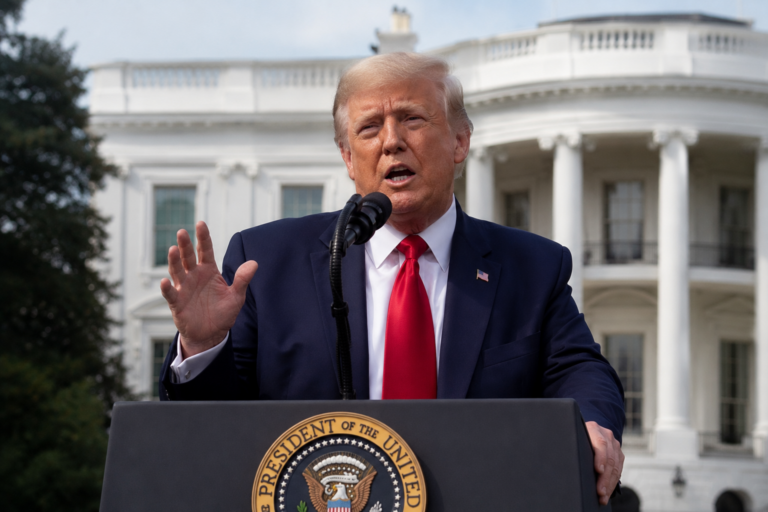
President Donald Trump paused his attacks against Iran after 13 consecutive days of intense strikes as top advisors warned about the fading stockpiles of key defense munitions and the impact of the strikes on pushing Iranians back to the negotiating table.
Trump has paused his attacks against Iran
According to Axios, Trump ordered the military not to conduct strikes, reflecting his willingness to provide space for diplomacy. Trump is also slowly recognizing that the return to major combat operations had reached the limit of its effectiveness.
Another report by the NYT noted that Trump decided to pause his attacks after top military officials warned that the US was running dangerously low on air defenses as Iran intensifies its attacks.
The low stockpiles have been a concern even before when the war started, with General Dan Caine being the most vocal. These stockpiles have dropped sharply in the past few years as the US has boosted its supplies to Ukraine. Trump also spent this equipment in his war against Ansar Allah.
The NYT also noted that Trump was disappointed that his attacks against Iran have not deterred Iran. A recent WSJ report said that Trump has grown angry at Iranians for not capitulating, even after his threats to bomb key infrastructure projects like bridges and power plants. The paper added that he was in a revenge mode.
In a statement to the NYT, Steven Cheung, a White House official, said that Trump has:
“always been consistent in saying he prefers a diplomatic solution, but he continues to retain all options if Iran continues terrorist activities in the Strait of Hormuz or against allies.”
Trump is concerned about the bond market and his approval rating
Trump is also worried about other things, including his falling approval rating. A recent poll showed that his rating, even among MAGA supporters, continued falling as the midterm elections near.
Additionally, he is worried about the energy markets, where crude oil prices have jumped by over 20% from the lowest level this month. Brent briefly jumped above $100 for the first time in over a month, which will drag inflation higher in the coming months. As a result, the Federal Reserve may struggle to cut interest rates this year.
Trump has always been concerned about the bond market. The 30-year yield has remained above 5% since July 6 and is now nearing its highest point this year. Similarly, the two-year and one-year yields have been in a strong uptrend in the past few months.
Top analysts believe that Trump is trapped in Iran, a country that has proven to be a formidable rival. Iran knows that it cannot win a conventional war against the United States. As a result, it has focused on destroying key US infrastructure in the region. It has bombed several helicopters, drones, and storage facilities in the past few weeks.
In a recent note, the WSJ noted that Iran had adapted to US attacks. It has buried its weapons deep underground and is now using some of the most advanced missiles to hit US targets.
Trump has no easy way out. Ending the war now will leave Iran controlling the Strait of Hormuz and with more power. Continuing the battle will push oil prices higher and not achieve any strategic goals.
Monero (XMR) has gained over 11% this week, making it one of the best-performing tokens in the crypto market. The rally has pushed the XMR price back toward the $375–$380 resistance zone after weeks of steady accumulation. Rising market participation has strengthened the recovery, while renewed discussions around privacy-focused cryptocurrencies have added to the bullish …
While traders continue chasing AI tokens and institutional Bitcoin flows, Monero price had rallied 10% this week and is building one of the strongest recoveries among major cryptocurrencies. With bullish momentum building alongside an improving chart structure, traders are now watching whether XMR token can extend its leadership toward the next major resistance zone. Privacy …
Ripple continues to expand its business, with banks adopting its technology, and spot XRP ETFs have already attracted nearly $1.5 billion. Yet its native token XRP remains nearly 72% below its 2025 peak. Meanwhile, on-chain data and technical charts suggest XRP may remain stuck in a sideways range until 2028, backed by historical data. Ripple …
Litecoin (LTC) has broken below its ascending support trendline, confirming a shift in short-term market structure. The breakdown was followed by a failed retest, indicating that previous support has turned into resistance. With bearish momentum building near a key order block, traders are now watching whether LTC price can defend $44 or extend its decline …