
Archive

July 17, 2026

Browsing

London’s FTSE 100 traded lower on Thursday as escalating tensions between the United States and Iran weighed on investor sentiment, while losses in technology stocks added further pressure to the blue-chip index.

The FTSE 100 declined 0.2% to 10,492.99 points by 1038 GMT as investors adopted a cautious approach amid rising geopolitical uncertainty.

Iran tensions dampen investor confidence

Market sentiment weakened after Iran described the Strait of Hormuz as an inviolable red line.

The warning came after US President Donald Trump threatened to attack Iran’s infrastructure.

Iran said that if Trump carried out the threat, it would strike all infrastructure across the Gulf region.

The developments prompted investors to reduce exposure to riskier assets, contributing to weakness across European markets.

Technology stocks lead declines

Technology stocks were among the biggest drags on the FTSE 100.

Shares of data and technology company Experian fell 2.3% after the company reported first-quarter results that were in line with expectations while maintaining its annual outlook.

Peer company RELX also traded lower, shedding 1% during the session.

The weakness in technology stocks contributed significantly to the decline in the benchmark index.

FTSE 250 gains as Rotork surges

While the FTSE 100 remained under pressure, the domestically focused FTSE 250 outperformed, rising 0.3%.

The midcap index was supported by a sharp rally in Rotork shares, which jumped 66.8%.

The gain followed Swiss engineering group ABB’s announcement that it would acquire the British automation company in a deal valued at $5.5 billion.

The takeover announcement provided a significant boost to the FTSE 250, offsetting broader market caution.

UK economy shows modest growth

Economic data released on Thursday showed that Britain’s economy recorded only minimal growth in May.

Growth was supported by expansion in the services sector, while other parts of the economy contracted.

The figures suggested that business confidence remained fragile amid continued geopolitical uncertainty surrounding the conflict involving Iran and political changes at home following a change of prime minister.

Ocado plunges to 13-year low

Among individual stocks, Ocado was one of the session’s worst performers.

Shares of the British online grocery and technology group tumbled 18.8%, hitting their lowest level in 13 years.

The decline came after the company failed to demonstrate tangible progress in discussions aimed at securing new US partners.

Investors viewed the lack of advancement as a setback for Ocado’s efforts to strengthen its business and compete more effectively with rapid delivery companies.

Elsewhere, shares of Frasers Group fell 5.4% after the British retailer declined to provide a fiscal 2027 outlook.

Overall, geopolitical concerns, weakness in technology stocks and company-specific disappointments kept the FTSE 100 under pressure, although gains in the FTSE 250 highlighted continued investor interest in stocks supported by corporate deal activity.

The post London stocks edge lower as geopolitical concerns offset gains in midcaps appeared first on Invezz

On Monday, the US government transferred approximately $297 million in seized Bitcoin and Ether to Coinbase Prime, a move it occasionally makes.

This prompts the same two questions each time: is this merely for safekeeping, or is it a prelude to a sale, and will the government uphold its 16-month-old pledge not to sell confiscated Bitcoin?

On July 13, the US government transferred approximately $297 million in seized Bitcoin and Ether to Coinbase Prime in two on-chain transactions tracked by Arkham Intelligence, with the funds sourced from three distinct criminal cases.

The transfer may be purely administrative, as Coinbase Prime serves as the government’s contracted custodian through a $32.5 million deal with the US Marshals Service, but that same contract also allows for the liquidation of assets, so on-chain analysts view exchange inflows as a potential sale signal.

An executive order issued in March 2025 prohibits the sale of Bitcoin held in the Strategic Bitcoin Reserve, but this protection only applies to Bitcoin, leaving the $53 million in Ether vulnerable to being sold, with the market watching for outflows to trading desks.

What actually moved, and why it drew scrutiny

Arkham Intelligence, a blockchain surveillance service, closely monitored the government’s digital wallets and asked the question on everyone’s mind: “Will they be selling it all?”

The funds were transferred in two stages, with an initial deposit of $8.8 million, followed by a second worth $288.33 million three hours later, comprising 3,940 Bitcoin worth about $244 million and 30,014 Ether worth about $53 million.

The coins in question are from three criminal cases.

They were seized from Ryan Farace, a drug dealer who operated on the dark web under the alias “XANAXMAN,” and from the now-defunct BTC-e, a cryptocurrency exchange that was shut down for money laundering.

The Ether traces to Brian Krewson, a former Oracle employee.

Typically, seized coins languish untouched in cold storage. As a result, when they are transferred, traders are on high alert for a motive.

There is a recent precedent that comes to mind. In December 2024, the government transferred almost $2 billion worth of Bitcoin linked to Silk Road to the same exchange, around the time a court cleared the stash for sale, and the price dipped roughly 1% to around $95,800 before recovering.

What the government’s own rules allow

On paper, nothing about this is unusual. Since 2024, the US Marshals Service has hired Coinbase Prime to store, trade, and liquidate seized assets under a $32.5 million contract.

The platform’s job is to sell, so this isn’t a departure from its normal duties.

The Bitcoin is the complication. Trump’s executive order in March 2025 established the Strategic Bitcoin Reserve from seized coins and vowed the government would not sell it: “The United States will not sell bitcoin deposited into the Strategic Bitcoin Reserve.”

However, this pledge only applies to Bitcoin and does not extend to Ether, which belongs to a separate Digital Asset Stockpile that the government is free to sell, thus putting the $53 million Ether leg in play.

Tim Sun, a senior researcher at HashKey, said: “The market needs to distinguish between Bitcoin held in the reserve and the US government’s broader balance-sheet holdings.”

The critical detail that no one outside the Treasury can confirm is whether these coins have actually been forfeited and moved into the reserve or are still ordinary seized assets passing through Marshals custody.

Why the market barely moved

Prices were nearly unaffected, with Bitcoin falling less than 1% to $62,650 and Ether hovering around $1,780, largely unrelated to the seized coins.

Market participants were watching the macro calendar, awaiting fresh inflation data and Fed Chair Kevin Warsh’s July testimony.

There is a longer reason for the calm. The fact that the government hands over nine-figure sums to a commercial custodian instead of a vault shows the progress made in the institutional plumbing of crypto. 

The record cautions against assuming a crash is triggered by a single seller, as the government spreads out its sales.

For instance, a large sale of 9,861 Bitcoin in March 2023 took place on a day when the price rose by 2.43%.

Michael Terpin, founder of Transform Group, said on the On The Margin podcast that traders overreact to isolated incidents:

“We have been following the four-year cycle unbelievably well, and yet every bear market it still seems like the majority of pundits say the cycle is broken.”

What it means for investors

What matters now is the next move of the coins, not the fact that they moved. Sitting in a custodian’s wallet, they are inconsequential.

A transfer out of Coinbase Prime and onto an exchange order book would be a real warning, but that hasn’t happened.

Two things will settle this: whether the Treasury classifies the Bitcoin as reserve money, which would render a sale a broken promise, and whether the Ether is sold discreetly like previous stockpile assets.

Until then, this appears as the government shuffling its own coins, and the price concurs.

The post US moves $297M in seized crypto to Coinbase Prime despite no-sell vow appeared first on Invezz

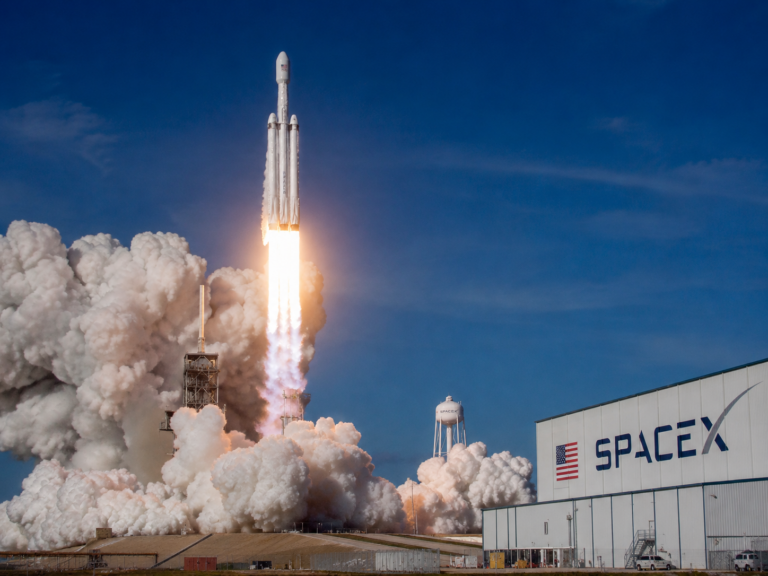
SpaceX has become one of Wall Street’s biggest targets for short sellers just weeks after completing the largest initial public offering in history, as investors increasingly bet that the Elon Musk-led company’s blockbuster valuation could come under pressure.

The stock briefly slipped below its $135 IPO price on Wednesday before recovering to close at $135.27, marking the first time it has traded below its debut price since listing on the Nasdaq last month.

Shares have now fallen about 10% over the past five trading sessions.

According to data compiled by S3 Partners, short interest in SpaceX has climbed to 181 million shares, representing 28% of the company’s 646 million-share tradable float.

Bloomberg reported that this is the highest level ever recorded for a newly listed company during its first month of trading.

Unrealised gains for short sellers have already reached approximately $3.88 billion.

The pace of bearish positioning has accelerated sharply.

In the past week alone, investors added approximately 37 million shares worth about $5 billion to short positions.

S3 Partners’ head of predictive analytics, Ihor Dusaniwsky, said the recent weakness in the stock, combined with the approaching expiry of insider lockup restrictions, has encouraged additional bearish bets.

“Recent share price weakness, combined with the approaching lockup expiration, is further stimulating short-selling demand,” Dusaniwsky said.

Valuation concerns weigh on shares

The decline in SpaceX’s shares comes after its highly anticipated IPO valued the company at about $2.1 trillion following its first day of trading.

Despite the recent pullback, the company still trades at around 49 times expected revenue, making it one of the most expensive large-cap technology companies on Wall Street.

By comparison, fellow Musk-backed company Tesla trades at roughly 15 times expected revenue.

Investors have also become more cautious after SpaceX raised $25 billion through the bond market last month to finance the expansion of its artificial intelligence infrastructure.

The move added to broader concerns that aggressive AI-related capital spending across the technology sector could pressure future returns, particularly if interest rates remain elevated.

“The stock’s retreat seems to be a combination of profit-taking, valuation reassessment and the unwinding of extremely bullish positioning following one of the most anticipated listings in recent years,” said Daniela Hathorn, senior market analyst at Capital.com in a Reuters report.

Lockup expiry and earnings in focus

Investors are preparing for two key catalysts that could increase volatility over the coming weeks.

The company is expected to conduct its 13th Starship test flight, while second-quarter earnings are anticipated during the first week of August.

Attention is also turning to the expiry of lockup restrictions for insiders.

Although SpaceX completed the largest IPO in US history, less than 5% of its outstanding shares were made available for public trading, creating a scarcity that helped propel the stock following its debut.

As lockup restrictions begin to expire, millions of additional shares could enter the market, potentially increasing selling pressure.

Most analysts are still bullish on stocks

Despite the recent correction, Wall Street remains broadly optimistic on the company’s long-term prospects.

According to LSEG data, 27 of the 32 analysts covering the stock recommend buying it, while four maintain neutral ratings and only one has a sell recommendation.

However, several high-profile investors and analysts have come to reiterate their bearish stance after the stock price decline.

Former Fidelity Overseas Fund manager George Noble told Business Insider that investors should “expect the price to completely crash.”

“I think it could be half over the course of the year,” Noble said, adding that he believes a fair value for the shares is around $30, implying a decline of roughly 78% from current levels.

Jay Ritter, the economist widely known as “Mr. IPO” for his research on public listings, said he had considered shorting SpaceX before its market debut and was not surprised by the recent decline.

CFRA analyst Keith Snyder has also maintained his sell rating since the IPO.

“I am still negative on the valuation at these levels and haven’t seen anything that would change the story for me,” Snyder told Business Insider, adding that only substantially stronger growth would alter his view.

A Reuters analysis of 50 major US IPOs since 2010 found that companies whose shares fell below their IPO price within the first two months of trading generally went on to underperform those that remained above their offering price, although most still delivered positive long-term returns.

The post The world's most valuable IPO, SPCX, is now Wall Street's most shorted new stock appeared first on Invezz

Salesforce stock has plunged by more than 50% from its December 2024 peak as concerns about its growth outlook have intensified. Its market capitalization has fallen from more than $347 billion to about $136 billion, and the selloff could continue as investors remain concerned about the company’s strategy and long-term growth prospects.

Salesforce stock has dropped amid SaaSpocalypse fears

CRM stock has been in a steep decline over the past few years as concerns about its growth have escalated. Recently, the stock has dropped because of the rising SaaSpocalypse fears. 

SaaSpocalypse is a relatively new term referring to fears that AI agents will replace traditional software and the “per seat” pricing model. A good example of this is what Starbucks is doing. 

According to Bloomberg, the company is now building its own AI-assisted replacement for a Microsoft system that tracks inventory and an IBM solution that manages maintenance. It aims to save the $400 million it spends annually on software.

The fears in the software industry escalated this week after IBM published its financial results. IBM said that its business slowed as customers reprioritized their capital expenditure, redirecting it towards hardware purchases like servers and memory.

Salesforce’s organic growth has been slowing for a while. The most recent results showed that its revenue rose by 13% in the first quarter. While this growth is solid for a company that has been in business for years, it was not organic. Its $11.1 billion revenue included $444 million from Informatica, a company it acquired in a $8 billion deal.

The company has been one of the most acquisitive ones in the US. It has spent billions of dollars acquiring firms like Own Company, Fin, Bluebirds, Tableau, and Slack.

Analysts expect that Salesforce’s business will remain under pressure in the coming months. The average estimate is that its revenue jumped by 10% in the last quarter to $11.32 billion. Its annual revenue is expected to be $46.1 billion, followed by $50.4 billion next year. 

Bargain or a value trap?

At face value, there are signs that Salesforce stock has become a bargain. For one, its Non-GAAP forward price-to-earnings ratio has dropped to 11.8, well below the sector median of 24. Its five-year average stands at 24. 

Similarly, the forward PEG ratio stands at 0.73, also lower than other companies in the tech industry. The challenge, however, is that these valuation metrics include the extra funds made from its Informatica buyout. 

As a result, the company will need more growth catalysts over time. One of this catalysts will be its Agentforce and data segments, whose annual recurring revenue soared to $3.4 billion, a 200% jump. It has deployed over 3.8 billion Agentic Work Units (AWU) across Agentforce and Slack.

READ MORE: Salesforce stock falls after KeyBanc downgrade on AI growth concerns

CRM stock technical analysis

Salesforce stock chart | Source: TradingView

The weekly chart shows that the CRM share price has slumped in the past few years, moving from a record high of $367 to a low of $146. It remains below the 50-week Exponential Moving Average (EMA).

The stock has also remained below the Supertrend indicator and the 78.6% Fibonacci Retracement level. 

Therefore, the stock will likely remain under pressure in the near term. In this, it may drop and retest the year-to-date low of $146. 

In the long-term, however, the stock will likely bounce back as investors buy the dip in software stocks. 

The post Salesforce stock has slumped amid SaaSpocalypse concerns: what next? appeared first on Invezz

Binance Coin (BNB) is back in focus after a series of developments strengthened interest in the Binance ecosystem while technical indicators pointed to a possible trend reversal.

At the time of writing, BNB was trading at $577.34, leaving it within striking distance of the next major technical hurdle.

Bullish chart pattern puts $647 in focus

BNB has been building what market technicians identify as an inverse head-and-shoulders pattern on the 12-hour chart.

Source: crypto_vulture_signals on TradingView

The formation is widely followed because it often signals a reversal after a prolonged decline, provided the price clears the neckline resistance with convincing momentum.

The neckline is located around $589 to $590, making that range the most important level for traders in the near term.

A decisive move above it would complete the pattern and project a measured upside target of about $647.29.

From the current price near $577, that represents a potential gain of roughly 12%.

The latest trading activity also shows BNB holding within a relatively tight range.

During the past 24 hours, the token traded between $574.69 and $584.24, suggesting that buyers and sellers are waiting for the next catalyst before committing to a stronger directional move.

On the downside, $550 remains a key support level. Technical studies place additional importance on that area because it aligns with the 0.618 Fibonacci retracement and the Value Area Low (VAL).

A sustained decline below approximately $537 would invalidate the current bullish setup and shift attention back to downside risks.

Binance ecosystem continues to expand

While traders monitor the charts, Binance has continued to broaden the use cases for its ecosystem, giving BNB additional utility beyond exchange fee discounts.

The company is accelerating its strategy of building a financial platform that combines crypto trading, payments, investments, and digital asset services under one ecosystem.

Binance Pay has grown significantly and now supports more than 21 million merchants, allowing users to spend digital assets through local payment networks in multiple markets.

Binance has also expanded its tokenised asset offerings. Its bStocks product reached $100 million in trading volume within just 15 days of launch, with 47% of trading taking place outside traditional US market hours.

Those figures highlight growing demand for around-the-clock access to tokenised financial products.

Stablecoins are also becoming a larger part of Binance’s strategy.

The exchange recently expanded support for Ripple’s RLUSD on the XRP Ledger (XRPL) after previously listing the Ethereum version of the stablecoin.

Binance also announced an XRP airdrop for eligible RLUSD holders, adding another incentive for users participating in the expanding RLUSD ecosystem.

These developments continue to increase activity across Binance’s products, where BNB remains the primary utility token for transaction fees, staking, decentralised applications, and other services.

Deflationary tokenomics remain a long-term support

BNB’s supply continues to decline through its automated token burn mechanism.

The 36th quarterly Auto-Burn permanently removed 1,615,827.795 BNB from circulation.

At prevailing prices, the burn was worth approximately $931.7 million.

The automated process calculates the number of tokens to be destroyed using an objective formula that considers BNB’s market price and the number of blocks produced on BNB Smart Chain, rather than relying on discretionary decisions.

Following the latest network upgrades, quarterly burns are now executed directly on BNB Smart Chain, with the tokens sent to the network’s permanent blackhole address.

The long-term objective remains reducing BNB’s total supply from the original 200 million tokens to 100 million tokens over time.

The token also continues to serve as the native asset across BNB Smart Chain, opBNB, and BNB Greenfield, where it is used for network fees, staking, governance, and a growing range of decentralised applications.

The post BNB price outlook: Binance Coin targets $647 as bullish pattern takes shape appeared first on Invezz