
Archive

July 22, 2026

Browsing

DeXe (DEXE) has suffered one of the sharpest declines in the cryptocurrency market this year after its price plunged more than 80% on Wednesday.

The dramatic sell-off erased almost all of the gains from the token’s recent rally and left traders scrambling to understand what triggered the collapse.

While the broader crypto market remained relatively stable, DEXE dropped from trading above $23 during the day to around $4.83, marking an unusually severe move that quickly became one of the biggest talking points across the digital asset market.

The token is now trading more than 90% below that record level, with losses extending to 88% over the past seven days.

Notably, the collapse came only days after DEXE reached a new all-time high of $48.91 on July 13, highlighting just how quickly market sentiment changed.

Alleged team-linked token sales trigger market panic

The biggest catalyst behind the crash appears to be large token transfers linked to wallets reportedly associated with the DeXe project team.

According to on-chain data shared by blockchain analyst morsyxbt, wallets believed to be connected to the team transferred approximately 625,000 DEXE, valued at about $6.2 million at the time, to cryptocurrency exchange Binance on July 21.

The tokens were subsequently sold, adding significant selling pressure to a market that had already experienced a rapid price run-up.

The reported sales sparked immediate concern among traders, many of whom viewed the transfers as a sign that major holders were reducing their exposure.

Panic selling followed as market participants rushed to exit their positions, accelerating the decline within hours.

The speed of the drop stood out because it occurred while the broader cryptocurrency market showed no comparable weakness.

Instead of moving in line with Bitcoin or the wider altcoin market, DEXE experienced a sharp decline that appeared largely isolated to the token itself.

The crash also followed an extraordinary rally that had lifted DEXE from much lower levels to nearly $49 in a matter of days.

Such rapid gains often leave markets vulnerable when large holders begin selling, particularly when liquidity is relatively thin.

Liquidations magnified the decline

The initial wave of selling did not end with spot market activity. As prices continued falling, leveraged traders were forced out of their positions, creating another round of selling pressure.

Crypto market commentator Crypto__Haris reported that funding rates turned deeply negative as the decline intensified, while leveraged traders faced six-figure losses during the sell-off.

https://twitter.com/Crypto__Haris/status/2079657133793247577?s=20

Forced liquidations added to the downward momentum, creating a chain reaction that pushed the token even lower.

This type of liquidation cascade is common after strong rallies. When traders use borrowed funds to amplify gains, a sharp decline can trigger automatic liquidations.

Those liquidations become market sell orders, which place additional pressure on price and often lead to even more liquidations.

That sequence appeared to play out in DEXE’s case.

What began as heavy selling reportedly linked to large wallets quickly evolved into a broader market-wide exit as leveraged positions were unwound.

DEXE’s technical picture remains heavily bearish

The scale of the decline has left DEXE in an extremely oversold position from a technical perspective.

The token is down 80.2% over the past 24 hours, 84.3% over 14 days, 71.7% over the past month, and 40.3% over the past year.

Technical indicators also reflect the severity of the move.

DEXE token price analysis

The 7-period Relative Strength Index (RSI) reportedly fell to around 27.02, a level that typically signals heavily oversold conditions after aggressive selling.

However, despite the oversold reading, traders remain focused on whether selling pressure has fully subsided.

Market participants are also monitoring on-chain wallet activity for signs that additional large transfers to exchanges could emerge.

Current technical levels place immediate support between $4.00 and $4.50, where buyers may attempt to stabilise the price.

On the upside, analysts have identified $7.50 as an important resistance level that needs to be reclaimed before short-term sentiment begins to improve.

The post DEXE price crashes 80% in 24 hours as alleged team sell-off sparks panic appeared first on Invezz

Investors have largely shifted their attention away from the Magnificent 7 companies as enthusiasm has moved toward semiconductor stocks and the broader artificial intelligence trade. 

The Roundhill Magnificent 7 ETF (MAGS) has gained just 0.68% this year, significantly underperforming the S&P 500 and Nasdaq 100 indices. 

With earnings from the biggest names in technology approaching, the key question is whether this pullback presents a golden opportunity to buy these market leaders before a potential rebound.

Magnificent 7 stocks have underperformed the market

Magnificent 7 is a group made up of the biggest American companies, including popular names like Apple, Microsoft, Alphabet, Amazon, Meta Platforms, NVIDIA, and Tesla. Cumulatively, these companies are valued at over $22 trillion.

These companies have underperformed the broader market this year as investors have started to question their AI spending. At the same time, investors have turned to memory companies, with the popular DRAM ETF attracting over $20 billion in assets in less than four months.

Apple, which has plans to spend just $14.6 billion in capital expenditure this year, has jumped by 20% and is the best-performing Magnificent 7 company. Nvidia and Google have risen by 9%, while Amazon has risen by 7%. Meta has slipped by 2.8%, while Tesla is down by over 17%.

This performance has pushed investors to lose interest in these companies. The closely-watched Roundhill Magnificent 7 ETF (MAGS) has had over $167 million in outflows in the last six months. It has shed over $332 million in assets in the last three months.

MAGS ETF inflows and outflows | Source: ETF Db

Recently, however, there are signs that investors are buying the dip, with the net inflows rising by $400 million in the last 30 days. 

Magnificent 7 earnings ahead

The next few days will be crucial for Magnificent 7 companies as they publish their financial results. Tesla and Alphabet will be the first ones to publish their results today, with analysts expecting strong numbers.

Tesla recently announced strong second-quarter delivery numbers. It sold 480,000 vehicles in the second quarter after making 450k. A recent report suggested that the company is boosting its production in Germany as demand in Europe jumped. 

Estimates are that its revenue rose by 17.2% in the second quarter to $23 billion as its deliveries jumped.

Alphabet is also expected to release strong numbers. The average estimate is that its revenue jumped by 21% to $113.62 billion, while its EPS moved from $2.31 to $3.04. These will be the first results since the company raised billions of dollars by selling shares and debt. 

More Magnificent 7 companies will publish their numbers next week. Microsoft and Meta Platforms will release their results on Wednesday, while Apple and Amazon will do so a day later. Nvidia is always the last company to publish its numbers.

These results will be important because the big-tech companies will describe their strategies going forward. Most importantly, they will announce their capital expenditure plans as the cost of memory, servers, and chips keeps rising. 

Most analysts believe that most of these companies will do well over time. In a recent Bloomberg interview, Morgan Stanley’s Mike Wilson said that big tech stocks will do well as investors rotate from semiconductor names. 

Also, the average estimate for Nvidia stock is $304, much higher than the current $207. The consensus Microsoft target is $556, up from the current $397, while Google’s target is$386.

The post Magnificent 7 face the ultimate test as Q2 earnings loom appeared first on Invezz

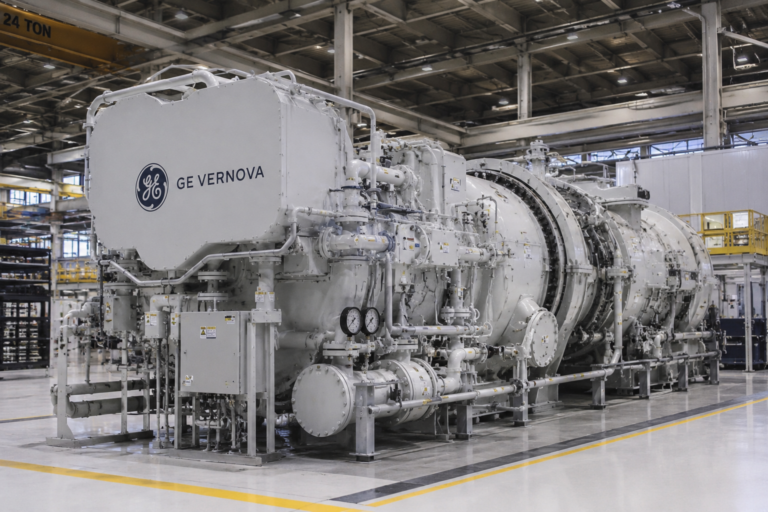
GE Vernova GEV shares fell about 4% in premarket trading on Wednesday after the energy equipment maker narrowly missed Wall Street’s profit expectations.

The company also warned that global tariffs could increase its costs by as much as $200 million next year, overshadowing stronger revenue growth and another increase in its full-year outlook.

The company said tariffs are expected to raise costs by between $100 million and $200 million in 2026, even after accounting for contractual protections and cost recovery measures.

The warning came despite another quarter of robust order growth fueled by surging electricity demand linked to data center expansion and broader electrification trends.

The Cambridge, Massachusetts-based company reported adjusted core earnings of $1.3 billion for the second quarter, slightly below analysts’ expectations of $1.3 billion, according to LSEG data.

Adjusted earnings per share came in at $2.47, missing the analyst consensus estimate of $3.04.

Revenue rose 22% year over year to $11.1 billion, surpassing FactSet estimates of $10.8 billion.

Net profit increased to $649 million, or $2.47 per share, from $492 million, or $1.86 per share, in the same quarter last year.

Chief Executive Scott Strazik said GE Vernova continues to benefit from strong global demand, supported by a record backlog worth $176 billion.

In the second quarter, total orders climbed to $24.2 billion, nearly doubling from $12.4 billion a year earlier, with organic orders rising 88%, driven primarily by the Power and Electrification businesses.

Wind remains the weakest business

While demand for electricity infrastructure continued to strengthen, GE Vernova’s wind division remained a drag on overall performance.

Revenue from the Wind segment declined about 10% to $2 billion as lower onshore turbine deliveries and higher offshore project costs weighed on results.

The business reported a core operating loss of about $275 million, extending losses from the previous year.

By contrast, the Electrification segment generated core profit of $671 million, more than doubling from $314 million a year ago.

The Power business also posted strong performance, with core profit rising about 31% to $1 billion.

The contrasting results underscore the company’s increasing reliance on conventional power generation and grid infrastructure, areas benefiting from growing investment as utilities prepare for rising electricity demand.

Company raises outlook despite tariff warning

GE Vernova increased its financial guidance for the second consecutive quarter, citing accelerating investment in electricity generation and transmission.

The company now expects 2026 revenue of between $45.5 billion and $46.5 billion, approximately $1 billion higher than its previous forecast.

It also sharply raised its free cash flow outlook to between $11.5 billion and $12.5 billion, compared with its earlier projection of $6.5 billion to $7.5 billion.

The improved outlook reflects expectations that electricity consumption in the United States will continue rising as artificial intelligence infrastructure, data centers and broader electrification projects boost demand.

Commercial electricity demand is expected to outpace residential consumption over the coming year, creating additional opportunities for equipment suppliers.

Valuation debate continues

GE Vernova shares have climbed roughly 60% this year and have nearly doubled over the past 12 months, making the stock one of the strongest performers in the industrial sector.

Last month, Jefferies raised its price target on the company to $1,210 while maintaining a Buy rating. The shares currently trade around $1,079.

However, not all analysts believe the valuation is justified.

According to Simply Wall St, a discounted cash flow analysis values GE Vernova at around $874 per share, implying the stock trades at roughly a 23.5% premium to its estimated intrinsic value.

At the same time, valuation based on earnings multiples suggests the shares remain attractive relative to peers.

Analysts say the key question for investors will be whether GE Vernova can continue converting the global wave of investment in power generation and grid infrastructure into sustained earnings growth and stronger cash flows while managing rising costs and execution risks.

The post GE Vernova beats revenue estimates, raises 2026 outlook: why is the stock falling? appeared first on Invezz

Advanced Micro Devices Inc. (AMD) and Anthropic have agreed to a deal covering tens of billions of dollars’ worth of artificial intelligence servers, according to a Wall Street Journal report, in a move that could strengthen AMD’s position against Nvidia while expanding Anthropic’s computing capacity.

Under the reported agreement, Anthropic will purchase up to 2 gigawatts of AMD’s next-generation Instinct MI450 chips beginning in the first half of 2027.

AMD will also invest up to $5 billion in Anthropic, contingent on the AI startup meeting specific deployment milestones.

AMD shares fell about 2.5% in premarket trading following the report.

The agreement marks AMD’s first investment in Anthropic and expands the chipmaker’s presence in the rapidly growing AI infrastructure market.

Anthropic to deploy AMD chips across AI infrastructure

According to the report, Anthropic will use some of the AMD chips in its own data centers while leasing additional computing capacity through major cloud providers and neocloud operators.

AMD and Anthropic are also working together to identify suitable data center locations for the deployment of the new hardware.

“We have very much wanted to be a major part of their infrastructure,” AMD Chief Executive Lisa Su said.

She added that the companies’ engineering teams have been collaborating for some time.

Anthropic currently runs workloads across several AI hardware platforms, including Google’s tensor processing units, Amazon’s Trainium chips and Nvidia graphics processing units.

Discussing the planning required for large AI infrastructure deployments, Su said, “You can’t just wake up one morning and say, ‘Oh, I want a gigawatt of compute tomorrow.’”

“You actually have to plan, you know, 12, 18, 24 months in advance for what you want.”

The Wall Street Journal also reported that AMD is in discussions to provide a financial backstop for Anthropic’s future data center leases.

AMD expands challenge to Nvidia

The deal comes as AMD continues its effort to increase its share of the AI accelerator market, where Nvidia remains the dominant supplier.

Growing demand for AI infrastructure has created opportunities for AMD as developers seek alternative chip providers.

AMD has recently secured major agreements with OpenAI and Meta Platforms and has been working to attract younger AI companies as customers.

As part of the partnership, AMD has also entered into an engineering collaboration with Anthropic that will use Anthropic’s Claude AI models to improve the performance of AMD’s chip technology.

AMD’s chips currently have lower adoption than Nvidia’s products, partly because many AI developers are more familiar with Nvidia’s software ecosystem.

According to the report, AMD has also offered incentives, including warrants, to help attract large customers.

AI infrastructure demand continues to accelerate

The agreement is expected to help Anthropic meet growing demand for its AI services after rapid adoption strained its computing resources.

The company has experienced capacity constraints in recent months, with some customers reporting outages and usage limits as demand for its AI tools increased.

Earlier this year, Anthropic expanded its infrastructure partnerships through agreements with Google, Amazon and Elon Musk’s SpaceX, which has begun offering excess data center capacity to customers.

The post AMD to invest up to $5B in Anthropic under AI chip supply deal: report appeared first on Invezz

US stocks opened lower on Wednesday as weakness in semiconductor stocks and higher oil prices weighed on investor sentiment ahead of a crucial day of corporate earnings led by Alphabet, Tesla and other major technology companies.

The Dow Jones Industrial Average gained 78 points, or 0.15%. The S&P 500 declined 0.12%, while the Nasdaq Composite dropped 0.46%.

Markets are entering a pivotal phase of the second-quarter earnings season, with investors looking for evidence that large technology companies are generating returns from their multibillion-dollar investments in artificial intelligence after months of AI-driven gains across Wall Street.

Alphabet and Tesla earnings take center stage

Investor attention is firmly focused on earnings from Alphabet and Tesla, the first of the so-called Magnificent Seven companies to report results this earnings season.

Alphabet’s results are expected to receive particular scrutiny following the delay of a key Gemini AI model, which has raised questions about the company’s AI strategy and its ability to compete in the rapidly evolving artificial intelligence market.

Alphabet shares were almost unchanged after market open, trading 0.03% higher.

Technology companies reporting after Wednesday’s closing bell also include Texas Instruments, International Business Machines and ServiceNow.

Investors are expected to closely monitor commentary on artificial intelligence spending, cloud demand, enterprise technology budgets and expectations for the second half of the year.

The earnings reports are widely viewed as an important test of whether continued investment in AI infrastructure and software can justify elevated technology stock valuations.

Semiconductor stocks came under renewed pressure ahead of the reports. The iShares Semiconductor ETF (SOXX) fell 1.2% in trading, while Texas Instruments slipped 1.56%.

Rising oil prices add to market caution

Markets also continued to monitor developments in the Middle East, where geopolitical tensions pushed oil prices to their highest levels in more than a month.

Brent crude climbed about 3% to trade above $94 per barrel after briefly moving above $95, while West Texas Intermediate crude rose roughly 3% to above $86 per barrel.

The gains followed the 11th consecutive round of US strikes against Iran, while tensions surrounding shipping routes remained elevated after continued threats from Yemen’s Iran-backed Houthi militia.

Higher energy prices have renewed concerns that inflation could remain elevated, potentially complicating the Federal Reserve’s policy outlook.

According to the latest Reuters poll, economists expect the Federal Reserve to leave interest rates unchanged for the remainder of 2026, although many also see an elevated risk of future rate increases.

CME FedWatch data showed traders assigning more than a 70% probability that the Fed will leave rates unchanged at next week’s meeting. However, traders were also pricing in a 70% chance of at least a quarter-point rate increase in September.

Super Micro jumps as earnings season gathers pace

Corporate earnings continued to generate notable stock moves ahead of the market open.

Super Micro Computer surged 14% in trading after the AI server manufacturer announced it had secured more than $60 billion in new fourth-quarter orders and forecast gross margins above its previous expectations.

AT&T also gained 4% after reporting stronger-than-expected wireless subscriber additions during the second quarter.

As earnings season accelerates, investors remain focused on whether strong demand for AI infrastructure, cloud services and enterprise software will continue to support corporate growth and broader market valuations amid persistent geopolitical and macroeconomic uncertainty.

The post Nasdaq slips as investors await Alphabet, Tesla earnings, chip stocks fall appeared first on Invezz