Archive

July 14, 2026

Browsing

The post MemeCore (M) Price Explodes—Could a 100% to $3 Be Next? appeared first on Coinpedia Fintech News

Memecore (M) price has witnessed a significant upswing in the past few hours and attracted more than 20% gains, becoming the top performer in the crypto market. The token has reached $1.51, while the trading volume increased by less than 1%. However, the price has broken above a bearish pattern, signalling renewed bullish momentum after …

The post Pi Network Price Crashes 98% – 3 Steps That Could Revive the Pi Token Price appeared first on Coinpedia Fintech News

Pi Network price has fallen to a new all-time low after dropping another 13% to $0.07078. The token is now down more than 98% from its all-time high, increasing concerns among holders as selling pressure continues to mount. As Pi’s decline accelerates, some community members are urging the Pi Core Team to take immediate action …

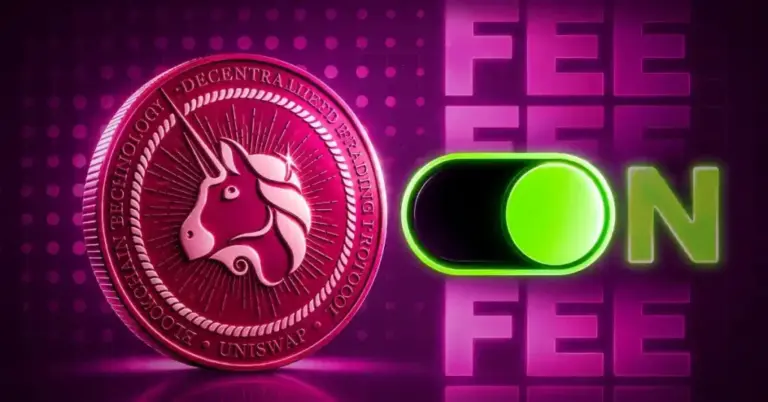
The post Uniswap Price Rallies After Fee Switch Proposal—Can UNI Hit $5 Next? appeared first on Coinpedia Fintech News

Uniswap price is outperforming the broader crypto market after governance discussions around the protocol’s fee switch returned to the spotlight. The proposal has revived expectations that future protocol revenue could strengthen UNI’s long-term tokenomics, while a confirmed breakout above long-term trendline resistance has improved the technical outlook. Together, the governance update and strengthening price structure …

The post Riot Platforms (RIOT) Stock Price Prediction 2026, 2027, 2030 – 2040: How High Can RIOT Stock Go? appeared first on Coinpedia Fintech News

As institutional adoption of Bitcoin continues to reshape capital markets, RIOT Platforms Inc. (NASDAQ: RIOT) has emerged as one of the leading publicly traded Bitcoin infrastructure companies. Despite retreating from its 52-week high of $30.32 following broader crypto market weakness, the company remains well-positioned to capitalize on the next phase of Bitcoin adoption through its …

The post Ripple Joins x402 Foundation as Premier Member appeared first on Coinpedia Fintech News

Ripple has joined the x402 Foundation as a Premier Member to support the development of payment standards for AI-driven transactions. The company said it is expanding support on the XRP Ledger, enabling AI agents to make payments using XRP and RLUSD through the x402 protocol. The move aims to advance infrastructure for automated digital payments …

The GBP/USD pair rose to around 1.3355 during the early European session on Tuesday.

The British pound strengthened against the US dollar.

Investors increased bets that the Bank of England could raise interest rates later this year.

Markets expect the central bank to tighten policy to keep inflation under control.

Market sentiment toward the pound improved after policymakers signalled that inflation risks remain elevated, prompting traders to reassess the outlook for UK monetary policy.

However, escalating geopolitical tensions in the Middle East continued to support demand for the US dollar as a traditional safe-haven asset, limiting gains for the currency pair.

BoE rate hike expectations boost sterling

The British pound found support as traders ramped up bets that the Bank of England will be forced to tighten monetary policy before the end of the year in an effort to contain inflationary pressures.

The shift in expectations came after renewed tensions in the Middle East pushed oil prices higher following a decline to pre-conflict levels over the past month.

Higher energy prices have renewed concerns that inflation could remain elevated.

BoE Chief Economist Huw Pill signaled that interest rates are likely to rise this year to prevent inflation from becoming entrenched.

Following those remarks, futures markets shifted their focus to the September and November policy meetings as the most likely opportunities for the UK central bank to increase borrowing costs.

According to Morningstar, while markets are increasingly pricing in the possibility of a rate hike, the probability of such a move remains below 50%.

Middle East conflict underpins demand for the US dollar

Despite sterling’s gains, renewed geopolitical uncertainty continued to provide support for the US dollar.

Earlier, US President Donald Trump said the United States would ensure the Strait of Hormuz remains open and would charge a 20% fee.

On Tuesday, the United States carried out additional attacks on Iran.

Iranian media reported explosions on Kish and Qeshm islands, as well as in Bushehr and Bandar Abbas.

Iran’s military said it attacked US military sites in Kuwait, Bahrain, and Jordan, along with two oil supertankers in the Strait of Hormuz.

The escalating conflict has increased investor demand for safe-haven assets, which could strengthen the greenback and act as a headwind for the GBP/USD pair.

Focus shifts to US inflation data and Fed testimony

Investors are now awaiting the release of the US June Consumer Price Index (CPI) inflation report later on Tuesday, which could provide fresh guidance on the outlook for US monetary policy.

A softer-than-expected inflation reading could weaken expectations for further US interest rate hikes, putting pressure on the US dollar and providing additional support for the GBP/USD pair.

Market participants will also closely monitor congressional testimony from Federal Reserve official Kevin Warsh for further signals on the US central bank’s policy outlook.

The post Sterling rises as BoE rate hike bets strengthen amid inflation concerns appeared first on Invezz

The US dollar remained supported on Tuesday after benefiting from a risk-averse market environment at the start of the week.

Investors also turned their attention to the upcoming US inflation data, while rising geopolitical tensions continued to lift oil prices and pressure several major currencies.

The US Dollar Index (DXY), which closed in positive territory on Monday, traded in a narrow range above the 101.00 mark during the European session on Tuesday.

Market participants are now awaiting the release of the US Consumer Price Index (CPI) data.

Annual CPI inflation is forecast to ease to 3.8% in June from 4.2% recorded in May.

Euro and sterling remain in focus ahead of Lagarde’s speech and UK GDP data

The euro remained in consolidation after Monday’s losses.

EUR/USD traded below the 1.1400 level after declining around 0.3% in the previous session.

Investors are also watching comments from European Central Bank President Christine Lagarde, who is scheduled to meet US Treasury Secretary Scott Bessent later in the day.

Lagarde is also expected to deliver a speech that could offer further clues on the economic outlook.

The British pound steadied against the US dollar after coming under pressure on Monday.

GBP/USD traded near the 1.3350 level during the European session.

Investors are now looking ahead to the UK’s monthly Gross Domestic Product data for May, which will be released later this week by the Office for National Statistics.

Yen trades sideways after Monday’s gains

The Japanese yen remained relatively stable after USD/JPY advanced about 0.5% on Monday.

The currency pair traded sideways above the 162.00 level during European trading hours.

Earlier on Tuesday, Japan’s Finance Minister Satsuki Katayama said that a sharp shift in the asset management environment could prompt a review of the Government Pension Investment Fund’s portfolio.

New Zealand dollar rises on policy easing comments

The New Zealand dollar outperformed several peers after comments from Reserve Bank of New Zealand Chief Economist Paul Conway.

Conway said on Tuesday that additional tightening of monetary policy would probably be needed if inflation resulting from the Middle East conflict proves persistent.

Following the remarks, NZD/USD gained bullish momentum and traded near the 0.5800 level, rising roughly 0.8% on the day.

Indian rupee weakens as oil prices surge

The Indian rupee traded sharply lower against the US dollar on Tuesday as higher crude oil prices and rising US Treasury yields reduced demand for the local currency.

USD/INR climbed to a fresh seven-week high near 96.13.

The pressure on the rupee coincided with a sharp rise in domestic crude oil futures.

Middle East tensions drive oil prices higher

Geopolitical tensions remained a key driver of market sentiment.

The US military carried out strikes for a third consecutive day on Monday.

Iranian media reported explosions on the islands of Kish, Qeshm and Abu Musa, as well as in the port city of Bandar Abbas.

The escalating tensions continued to support crude oil prices.

West Texas Intermediate crude climbed nearly 9% on Monday and was last seen trading around $80 per barrel, extending gains by another 2.5% during Tuesday’s session.

The post US dollar steadies ahead of CPI as oil surge pressures global currencies appeared first on Invezz

Gold prices recovered strongly on Tuesday, reversing losses from a sharp sell-off as cooler-than-expected US inflation data reinforced expectations.

The precious metal had come under pressure in the previous session, briefly touching a two-week low as investors refrained from placing large bets ahead of the release of the US CPI data and Federal Reserve Chair Kevin Warsh’s congressional testimony.

However, sentiment shifted dramatically after inflation figures came in well below market expectations, triggering a sharp rally in bullion.

Gold recovers after sharp sell-off

In the previous session, spot gold rose 0.3% to $4,013.93 an ounce by 0300 GMT after falling to its weakest level since July 1.

US gold futures for August delivery gained 0.4% to $4,020.80.

The modest recovery came after bullion had fallen nearly 3% on Monday, marking its steepest one-day decline in more than a month.

Investors largely stayed on the sidelines ahead of key US economic data and congressional testimony from Federal Reserve Chair Kevin Warsh.

Softer inflation changes market sentiment

Investor sentiment shifted significantly after the US Bureau of Labor Statistics released its June inflation report on Tuesday.

According to the agency, the Consumer Price Index (CPI) fell 0.4% in June after increasing 0.5% in May.

The reading was considerably cooler than economists’ expectations, which had called for a decline of 0.1%.

“This decline in the all-items index was the largest 1-month decrease since April 2020, when it fell 0.8%,” the report said.

On an annual basis, headline inflation rose 3.5% over the past 12 months, easing from 4.2% recorded in the previous month.

The reading also came in below economists’ expectations of 3.8%.

Meanwhile, core CPI, which excludes volatile food and energy prices, remained unchanged in June after rising 0.2% in May.

Economists had expected another 0.2% monthly increase.

Annual core inflation slowed to 2.6% from 2.9% reported in May.

Gold jumps toward $4,100

The softer inflation data provided a significant boost to the gold market, as investors viewed the figures as giving the Federal Reserve greater flexibility to leave interest rates unchanged during the remainder of the year.

Gold prices surged nearly $60 immediately after the inflation report was released.

Although bullion remained just below the $4,100-an-ounce mark, the rally marked a sharp reversal from the weakness seen in the previous session.

Spot gold was last trading at $4,087.40 an ounce, up more than 2% on the day.

The rebound effectively erased much of the previous session’s weakness, when prices had slipped to a two-week low amid cautious positioning ahead of the inflation release.

The stronger-than-expected recovery underscored how sensitive the gold market remains to US inflation data and expectations surrounding future Federal Reserve monetary policy.

With inflation cooling more sharply than anticipated and both headline and core price pressures easing, bullion found renewed buying interest after a volatile start to the week, pushing prices back toward the key $4,100-an-ounce level.

The post Gold recovers after two-week low as softer US CPI boosts Fed outlook appeared first on Invezz

Oracle stock continued its strong freefall this week, reaching its lowest level since April last year. ORCL has slumped by over 62% from its all-time high, with Larry Ellison’s net worth plunging by $60 billion this year to $187 billion. It has become one of the top laggards in the AI space.

Oracle stock has plunged despite strong revenue and backlog growth

ORCL stock has been in a steep decline despite being one of the top beneficiaries of the artificial intelligence boom. Its most recent financial results showed that its revenue and backlog continued rising.

Its revenue jumped by 21% to $19.2 billion in the fiscal fourth quarter, with its cloud infrastructure figure rising by 93% to $5.8 billion. Its cloud apps revenue jumped by 10% to $4.1 billion.

For the year, its revenue jumped by 17% to $67 billion, with its operating cash flow rising by 54% to $32 billion.

Most importantly, the company’s RPO or backlog, jumped by $85 billion in Q4 to $638 billion, with its top clients including companies like Applied Intuition, SoundHound (SOUN), Admiral, and Kobalt. 

Wall Street analysts are bullish on the company, with the revenue estimate for the first fiscal quarter being $19.12 billion, up by 28% YoY. Its annual revenue is expected to jump 32% this year to $90 billion, followed by $130 billion next year.

Soaring debt and OpenAI deal are key risks

Despite this growth, analysts are still concerned about Oracle’s huge debt load and its overreliance on OpenAI. Of its huge RPO, $300 billion of it comes from OpenAI, a company whose growth has started slowing amid rising competition from Anthropic. The contract will start in 2027, with OpenAI buying massive amounts of AI compute.

Most importantly, there are concerns about its massive debt load and soaring capital expenditure. Its capex jumped by 162% in the last fiscal year, with its free cash flow coming in at negative $24 billion.

The company’s debt has also jumped, and this trend will continue. It ended the last year with $130 billion in debt, with the company planning to raise $40 billion through debt and equity. It raised $43 billion in debt sales and $5 billion in equity.

Investors are concerned about its soaring debt, which has pushed its yields higher. TradingView data shows that the yield of its 2034 bonds jumped to 6.518% from the year-to-date low of 5.34%. Its 2038 bonds are yielding 6.70%, while its 2027 ones are yielding 4.56%.

Still, on the positive side, the ongoing Oracle stock crash has made it a bargain, with most analysts having a favorable rating. Keycorp recently reiterated its overweight rating, while Wedbush’s Dan Ives placed a target of $240.

Bernstein has a target of $325, while Wolfe Research placed a target of $225. MarketBeat data shows that the average target for the stock is $268. 

ORCL stock technical analysis

Oracle stock chart | Source: TradingView

The daily chart shows that the ORCL stock has slumped in the past few months, moving from a high of $346.23 on September 10 last year to the current $131.5.

It recently crossed the crucial support level of $134.95, its lowest level in February and April this year.

The stock has dropped below all moving averages and the oversold level of the Murrey Math Lines tool. It also remains below the Supertrend indicator.

Therefore, the waning sentiment will likely push it lower, potentially to $120 or even $100. However, in the long term, the stock will bounce back as investors rotate from semiconductor names to hyperscalers.

The post Oracle stock drops below crucial support as its bond yields jump: now what? appeared first on Invezz

US consumer prices recorded their biggest monthly decline in more than six years in June as a sharp drop in energy prices provided temporary relief from this year’s inflation pressures.

The Consumer Price Index for All Urban Consumers (CPI-U) fell 0.4% on a seasonally adjusted basis in June after rising 0.5% in May, the Bureau of Labor Statistics (BLS) said on Tuesday.

Economists had forecast a monthly decline of 0.2%.

The decline was the largest one-month drop since April 2020, when prices fell 0.8% during the early stages of the pandemic.

On an annual basis, consumer prices increased 3.5%, down from economists’ expectations of 3.8%, according to a Dow Jones survey.

Despite the softer-than-expected reading, the report is unlikely to provide lasting relief for households or eliminate the possibility of another Federal Reserve interest rate increase later this year as tensions in the Middle East resurface and oil prices rise again.

However, the S&P futures rose on the news by 0.2%. Nasdaq 100 futures rose by 1%.

Gasoline prices provide temporary relief

The decline in headline inflation was driven largely by lower fuel costs after gasoline prices retreated from multi-year highs following a fragile ceasefire between the United States and Iran last month.

The energy index fell 5.7% in June after rising 3.9% in May, 3.8% in April, and 10.9% in March.

According to the BLS, the drop in energy prices was the single largest contributor to the decline in overall consumer prices, more than offsetting increases in food and shelter costs.

However, energy prices remain significantly higher than a year ago, with the index still up 15.7% over the past 12 months.

Food prices continued to edge higher, with the food index rising 0.2% during June, matching the increase recorded in May.

Grocery prices also climbed 0.2% over the month, while food inflation stood at 3% on an annual basis.

Core inflation remains subdued

Core inflation, which excludes the more volatile food and energy categories, was unchanged in June, bringing the annual core inflation rate to 2.6%.

Economists had expected core prices to rise 0.2% during the month and 2.9% from a year earlier.

The softer core reading suggests underlying price pressures eased during the quarter, although the outlook remains uncertain.

Middle East conflict clouds outlook

The improvement in inflation may prove short-lived.

The ceasefire between the US and Iran collapsed last week after commercial vessels came under attack in the Strait of Hormuz, triggering renewed military strikes between the two countries.

Fuel prices have already begun moving higher again.

According to motorist advocacy group AAA, the national average gasoline price rose to $3.86 a gallon on Tuesday from $3.79 a week earlier.

Oil prices also climbed to a four-week high after President Donald Trump announced that the United States would reinstate a naval blockade around Iran, targeting the Strait of Hormuz, one of the world’s most critical oil shipping routes.

Further increases in energy prices could quickly feed back into consumer inflation over the coming months.

The Federal Reserve left its benchmark interest rate unchanged at 3.50%-3.75% during its June meeting, although updated projections showed policymakers increasingly leaning toward another rate increase in 2026.

Before Tuesday’s inflation report, futures markets tracked by CME FedWatch indicated investors were assigning roughly a 51.9% probability that the Fed would raise interest rates at its September 15-16 policy meeting.

The latest inflation data may temper those expectations somewhat, but renewed pressure on oil prices could keep policymakers cautious.

The post US CPI falls sharply in June as energy prices tumble, but relief may be shortlived appeared first on Invezz