
Archive

July 2026

Browsing

Crinetics Pharmaceuticals shares surged after Vertex Pharmaceuticals announced an agreement to acquire the endocrinology-focused biotech companyin a deal valued at approximately $10 billion.

The all-cash transaction values Crinetics at $85 per share and is expected to close during the current quarter, subject to customary conditions.

The acquisition sparked a sharp rally in CRNX stock.

CRNX shares climbed nearly 100% in pre-market trading on Tuesday to around $83.69.

Vertex shares, meanwhile, declined modestly following the announcement.

The transaction comes amid a wave of pharmaceutical industry acquisitions, as large drugmakers seek to strengthen their development pipelines by acquiring smaller biotechnology companies with promising therapies.

Vertex targets endocrinology growth

According to a joint press release, Vertex expects Crinetics’ portfolio, including its approved acromegaly treatment Palsonify and investigational therapy Atumelnant, to contribute an estimated $5 billion in peak annual sales.

Crinetics focuses on therapies for endocrine disorders.

The company markets Palsonify, a once-daily oral treatment approved by the US Food and Drug Administration in September for acromegaly, a rare hormonal disorder caused in most cases by a noncancerous pituitary gland tumour that leads to excessive growth hormone production during adulthood.

The disease can result in enlargement of the face, jaw, hands, and feet, along with symptoms including joint pain, headaches, and nausea.

Crinetics said Palsonify works by lowering insulin-like growth factor to help alleviate these symptoms.

The company’s pipeline also includes Atumelnant, a once-daily oral treatment under development for congenital adrenal hyperplasia (CAH), a group of inherited disorders affecting the adrenal glands.

The condition leads to excessive production of male sex hormones known as androgens.

Patients with CAH are commonly treated with high-dose glucocorticoids, which are associated with multiple side effects.

Crinetics is developing Atumelnant as an alternative treatment approach.

The company also said the therapy has demonstrated potential in treating Cushing’s syndrome, a rare hormonal disorder characterised by excessive cortisol levels that can cause rapid weight gain, muscle weakness, bruising and high blood pressure.

CEO highlights strategic fit

Vertex Chief Executive Officer Reshma Kewalramani described the acquisition as strategically aligned with the company’s long-term growth plans.

“Its focus on serious diseases in specialty markets with significant unmet need, well-understood causal human biology, and potentially best-in-class medicines could deliver transformative benefit to patients,” she said in a statement.

Kewalramani added that Vertex intends to build on its experience in rare genetic diseases to continue expanding the commercial potential of Palsonify.

Vertex has established its business around treatments for cystic fibrosis and has also expanded into gene-editing therapies through its partnership with CRISPR Therapeutics.

Premium reflects pipeline potential

Crinetics closed at slightly above $42 per share before the announcement, meaning Vertex’s offer represents a premium of more than 100%.

According to the companies, the acquired portfolio could generate approximately $5 billion in peak annual sales.

Vertex reported total revenue of $12 billion last year, making the acquisition a significant addition to its long-term growth strategy.

Market analysts also viewed the strategic rationale positively.

Citi analyst Geoff Meacham said the acquisition aligns well with Vertex’s existing strengths in specialty diseases and biologically targeted medicines.

“The fit is clear, given existing expertise in specialty markets, serious diseases, causal biology, and measurable biomarkers. The $5 billion peak sales framing adds another route to sustain double-digit topline growth.”

Meacham maintained a Buy rating on Vertex and set a price target of $585, indicating further upside from the stock’s previous closing level.

The post Crinetics stocks surge after Vertex agrees to $10B cash buyout appeared first on Invezz

Dow Jones opened higher on Tuesday even as the Nasdaq came under pressure from another broad selloff in semiconductor stocks, highlighting a divergence in US equity markets ahead of the second-quarter earnings season.

The Dow Jones Industrial Average gained about 160 points, or 0.3%, while the Nasdaq Composite fell around 0.7%.

The S&P 500 slipped 0.25% as weakness in chipmakers weighed on the broader technology sector.

The mixed performance follows Monday’s session, when the Dow briefly crossed the 53,000 mark for the first time and closed above the milestone, while the S&P 500 and Nasdaq Composite posted solid gains led by a rebound in semiconductor stocks.

Dow outperforms as chip stocks pressure Nasdaq

The Dow’s relative strength contrasted with declines across major semiconductor names in trading.

Micron Technology fell about 6.9%, while KLA, Marvell Technology, Broadcom and Advanced Micro Devices also traded lower.

Nvidia lost more than 1.4% after a Reuters report said Chinese startup DeepSeek is developing its own artificial intelligence chip, a move that could reduce its reliance on chips from Nvidia and Samsung.

Memory stocks were among the biggest decliners.

Western Digital dropped more than 6%, while SanDisk also fell 8% as investors continued to take profits after the sector’s strong rally over the past year.

Dow was supported by gains in software companies including Microsoft, Salesforce and IBM, helping the blue-chip index outperform despite broader weakness in technology hardware stocks.

Meanwhile, SpaceX was set to join the Nasdaq-100 on Tuesday, with its shares trading modestly higher ahead of the index inclusion after the industry’s mandatory quiet period expired.

Samsung selloff weighs on global chip sector

The latest wave of selling began in Asia after South Korea’s Kospi index dropped nearly 5%, driven by heavy losses in semiconductor companies.

Samsung Electronics fell nearly 7% despite reporting a 19-fold increase in second-quarter operating profit.

Investors appeared to focus instead on concerns about spending, demand and elevated expectations following the stock’s strong rally.

SK Hynix also declined sharply, extending weakness across the memory-chip industry.

The company is scheduled to begin trading on the Nasdaq later this week, giving investors another closely watched event for the semiconductor sector.

The weakness spread into Europe, where the STOXX 600 index edged lower, before reaching US markets.

Analysts said the market reaction reflects heightened expectations heading into earnings season after semiconductor stocks led much of this year’s rally.

Earnings and Fed remain in focus

Investors are now turning their attention to the second-quarter earnings season, which is expected to test whether artificial intelligence-related companies can justify their elevated valuations.

Market participants are also awaiting minutes from the Federal Reserve’s latest policy meeting on Wednesday, the first under Chair Kevin Warsh.

According to LSEG data, traders currently expect at least one 25-basis-point interest rate increase before the end of the year.

Outside the technology sector, Fiserv rose after reports that the payments company had discussed selling its debit card payments infrastructure business to major US banks, including JPMorgan Chase and Bank of America.

Rivian shares fell more than 10% after the electric vehicle maker launched an offering of 75 million shares despite forecasting second-quarter revenue above analysts’ estimates.

Oil prices also moved higher following reports of attacks on vessels near the Strait of Hormuz, adding another factor for investors to monitor as markets head into a busy week of earnings and monetary policy updates.

The post Dow gains 160 points as chip selloff drags Nasdaq ahead of earnings season appeared first on Invezz

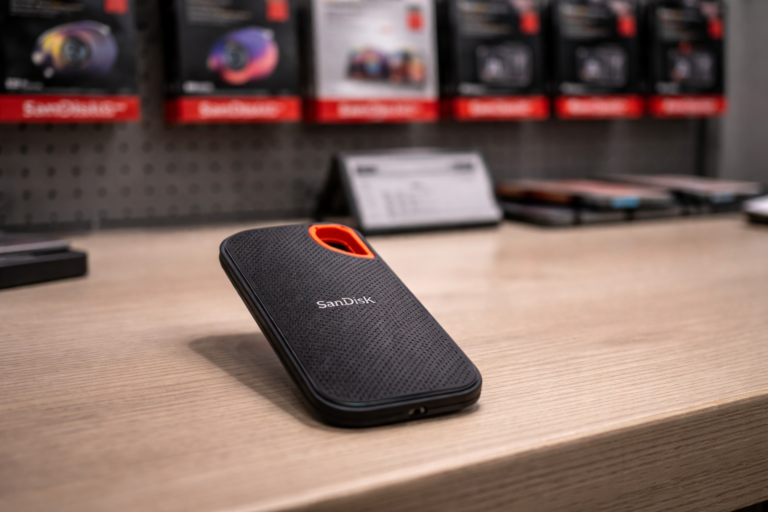
Shares of SanDisk Inc. (SNDK) fell sharply in trading on Tuesday as a broad selloff in memory-chip stocks spread from South Korea to US markets despite strong preliminary earnings from Samsung Electronics.

SanDisk shares declined 8% after falling 23% over the previous three trading sessions.

The stock has been one of the strongest performers in the US technology sector this year, gaining about 635% year to date and more than 3,750% over the past 12 months.

The decline came as investors took profits across the memory-chip sector following steep gains in semiconductor stocks driven by artificial intelligence demand.

Samsung results fail to lift memory stocks

The selling pressure followed Samsung Electronics’ preliminary second-quarter earnings announcement.

The South Korean technology company projected operating profit of 89.4 trillion won ($58.44 billion), representing a 19-fold increase from the same period a year earlier. Samsung also forecast revenue of 171 trillion won, up 129% year over year.

Despite the stronger-than-expected results, Samsung shares fell 6.9% in South Korean trading as investors appeared to lock in gains after a prolonged rally. The stock has risen about 380% over the past year.

SK Hynix also declined 6.1%, with the two companies together accounting for more than half of the Kospi index’s market capitalization.

The broader South Korean market came under pressure as heavy selling in chipmakers pushed the Kospi down as much as 8.2% during the session, briefly placing the index in bear market territory before trimming some losses.

US memory stocks follow global decline

The weakness in South Korea quickly spread to US semiconductor stocks.

Micron Technology and Western Digital fell 7.3% and 8.14% respectively in trading.

The Roundhill Memory ETF (DRAM), whose largest holdings include Samsung, SK Hynix and Micron, dropped 6.2%.

The selloff extended beyond memory-chip companies. Intel and Advanced Micro Devices each declined more than 6%, while Nvidia slipped 1.5%.

Investors appeared to be taking profits after a prolonged rally in semiconductor shares, particularly in companies benefiting from growing demand for AI-related memory and storage products.

Profit-taking follows strong rally

SanDisk’s recent decline comes after an extended period of exceptional gains.

Although the stock has fallen more than 20% over the past three trading sessions, it remains one of the best-performing US technology stocks over the past year.

The company has previously experienced similar pullbacks, including a four-day losing streak in May and a five-day decline in March before resuming its broader upward trend.

Profit-taking was also evident across the memory sector.

Micron and SanDisk are now trading well below the highs they reached last month, while the Roundhill Memory ETF has declined 19% from its June 22 peak.

Investors are also preparing for another potential catalyst later this week, with South Korean memory-chip maker SK Hynix scheduled to begin trading on the Nasdaq on Friday.

The upcoming listing could keep attention focused on the memory-chip sector as investors continue to assess whether recent declines represent a pause in the AI-driven rally or the beginning of a broader correction following months of outsized gains.

The post SanDisk stock drops as Samsung-led chip selloff hits memory sector appeared first on Invezz

KuCoin, a cryptocurrency exchange, has announced a partnership with UAE Team Emirates–XRG, a professional cycling team.

The partnership will make its public debut at the 2026 Tour de France, with KuCoin branding displayed on the team’s buses, support vehicles, and fleet cars throughout the three-week race.

Under the agreement, KuCoin will become the team’s exclusive partner in the cryptocurrency exchange, blockchain trading platform, and crypto wallet services categories.

The partnership brings together two organizations that share a focus on innovation, precision, and long-term development.

According to KuCoin, the partnership reflects similarities between professional cycling and the digital asset industry, where success depends on coordination, discipline, and long-term planning.

“We are incredibly proud to partner with UAE Team Emirates – XRG and launch this collaboration on cycling’s grandest stage,” said BC Wong, CEO of KuCoin.

“World-class achievements are never solitary; they require a dedicated team moving in unison toward a shared vision. These are the very values that have fueled KuCoin’s growth, and we look forward to empowering the team as they chase victory at the Tour de France.”

The company said these principles also guide its efforts to build a global digital asset infrastructure.

UAE Team Emirates–XRG, which includes riders such as multiple Tour de France champion Tadej Pogačar, is one of the leading teams in professional cycling.

The partnership expands KuCoin’s sports sponsorship portfolio and increases its brand visibility through international cycling events.

KuCoin said additional initiatives involving UAE Team Emirates–XRG and Tadej Pogačar will be announced later this season.

The post KuCoin partners with UAE Team Emirates–XRG ahead of 2026 Tour de France appeared first on Invezz