Archive

July 2026

Browsing

The post Tether Sees Historic $5B Exchange Outflow: Is Smart Money Preparing for the Next Crypto Rally? appeared first on Coinpedia Fintech News

The crypto market may have just witnessed one of its most intriguing liquidity shifts this year. Tether (USDT) on Ethereum recorded a record-breaking daily exchange outflow, even as investors realized nearly $2.92 million in profits, the highest level in five months. Under normal circumstances, heavy profit-taking would suggest capital is leaving the market. This time, …

The post Increase Bitcoin Supply By 4% Every Year, Says Zcash Co-Founder Eli Ben-Sasson appeared first on Coinpedia Fintech News

Bitcoin’s fixed 21 million supply has always been one of the biggest reasons investors call it digital gold. But now, Zcash co-founder and StarkWare CEO Eli Ben-Sasson suggests Bitcoin should remove its supply cap and allow the supply to grow by up to 4% every year. Here’s why he is proposing such a major change. …

The post Pi Network Price Collapse Continues: Should Investors Be Worried? appeared first on Coinpedia Fintech News

Pi Network’s prolonged decline is raising fresh questions about the token’s near-term outlook. After sliding nearly 33% over the past month, Pi Network price continues to underperform the broader crypto market as persistent token unlocks, subdued demand, and weakening investor sentiment keep sellers firmly in control. Recent geopolitical tensions have added another layer of pressure, …

The post Altcoin Bloodbath 2026: 40% of Tokens Crash to All-Time Lows appeared first on Coinpedia Fintech News

Nearly 40 percent of altcoins are trading close to their all-time lows, according to fresh data shared by crypto analyst Darkfost, underscoring how brutal this stretch of the market has become for token projects. A market stuck near the bottom “That’s today’s stat, and it reflects the harsh reality facing all these projects that chose …

The post ChangeNOW Review: Everything You Need to Know Before Using It appeared first on Coinpedia Fintech News

Centralized crypto exchanges have kept the industry under a tight grip, but the narrative is shifting fast. Traders are weary of unexpected KYC blocks, security breaches, and platforms holding their private keys hostage. This shift explains why instant, non-custodial exchange aggregators are surging in popularity. Sitting at the top of this sector is ChangeNOW. Launched …

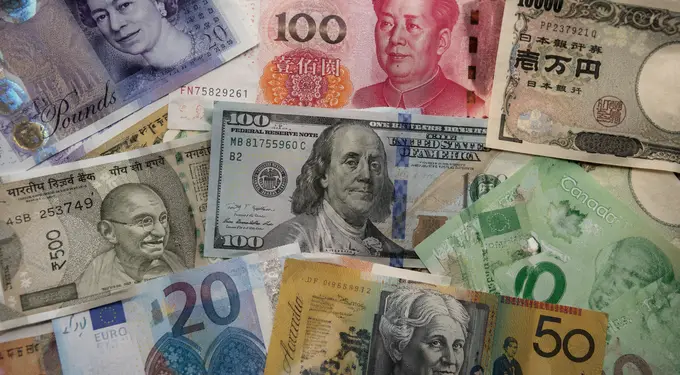
The US dollar held near its strongest level of the week against most major currencies during early Asian trading on Wednesday after renewed US strikes on Iran reignited geopolitical tensions and pushed oil prices higher.

The dollar index, which tracks the greenback against a basket of six major currencies, rose to 101.18.

Meanwhile, the New Zealand dollar strengthened after the country’s central bank raised interest rates and signaled that additional monetary tightening could follow.

The greenback gained 0.2% against the Japanese yen to trade at 162.46, extending its advance for a fourth consecutive session.

The move pushed the currency to its strongest level since July 2.

New Zealand dollar jumps after rate hike

The New Zealand dollar rose 0.5% to a high of $0.5705 after the Reserve Bank of New Zealand increased its benchmark interest rate by 25 basis points to 2.5%, in line with economists’ expectations.

The central bank said “some further reduction in monetary stimulus is likely to be required” to keep inflation under control, signaling that additional policy tightening may be needed in the coming months.

The Australian dollar also moved higher, gaining 0.1% to $0.6938.

Iran developments support demand for the dollar

Demand for the US dollar strengthened after the United States launched a new wave of strikes against Iran on Tuesday.

The US also revoked a licence that had allowed Iran to sell oil after three tankers were attacked in the Strait of Hormuz.

The developments increased demand for the dollar, which is widely regarded as a global safe-haven currency during periods of geopolitical uncertainty.

In a research report, DBS analysts said, “For now, the market is keeping to the playbook that Tehran and Washington are still in a high-stakes game to gain leverage during the temporary truce, and that Tuesday’s incident would not descend back into a full-scale war.”

Oil extends rally as geopolitical risks remain in focus

Brent crude futures rose 2.5% to $76.03 per barrel during Asian trading on Wednesday, extending gains for a second consecutive session as markets continued to assess the implications of the latest developments involving Iran.

Higher oil prices reflected investor concerns over potential disruptions to energy supplies following the attacks and the renewed military action.

Yen weakens as BOJ policymaker signals caution

The Japanese yen moved closer to a fresh 40-year low after Bank of Japan board member Toichiro Asada, the lone dissenter to the central bank’s June interest rate increase, reiterated his cautious stance on further policy tightening.

His comments reinforced expectations that the Bank of Japan could remain cautious about tightening monetary policy despite the yen’s prolonged weakness.

The post US dollar hits one-week high as Iran strikes boost safe-haven demand appeared first on Invezz

Investor sentiment turned cautious on Wednesday as markets assessed the latest developments surrounding the conflict in the Middle East, while attention shifted to the upcoming release of the minutes from the US Federal Reserve’s June Federal Open Market Committee meeting.

Market participants remained focused on geopolitical developments during the European session, with concerns over escalating tensions supporting higher crude oil prices and influencing broader market sentiment.

US dollar steadies as investors await Fed minutes

The US Dollar Index remained largely stable near the 101.00 mark after rising roughly 0.3% during Tuesday’s session.

Meanwhile, US stock index futures traded about 0.2% lower during the European morning, suggesting investors adopted a cautious stance ahead of the release of the Federal Reserve’s June FOMC meeting minutes later in the day.

The minutes are expected to provide additional insight into policymakers’ assessment of economic conditions and the future direction of monetary policy.

The New Zealand dollar strengthened following the policy decision.

NZD/USD gained more than 0.5% on the day and traded above the 0.5700 level during the European session.

Major currency pairs trade cautiously

The euro remained relatively stable against the US dollar after Tuesday’s losses.

EUR/USD held above the 1.1400 level during Wednesday’s European trading session after declining about 0.3% a day earlier.

The British pound also traded with limited momentum.

GBP/USD had fallen more than 0.2% on Tuesday, ending a nine-day winning streak.

The pair attempted to stabilise early Wednesday while holding above the 1.3350 mark.

Elsewhere, USD/JPY continued to move within a narrow range.

The pair closed Tuesday’s session largely unchanged and extended its sideways trading pattern above the 162.00 level at the start of European trading on Wednesday.

The Indian rupee posted modest gains against the US dollar during Wednesday’s opening session.

The USD/INR pair eased towards the 95.00 level despite renewed geopolitical concerns following US strikes on Iran, which contributed to higher oil prices.

Oil extends gains amid Middle East developments

Crude oil prices surged on Tuesday after reports said Iran fired at three commercial vessels attempting to cross the Strait of Hormuz.

In response, the United States launched retaliatory strikes targeting Iranian air defence systems and drone launch sites.

Following a gain of nearly 5% on Tuesday, West Texas Intermediate (WTI) crude continued its upward move on Wednesday.

The benchmark was last seen trading near $72.60 per barrel, up about 0.8% on the day.

The renewed rise in oil prices reflected growing concerns that escalating geopolitical tensions could disrupt energy supplies and increase market volatility.

Currency markets remained focused on both geopolitical developments and the upcoming Federal Reserve meeting minutes, with investors looking for fresh signals that could shape near-term market direction.

The post Middle East tensions keep markets on edge as Fed minutes come into focus appeared first on Invezz

Samsung Electronics delivered blockbuster quarterly earnings, but its sharp share-price decline may have offered investors a more important message than the results themselves: in a market driven by artificial intelligence, strong numbers are no longer enough.

The South Korean technology giant reported a near 20-fold increase in second-quarter operating profit and roughly doubled revenue from a year earlier, comfortably beating Wall Street expectations.

Yet the stock closed about 7% lower on Tuesday, triggering a broader selloff across global semiconductor stocks and raising fresh questions about whether the AI-driven rally is entering a more demanding phase.

With the US earnings season set to gather pace later this month, the market’s reaction to Samsung suggests investors are increasingly focused on companies not only beating expectations but also raising forecasts and convincing investors that the AI boom can continue delivering outsized returns.

Investors demand more than earnings beats; fatigue setting in

Markets have entered what many analysts describe as a “beat and raise” environment, where simply exceeding analyst estimates is no longer sufficient to justify elevated valuations.

Samsung guided for second-quarter operating profit of 89.4 trillion won, a 19-fold increase from a year earlier.

While the earnings comfortably surpassed consensus estimates, investors appeared more inclined to lock in gains after the stock had surged 382% over the previous 12 months.

The stock is currently trading at 52.2 times earnings, up from 18.2 times at the end of 2025, according to CompaniesMarketCap data.

Investors use price-to-earnings multiples to assess a company’s valuation relative to the earnings it is expected to generate.

With the growth of online trading apps, tracking such metrics has become significantly easier and more accessible to market participants.

“Results were ‘only’ 6% ahead of estimates, and it seems to have brought in a bout of profit-taking,” Deutsche Bank analyst Jim Reid wrote in a research note on Tuesday.

The market’s response is increasingly being interpreted as evidence of growing fatigue toward AI-related stocks after a blistering rally fueled by heavy spending on artificial intelligence infrastructure and semiconductor demand.

Rather than celebrating another strong earnings report, investors appeared to question whether future growth can continue to justify lofty valuations.

A key test for US technology giants as earnings loom

Samsung’s results have heightened attention on the earnings reports due later this month from US technology leaders, particularly the hyperscalers within the Magnificent Seven and semiconductor companies that have led much of the market’s gains this year.

Goldman Sachs chief US equity strategist Ben Snider estimates that Nvidia and Micron Technology alone will account for roughly 40% of the S&P 500’s projected earnings growth this quarter, while the broader AI infrastructure ecosystem is expected to contribute nearly two-thirds of the benchmark’s anticipated 22% earnings increase.

Those expectations are exceptionally demanding.

The projected growth rate represents the highest starting point for earnings forecasts in five years, following first-quarter earnings growth of 27% that exceeded Wall Street expectations by roughly 15 percentage points.

Whether companies can once again outperform those already ambitious forecasts has become one of the market’s biggest questions.

Analysts warn expectations may be too high heading into earnings season

Several market strategists believe the risks heading into earnings season lie less in company fundamentals than in investor expectations.

“The big risk up ahead is that technology companies, especially the hyperscalers, won’t beat analysts’ overly optimistic earnings growth estimates for the quarter,” said Ed Yardeni, founder and president of Yardeni Research.

“That could cause a correction among technology stocks,” he added, noting that the “overall stock market might dodge a correction if investors rotate into sectors that have lagged and report better-than-expected earnings.”

Morningstar chief equity market strategist Michael Field also believes Samsung’s share-price reaction illustrates how quickly investor sentiment can spread across the sector.

“The (Samsung) results were in themselves fundamentally good but it seems then to have a knock-on effect at general markets that once people start being negative about Samsung, that negativity extends across markets,” Field said.

“This is the problem coming up to earnings season as well, that we’re likely to see a lot of volatility. The markets are something on a knife-edge going into earnings season.”

Rotation beyond technology gathers pace

The recent weakness in semiconductor stocks has coincided with a broader shift in market leadership.

Healthcare, financial and industrial stocks have outperformed over the past month following the S&P 500’s peak in early June, while many technology sectors have struggled to maintain momentum.

The Dow Jones Industrial Average, which climbed above 53,000 for the first time on Monday, has outperformed both the S&P 500 and the Nasdaq over the past month with gains of nearly 4.5%.

Meanwhile, the PHLX Semiconductor Index has fallen more than 10% from its June 22 record high, with Micron, Intel, Marvell Technology and Advanced Micro Devices also coming under pressure.

AI enthusiasm enters a more selective phase

For some strategists, Samsung’s earnings mark a turning point in how investors evaluate AI-related companies.

Charu Chanana, chief investment strategist at Saxo Bank, said the earnings could have been a “victory lap” for the AI trade but instead may represent a more cautious phase of the cycle.

“Strong earnings are no longer enough,” she said. “For AI-linked stocks, the market now wants strong earnings, strong guidance and clear evidence that pricing power can last.”

Chanana noted that Samsung’s results confirmed demand for AI memory remains robust, but investors are becoming more disciplined in assessing how long that demand can sustain current valuations.

“This is the stage where earnings can still rise, but valuation becomes harder to defend. The market wants proof that pricing power can last, AI capex fatigue will not bite, and capacity growth will stay disciplined,” she said.

That shift suggests the coming earnings season may determine not whether the AI boom continues, but whether investors remain willing to pay increasingly rich valuations for companies leading it.

The post Samsung's earnings send a warning ahead of Big Tech results: brace for volatility appeared first on Invezz


The British pound was on track to record its biggest weekly gain against the US dollar in 12 weeks on Friday.

The currency was supported by easing domestic political concerns and weaker-than-expected US labour market data, which weighed on the dollar.

Sterling rose 0.1% to $1.3357 during the session.

The move brought its weekly gain to 1.2%, marking its strongest weekly performance against the dollar since early April.

The dollar came under pressure after the latest US employment data showed that the economy added fewer jobs than expected last month.

The softer labour market figures reduced expectations that the US Federal Reserve would continue raising interest rates.

Political concerns begin to fade

Earlier in the week, British financial markets showed signs of unease after Andy Burnham, the only Labour lawmaker to publicly express interest in replacing outgoing Prime Minister Keir Starmer, gained support for a potential leadership challenge.

Burnham had previously said that the country needed to get “beyond this thing of being in hock to the bond markets.”

His remarks raised concerns among some investors, who feared that he could move away from the government’s existing borrowing commitments.

However, market sentiment improved after Burnham reaffirmed his commitment to the country’s current fiscal rules.

Those rules include balancing day-to-day government spending through tax revenues and reducing debt as a share of economic output.

His reassurance helped ease investor concerns over fiscal discipline.

Pound slips slightly against the Euro

Against the euro, sterling edged lower to 85.73 pence.

The previous day, the British currency had touched 85.47 pence against the single currency, its strongest level in a year.

Despite easing hostilities in Iran and the gradual resumption of oil supplies from the Middle East, financial markets continue to assign a greater probability to a Bank of England interest rate hike than a rate cut later this year.

Bank of England signals remain in focus

Attention also remained on comments made by Bank of England rate-setter Catherine Mann on Thursday.

Mann said that looser financial conditions since the Bank’s June policy meeting would be an important factor when policymakers meet again in July.

She also stated that she would be prepared to support a rate increase if higher inflation expectations following the US-Iran war reduce the likelihood of inflation returning to the Bank’s 2% target.

Money market futures currently imply around a 70% chance of a Bank of England rate hike by the end of the year.

Before the Middle East conflict, investors had expected the central bank to deliver two interest rate cuts during 2026.

Recent developments, however, have prompted markets to reassess that outlook in favour of tighter monetary policy.

The post British pound extends weekly rally as Fed Rate expectations ease appeared first on Invezz

The US Dollar Index (DXY), which measures the US Dollar against a basket of six major currencies, edged higher during Asian trading hours on Monday.

The index traded around the 101.00 level after remaining largely unchanged in the previous session.

Market participants continued to assess the outlook for US monetary policy.

Expectations of further Federal Reserve interest rate hikes later this year helped support the Greenback, even as recent economic data painted a mixed picture.

Fed expectations support the Dollar

The US Dollar remained resilient as traders continued to price in the possibility of additional interest rate increases before the end of the year.

According to the CME FedWatch tool, financial markets are currently pricing in a 77.3% probability of Federal Reserve interest rate hikes by year-end. That expectation has continued to provide support for the US currency.

At the same time, easing global inflation pressures have also shaped market sentiment.

The moderation in inflation has been supported by the return of normal oil shipping volumes through the Strait of Hormuz, reducing concerns over supply disruptions.

Investors are now looking ahead to a series of key US economic releases that could influence expectations for future monetary policy.

OCBC strategists see the labour market remaining tight

Despite the weaker payrolls report, OCBC strategists said the decline in the US unemployment rate continued to point towards a tight labour market.

According to the strategists, the lower unemployment rate should help keep expectations for further Federal Reserve tightening intact.

Their assessment suggested that markets may still have to consider the possibility of additional policy action from the US central bank despite softer employment growth.

The differing interpretations of the latest labour market data highlighted the uncertainty surrounding the Federal Reserve’s next policy move.

Yen stays in focus as intervention concerns persist

The Japanese yen remained one of the most closely watched currencies in the market.

It traded at 161.57 per US dollar.

That was not far from the 1986 low of 162.84 reached last week.

Traders continued to monitor the possibility of intervention by Japanese authorities. Concerns intensified after a sudden surge in buying briefly lifted the yen on Thursday.

Despite the market’s focus on possible official action, analysts questioned whether any intervention by Tokyo would provide lasting support to the Japanese currency.

The continued weakness of the yen kept investors cautious as they assessed the likelihood of further volatility in the foreign exchange market.

South Korean won begins historic trading phase

South Korean won strengthened slightly on the first day of its historic 24-hour onshore spot dollar-won trading.

The currency was trading at 1,534 per US dollar.

The development marked the beginning of round-the-clock onshore spot trading for the dollar-won market.

At the same time, broader currency movements continued to be driven by expectations surrounding US monetary policy and developments in Japan.

The post US dollar gains slightly despite softer labour market signals appeared first on Invezz