Archive

July 2026

Browsing

The US financial landscape is featuring a striking paradox in 2026.

Wall Street is sprinting, with major indices flirting with record highs and extending a “multi-year” winning streak. Yet, step outside the trading floors, and Main Street tells a far more muted story.

The broader US economy is expanding at a tepid pace, weighed down by a cooling labour market and battered consumer sentiment.

This growing “disconnect” has been confusing for many investors as the modern economic wedge shatters the broader narrative that stock market and economic health move in lockstep.

What’s behind this divergence?

According to Mark Zandi, the chief economist at Moody’s, the primary reasons for this divergence is the explosive rallies in AI stocks.

While the benchmark S&P 500 index is currently hovering around record levels, much of its YTD rally has been driven by select AI names – particularly on the hardware side (GPUs, HBM makers).

Because technology and adjacent companies now command up to half of the stock market’s overall weight, their soaring valuations tend to artificially lift the index.

Investors are buying into tomorrow’s digital revolution – transforming the US stock market into a forward-looking speculative vehicle rather than a mirror of economic reality that’s more muted at present, to say the least.

What’s weighing on Main Street?

In stark contrast to the stock market’s glitz, the actual productive economy is growing at a soft 2% pace, a visible deceleration from previous years.

“We’re growing. We’re not in recession. But we’re not going anywhere quickly,” Zandi argued.

This stagnation is mostly rooted in the structure of the US Gross Domestic Product (GDP), where technology only accounts for a fraction of the footprint.

Instead, the economy relies on a labor market currently plagued by multi-year lows in hiring and weak labor force participation.

Coupled with stubborn inflation, consumer confidence has eroded, creating an underlying economic environment that feels decidedly fragile.

The fragile K-shaped consumer spender

Because the broader populace is tightening its belt, US economic growth has become dangerously dependent on a wealthy minority.

A distinct “K-shaped” dynamic has emerged: the top 20% of earners now drive nearly 60% of all personal spending, supercharged by the “wealth effect” of their booming stock portfolios.

This creates a precarious structural vulnerability. If the artificial intelligence hype cycle cools down and the stock market suffers a prolonged slump, the wealthy will likely stop spending – leaving an already soft economy exposed to a severe downturn.

On the other hand, if AI-driven productivity eventually translates to stronger hiring, wage growth, and business investment, the gap may narrow.

All in all, how the artificial intelligence narrative unfolds in the back half of 2026 is really the key to determining whether this divergence persists.

The post US stocks and the economy seem to moving in opposite directions: here's why appeared first on Invezz

Retail investors, long considered one of the strongest pillars supporting the US stock market since the pandemic, are becoming increasingly selective as market leadership shifts rapidly and alternative investment opportunities gain traction.

Recent data suggest individual investors are rotating between themes rather than making broad-based bets on the stock market.

At the same time, a new Bank of America Private Bank survey shows younger wealthy investors are increasingly questioning whether traditional stocks and bonds can continue to generate above-average returns, with many allocating more capital to private markets, crypto and other alternatives.

Retail traders rotate between market themes

A Bloomberg report citing Vanda Research said the gap between cash flowing into and out of the stock market over the past four weeks has narrowed to $13 billion, the lowest level since the Covid-19 pandemic.

The trend suggests retail investors are buying and selling stocks more aggressively while showing less conviction toward the broader S&P 500 Index.

Instead, investors have been chasing individual themes as market leadership shifts.

Retail traders have rotated from energy and silver stocks to software companies, then to semiconductor names, before moving into space-related stocks following SpaceX’s public listing in June.

Viraj Patel, global macro strategist at Vanda Research, said the market environment has become increasingly dependent on stock selection.

“A selective retail investor is joining what is a very selective institutional investor – one where 2026 has really been a stock picker’s world,” said Patel.

Patel added that reduced exposure to US equities does not necessarily signal a bearish outlook for the broader market.

Instead, he said retail investors appear increasingly willing to pursue emerging investment themes before quickly moving on.

“The 2026 retail investor is very different to anything we’ve really seen in the post-Covid years,” Patel said.

Sentiment data also reflect growing caution.

According to the American Association of Individual Investors, bearish investors have outnumbered bullish respondents in all but four weeks since mid-February.

In the latest survey for the week ended July 8, 37% of respondents expected stocks to decline over the next six months, compared with 36% who were optimistic.

High valuations and new investment options influence behavior

Analysts say elevated technology valuations and rapid sector rotations are making investors more cautious.

Bret Kenwell, US investment analyst at Etoro, believes recent weakness in semiconductor stocks may be encouraging retail investors to wait for better entry points.

Vanda Research also pointed to the growing popularity of crypto trading, prediction markets and sports betting as alternative destinations for speculative capital.

Retail participation in US equity trading has moderated accordingly.

Individual investors accounted for 17.2% of total US equity trading volume during the first quarter of 2026, down from 20.5% a year earlier, although still above pre-pandemic levels, according to Bloomberg Intelligence.

Even so, retail investors continue to selectively deploy capital.

JPMorgan data showed they purchased a net $8.9 billion of equities this week, exceeding the 12-month average of $6.8 billion. Technology stocks attracted the largest inflows at $712 million, followed by communication services at $617 million.

“There hasn’t been a clear theme across AI and tech. Even the Mag 7 has stopped trading like a bloc,” Vanda’s Patel said.

Younger wealthy investors embrace alternatives

The trend extends beyond retail traders.

According to the 2026 Bank of America Private Bank Study of Wealthy Americans, 67% of Gen Z and Millennial investors with at least $3 million in investable assets believe traditional stocks and bonds can no longer generate above-average returns.

As a result, younger affluent investors are increasing allocations to private equity, real estate, cryptocurrency, and emerging technology investments.

The survey found that 58% already own digital assets, while nearly nine in 10 expect to increase investments in alternatives over the coming years.

Among respondents with at least $25 million in wealth, 77% believe greater opportunities exist in private markets than public markets.

The findings suggest that as wealth transfers to younger generations, investment portfolios may continue shifting beyond publicly traded stocks toward assets that offer exposure to earlier-stage growth opportunities.

The post Why retail investors are ditching broader index bets for selective trades appeared first on Invezz

The post Hedera Ecosystem Hit by Suspected $5.25M Exploit: Will the Security Breach Push HBAR Price Lower? appeared first on Coinpedia Fintech News

The Hedera ecosystem is under scrutiny after blockchain security firms flagged a suspected exploit that resulted in the loss of approximately $5.25 million in digital assets. The incident came to light after on-chain investigators observed stolen funds being bridged from the Hedera network to Ethereum, where they were consolidated into a single wallet. Blockchain security …

The post Hedera (HBAR) Price Prediction 2026, 2027 – 2030: Will HBAR Price Hit $1? appeared first on Coinpedia Fintech News

Story Highlights The live price of Hedera crypto is . HBAR price prediction for 2026 suggests potential highs of $1.05 Long term forecasts indicate HBAR could reach $2.20 by 2030. Hedera has been making waves in the cryptocurrency space, with a fast and secure blockchain that offers a distinct approach to transaction processing compared to …

The post Nvidia Stock Is Rallying Again: Here’s What Wall Street Is Saying appeared first on Coinpedia Fintech News

Nvidia stock is rallying again and is now eyeing to surpass the 52-week high level of $236, as investors looked beyond Meta’s custom AI chip headlines and refocused on a more powerful catalyst, AI infrastructure spending that continues to exceed expectations. Fresh bullish commentary from Morgan Stanley and TD Cowen, combined with a confirmed bullish …

The post The Next Crypto Bull Run Will Be Slower—BitGo CEO Explains appeared first on Coinpedia Fintech News

The crypto market has entered one of its bullish quarters of the year. However, nearly 278 days have passed since Bitcoin reached its all-time high of around $126,000. Meanwhile, BitGo CEO Mike Belshe says, “The next crypto bull run will be slower and far less volatile than previous ones.”Here’s when the actual Bull run will …

The post XRP Network Activity Falls to 2026 Lows—Can the Price Stay Resilient? appeared first on Coinpedia Fintech News

The XRP price is chopping around the $1.08–$1.10 range despite mixed momentum in the broader crypto market. The token has neither staged a decisive breakout nor slipped into a sharp correction, suggesting that traders are waiting for a stronger catalyst before taking fresh positions. However, fresh on-chain data from Santiment indicates that activity on the …

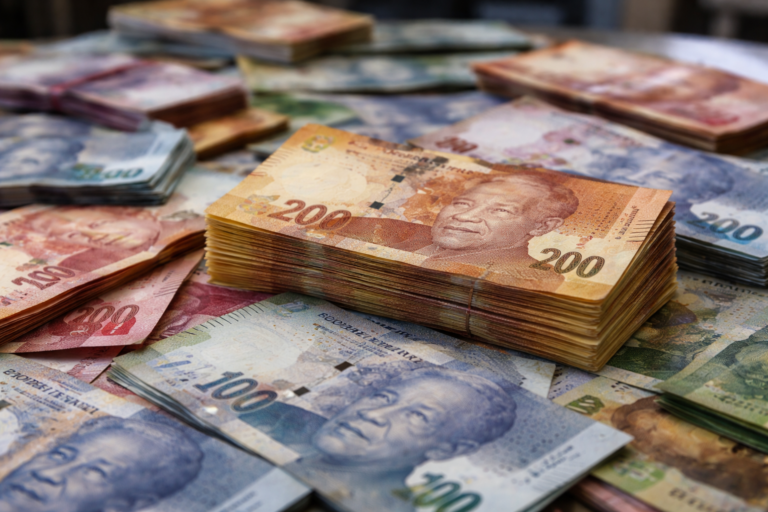
The USD/ZAR exchange rate rose by a few pips today, July 9, as crude oil prices rose following the new strikes in the Middle East. It jumped to 16.50 on Wednesday and then pulled back a bit to 16.37. 

South African rand falls as geopolitical tensions rise

The South African rand softened a bit after the US and Iran restarted their strikes, with President Donald Trump declaring the truce over. As a result, crude oil prices jumped as investors anticipated more traffic disruptions at the Strait of Hormuz.

This disruption will happen at a time when inventories in the US and other countries remain at dangerously low levels. Indeed, Trump noted that worries in the oil market were one of the reasons why he decided to reach a one-sided deal with Iran. 

Rising oil prices will make the South African inflation situation worse and push the central bank to intervene. The most recent data showed that the headline CPI jumped 4.5% in may from 3% in February. It has remained above the central bank’s target level since March this year.

In a statement at the European Central Bank (ECB) forum in Portugal, the head of South Africa’s central bank hinted that the bank may be forced to hike interest rates later this year. The bank has already hiked rates to 7% this year, with market participants expecting at least one more.

The South African rand has also struggled because of the ongoing developments in the metals industry. Gold, a key South African export, has plunged to $4,080, down by 27% from its highest point this year. Platinum and palladium prices have also pulled back.

Federal Reserve may hike rates this year

Meanwhile, there are signs that the Federal Reserve will hike interest rates this year. Fed minutes released on Wednesday showed that the committee entertained different scenarios in the last meeting. 

Some members supported a view where the bank started cutting rates later this year, contigent on falling inflation. Others, however, supported hiking rates later, citing the elevated inflation, which has remained above the 2% target for a while.

Fed and SARB policies have an impact on the USD/ZAR pair because of the carry trade situation. The rand normally attracts more demand whenever the SARB is hiking rates as that makes it more attractive. 

Looking ahead, the next main catalyst for the USD/ZAR pair will be the upcoming US inflation report coming out next week.

USD/ZAR technical analysis

USDZAR chart | Source: TradingView

The daily chart shows that the USD/ZAR pair has come under pressure in the past few months. It has dropped from a high of 17.25 on March 23rd to the current 16.35. 

The pair is now consolidating at the 25-day and 50-day Exponential Moving Averages (EMA). It also formed a falling wedge pattern, which is made up of two descending and converging trendlines. 

This wedge pattern normally leads to a strong bullish breakout. If this happens, the next level to watch will be the psychological point of 17. A drop below the lower side of the wedge will point to more downside.

The post USD/ZAR forecast: falling wedge points to a South African rand pullback appeared first on Invezz

The US Dollar (USD) struggled to attract buyers early Thursday despite a fresh escalation in tensions in the Middle East.

Investors shifted their focus toward upcoming US economic data releases and comments from central bank officials while monitoring developments in the region.

The US economic calendar is scheduled to feature weekly Initial Jobless Claims and Existing Home Sales data for June later in the day.

Market participants are also expected to closely watch remarks from policymakers for fresh signals on the economic outlook and monetary policy.

Middle East tensions remain in focus

Geopolitical tensions intensified after the United States military said late Wednesday that it had struck 90 targets along Iran’s coastline.

In response, Iran’s Revolutionary Guard reportedly targeted US military bases in Kuwait and Bahrain.

Despite the renewed hostilities, crude oil prices edged lower during the European trading session on Thursday.

At the same time, the US Dollar Index remained under pressure, trading below the 101.00 level.

Risk sentiment appeared relatively resilient as US stock index futures advanced between 0.2% and 0.7%, suggesting investors were not moving aggressively toward traditional safe-haven assets.

The euro and pound extend gains against the dollar

The euro strengthened against the US dollar as renewed weakness in the greenback supported the common currency.

After ending Wednesday’s session largely unchanged, the EUR/USD pair climbed toward the 1.1450 level during the European session on Thursday.

The British pound also maintained its upward momentum.

GBP/USD extended gains after closing in positive territory on Wednesday and traded above the 1.3400 mark, reaching its highest level in three weeks.

Yen strengthens as Bank of Japan maintains regional assessment

The Japanese yen gained against the US dollar after USD/JPY reversed lower on Thursday.

The currency pair traded below 162.50 after posting a gain of around 0.3% in the previous session.

Meanwhile, the Bank of Japan’s latest quarterly regional report showed no changes to its overall assessment across all nine regions of the country.

The report indicated that most regional economies continue to recover moderately.

Indian rupee opens stronger

The Indian rupee opened higher against the US dollar on Thursday, supported by broad-based weakness in the US currency.

The USD/INR pair declined to around 95.40 as the dollar softened.

However, the broader outlook for the pair remained bullish, with renewed Middle East hostilities continuing to support oil prices, a factor that could influence the rupee going forward.

For now, currency markets continue to balance geopolitical uncertainty with incoming economic data, while movements in oil prices, gold and global risk sentiment remain key drivers of trading activity.

The post US Dollar weakens despite escalating Middle East tensions as markets await US data appeared first on Invezz

Financial markets remained volatile heading into the weekend as investors avoided taking large positions amid continued uncertainty surrounding the conflict.

Market participants largely stayed on the sidelines, limiting major moves across asset classes.

The June labor market report from Canada is expected to be the day’s only major economic release with the potential to drive market sentiment during the second half of the session.

Meanwhile, the US Dollar (USD) struggled to maintain momentum after posting modest losses on Thursday.

In the absence of high-impact US economic data, improving risk appetite weighed on the greenback.

The positive tone in equity markets, reflected by gains in Wall Street’s major indexes, reduced demand for the safe-haven currency.

Early on Friday, US stock index futures traded mixed, while the US Dollar Index remained under pressure, hovering around 100.75.

Euro and Pound extend gains

The euro maintained its strength against the US dollar during early Friday trading.

EUR/USD edged higher toward the 1.1450 level after data from Germany confirmed that the country’s annual Consumer Price Index (CPI) increased 2.3% year-over-year in June.

The reading matched the preliminary estimate, providing little surprise for markets.

The British pound also continued its recent advance.

GBP/USD extended its weekly gains and traded above the 1.3400 mark, reaching its highest level since the middle of June.

Canadian dollar awaits employment data

The Canadian dollar strengthened against its US counterpart ahead of the country’s June labor market report.

USD/CAD remained under pressure during the European session, falling toward 1.4150.

Market expectations point to Canada’s unemployment rate holding steady at 6.6% in June.

The employment report is expected to be closely watched as it could influence expectations for the Canadian economy and prompt fresh movement in the currency pair.

Strong Japanese inflation data supports the yen

Earlier on Friday, data from Japan showed that the country’s Producer Price Index (PPI) rose 7.1% year-over-year in June.

The latest reading accelerated from the 6.6% increase recorded in May and exceeded market expectations of 6.8%.

Japan’s Finance Minister, Satsuki Katayama, said the government will closely monitor economic indicators and financial market conditions.

Following the stronger-than-expected inflation data, USD/JPY remained under bearish pressure, declining about 0.5% on the day to trade near 161.60.

Indian rupee strengthens despite oil price concerns

The Indian rupee extended Thursday’s recovery against the US dollar during Friday’s opening session.

USD/INR fell further toward 95.22 as the US dollar weakened amid hopes that renewed conflict in the Middle East between the United States and Iran would not become prolonged.

However, the rupee could still face pressure if elevated oil prices persist, as higher energy costs remain a potential headwind for the Indian currency.

The post Currency markets trade mixed amid US-Iran conflict uncertainty appeared first on Invezz