Archive

September 2026

Browsing

The post Zcash Reaches $1000 After a 20% Surge—Can Bulls Break Multi-Year Targets? appeared first on Coinpedia Fintech News

Zcash has exploded higher over the past 48 hours, with the price breaking above the $1000 barrier. The ZEC price has marked an intraday high of $1,046 for the first time since 2016, putting the privacy-based crypto firmly back in the spotlight. Besides, the market data shows that derivatives have played a major role compared …

The post XRP Price Eyes $2.13 as Spot Volume Hits Six-Month High appeared first on Coinpedia Fintech News

XRP price is trying to recover, but the order-flow data still has a few problems. Spot trading volume reached its highest level since February in August, while the 30-day price-to-CVD correlation improved to approximately 0.43. Yet CVD remains negative near -8 million. More activity is returning, but buyers haven’t fully taken control. XRP Trading Volume …

The post ZEC Price Flips $1,000 in September, Will Ironwood Keep Zcash In Trend? appeared first on Coinpedia Fintech News

Someone bought 22,840 ZEC for $1.1 million between 2022 and 2024. They held through the volatility, and today, the same investment is worth $23 million. That’s a $22 million profit from one trade. Not bad for an asset most investors would’ve abandoned during the ugly years. ZEC Price Rally Follows Major Supply Migration The latest …

The post Aerodrome Price Eyes $0.85 as Stock Trading Volume Surges appeared first on Coinpedia Fintech News

Aerodrome’s tokenized stock trading volume has crossed $250 million in just two weeks. If the histogram trend continues, $300 million could be the next target for Aerodrome on Base. The numbers are getting attention, but the token still has plenty to prove. Aerodrome Stock Trading Gains Fresh Momentum Token Terminal showed that Aerodrome on Base …

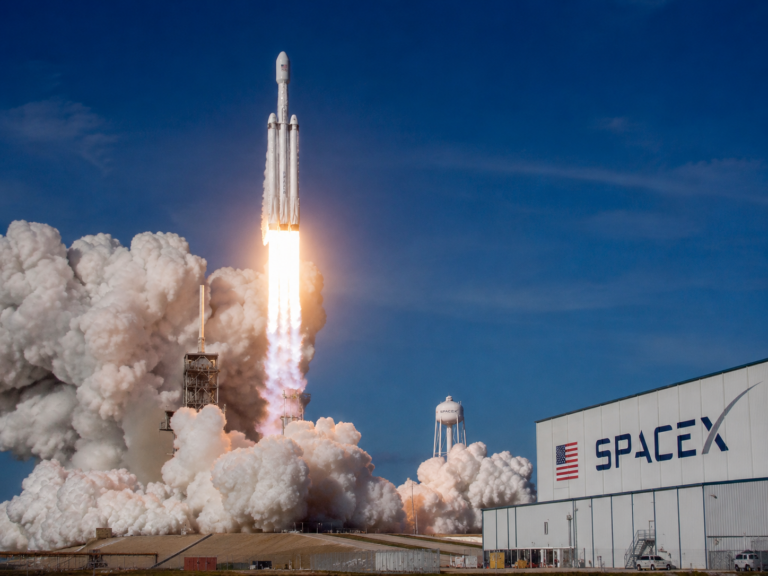
SpaceX stock SPCX is heading toward another potentially volatile milestone next week, with hundreds of millions of additional shares set to become eligible for sale just as the company’s shares are regaining momentum and its artificial intelligence ambitions continue to attract bullish attention.

The September 9 lockup expiry will mark the 90th trading day since SpaceX’s initial public offering and allow roughly 319 million additional shares held by select insiders to become eligible for sale.

The event will be closely watched because SpaceX has already demonstrated that a large increase in the potential supply of shares does not necessarily translate into a sharp selloff.

The company cleared its first and largest lockup expiry on August 6 without the anticipated collapse in its stock.

More than 900 million shares held by early investors became liquid at the time, but instead of plunging, SpaceX shares rebounded above their $135 IPO price within days.

The stock subsequently rallied about 35% in the five trading sessions following the expiry, adding roughly $500 billion to SpaceX’s market value.

Shares are now trading around $149, roughly where they opened on their first day of trading at $150, and are about 20% higher than immediately after the first lockup event.

September 9 could bring another supply shock

The September 9 event will be the third lockup expiry for SpaceX, following another release on August 20.

A final lockup expiry is scheduled for December 8.

The staggered schedule is designed to prevent a sudden flood of shares from overwhelming the market.

However, each release creates a fresh question for investors: will insiders and early shareholders take advantage of the liquidity, or continue holding their stakes and betting on Elon Musk’s long-term ambitions?

That question could be particularly important for early employees and investors sitting on enormous unrealized gains.

An employee who received SpaceX shares when the company was valued at $10 or $20 a share could potentially realize life-changing wealth by selling even a portion of their holdings at around $150.

At the same time, the fact that the stock absorbed more than 900 million newly liquid shares in August without collapsing could encourage investors to believe that demand remains strong enough to absorb additional supply.

SpaceX shares rose 6.4% on Thursday, briefly moving above $150 for the first time since July 10.

The stock closed at $149.74, giving the company a market capitalization of just over $2 trillion, according to Dow Jones Market Data.

Analysts remain bullish on SpaceX

The recent rebound has also been supported by a largely positive analyst view.

SpaceX has an average price target of $225.87 a share, according to FactSet data, implying roughly 50% upside from current levels.

According to The Wall Street Journal, 28 analysts rate the stock Buy, while three have an Overweight rating, seven have a Hold rating, one has an Underweight rating and only two have a Sell rating.

Price targets remain unusually wide, however, ranging from $75 to as high as $800.

Oppenheimer analyst Timothy Horan is among those who remain optimistic.

Oppenheimer raised its price target for SpaceX to $280 from $250 on Tuesday while maintaining an Outperform rating, an almost 90% upside from current levels.

Horan believes SpaceX could be a major beneficiary of the shortage of artificial intelligence infrastructure and argues that the company’s AI revenue is growing faster than expected as it develops increasingly capable models.

SpaceX “has the ability to bring on infrastructure faster than anyone else, and is using this infrastructure and its data to improve its own models faster than anyone else,” Horan wrote in a note to clients on Wednesday, while maintaining a Buy rating.

Investor Ross Gerber is even more bullish on SpaceX’s long-term prospects.

The president and CEO of Gerber Kawasaki said he sees greater potential in SpaceX than Tesla and believes the two Musk-led companies could eventually merge.

Gerber said SpaceX, Starlink and xAI are among the company’s biggest attractions and argued that xAI is also critical to Tesla’s future.

“In essence, Tesla doesn’t own its own operating system. It’s owned by SpaceX,” Gerber told CNBC.

Asked whether investors would be better off owning SpaceX than Tesla, Gerber replied, “SpaceX is better to me.”

The AI opportunity comes with a huge spending bill

The bullish argument, however, faces one significant obstacle: the enormous amount SpaceX is spending to build its AI infrastructure.

SpaceX’s capital expenditure reached $28.5 billion during the first six months of 2026, a 308% increase from the same period a year earlier.

It spent $18.4 billion on capital projects in the second quarter, 86% of which went towards AI.

Morgan Stanley expects the company to spend as much as $64 billion on AI infrastructure this year, substantially more than earlier estimates.

SpaceX is building data center capacity both for its own AI needs and potentially for external customers.

The company owns the Grok AI model through its acquisition of X and is attempting to build an infrastructure business around the rapidly growing demand for computing power.

The opportunity could eventually become another major source of revenue. But the economics remain uncertain.

SpaceX generated $7.8 billion in sales in the second quarter, meaning its capital expenditure was more than twice its quarterly revenue.

The company has argued that investors should not be overly concerned because it expects the investments to pay for themselves relatively quickly and remains on track to reach $100 billion in annualized revenue by the end of 2026.

Can SpaceX turn AI spending into profits?

The key question is whether the enormous investment in computing capacity will translate into sustainable revenue.

According to regulatory filings, SpaceX’s ability to fund some of the spending depends heavily on compute agreements with companies such as Anthropic and Google.

Those arrangements can reportedly be terminated with only a few months’ notice.

There is also uncertainty over whether SpaceX’s AI models can win enterprise customers away from established players such as Anthropic and OpenAI.

Its ambitions to eventually build AI data centers in space add another potentially transformative opportunity, but that project appears to be several years away.

Stifel analyst Jonathan Siegmann has dismissed some of the concerns surrounding SpaceX’s spending.

“Skeptics will push back that planned capex is higher … but we believe this all reflects the red-hot AI data capacity demand signal – you’ve got to spend money to make money, and SpaceX is accelerating its capacity investments accordingly,” he said in a client note this month.

For investors, however, the valuation makes the spending debate more consequential.

SpaceX currently trades at a price-to-sales ratio of around 65, according to The Motley Fool, compared with roughly seven for the broader technology sector.

That premium assumes that the company will successfully convert its investments in Starlink, AI infrastructure and other businesses into dramatically higher revenue and profits.

Uncertainty remains before the next lockup

The September 9 lockup expiry therefore presents a complicated setup.

For existing shareholders, the combination of strong analyst support, rising shares and the stock’s ability to withstand the August supply shock may offer little immediate reason to sell.

For prospective investors, the equation is less straightforward.

A large number of shares becoming eligible for sale could create volatility, while the company’s extraordinary capital spending and premium valuation leave little room for execution mistakes.

The bullish case rests on SpaceX becoming much more than a rocket company — combining Starlink, AI models, computing infrastructure and potentially other Musk-led businesses into a sprawling technology platform.

The bearish case is that investors are already paying for that future before the economics of some of these businesses have been proven.

Jim Cramer summed up the long-term bullish argument last month.

“SpaceX could be a 100-year piece of paper,” the CNBC Mad Money host said, comparing it with century-long railroad bonds that rewarded patient investors over generations.

“Maybe you put some away for the next generation or even the one after that.”

For insiders, meanwhile, the decision may be less philosophical.

Even the strongest believers in SpaceX’s future could rationally choose to diversify after accumulating gains that can transform their personal finances.

That makes the September 9 expiry less a simple test of whether investors believe in SpaceX and more a test of how much of that belief insiders are willing to express by continuing to hold their shares.

The post SpaceX stock rally meets another lockup expiry test on September 9: what to expect appeared first on Invezz

GoPro stock GPRO has surged in recent sessions after the struggling action-camera maker announced a $285 million cash merger with Starman Optical, a privately held photonics company.

Earlier, YouTube creator Mark Fischbach, better known as Markiplier, revealed an 8.5% stake in the company, making him the single largest stakeholder in the company.

GoPro shares have rallied sharply as investors reacted to both developments.

The stock has gained nearly 200% in the week so far and has gained 26% on Friday.

The 200% surge includes a 40% surge on September 1 when the Starman deal was announced.

The stock was trading around $1.75, above Starman’s $1.14-per-share offer.

The developments mark a significant turnaround in investor interest for a company whose stock has lost about 96% of its value since reaching a valuation of $4 billion on its first trading day in 2014.

Markiplier becomes GoPro’s largest shareholder

Markiplier acquired an 8.5% stake in GoPro, making him the largest single shareholder in the camera company.

He revealed the stake in the company through a Schedule 13G filing dated August 20.

In an interview with Bloomberg, Fischbach said he had been interested in GoPro because he believed its shares were undervalued. He also said he wanted the company to succeed.

Fischbach has described the investment as part of a broader effort to make filmmaking more accessible. He has also invested in Strada, a company that provides tools for filmmakers to transfer large files.

The investment quickly attracted attention from retail traders.

GoPro has been a heavily shorted stock in the past, and its sharp rally following Markiplier’s disclosure has renewed interest among meme-stock traders.

$285 million Starman Optical merger

GoPro’s rally accelerated after the company announced a definitive merger agreement with Starman Optical.

Under the transaction, Starman will pay GoPro shareholders $285 million in cash, or $1.14 per share. Starman would receive a 90% stake in the combined company, while existing GoPro shareholders would retain the remaining 10%.

The transaction is expected to repay GoPro’s roughly $92 million of outstanding debt when it closes. GoPro is also expected to remain publicly listed on the Nasdaq, with the deal targeted for completion by the end of the year.

Starman makes optical transceivers in the US for use in AI data centers.

The merger is intended to give GoPro exposure to commercial, defense and AI markets while allowing it to make greater use of its more than 2,500 US patents, including those related to optics and imaging.

Starman will also add optical transceivers to GoPro’s product portfolio.

The companies said they would seek to bring production of some important optical equipment back to the US, although they did not provide a timeline.

GoPro CEO Nicholas Woodman said the merger is expected to allow the company to expand across consumer, commercial and defense markets while becoming an American imaging and optical solutions company.

GoPro faces major challenges despite stock rally

The sharp rise in GoPro shares comes after years of deterioration in the company’s market value and financial position.

GoPro debuted in 2014 at $38 a share and reached a valuation of about $4 billion on its first trading day.

Since then, the stock has lost around 96% of its value as the company faced growing competition from Chinese rivals including DJI and Insta360.

The company’s revenue has also fallen substantially from its peak. Revenue in the June quarter was down more than 80% from the $633.91 million recorded in the final quarter of 2014.

More recently, higher memory chip prices linked to the expansion of AI infrastructure have added pressure on GoPro.

The company warned in June that there was substantial doubt about its ability to continue as a going concern over the next 12 months.

GoPro said it will continue supporting its existing consumer products, subscriptions and cloud platform while investing in a broader product roadmap.

The company therefore does not plan to abandon its action-camera business as it expands into new markets through the Starman transaction.

The merger announcement also comes after GoPro said in May that its board was exploring strategic alternatives.

The stock’s recent rally has pushed the company back into the spotlight, with Markiplier’s investment providing a catalyst for retail interest and the Starman transaction offering a potential path into AI infrastructure and defense markets.

However, the company continues to face financial and competitive challenges, while the proposed merger remains subject to its closing conditions.

The post GoPro stock soars 200% after Markiplier stake, $285M Starman deal appeared first on Invezz

Earlier this year, a fear psychosis had gripped investors that advances in AI would replace software firms, and the sector was all but written off.

Anthropic’s launch of new plugins for its Claude Cowork system in February sparked a global selloff in software firms, with the US markets alone losing $300 billion in market value in a day.

The pressure did not leave the sector for a while, and a new phrase called ‘SaaSpocalypse’ started being circulated, signaling the imminent doom of the software sector.

However, the latest earnings season has shown that software companies are not going anywhere.

Ironically, AI, which had seemed to sound the sector’s death knell, is helping the industry rewrite its next growth story.

Late last month, the iShares Expanded Tech-Software Sector ETF (IGV) broke into positive territory on a year-to-date basis, powered by a particularly strong earnings beat from software bellwether Salesforce.

The ETF is up about 10% in the last one month.

The State Street Software and Services ETF, which tracks about 130 software and IT stocks, hit a new all-time high in August.

It is up 11% in the last one month and 10% year to date, after remaining under pressure until the end of July.

The recovery represents more than a simple reversal in investor sentiment.

It suggests that markets are beginning to distinguish between software companies that could be disrupted by AI and those that may actually benefit from it.

Snowflake offers a fresh signal for software investors

Snowflake shares surged nearly 25% on Thursday after the company raised its annual product revenue forecast, strengthening investor confidence that AI-related spending could become a powerful driver of growth for software firms.

The cloud data platform provider lifted its fiscal 2027 product revenue forecast to $6.07 billion from $5.84 billion and posted a 37% jump in second-quarter product revenue.

Its AI offerings accounted for “approximately half of the acceleration” in growth, according to CEO Sridhar Ramaswamy.

Snowflake’s coding assistant, Cortex Code, topped 9,100 accounts after adding more than 2,000 customers during the quarter, while enterprise chatbot CoWork expanded to 5,800 accounts.

The significance of the results goes beyond Snowflake itself.

They suggest that companies are beginning to spend more on software specifically because AI workloads require more data, automation, and computing infrastructure.

A third straight quarter of accelerating growth amid high expectations “underscore just how well AI is monetizing and driving greater consumption in the core platform,” Morgan Stanley analysts wrote.

Salesforce challenges the ‘SaaSpocalypse’ narrative

Salesforce has provided perhaps the clearest rebuttal to the idea that AI will simply eliminate enterprise software.

Salesforce shares jumped about 12% last month after the company raised its annual revenue and profit forecasts and expanded its partnership with Anthropic through a new artificial intelligence integration.

The company also reported higher second-quarter profit and revenue on rising demand for its artificial intelligence and data offerings.

Salesforce CEO Marc Benioff used the results to push back against the “SaaSpocalypse” narrative.

“This SaaSpocalypse narrative has been such nonsense,” Benioff told Cramer on CNBC’s “Mad Money.”

“Frontier models depend on CRM. They don’t replace it.”

According to Benioff, nine of the 10 leading artificial intelligence companies use Salesforce and Slack, with spending on the platforms increasing 435% from a year earlier.

The argument highlights one of the most important distinctions emerging in the software sector.

Companies with proprietary data, deeply embedded workflows and large installed customer bases may be harder to replace than smaller software providers whose products can be replicated by AI models.

Nicholas Frasse, product manager for thematic ETFs at VanEck, said that distinction is increasingly becoming important for investors.

“I don’t think all SaaS companies are created equal,” Frasse told MarketWatch.

“There are entrenched businesses like Salesforce that own a very proprietary set of data that make them much more formidable in this new era, and also probably a much bigger benefactor of the technology.”

That could mean the software sector is unlikely to move as one group going forward.

“Investors and the market have started to find the signal through the noise,” Frasse said.

“You’re starting to see much more nuanced activity around individual names depending on the individual business model, rather than systemic buying or selling of an entire category.”

ServiceNow and Workday show another side of the AI trade

ServiceNow has also emerged as a beneficiary of the shift in sentiment.

The company raised its forecast for annual subscription revenue for the second time in July after beating second-quarter revenue and profit estimates, driven by growing demand for its AI-powered software.

CEO Bill McDermott said he had not seen any change to sales cycles from increased hardware and AI spending.

ServiceNow said its AI platform has seen widespread adoption across the public sector, with nearly all 50 US states now using it to improve citizen services and modernize operations.

The company also crossed $1 billion in annual contract value for its AI offerings.

Workday is seeing a similar trend.

Shares of the finance and human resources software provider soared after the company reported higher profit and rising revenue in its fiscal second quarter, driven by growing adoption of its artificial intelligence agents.

Workday has been embedding AI across its platform to automate tasks ranging from payroll processing to financial forecasting, with the aim of increasing efficiency for customers.

“We had a strong Q2, with AI driving more than 25% of our new ACV and more than 5,500 customers now using at least one of our organic agents,” co-founder and Chief Executive Aneel Bhusri said.

Chief Financial Officer Zane Rowe added that AI is driving Workday’s customer expansion.

Cybersecurity is emerging as another AI winner

Another category of software companies is benefiting from the heightened cybersecurity risks that AI has ushered in.

CrowdStrike shares jumped more than 9% after the cybersecurity company beat second-quarter earnings expectations and raised its full-year revenue forecast, as businesses stepped up spending to protect against increasingly sophisticated threats linked to artificial intelligence.

Chief Executive George Kurtz described the quarter as a milestone for the company, pointing to the growing realization among enterprises that adopting AI also creates new cybersecurity risks.

The second quarter “was the best quarter in CrowdStrike’s history,” Kurtz said in a statement.

“The Mythos moment translated into mass-market acceptance that AI adoption needs security.”

“Every enterprise will run on AI, and securing it is the largest market opportunity in our history.”

CrowdStrike’s shares have already gained more than 66% this year, supported by expectations that rapid adoption of generative and agentic AI will expand the market for cybersecurity products.

Palo Alto Networks has also pointed to the same dynamic.

Chief Executive Officer Nikesh Arora said enterprises are increasingly recognizing that they need to modernize cyber defenses as AI models become more powerful, particularly following Anthropic’s release of Mythos.

“In that context, people are gravitating towards the largest players in the industry and looking at us to provide the antidotes to this development in AI,” Arora said in an interview.

The cybersecurity trade therefore offers a different way to play the AI boom.

Chip stocks see some decline as software rebounds but both reinforcing each other’s growth

The resurgence in software stocks is perhaps also coming at the cost of interest in the most red-hot trade — chip stocks.

The iShares Semiconductor ETF (SOXX) is down more than 7% in the last one month, even as software ETFs have rallied during the same time, as mentioned earlier.

Although SOXX remains up about 60% this year, the recent divergence represents a notable change in investor behavior.

Veteran technology investor Dan Niles, founder of Niles Investment Management, highlighted the shift in a recent post on X.

He noted that many AI investors had been bullish on semiconductors and bearish on software on the belief that AI would displace many point-solution software companies.

But the unwinding of that trade has produced a sharp reversal.

“But since the unwinding of the Momentum trade which started on 6/22 (I wrote about these concerns on 6/20), IGV has rallied 25% while the SOX Index has declined 22% through 8/28,” Niles said.

He also pointed to a potential new bullish argument for software: AI agents could access software tools far more frequently than human users.

“But a bullish twist on AI for the software sector introduced recently is that AI agents will access software tools ~10-100x more often than humans,” he said.

That could potentially create an entirely new source of software consumption, even as AI reduces the need for certain individual applications.

Can the software rally continue?

The biggest question now is whether the software rally is based on improving fundamentals or simply a reversal in positioning.

Mizuho desk-based analyst Jordan Klein argued that the latest rally has much more to do with “positioning” among institutional investors than anything particularly new in the core fundamentals.

A number of hedge funds and long-only growth managers had owned less software than the sector’s representation in the broader market, partly because of AI concerns and partly because software had become a “funding short” used to finance larger bullish positions in semiconductors and AI hardware.

That underweight positioning could leave room for further gains.

Based on this positioning, Klein believes software names could continue to climb higher well into September and October.

He expects Salesforce shares to move higher into its Dreamforce conference next month, although he cautioned that he would not “chase” the stock at current prices, instead preferring names such as ServiceNow and Microsoft.

The software sector’s comeback therefore appears more nuanced than a simple return to its pre-AI trajectory.

The post Software stocks are back from the dead as AI fuels growth: can the rally continue? appeared first on Invezz


Tesla (TSLA) stock came under pressure on Friday, a day after the electric vehicle maker officially launched its Cybercab robotaxi in Austin, Texas.

Shares fell about 6.4% in trading, although the stock remained on track for its fourth weekly gain in five weeks.

The launch has drawn mixed reactions from analysts and raised new regulatory questions after the National Highway Traffic Safety Administration (NHTSA) opened an inquiry into Tesla’s certification of the driverless vehicle.

Wells Fargo maintained its Underweight rating and $130 price target on Tesla, implying about 63% downside from the stock’s current level.

The bank said the Cybercab launch likely fell short of investor expectations because of limited updates and a lack of surprises.

Cybercab launch faces competition

Tesla added its two-seat Cybercab to its Robotaxi network in Austin, marking the commercial debut of its purpose-built autonomous vehicle.

The gold-colored vehicle has no steering wheel or pedals and is designed to operate without a driver.

Public Cybercab rides are scheduled to begin Friday at 5 p.m. CT in limited areas of Austin.

Tesla has not disclosed how many vehicles will initially be available, while Wells Fargo noted that about 45 Cybercabs were registered in Texas around the launch.

The rollout comes as Tesla seeks to compete with Alphabet’s Waymo, which has established a larger US autonomous-vehicle operation.

GLJ Research also reiterated a Sell rating on Tesla, describing the event as a “sell-the-news” moment, according to TipRanks.

Tesla CEO Elon Musk has positioned autonomous driving and robotics as increasingly important to the company’s future.

The Cybercab is central to that strategy, with Tesla having started production in April and Musk previously saying production would grow “exponentially” later this year or next.

NHTSA opens Cybercab inquiry

The NHTSA said Friday it had opened an Audit Query covering about 1,000 Cybercab vehicles.

The agency is examining how Tesla determined that the vehicle complies with federal safety regulations.

The issue centers on the Cybercab’s lack of conventional manual controls. Existing US vehicle safety standards were largely written around human-driven vehicles and require manual controls.

Michael Brooks, executive director of the Center for Auto Safety, said in a Reuters report that, “I don’t think there is a reasonable interpretation that can be made to suggest that the Cybercab can comply with the Federal Motor Vehicle Safety Standards.”

Carnegie Mellon University professor and autonomous-vehicle safety expert Philip Koopman said Tesla has historically “tested limits and pushed boundaries on regulations.” He added that he expects Tesla to test those limits with the Cybercab.

Tesla valuation under scrutiny

The regulatory questions add another challenge as Tesla seeks to expand its robotaxi operations.

The company currently operates a limited paid robotaxi service in Texas and Florida using Model Y vehicles, which retain manual controls required under federal standards and have human backup drivers in some cars.

Bryant Walker Smith, a University of South Carolina law professor specializing in autonomous-driving regulation, questioned whether Tesla’s technology is ready for broad deployment.

He said public information does not indicate that Tesla is “anywhere close” to safely and reliably deploying an automated driving system across the conditions required for a vehicle without conventional controls.

For vehicles that do not comply with federal safety standards, NHTSA provides an exemption process that limits deployment to 2,500 vehicles annually.

Tesla’s engineering chief Lars Moravy has said Cybercab would not be subject to that cap, although he did not provide details.

Tesla’s approach could face further regulatory scrutiny.

Amazon-backed Zoox previously attempted to self-certify a similar driverless vehicle, but withdrew its certification after an NHTSA investigation. Zoox later received a federal exemption for limited commercial deployment.

Meanwhile, investor concerns extend beyond the Cybercab launch itself. Gary Black cautioned Tesla shareholders against conflating enthusiasm for the company with enthusiasm for its stock, saying, “Loving the company doesn’t mean you should love the stock.” He urged investors to conduct their own research rather than rely on management’s promises.

The post Tesla stock falls 6% as cybercab launch faces analyst, regulatory concerns appeared first on Invezz

Apple (AAPL) stock fell about 2% on Friday as investors weighed reports that initial production of the company’s long-awaited foldable iPhone remains limited, raising concerns about whether Apple can meet demand when the device launches.

According to a Nikkei Asia report, production of the foldable iPhone was running at only a few hundred units per day in late August.

The report attributed the slow initial output primarily to Apple’s stringent quality-control requirements, while the company and its suppliers work to increase production.

The production constraints come shortly before Apple’s Sept. 9 launch event, where the company is expected to unveil its latest iPhone lineup.

The foldable model represents an important product milestone for Apple as it enters a category that competitors including Samsung and Huawei have developed for years.

Apple faces foldable iPhone production challenges

Apple has reportedly targeted production of 8 million to 10 million foldable iPhones this year.

However, the company could fall short of that target if production does not accelerate, according to the Nikkei Asia report.

One supply chain manager familiar with the situation told Nikkei Asia that Apple has “very high quality requirements” and conducted an additional trial run in August ahead of actual production.

The source said output was only a few hundred units per day in late August and warned that the initial volume could be challenging to match with market demand.

Industry executives cited by Nikkei Asia said tens of thousands of devices would normally need to be produced each day to meet Apple’s planned production target.

The company has also encountered engineering and test-production challenges.

Apple is reportedly requiring more stringent durability testing than rival smartphone makers, including more extreme testing conditions, a higher number of folding cycles and greater screen flatness.

“The surface flatness and the performance of the hinge are among the details where Apple is asking for better production yields,” another person familiar with the situation told Nikkei Asia.

Two people familiar with the situation also told Nikkei Asia that Apple conducted an additional verification process in August to ensure the foldable iPhone could be mass-produced according to its specifications.

That process reportedly delayed commercial production by several weeks.

Memory shortages add pressure on Apple stock

The foldable iPhone production challenges come as the broader smartphone industry faces shortages of memory and other electronic components.

The shortages have been linked to the massive buildout of artificial intelligence infrastructure.

IDC’s latest forecast projects that the global smartphone market will decline 16.7% this year, while the memory shortage is expected to push average smartphone selling prices up by around 27.6%.

Apple has so far been less affected than some of its more price-sensitive Chinese competitors, including Xiaomi, Oppo and Vivo.

IDC data showed Apple’s global smartphone market share rose to 20.2% in the April-to-June quarter, compared with 16.3% a year earlier.

The company is also reportedly prioritizing its three most premium iPhone models this year to optimize memory allocation and marketing resources.

The standard iPhone launch has been pushed to next spring, according to an earlier Nikkei Asia report.

The foldable iPhone could therefore arrive at a time when Apple is balancing premium product demand with component constraints.

Huawei is also preparing to release its latest generation of triple-fold phones, increasing competition ahead of Apple’s launch.

Foldable iPhone could drive new growth

Despite the production concerns, the foldable iPhone is viewed as a significant milestone for Apple.

The device would mark the company’s entry into a smartphone segment already served by competitors such as Samsung and Huawei.

The new form factor could potentially create a new premium upgrade cycle for the iPhone, expand Apple’s addressable market and provide an additional growth driver as the broader smartphone market faces pressure.

Citi expects Apple’s first foldable iPhone, potentially called the iPhone Ultra, to start at more than $2,000.

The firm also expects the iPhone 18 Pro and Pro Max models to cost about $200 more than their predecessors.

Citi analyst Atif Malik said the iPhone lineup is expected to receive several major upgrades, including the A20 chip, variable-aperture main cameras on the Pro and Pro Max models, and Apple’s own modems.

The foldable model is expected to feature dual front and rear camera systems, an OLED display with an ultra-thin glass cover for the inner screen, and increased component content in areas including the battery, vapor-chamber cooling system and structural components.

Apple’s Sept. 9 event will also be notable as the first major product launch under new CEO John Ternus, who officially succeeded Tim Cook on Sept. 1. Ternus, a longtime Apple hardware executive, has described the upcoming launch as a major one.

The post Apple stock falls 2% as foldable iPhone production faces supply hurdles appeared first on Invezz

President Donald Trump renewed pressure on the Federal Reserve to lower interest rates after stronger-than-expected August jobs data increased expectations of a September rate hike.

US employers added 162,000 jobs in August, sharply exceeding forecasts and keeping the unemployment rate at 4.1%.

Gold prices fell as stronger labor data boosted expectations for higher interest rates and lifted the US dollar.

Oil prices declined on Friday but remained on track for weekly gains of more than 6% amid renewed US-Iran military exchanges.

Trump renews pressure on Fed to cut interest rates

President Donald Trump intensified his pressure on the Federal Reserve on Friday, calling for lower interest rates after a stronger-than-expected August employment report boosted expectations for a potential rate hike this month.

In a social media post, Trump urged Fed Chair Kevin Warsh and other policymakers to lower borrowing costs, saying, “LOWER THE RATE OR I’LL STOP TRADING WITH COUNTRIES WITH WHICH WE HAVE A DEFICIT.”

Trump argued that high interest rates put the US at a disadvantage and later said the country should have a policy rate of 1% or even 0.5%, rather than the current level near 4%.

The comments marked a renewed pressure campaign against the central bank.

Trump had eased his criticism of the Fed after Warsh replaced Jerome Powell as chair, but Friday’s remarks revived concerns about political pressure on monetary policy.

The president also defended his threat to restrict trade with countries including Switzerland, Mexico and the European Union, although such a move would likely face legal challenges.

August jobs report strengthens case for Fed Rate hike

The US economy added 162,000 nonfarm jobs in August, according to the Bureau of Labor Statistics, significantly exceeding the 53,000 increase economists surveyed by Dow Jones had expected.

The unemployment rate remained at 4.1%, in line with forecasts.

August recorded the strongest monthly employment increase since March, offering a more positive picture of the labor market following weaker hiring during the summer.

July’s employment figure was also revised sharply higher. The BLS said the economy added 21,000 jobs in July, compared with the previously reported loss of 23,000 positions.

However, wage growth remained a concern. Average hourly earnings rose 0.3% in August and were up 3.1% from a year earlier.

The stronger jobs data increased market expectations for a September rate hike. Traders were pricing in roughly a 60% probability of a hike, while later short-term interest-rate futures implied about a 65% chance.

Gold price falls as rate hike bets rise

Gold prices declined sharply after the employment report strengthened expectations for higher US interest rates.

Spot gold fell 0.79% to $4,437.61 an ounce and briefly dropped more than 2% to an intraday low of $4,364.99.

US gold futures for December delivery fell 1.35% to settle at $4,478.70.

Stronger employment data can reduce the appeal of non-yielding gold by increasing expectations for higher interest rates.

The US dollar also strengthened following the report, making dollar-denominated bullion more expensive for buyers using other currencies.

Independent analyst Tai Wong said in a Reuters report that gold had stumbled after the strong jobs report made a September rate hike more likely unless upcoming CPI data proved weak.

The market will now focus on next week’s consumer and producer inflation data for further clues about the Fed’s policy path.

Oil price gains

Oil prices reversed losses on Friday and remained on course for strong weekly gains as renewed US-Iran military exchanges kept a risk premium in crude markets.

Brent crude futures were up 0.79% at $96.27 a barrel, while West Texas Intermediate crude gained 0.20% to $91.48.

Brent was up 7.6% for the week and WTI had gained 9.58%.

Norbert Rucker, head of economics and next-generation research at Julius Baer, told Reuters that oil appeared to be in a phase where recurring hostilities were repeatedly reviving a risk premium in prices.

He added that there was no indication the latest escalation had materially affected Middle Eastern oil exports, describing the rally as largely driven by market sentiment and fear.

Citi raised its third-quarter average Brent forecast to $86 a barrel from $80, while ANZ lifted its short-term Brent forecast to $95 and warned of further upside if the Middle East conflict intensifies.

The post Evening digest: Trump pressures Fed as US jobs rise, gold falls appeared first on Invezz