Archive

September 8, 2026

Browsing

Gold and Bitcoin (BTC) have rallied as investors increasingly embrace the so-called debasement trade, while the US dollar has weakened.

The timing has drawn attention to the US Treasury’s decision to increase its long-term debt buybacks.

But according to Alexander Lis, chief investment officer at SDV, investors risk confusing two very different things: a Treasury operation that changes the composition of government debt and genuine monetary easing by the Federal Reserve.

Speaking on the latest episode of Zero Sum, Lis explained why the Treasury’s debt buybacks are not quantitative easing (QE), why they can still influence financial markets, and what investors should watch next as the Federal Reserve and Treasury navigate rates, inflation and the dollar.

https://www.youtube.com/watch?v=cO4TBTtZKZw

The Treasury buyback is not QE

The term “debasement” has become increasingly popular among investors who believe governments have an incentive to reduce the real burden of their debt by allowing the currency to lose value.

“The debasement narrative is so popular nowadays because there is a notion that it is beneficial for the US government to debase the huge debt that they have.”

Lis argued that the underlying concept is broader than any single Treasury announcement.

When the amount of money in the financial system grows faster than nominal GDP, some assets can rise in value as they reflect that expansion.

But he rejected the idea that the Treasury’s latest buyback should automatically be treated as QE.

The key issue is how the operation is funded. According to Lis, the Treasury can finance the buybacks by issuing shorter-term bills while buying longer-term securities.

In that case, the government is effectively changing the maturity profile of its debt rather than creating new money.

That makes the operation fundamentally different from a Federal Reserve asset-purchase program.

A change in Treasury debt composition can still push investors toward risk

The fact that a Treasury buyback is not QE does not mean it has no market consequences.

Lis argued that shifting away from longer-duration securities can reduce volatility in the fixed-income market.

That matters because government bonds are widely used as collateral across financial markets.

A reduction in volatility could increase the amount of usable collateral and make it easier for capital to move through the financial system.

Lis argues that this can create a broader risk-on effect without requiring the central bank to print money.

“Risk assets would go up, dollar would go down, inflation [is] already on higher levels.”

That helps explain why markets can react positively to an operation that does not itself inject fresh liquidity.

Bitcoin and gold may be responding to positioning as much as fundamentals

The recent rally in Bitcoin and gold is therefore not necessarily proof that markets have correctly identified a new era of monetary debasement.

Lis pointed out that both assets had been trading from relatively depressed levels, with investor positioning already weak.

“So probably there were a lot of shorts.”

An unexpected move can force those positions to unwind, amplifying a rally that might initially have little to do with long-term fundamentals.

That is particularly important for crypto, which Lis sees as a higher-beta expression of the debasement trade.

In other words, if the debasement thesis strengthens, Bitcoin could outperform gold.

“Crypto just has higher beta to debasement than gold does.”

But the reverse is also true: if the narrative fades, crypto could suffer substantially more.

The next major test may be the Federal Reserve, not the Treasury

Lis does not expect the start of the Treasury buybacks to be the next major market-moving event.

The announcement itself has already given investors time to price the move in.

Instead, he is watching the next Treasury Quarterly Refunding Announcement and, more immediately, the Federal Reserve’s September meeting.

The August inflation report could prove particularly important.

“If we have a super hot print, we are definitely going to get a hike, in my opinion.”

His base case, however, is more moderate. With July inflation data relatively soft, Lis expects August readings to be broadly neutral.

Under that scenario, he does not expect the Fed to raise rates. That puts monetary policy back at the centre of the debasement debate.

Investors should watch the dollar as closely as they watch gold and Bitcoin

One of Lis’s central arguments is that policymakers cannot simultaneously control short-term rates, long-term yields and the dollar without trade-offs.

Attempts to suppress long-term yields could therefore produce consequences elsewhere in the system.

Lis does not believe the United States is destined to follow Japan’s path of successfully suppressing long-term yields for an extended period.

“I do not buy the idea of the US as the next Japan.”

For investors, that leaves a more complicated picture than the simple “money printing” narrative suggests.

Gold and Bitcoin may benefit from expectations of currency weakness, but a sustained debasement trade would also have implications for equities, bonds, inflation and the dollar.

Lis’s own market positioning reflects that nuance.

He is bullish on relatively defensive, “boring” stocks such as Netflix, bearish on gold because he does not currently buy the debasement thesis, and views the long-duration Treasury ETF TLT as his wildcard.

The broader message is that investors should look past the headline and focus on the structure underneath it.

A Treasury buyback may not be QE, but changes in duration, volatility, collateral, and expectations for Federal Reserve policy can still reshape the risk landscape.

Watch the full episode of Zero Sum for the complete discussion with Alexander Lis on debasement, Treasury debt, crypto, gold, and the outlook for US monetary policy.

Listen on Spotify
Listen on Apple Podcasts

The post SDV's Alexander Lis on why the Debasement trade is more complicated than it looks appeared first on Invezz


The Japanese yen is in a strong uptrend this week, reaching its highest level since February this year. The USD/JPY pair dropped to 154.28, down by nearly 6% from its highest level this year. This retreat will be put to the test ahead of major macro events in the next two weeks.

Odds of BoJ interest rate rise ahead of Japan GDP data

The USD/JPY exchange rate has crashed hard in the past few days, helped by the rising optimism that the Bank of Japan (BoJ) will hike interest rates next week. A Polymarket poll places the possibility that the bank will do that next week at 98%.

The bank is hiking rates for two main reasons. First, Japanese inflation remains stubbornly high in Japan’s standards. The most recent data showed that the country’s consumer price index (CPI) jumped 1.9% in July. More data revealed that inflation has continued rising in the past few months. 

Second, the BoJ aims to narrow the spread with the United States, which has widened in the past few years. By doing that, the bank aims to make the Japanese yen more attractive to investors, ending the carry trade opportunity.

The USD/JPY pair has also dropped as investors predicted that the BoJ will intervene monetarily. It has already spent billions of dollars defending the yen in the past few months, including with the help of the United States. 

The next key catalyst for the USD/JPY pair will be the upcoming Japan GDP numbers, which will come out on Tuesday. Economists expect the data to show that Japan’s economy expanded by 0.3% in the second quarter after growing by 0.5% in the previous quarter. 

US inflation report

The next important catalyst for the USD/JPY exchange rate is the upcoming macro data from the United States, where the Bureau of Labor Statistics (BLS) will publish the latest consumer and producer inflation report.

The first report to watch will be the PPI, which will come out on Thursday this week. Economists expect the report to show that the PPI rose from 0% in July to 0.4% in August, while the core figure rose from 0.2% to 0.3%. 

After that, the US will release the consumer inflation number on Friday, shedding light on the state of inflation in the country. These numbers will provide more hints on what to expect from the Federal Reserve next week.

USD/JPY forecast: technical analysis

USDJPY chart | Source: TradingView

The daily chart shows that the USD/JPY exchange rate has plunged in the past few days. It has moved from a high of 163.92 in July to a low of 154.3. It moved below the important support level of 154.97, its lowest level in May and August this year. Moving below that price confirmed the bearish breakout.

Most notably, the pair has formed a death cross pattern as the 50-day and 200-day weighted moving averages crossed each other. Therefore, the pair will likely continue falling, potentially to the key support level of 152.10, its lowest level in January. 

The post USD/JPY signal: forecast as a death cross forms ahead of key US, Japan macro data appeared first on Invezz

GameStop reports second-quarter fiscal 2026 results after the market closes on Tuesday.

In a preliminary results press release on August 31, the company said it expects net sales of $780 million to $800 million for the quarter ended August 1, down sharply from $972.2 million a year earlier.

GameStop attributed the decline to a tough comparison against last year’s Nintendo Switch 2 launch, planned store closures, and the divestiture of its France operations.

The same release flagged operating income of $150 million to $170 million and net income of $290 million to $310 million, both well above the prior year.

Investment gains are doing the heavy lifting

Despite falling sales, GameStop expects operating income of $150 million to $170 million, more than double the $66.4 million posted a year ago, and net income of $290 million to $310 million versus $168.6 million last year.

The jump is largely financial engineering rather than retail strength.

GameStop converted its eBay derivative position into a direct equity stake during the quarter, and now holds roughly 43.4 million eBay shares worth close to $4.95 billion.

That stake generated about $238 million in net gains, partly offset by a roughly $75 million loss on digital assets and related receivables.

Wall Street’s consensus EPS of $0.27 already reflects most of this.

The convertible note overhang just got smaller

A day before the preliminary results, GameStop also amended its $1.4 billion convertible note exchange, first announced in early August.

Instead of an open-ended, share-price-linked stock swap tied to a 35-day trading window, the company fixed the terms: noteholders received about 55.5 million shares plus $358.4 million in cash, capping further dilution.

The exchange closed around September 3, leaving roughly $2.8 billion of convertible notes outstanding.

That certainty on share count matters more than usual right now, given GameStop’s proposed acquisition of eBay at $125 a share, payable in cash and stock, which will likely need further equity issuance down the line.

What Wall Street is expecting

Ahead of the print, analysts have penciled in adjusted earnings per share of $0.27 on revenue of roughly $756.85 million, according to estimates tracked by TipRanks and other Street-facing platforms.

Both figures sit inside the ranges GameStop itself flagged in its preliminary release, which is why analysts widely expect Tuesday’s print to confirm rather than surprise.

The bigger swing factor, in their view, is management’s forward commentary rather than the historical numbers.

GME shares closed at $19.16 on Friday, just above their 52-week low of $17.79, and have traded a roughly flat-to-down path over the past week.

The options market is pricing a swing of around 9% in either direction post-earnings, well above the stock’s 6.6% average move over the past four quarters.

The post GameStop earnings preview: eBay gains set to mask a shrinking core business appeared first on Invezz

Volatility is one of the few constants in financial markets, as Bitcoin and SpaceX have demonstrated with their sharp moves in recent months.

Bitcoin BTC, until last month, was trading under $62,000, and suddenly it’s trading near $80,000

SpaceX, which was the largest IPO in history, opened above its listing price of $135 and reached $225 at its peak. The stock saw huge volatility and reached a bottom of $104.83. The stock is currently trading near $150. 

Is there a company or entity that has an interest in these different sectors of finance? Turns out Bitcoin Japan Corporation is exactly a company like this. 

Bitcoin Japan Corporation had a wild journey.

The company was an apparel business, Marusho Hotta, which was founded in 1861, and in 2025, the company changed its name to Bitcoin Japan Corporation and shifted its operations to focus on Bitcoin, artificial intelligence, robotics, and critical minerals. 

The company announced in July a ¥9.7 billion (nearly $60 million) funding. 

The company has invested in positions in SpaceX and humanoid robotics developer Figure AI, while also preparing for a Bitcoin treasury strategy and exploring upstream rare earth exposure. 

In an interview with Invezz, Phillip Lord, Representative Director, President and CEO of Bitcoin Japan, discusses the company’s transformation, its plans for Bitcoin purchases, the outlook for its SpaceX and Figure AI investments, and why it sees rare earths as a strategic part of the AI economy.

Philip Lord, CEO of Bitcoin Japan Corporation

From apparel company to AI and Bitcoin investment platform

Invezz: What changed in your company’s philosophy and due diligence process as you transitioned from an apparel company into a bitcoin-and-AI investment vehicle?

FY2025 was really about building the platform before we tried to run on it: governance, controls, structure, the ability to deploy capital internationally.

We enhanced our internal controls under the J-SOX framework, established structures in Delaware, Cayman and Dubai, and onboarded a new external auditor with capabilities relevant to digital assets, AI and overseas operations.

The legacy apparel business, formerly Marusho Hotta, is now managed separately with a focus on operational improvement.

On diligence specifically: every new-economy investment now goes through an Investment Committee process with defined return thresholds, and, for private and long-dated positions, a long horizon and diversification over time, rather than the working-capital-driven decisions of a traditional apparel business.

Bitcoin treasury strategy: Waiting for the right opportunity

Invezz: Reports suggested that you were going to use some part of the recent fundraising to purchase Bitcoin for a Bitcoin treasury. Can you comment on that? Would you consider becoming a Bitcoin corporate treasury under the current climate due to lower prices, or is it better to wait for better pricing opportunities?

I can tell you what’s on the public record: of the recent net proceeds, a defined allocation was set aside as a re-raise of Bitcoin capital that went unfunded last time.

Bitcoin remains part of our strategy as strategic treasury capital, not as a total to be maximised. On timing, we don’t give price targets, because that would compromise our ability to act with discipline.

What I can say is that the infrastructure is operational: custody, multi-signature governance, J-SOX controls and legal and accounting opinions on classification and treatment were all built before any purchase, not after.

We declined to buy at past price levels when our criteria weren’t simultaneously met, and we see that patience as protecting long-term value per share, not as hesitation.

The question has never been if; it’s when, and that will be governed by risk-adjusted opportunity, not by short-term sentiment about price.

SpaceX investment offers exposure to AI infrastructure

The company had announced an investment in SpaceX through its US subsidiary in May 2026. The investment is part of the company’s investment thesis to invest in multiple aspects of AI infrastructure.

Invezz: You invested in SpaceX. How would you evaluate the company’s post IPO performance so far? What are your expectations from the investment?

We entered at $122 per share, and the reference valuation at the end of June 2026 was around $153, so on a disclosed basis, that’s tracking well ahead of our entry point.

But I’d caution against reading too much into one data point over a short window; we mark this position quarterly and will let that record speak over time rather than calling it early.

What gives us confidence in the underlying business is the infrastructure role it plays: global launch capacity, satellite connectivity, sovereign-scale communications infrastructure.

That’s the physical layer underneath the AI and compute buildout. Our expectation isn’t a short-term trading return; it’s that this is one of the more important infrastructure platforms globally, and we wanted exposure to it at a price we considered attractive.

Invezz: You have also invested in Figure AI, the robotics developer. Is that your way of diversifying into multiple aspects of AI development?

Yes, though I’d frame it less as diversification for its own sake and more as completing the picture.

AI doesn’t live only in software; it needs to move into the physical world, and Figure AI’s humanoid robots for manufacturing, logistics and warehousing are part of that shift.

It also aligns directly with our own Robotics-as-a-Service strategy here in Tokyo, so it isn’t a standalone bet, it’s connected to an operating business we’re building.

That said, the position is currently held at cost; we haven’t published a reference valuation for it yet, and we’ll extend our standard quarterly marking policy to it once one is available, rather than asserting a return prematurely.

Why Bitcoin Japan prefers upstream rare earth exposure

With $20 million of its nearly $60 million funding earmarked for rare earth mining, Bitcoin Japan is targeting the supply-constrained end of the AI and defence value chain.

The company sees upstream exposure as a way to capitalise on the strategic importance of critical minerals, particularly given China’s dominance of rare earth refining and Japan’s reliance on imports.

Invezz: What are the advantages of investing in upstream rare earth exposure ratherthan downstream investment?

Rare earths sit at the very bottom of the AI and defence value chain; they’re one of the scarce physical inputs everything above depends on.

China refines roughly 92% of NdPr and 98-99% of heavy rare earths globally, and Japan imports nearly all of what it uses, so there’s a real single-supplier dependence here.

Downstream, you’re competing on manufacturing scale and margin in a chain that’s already dominated by others.

Upstream, you’re closer to the scarcity itself, and that’s where we believe the strategic and pricing power sits, particularly as governments, including the G7 and Japan’s own Prime Minister, have named securing these materials a national priority this year.

To be clear, we’re not trying to become a mining company in the traditional sense; we’re pursuing upstream exposure where scarcity, policy support, and Japan’s national interest line up, phased and subject to diligence.

Building an AI value chain across multiple investments

Invezz: Do you see a direct supply-chain link between the mine investment and the SpaceX and Figure AI positions, or are these separate legs of the portfolio?

I’d describe it as a connected thesis rather than a direct, contracted supply chain today.

Think of it as the AI value chain end to end: rare earths and minerals at the base, then chips and compute, then physical AI like robotics, then the platforms, like satellite and launch infrastructure, that let all of it operate at scale.

We’re not trying to own every layer, but we’re deliberately taking positions at different points in that chain where capital efficiency, growth and Japan’s strategic edge align.

Over time, we’d expect some of these positions to reinforce each other; for instance, rare earths feed directly into robotics manufacturing, but I wouldn’t want to overstate a formal supply agreement that doesn’t yet exist.

The post Interview: Bitcoin Japan’s big bet on AI economy, from SpaceX to rare earths appeared first on Invezz

Bombardier stock will come under pressure when markets reopen after the long weekend as investors react to the new threat from President Donald Trump. This comes at a time when it remains in a bear market after falling by 27% from its highest point this year. Still, there are several reasons why Trump’s threat will not have a major impact on the company.

President Trump cannot just ban Bombardier

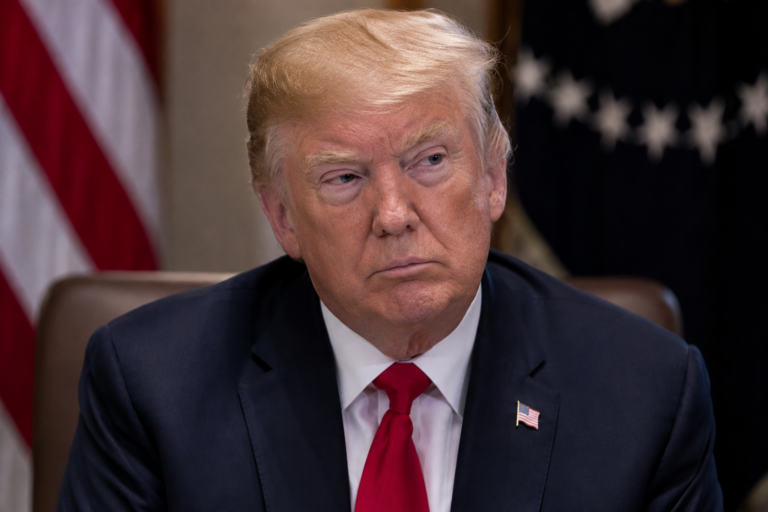
In a Truth Social post on Monday, President Trump announced that the US will prevent Bombardier from selling its jets in the United States as the trade war with Canada escalated. 

Trump argued that Canada was unfair to the United States, repeating his claim of the large trade deficit that the US has with the country. He also noted that Canada delayed the approval of Gulfstream. 

Trump was right to note that the US is the biggest market for Bombardier, and a ban would have major implications on its business.

However, the question is whether Trump can use his presidential power to ban Bombardier from selling its planes in the United States. For one, the FAA has already certified all Bombardier planes that are sold in the US. Also, the planes comply with the USMCA deal that Trump negotiated in his first term. USMCA was passed by the Senate and signed into law, meaning that he would need congressional approval to ban it. 

READ MORE: Forget Airbus, Boeing stocks: Embraer and Bombardier are cruising

Most importantly, Bombardier, if banned, may use the legal system to overturn it. Trump has already had major losses in the Supreme Court, including on tariffs. 

Additionally, Canada would respond by banning US jets by companies like Boeing and Gulfstream, which is owned by General Dynamics. 

Bombardier has a large US presence and buys US parts

Most importantly, Bombardier has a large presence in the United States, with over 1,000 employees in the country. It also uses many US suppliers, who would be hurt if its business slows down. 

The company uses engines made by companies like Pratt & Whitney, GE Aerospace, and Honeywell. All these are American companies. It also uses products from companies like Collins Aerospace, Parker Hannifin, TransDigm Group, RTX, and Parker Aerospace.

As such, banning Bombardier would have a big impact on US business, which raises the possibility of a TACO moment. TACO stands for Trump Always Chickens Out.

The most recent earnings report showed that Bombardier’s business continued growing steadily. Its revenue rose from $2.03 billion in the second quarter of last year to $2.15 billion in the second quarter of this year. Most of this revenue comes from its manufacturing segment followed by the services.

Its profits also continued to rise, with the adjusted EBITDA moving to $325 million from $297 million in the same period last year.

Bombardier stock price analysis

Bombardier stock chart | Source: TradingView

The daily chart shows that the Bombardier share price has remained in a bear market in the past few weeks. It dropped from a high of $378 in July to the current $311.90. It moved below the lower side of the ascending channel. 

The stock has remained below the 50-day moving average and the Major S/R pivot point of the Murrey Math Lines too. Looking forward, the stock will likely resume under pressure as investors react to Trump’s threat. It will then bounce back, possibly to the strong pivot reverse level of $343 as the fears ease.

The post Bombardier stock in focus as Trump threatens US sales ban that may not hold up appeared first on Invezz

US stocks may have further room to rise despite elevated valuations, as the earnings and productivity gains generated by artificial intelligence are not yet fully reflected in equity prices, according to HSBC’s Willem Sels.

According to Bloomberg, Sels, global chief investment officer at HSBC Private Bank and Premier Wealth, said investors remain skeptical about the sustainability of corporate earnings growth, particularly among technology and semiconductor companies.

But he argued that the market’s valuation premium has already narrowed compared with Europe.

“The US is not expensive. The markets are questioning the sustainability of earnings growth, but that’s in the price because that gap has closed,” Sels said in a Bloomberg Television interview.

The S&P 500 currently trades at roughly 19 times forward earnings, compared with nearly 15 times for Europe’s Stoxx 600.

While that represents a premium for US equities, Sels believes the difference is increasingly justified by stronger earnings growth and the scale of AI investment.

AI earnings could support US stocks

Sels pointed to the widening gap between companies adopting AI and those that have yet to embrace the technology.

Businesses using AI are already showing stronger revenue, earnings and margin growth, particularly in the US, he said.

That suggests investors may still be underestimating the economic benefits of the technology as companies move from experimentation to more widespread deployment.

Semiconductor stocks are a particular example.

Sels said investors are effectively discounting some companies because they question whether earnings forecasts for 2027 can be achieved.

He expects that skepticism to diminish as companies provide greater visibility through order books, customer demand and guidance.

The argument comes as US corporate earnings continue to surprise on the upside.

S&P 500 earnings per share jumped 50.7% in the second quarter from a year earlier, accelerating sharply from 19% growth in the first quarter.

Even excluding mark-to-market investment gains, earnings increased 25%.

Forward earnings also climbed to a record $401.75 a share last week, suggesting that corporate fundamentals remain resilient despite geopolitical tensions, elevated energy prices and uncertainty surrounding monetary policy.

That strength has helped support the broader equity market.

S&P 500 forward price-to-earnings multiples have fallen about 12% since the beginning of the year even as the index has gained roughly 13%.

Bond yields remain the biggest threat

The main threat to the bullish outlook is not necessarily equity valuations but a sharp increase in bond yields.

Sels identified a 10-year US Treasury yield of around 5% as a level that could trigger significant volatility in stocks.

Higher yields make bonds more attractive relative to equities while also increasing borrowing costs for companies.

“The bond market has been back in the driving seat for stock investors recently,” as rising oil prices, inflation concerns, fiscal pressures and expectations for tighter monetary policy have pushed Treasury yields higher.

JPMorgan’s Grace Peters has also described a 5% 10-year Treasury yield as psychologically important, while Barclays’ Emmanuel Cau warned that such a move could make investors more concerned about equity valuations.

The risk is particularly relevant as companies increase borrowing to finance AI infrastructure, data centers and other capital-intensive projects.

Higher financing costs could ultimately weigh on corporate earnings and investment.

Still, Sels remains broadly bullish on equities, arguing that businesses and economies have repeatedly proved more resilient than investors expected.

Earnings could keep the rally going

The strength of the earnings backdrop has also encouraged prominent market bulls to remain optimistic.

Veteran economist Ed Yardeni has indicated that he may need to raise his already bullish 8,400 year-end target for the S&P 500.

For Sels, the combination of improving earnings, AI-related productivity gains and resilient businesses provides a powerful tailwind for stocks.

The key question for investors is therefore whether earnings growth can continue to outpace concerns over valuations and bond yields.

So far, the earnings data suggest that it can. But with Treasury yields climbing and the 10-year note approaching levels that investors consider dangerous for equities, the bond market could determine whether the next leg higher in US stocks is sustained.

The post Can the S&P 500 rise further despite high valuations? HSBC says yes: here's why appeared first on Invezz

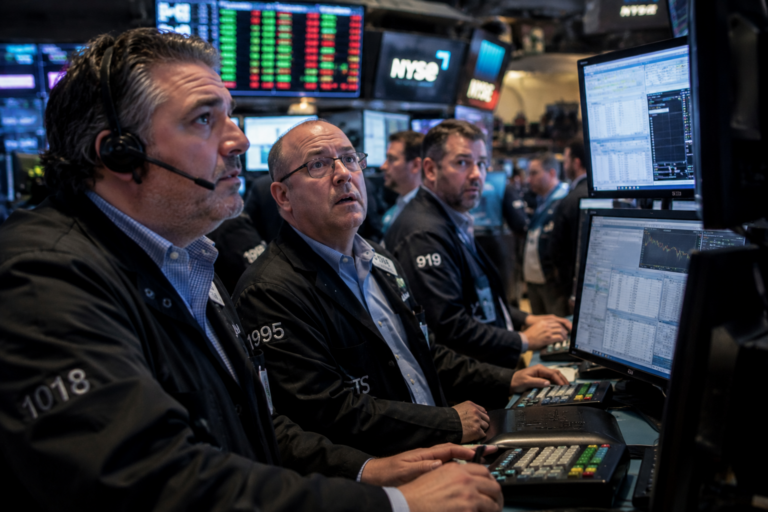
US stocks opened lower on Tuesday as renewed Middle East hostilities pushed oil prices higher, while investors prepared for key inflation data later this week. 

The moves come after a volatile period in which markets reassessed expectations for Federal Reserve policy following comments from Fed Governor Christopher Waller and stronger-than-expected August employment data.

The Dow Jones Industrial Average fell 471 points while the S&P 500 slipped 0.16% and the Nasdaq Composite declined 0.09%.

The shortened trading week will be dominated by the Producer Price Index on Thursday and the Consumer Price Index on Friday. 

Markets are currently pricing in about a 58.4% probability of a rate hike at the Federal Reserve’s September meeting, according to the CME FedWatch tool.

Middle East tensions push oil prices higher

The ongoing US-Iran conflict remained a major concern for investors as renewed military activity raised the prospect of disruptions to energy supplies. 

Yemen’s Tehran-backed Houthis attacked energy facilities and cities in Saudi Arabia, while Israel carried out strikes in southern Lebanon.

Shipping traffic through the Strait of Hormuz also slowed, with Iran threatening retaliation against further US attacks. 

The developments have added to concerns about the potential impact of higher energy prices on global inflation.

Brent crude futures rose 1.64% to $98.59 a barrel in one market reading, reaching their highest level since July 24. 

Separately, Brent futures were reported up 2.3% at $99.22, while West Texas Intermediate crude gained 3.3% to $94.54.

Energy stocks benefited from the move, with Marathon Petroleum and Occidental Petroleum gaining in trading. 

Higher oil prices, however, could create additional inflationary pressure and complicate the Federal Reserve’s policy outlook.

Treasury yields also remained elevated. 

The benchmark 10-year Treasury yield rose 0.42 basis points to 4.7882% on Tuesday, while yields had recently reached their highest levels in years. 

Higher risk-free yields can make equities relatively less attractive to investors.

Inflation data takes center stage for Fed outlook

Investors are now awaiting this week’s inflation figures for further clues about the Federal Reserve’s next policy decision. 

The data will follow August’s stronger-than-expected jobs report, which showed the US economy added 162,000 jobs while the unemployment rate remained at 4.1%.

The stronger labor-market reading increased expectations for a September rate hike, while Waller had previously indicated that he could support keeping rates unchanged if inflation pressures continued to ease.

The inflation reports could therefore shift market expectations again, particularly if higher energy prices begin to feed into broader price pressures. 

Markets will also monitor how Federal Reserve Chair Kevin Warsh responds to the latest economic data.

Tech stocks show mixed performance

The broader market remained mixed across sectors in trading. Chip stocks gained amid continued optimism surrounding artificial intelligence. Intel rose 5.54%, while Nvidia was unchanged with a 0.04% gain.

Cryptocurrency-related stocks moved lower as Bitcoin retreated from the $80,000 level. Coinbase declined 3%, while Strategy fell 5%.

Investors are also facing renewed trade tensions between the US and Canada. 

Canadian retaliatory tariffs on about $20 billion of US goods were set to take effect Tuesday, while President Donald Trump said Canadian aircraft manufacturer Bombardier would not be able to sell in the US unless Canada begins producing its products domestically.

With oil prices rising, inflation data approaching and trade tensions resurfacing, investors face several potential sources of volatility during the shortened trading week.

The post Dow opens 470 pts lower as oil prices rise, markets brace for key inflation data appeared first on Invezz