Bitcoin is trading at $77,529.59, up 0.6% over 24 hours, as selling pressure remains subdued but a tougher macro backdrop keeps the recovery capped below $80,000. Ethereum sits at $2,513.99, XRP at $1.38, and the broader market is heading into an important week for both stocks and crypto. A Packed Week Ahead Markets reopen Monday …
Senator Cynthia Lummis has released the final version of the CLARITY Act with major new ethics rules and more than 120 demands from Democrats just one day before the crucial September 15 Senate vote. President Trump has also agreed to tougher ethics restrictions, while the odds of the bill passing have jumped to 44%. Key …
Attorney Bill Morgan said the newly released final text of the CLARITY Act settles a long-running argument in crypto once and for all. He said XRP will be classified as a commodity in secondary markets regardless of how much of the supply Ripple continues to hold. “Deal with it Bitcoin maxis,” Morgan wrote, referencing critics …
OpenAI CEO Sam Altman has warned that fast AI development could create a future where humans lose control of the technology. His comments come as AI agents become more capable of operating on their own.While his warning is about AI safety, it also raises concerns for crypto, where exchanges, wallets, and smart contracts hold large …
The global cryptocurrency market, with a $2.73 trillion cap, is heading into a packed week of major events led by the U.S. Senate’s CLARITY Act vote, the FOMC Federal rate decision, Japan’s CPI, and the BOJ rate decision. These events could decide whether Bitcoin breaks higher or sees another pullback after its recent 2% weekly …
The Vanguard S&P 500 ETF (VOO) is firing on all cylinders this year, and is leaving other top competitors behind.
VOO & Chill is driving record inflows
The fund, which tracks the blue-chip S&P 500 Index, has continued adding assets at the fastest pace ever recorded. Data shows that it took six times more than other ETFs in August this year.
VOO added $13 billion in inflows last week, bringing its total year-to-date assets to $131 billion. This means that, if the trend continues, it will surpass the record $137 billion it added last year.
It has moved behind of the popular SPDR S&P 500 ETF (SPY) to become the biggest fund in Wall Street. Data shows that it now has over $1.05 trillion in assets under management, while SPY has $810 billion.
Notably, its total inflows this year are much more than other S&P 500 ETFs. For example, the iShares S&P 500 ETF (IVV) has had over $21 billion in outflows this year. This is notable since IVV and VOO are similar funds, even in terms of their expense ratios. SPY, on the other hand, has taken in over $12 billion in inflows this year.
The ongoing surge is driven by the phenomenon known as VOO & Chill. This is a situation where investors move their assets to the fund and hold them for a long time. They believe that beating the S&P 500 Index is one of the toughest approaches in investing. Indeed, most active managers and ETFs often struggle to match the performance of the index.
VOO ETF has some potential catalysts ahead
Looking ahead, there are reasons to believe that the VOO ETF will continue doing well this year. First, earnings growth is still strong. The average earnings growth in the second quarter was over 50%, helped by the AI boom and tariff refunds.
Analysts expect that the third-quarter earnings growth will be close to 30%. In most cases, the real figure is usually much higher than expected, meaning that a 40% or higher growth rate is possible.
Some of the top companies have guided to strong third-quarter earnings growth. For example, Nvidia is expected to make $108 billion this quarter, up by 91% from last year. Similarly, Google’s revenue is expected to come in at $127 billion, up by 25% YoY. Other companies expected to have strong revenue growth are those in the memory industry.
At the same time, it is highly undervalued, trading at a forward price-to-earnings ratio of 19.0, lower than the five-year average of 19.1. Together with the record VOO ETF inflows, chances are that the index will keep doing well.
VOO has formed a bullish flag pattern
VOO chart | Source: TradingView
The daily chart shows that the VOO ETF has formed a bullish flag pattern. This pattern is made up of a descending channel and a long vertical line. In most cases, it often leads to a strong bullish breakout.
On top of this, the fund has remained above all moving averages. As such, there is a likelihood that it will have a strong bullish breakout, potentially to the all-time high of $715 soon.
Zcash (ZEC) has recovered to roughly $1,140 on Monday after falling nearly 6% over the past seven days.
Despite the pullback, market activity remains elevated. ZEC recorded approximately $1.4 billion in trading volume, equivalent to more than 7% of its circulating market capitalization.
This suggests traders remain highly engaged even as the token struggles to extend its rally.
Macroeconomic concerns halt Zcash rally at $1,300
Zcash encountered significant selling pressure near $1,300 as the deteriorating US macroeconomic outlook weighed on the broader cryptocurrency market.
A stable inflation report initially triggered a rally across digital assets on Friday.
However, those gains quickly faded as market expectations for an interest-rate hike at the Federal Reserve’s next meeting climbed to nearly 90%.
The Federal Open Market Committee is scheduled to meet on September 16.
Investors will closely monitor comments from Fed Chair Kevin Warsh for clues about how policymakers intend to address persistent inflation.
Inflation remains well above the central bank’s 2% target, raising concerns that price pressures could become more difficult to control.
Meanwhile, the White House has continued to advocate for lower interest rates, even though monetary easing could intensify inflation in the short term.
This uncertainty may encourage cryptocurrency traders to reduce risk before the Fed’s decision.
Zcash has still significantly outperformed much of the cryptocurrency market, gaining approximately 116% in 2026.
Demand for the asset appears to be supported by its privacy technology and clearly defined use case.
The network recently faced a credibility challenge after an audit uncovered a vulnerability that could have allowed knowledgeable attackers to mint an unlimited number of ZEC tokens.
In response, the Zcash community introduced Ironwood, a new vault designed to strengthen the network’s underlying code.
Millions of ZEC have since migrated from the previous Orchard vault, indicating continued confidence among users.
Adoption of Zcash’s privacy features is also increasing.
Data from ZecHub shows that shielded transactions have reached their highest level in almost two years, representing 56% of all activity on the blockchain.
The rise in shielded usage suggests Zcash’s core privacy functionality remains a major attraction for users.
Bearish RSI divergence signals weakening momentum
ZEC’s daily chart is beginning to show signs that the recent rally may be losing strength. A bearish divergence has appeared on the Relative Strength Index.
This occurs when an asset’s price reaches a higher level while the RSI forms a lower high, indicating that bullish momentum is weakening despite continued price appreciation.
Such divergences commonly emerge during the later stages of an upward move and can precede a substantial correction.
With liquidity thinning at elevated prices and macroeconomic uncertainty increasing, ZEC could retreat toward the $850 area.
Traders may also close profitable positions or purchase put options before the Fed meeting, adding to short-term selling pressure.
Although the technical outlook points to a near-term correction, the broader Zcash rally may not be over.
ZEC previously broke out of an ascending-triangle pattern, producing a longer-term technical target near $2,500.
A decline toward $850 could therefore represent a reset within the existing uptrend rather than the beginning of a sustained bearish reversal.
If the $850 region attracts buyers and holds as support, Zcash could eventually resume its advance toward the projected $2,500 target.
However, the token’s immediate direction will likely depend on the Federal Reserve’s policy decision and the broader market’s reaction.
The sell-off came as AI-linked stocks fell after leaders of major AI companies warned about risks associated with rapid AI development.
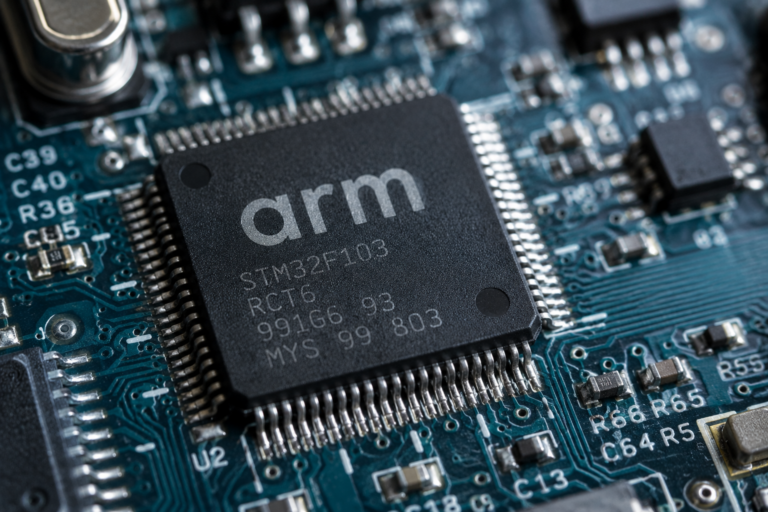
The move added to existing pressure on Arm shares, which have remained well below their all-time high of $452.70 reached earlier this year.
Arm’s valuation has been a key concern for investors.
An HSBC analyst downgraded the stock to Hold in July, citing foundry capacity constraints at advanced process nodes and a valuation that had priced in several years of future growth.
Arm shares were trading at 110 times forward earnings according to Stockanalysis.com.
Regulatory and AI concerns add to pressure
Arm is also facing scrutiny from the US Federal Trade Commission over its chip licensing practices, adding another source of uncertainty for investors.
Concerns surrounding majority owner SoftBank’s leveraged AI investment strategy have also weighed on sentiment toward Arm.
Investors are assessing whether a potential slowdown in AI development could expose risks in SoftBank’s strategy and reduce the perceived upside for Arm.
Despite the near-term pressure, Arm’s licensing and royalty model remains a key strength.
The business generates strong margins and robust cash flow, providing the company with financial resources to continue investing in chip designs and AI-related technologies even as market conditions become more challenging.
The increasing adoption of Arm-based CPUs in data centres and AI infrastructure could also help the company diversify beyond smartphones and develop more stable recurring revenue streams.
However, several risks could limit Arm’s performance in the near term.
Weakness in the global smartphone market could pressure royalty income, while supply bottlenecks for advanced chips could slow the rollout of its AGI CPUs.
New AI-focused products also initially carry thinner margins than Arm’s traditional business, potentially limiting profitability until the platform matures and scales.
Piper Sandler sees server CPU opportunity
The latest positive catalyst for Arm came on Sept. 9, when Piper Sandler initiated coverage with an Overweight rating, citing momentum from server CPU design wins.
However, the positive call has so far failed to provide lasting support for the shares.
Piper Sandler said Arm has a dominant position in CPU intellectual property, with a 50% market share of its target markets.
The firm expects Arm’s IP revenue to grow at approximately a 20% compound annual growth rate to around $12 billion by fiscal 2031.
The investment bank also highlighted Arm’s expansion into accelerator intellectual property as a potential source of upside.
Piper Sandler estimated that capturing approximately 10% of the ASIC market could double Arm’s current earnings.
The firm valued Arm using a fiscal 2031 sum-of-the-parts enterprise-value-to-EBIT approach, while acknowledging that the stock trades at an expensive valuation.
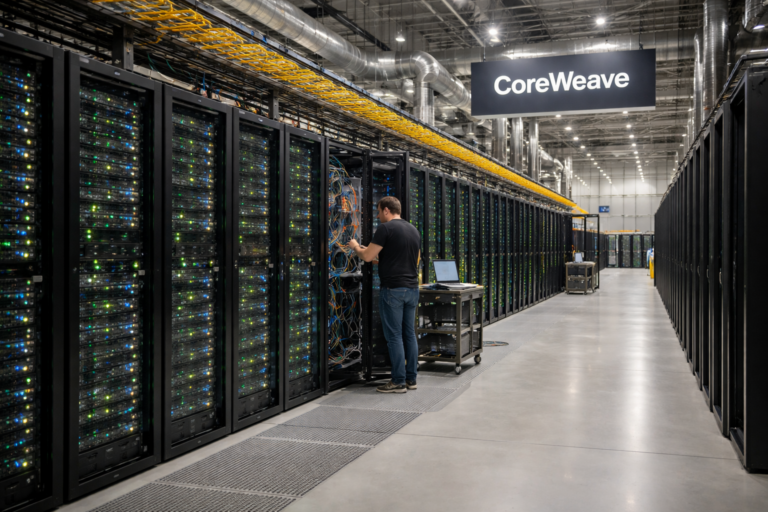
Top neocloud companies have dropped sharply this year, even as their revenue growth continues. CoreWeave, the pioneer of the industry, slipped to $87, down sharply from its all-time high of $186. This retreat has pushed its market capitalization from over $88 billion to $49 billion today.
Nebius stock slipped to $224 from the year-to-date high of $300. IREN, a Bitcoin miner pivoting to the AI data center industry, has also slipped to $43 from the year-to-date high of $77. All these companies have received large investments from Nvidia.
CoreWeave, IREN, and Nebius are seeing strong demand
The most recent financial results showed that these companies are firing on all cylinders as demand for their GPUs continue rising. CoreWeave has taken a lead role, with its revenue backlog jumping to over $104 billion. This backlog is coming from its partnership with companies like Microsoft, Anthropic, and OpenAI. It has also become a top supplier to Jane Street.
The results showed that CoreWeave’s revenue jumped by 112% to $2.6 billion, with its adjusted EBITDA moving to $1.5 billion. Analysts expect that its annual revenue will jump to $12.9 billion this year followed by $26.4 billion next year.
Nebius also released strong numbers, with its revenue rising by over 400% during the quarter. This growth is coming from its large deals from companies like Microsoft and Meta Platforms, with analysts expecting its revenue to $3.34 billion this year and $12 billion next year.IREN, on the other hand, is expected to make $2.8 billion this year and $7.2 billion next year.
Growth is coming at a cost
The main reason why these stocks are struggling is that this revenue growth is coming at a cost. For one, the AI boom has pushed the cost of GPUs, memory, servers, and optical systems much higher this year. As a result, they are having to spend more money than initially expected.
A good example of this is CoreWeave, which expects to spend between $35 billion and $39 billion in capex this year. Before that, its goal was to spend between $30 billion and $35 billion in capex.
The companies are now having to raise capital in debt and equity. Nebius raised over $2 billion by selling shares in the second quarter. It also has about 12 million shares that it can sell to fund its AI rollout.
They have also boosted their debt substantially. CoreWeave has accumulated over $27 billion in debt in the past few months. Nebius has been much better since its business started as a spin off of Yandex, the top Russian search engine company.
These metrics explains why these companies have received a substantial short interest. Nebius hs a short interest of 23%, while CoreWeave and IREN have a short interest of 12.8% and 24%, respectively. This means that investors expect the stocks to remain under pressure for longer.
The stocks have also slipped as competition in the neocloud rises. SpaceX recently received a large order from a company that will pay it $1.1 billion a month starting from December. Meta Platforms and Microsoft are also starting to lease their extra space.
IREN, Nebius, and CoreWeave stocks have also slipped because of the ongoing fears that the AI bubble will burst. Also, there are calls to slow the rollouts of more advanced AI models.
In the future, however, these companies will do well as their capital investment phase starts to wind up. This will lead them to start being free cash flow machines.
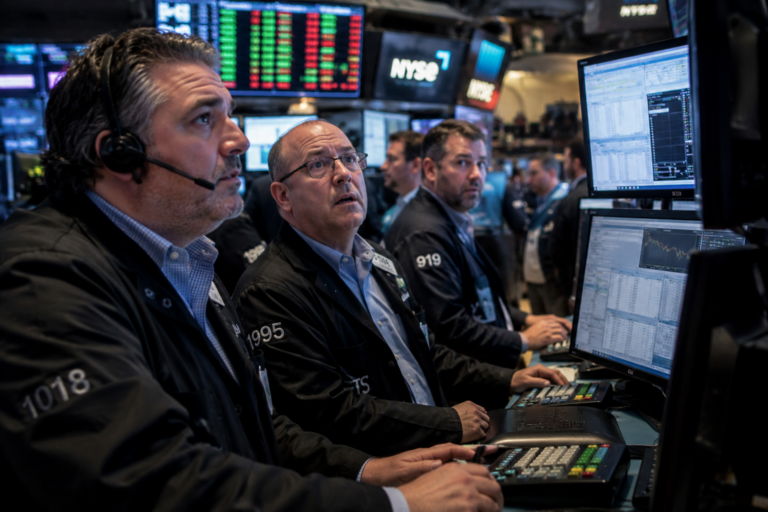
Wall Street’s main indexes opened lower on Monday as a selloff in major AI and semiconductor stocks added to pressure on US equities.
The decline followed calls from senior artificial intelligence executives for a slower pace of AI development amid growing safety concerns.
The Dow Jones Industrial Average declined 153 points. The S&P 500 fell 0.74% while the Nasdaq Composite dropped 1.22%.
Nvidia shares fell about 3.8% in trading, while Amazon declined around 1.32%.
Other major chipmakers also came under pressure, with Broadcom, AMD, Intel and Marvell Technology falling between 4% and 8.8%.
AI stocks retreat as executives call for slower development
The latest pressure on AI stocks followed comments from Anthropic CEO Dario Amodei, who called for AI companies to slow the pace at which they advance the capabilities of their most powerful models.
OpenAI CEO Sam Altman and xAI chief Elon Musk backed the proposal. Amodei has also raised concerns about the potential risks associated with increasingly capable AI systems.
The developments have prompted investors to reassess some of the enthusiasm that has driven a major rally in AI-related technology and semiconductor stocks.
Billions of dollars have flowed into AI infrastructure and development in recent years, supporting strong gains across parts of the technology sector.
A slower pace of AI development could potentially reduce the need for heavy investment in the technology, creating a risk for companies that have benefited from the rapid expansion of AI spending.
However, the impact was not uniform across technology stocks.
Software companies that have faced concerns over AI disruption moved higher in trading. ServiceNow rose 5.6%, while Adobe and Workday gained 3.8% and 4% respectively.
Meta advanced more than 1% and Alphabet climbed 1.4%.
Some investors also questioned whether the AI-related decline would prove lasting, given the lack of clarity over how any slowdown in development would be implemented.
Oil prices add to pressure ahead of Fed meeting
Rising oil prices added another source of uncertainty for investors.
Brent crude futures climbed more than 4% to $109 a barrel, while West Texas Intermediate crude futures gained about 3% to $103.98.
Oil prices rose after Saudi Arabia shut a key pipeline that bypasses the Strait of Hormuz.
The latest increase in energy prices comes after oil weighed on US equities last week.
The Dow fell 1.6% for its biggest weekly decline since March, while the S&P 500 and Nasdaq Composite lost about 0.8% and 0.7%, respectively.
Investors are also preparing for the Federal Reserve’s September policy meeting later this week.
Fed funds futures were pricing an approximately 88% to 89% probability of a rate hike, according to CME’s FedWatch tool.
The rate outlook has become more significant after data last week showed accelerating US inflation, while higher oil prices could add to inflationary pressures and complicate the central bank’s policy decisions.