Archive

September 11, 2026

Browsing

US producer prices rose in line with expectations in August as energy costs rebounded, keeping inflation pressures elevated ahead of the Federal Reserve’s policy meeting next week.

The Producer Price Index for final demand increased 0.4% last month after an upwardly revised 0.1% gain in July, the Labor Department’s Bureau of Labor Statistics said on Thursday.

Economists polled by Reuters had expected a 0.4% rise after July’s previously unchanged reading.

On a 12-month basis, producer prices climbed 5.4% in August, accelerating from a 4.8% increase in July.

Energy prices drive August increase

Energy prices rose 4.2% in August after declining for two consecutive months, providing the biggest boost to the overall producer-price reading.

Renewed hostilities between the United States and Iran pushed oil prices higher during the month.

Wholesale food prices edged up 0.1% after falling 0.9% in July.

Excluding the volatile food and energy components, the core PPI increased 0.2%, below economists’ expectations for a 0.3% rise.

Core prices excluding trade services, another volatile category, advanced 0.3%.

Producer goods prices surged 1.1% during the month and rose 0.4% excluding food and energy.

Services prices increased 0.1%, although several components recorded stronger gains.

The data comes as investors and economists assess whether inflation remains too high for the Federal Reserve to ease policy aggressively, even as the central bank weighs labor-market conditions.

PPI impact on PCE becomes harder to gauge

The PPI report is closely watched because some of its components are used in calculating the Personal Consumption Expenditures price indexes, the Federal Reserve’s preferred inflation gauge.

However, changes to the government’s methodology beginning in August are expected to complicate comparisons.

The revisions affect portfolio management and investment advice services, legal services, and computer software and accessories, changing how PPI data feeds into the PCE inflation measures.

The portfolio management component, which has contributed to significant swings in core PCE inflation, will be replaced with an imputation.

“At the same time, new PPI-based estimators for household legal services and computer software will be added,” said Lou Crandall, chief economist at Wrightson ICAP in a Reuters report.

“We’ll have less confidence than usual in the translation from the PPI data to the PCEPI contribution for August as a result.”

Morgan Stanley economists said the methodology changes could lead to downward revisions to PCE inflation data for the first four months of the year, although they did not expect meaningful changes to the figures for May through August.

“As a result, we estimate that the 12-month and six-month annualized rates of core PCE inflation through July could be revised down to roughly 3.1% and 3.2%, respectively, from 3.3% and 3.5% currently,” they wrote in a note.

“Given that we do not expect meaningful revisions to the May-July monthly prints, the three-month annualized pace through July should therefore remain broadly unchanged at around 3.0%-3.1%.”

Fed faces inflation and jobs trade-off

Some Federal Reserve officials have focused on the three-month change in PCE inflation as a clearer indicator of underlying price pressures.

The Bureau of Economic Analysis will release updated PCE inflation data alongside annual revisions to gross domestic product figures on September 30.

With inflation still above the Fed’s 2% target and the labor market showing signs of regaining its footing in August, some economists have argued that the central bank should raise interest rates next week to reinforce its independence.

They also said uncertainty surrounding the Fed’s next move had contributed to higher long-term Treasury yields, adding another layer of pressure to policymakers as they balance inflation risks against economic growth and employment.

The post US producer prices rise 0.4% in August as energy costs rebound appeared first on Invezz

Oracle is set to report quarterly earnings after the closing bell on Thursday, with options markets signalling that investors are bracing for one of the stock’s biggest moves of the year.

Recent options pricing suggests Oracle (ORCL) shares could rise or fall by as much as 11% by the end of the week.

Based on Wednesday’s closing price, a move of that magnitude could send the stock toward $179 on the upside or below $145 if investors are disappointed.

The unusually wide expected range reflects a combination of Oracle’s history of sharp post-earnings moves, heightened expectations around its artificial intelligence infrastructure business and concerns over the company’s spending and financing requirements.

Oracle earnings expectations run high

Wall Street expects Oracle to report revenue of around $19.1 billion, representing an increase of nearly 28% from the same period a year earlier.

Earnings are expected to reach $1.74 a share, compared with $1.47 a year ago.

Investors will also be closely watching Oracle’s remaining performance obligations, or backlog, which is expected to have risen to nearly $640 billion, according to estimates compiled by Visible Alpha.

That would represent growth of about 40% from a year earlier and underline the scale of demand for Oracle’s cloud infrastructure.

The size of the backlog, however, has also become a source of investor concern because a significant portion is concentrated among a relatively small number of major AI customers.

Oracle shares have fallen more than 17% in 2026 and remain more than 50% below their record high from September 2025.

Concerns over the company’s capital spending, fundraising plans and ability to finance its aggressive AI infrastructure expansion have weighed heavily on the stock.

Yet the shares have recently shown signs of a recovery, gaining around 15% over the past week.

Options market points to a big move

The expected 11% move is particularly notable given Oracle’s history.

In September 2025, the stock surged about 35% after the company reported earnings that significantly exceeded investor expectations.

That move remains fresh in the minds of options traders and helps explain why the market is pricing in substantial volatility around Thursday’s results.

The timing of the earnings report adds another layer of uncertainty, with the US consumer price index report due the following morning.

Options positioning also suggests that some investors are preparing for an upside surprise.

There has been notable call-side activity in Oracle, with substantially larger clusters of open interest on calls than puts.

Calls within the expected trading range have also been carrying richer premiums than similarly distant puts, according to CNBC.

For example, in the September 11 weekly contracts, as of the market close on Sept. 9, the $144 strike puts were trading at around $2.34, while the $180 calls were priced at about $3.90, CNBC said.

The strikes were roughly equidistant from the stock price.

That is notable because equity markets typically place a higher premium on downside protection, with investors often willing to pay more for puts to hedge against a sell-off.

The unusual positioning could reflect several factors, including Oracle’s recent momentum, its history of explosive post-earnings gains, and optimism that the stock’s recovery from its July 52-week low can continue.

AI cloud growth is the key catalyst

Much of Oracle’s investment case now rests on the rapid expansion of its cloud infrastructure business.

Bank of America analyst Tal Liani expects infrastructure-as-a-service revenue to grow 25% sequentially and 116% year over year as Oracle expands its data-center footprint.

Liani believes customer prepayments and accelerating infrastructure deployment could help address some of the concerns surrounding Oracle’s financing needs.

“We favor the risk/reward of Oracle, as we believe Street consensus already captures the challenging balance sheet fundamentals,” Liani wrote on Friday, “yet is not fully incorporating the likelihood of revenue growth acceleration related to reaching DC buildout milestones.”

The argument is that Oracle’s enormous AI infrastructure commitments could eventually become less of a concern if the company demonstrates that the additional capacity is translating into faster revenue growth.

Morgan Stanley analyst Sanjit Singh has also described Oracle as a “good setup” heading into earnings and expects cloud revenue growth of 63% from a year earlier.

Analysts see substantial upside

Despite the stock’s steep decline from its record high, Wall Street remains broadly positive on Oracle.

Nine of the 11 analysts tracked by Visible Alpha rate the stock a “buy”, compared with one neutral rating and one “sell”.

Their average price target of $239 implies nearly 50% upside from Wednesday’s close.

Bank of America’s Liani has a $240 price target, implying about 51% upside.

Mizuho is even more bullish, maintaining its Outperform rating and a $320 target.

The firm expects Oracle to beat consensus estimates, primarily because of stronger-than-expected performance from Oracle Cloud Infrastructure.

Mizuho said another earnings beat could reinforce confidence in Oracle’s execution and improve visibility around its fiscal 2027 outlook.

The firm’s analysts will also be watching Project Jupiter, Oracle’s major data-center expansion, with the company’s ability to maintain its fiscal 2027 revenue guidance likely to be an important test for investors.

Mizuho sees potential for Oracle’s shares to re-rate if financing concerns begin to ease, visibility into a free-cash-flow inflection improves, and the company’s Oct. 28 Investor Day provides another catalyst.

Investors still want proof

The bullish analyst view is not universal.

Morgan Stanley maintains a neutral rating and has warned that Oracle could require several quarters of strong results before it fully regains the confidence of investors who have become concerned about its balance sheet and spending plans.

That caution highlights the central issue facing Oracle: strong AI demand is no longer enough by itself.

The company needs to demonstrate that its rapidly expanding infrastructure commitments can generate sufficient revenue and eventually translate into stronger free cash flow.

Citi analysts, meanwhile, said they “see opportunity after one of the most extreme dislocations and drawdowns in the stock’s history.”

Thursday’s earnings report could therefore become an important test of whether Oracle’s recent rebound represents the beginning of a sustained recovery or merely a short-term rally.

The post Here’s where ORCL stock could head after earnings as options market signals big move appeared first on Invezz

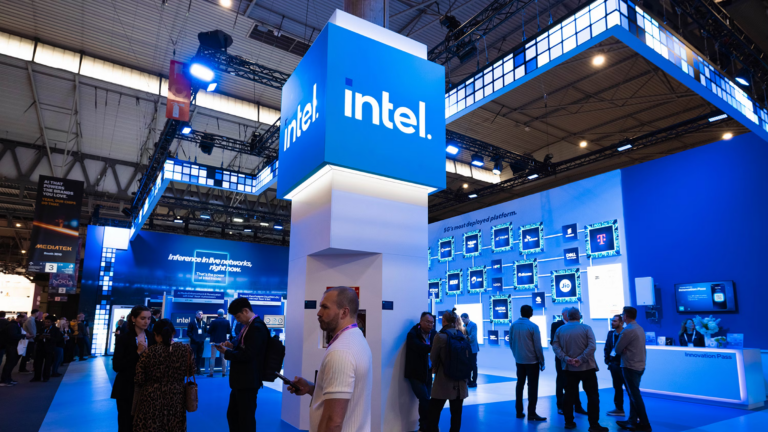
Intel stock fell on Thursday, putting the shares on track to end a five-session winning streak after gaining more than 20% during the run.

The INTC stock was down around 6% to trade near the $100 mark.

The sharp reversal came as the broader market moved lower amid a renewed surge in oil prices and concerns that higher inflation could keep interest rates elevated.

The Dow Jones Industrial Average fell 195 points, or 0.4%, while the S&P 500 declined 0.6% and the Nasdaq Composite dropped 0.9%.

US West Texas Intermediate crude futures for October delivery climbed above $100 a barrel, while Brent crude for November delivery rose above $105 as the US-Iran conflict stretched into its seventh month.

The rise in energy prices pushed the 10-year Treasury yield above 4.9%, its highest level since November 2023.

Higher rates have put pressure on high-beta technology and semiconductor stocks that have led much of the market’s recent rally.

Intel’s recent rally loses momentum

Intel’s Thursday decline comes after a sharp run higher that has pushed the stock more than 20% higher over the previous five sessions.

One catalyst behind the rally was a report from Taiwan-based technology publication DigiTimes that Intel was considering raising CPU prices by about 10% beginning in early October.

The potential increase would extend a series of price hikes that Intel began at the end of 2025 and comes as the company faces higher supply-chain costs and strong demand for its products.

Thursday’s broader market sell-off has nevertheless highlighted the sensitivity of the recent gains to the macroeconomic backdrop.

Piper sees AI-driven CPU demand

Piper Sandler initiated coverage of Intel on Wednesday with a Neutral rating and a $110 price target.

The firm said Intel is benefiting from the emergence of agentic AI, which is driving demand for its server CPU products.

Piper expects supply to remain constrained, with the supply-demand balance potentially not normalizing until 2029 or 2030.

The firm’s focus, however, is on Intel Foundry and whether the company can catch up in its 14A manufacturing process.

Piper said customer evaluations of Intel’s 14A technology have been surprisingly positive, while management has made progress rebuilding the company’s culture, products and customer trust.

That progress could provide a foundation for Intel’s longer-term foundry ambitions, but Piper believes much of the potential improvement is already reflected in the stock price.

The firm estimates the shares are already pricing in approximately 15% foundry market-share gains.

That would represent a full fab module, Fab-62, and accounts for roughly 45% of Intel’s current share price, according to Piper.

Earlier this week, Northland analyst Gus Richard upgraded Intel to Outperform from Market Perform.

The analyst cited what he described as “material progress” in the company’s turnaround.

He also said Intel could continue benefiting from an ongoing server CPU shortage.

Richard further said Intel’s partnership with Tesla on the Terafab semiconductor initiative could “materially benefit” the company’s foundry business.

The post Why Intel stock is sinking around 6% on Thursday appeared first on Invezz

Apple shares AAPL gained 1.1% in trading on Thursday after the company unveiled its iPhone Duo, iPhone 18 Pro and iPhone 18 Pro Max at its latest product event.

Wall Street analysts largely viewed the launch constructively, although opinions differed on the strength of the iPhone 18 product cycle and the impact of higher component costs.

Citi maintained a Buy rating on Apple with a $365 price target, while Bank of America kept its Buy rating but lowered its target to $370 from $380.

Morgan Stanley retained an Overweight rating with a $360 target, while GF Securities maintained a Hold rating.

Citi calls iPhone Duo a major hardware launch

In a note to investors cited by TheFly, Citi described the iPhone Duo as “Apple’s biggest new hardware category since the watch and AirPods.”

The firm said Apple had already increased prices for the iPhone 16 and iPhone 17 by at least $100 to offset higher memory component costs.

Citi viewed pricing for the iPhone 18 lineup and the foldable model as broadly consistent with its expectations.

Bank of America analyst Wamsi Mohan also took a constructive view while trimming his Apple price target to $370 from $380.

Mohan said the event was the first major product launch under CEO John Ternus and highlighted Ternus’s focus on Apple’s core values and customer-focused product development.

Mohan also noted that the new iPhone prices were below BofA’s estimates.

While that could support stronger unit sales, he said it could also put pressure on gross margins as memory and other component costs rise.

Morgan Stanley sees AI at center of strategy

Morgan Stanley analyst Erik Woodring said Apple was positioning the iPhone as an intelligent personal hub, with the iPhone Duo and Siri AI central to the strategy.

Woodring said continued product innovation, semiconductor and software differentiation, and pricing factors could support above-trend growth into fiscal 2027.

He also said the event differed from previous launches because of the change in leadership and the range of new offerings.

According to Woodring, Apple’s first 2nm A20 SoC could deliver a significant performance improvement, while the iPhone Duo could reshape the premium smartphone market.

He also highlighted Apple’s hardware and software integration and the expected role of Siri AI in making the iPhone a centralized intelligence hub.

Analysts differ on strength of iPhone 18 cycle

GF Securities analyst Henry Huang offered a more cautious assessment, calling the $100 price increase for the iPhone 18 Pro compared with previous models better than feared.

Huang pointed to uncertainty around the iPhone 18 Pro cycle, including limited hardware upgrades and potential margin pressure.

He said the iPhone Duo could partly offset those concerns but described the iPhone 18 series as a modest product cycle.

J.P. Morgan analyst Samik Chatterjee said the event was largely in line with his expectations. He noted that investors may have anticipated larger price increases because of higher memory costs.

Chatterjee said the pricing decisions could support iPhone volumes.

He also expects Siri AI features, powered by Apple’s foundational models and scheduled for beta release in mid-September, to contribute to iPhone revenue growth.

Supply-chain feedback from the initial weeks of orders could provide another catalyst for Apple shares as investors assess demand for the new models.

The post Apple stock rises as analysts expects iPhone Duo to fuel growth appeared first on Invezz