Archive

September 5, 2026

Browsing

Tesla (TSLA) stock came under pressure on Friday, a day after the electric vehicle maker officially launched its Cybercab robotaxi in Austin, Texas.

Shares fell about 6.4% in trading, although the stock remained on track for its fourth weekly gain in five weeks.

The launch has drawn mixed reactions from analysts and raised new regulatory questions after the National Highway Traffic Safety Administration (NHTSA) opened an inquiry into Tesla’s certification of the driverless vehicle.

Wells Fargo maintained its Underweight rating and $130 price target on Tesla, implying about 63% downside from the stock’s current level.

The bank said the Cybercab launch likely fell short of investor expectations because of limited updates and a lack of surprises.

Cybercab launch faces competition

Tesla added its two-seat Cybercab to its Robotaxi network in Austin, marking the commercial debut of its purpose-built autonomous vehicle.

The gold-colored vehicle has no steering wheel or pedals and is designed to operate without a driver.

Public Cybercab rides are scheduled to begin Friday at 5 p.m. CT in limited areas of Austin.

Tesla has not disclosed how many vehicles will initially be available, while Wells Fargo noted that about 45 Cybercabs were registered in Texas around the launch.

The rollout comes as Tesla seeks to compete with Alphabet’s Waymo, which has established a larger US autonomous-vehicle operation.

GLJ Research also reiterated a Sell rating on Tesla, describing the event as a “sell-the-news” moment, according to TipRanks.

Tesla CEO Elon Musk has positioned autonomous driving and robotics as increasingly important to the company’s future.

The Cybercab is central to that strategy, with Tesla having started production in April and Musk previously saying production would grow “exponentially” later this year or next.

NHTSA opens Cybercab inquiry

The NHTSA said Friday it had opened an Audit Query covering about 1,000 Cybercab vehicles.

The agency is examining how Tesla determined that the vehicle complies with federal safety regulations.

The issue centers on the Cybercab’s lack of conventional manual controls. Existing US vehicle safety standards were largely written around human-driven vehicles and require manual controls.

Michael Brooks, executive director of the Center for Auto Safety, said in a Reuters report that, “I don’t think there is a reasonable interpretation that can be made to suggest that the Cybercab can comply with the Federal Motor Vehicle Safety Standards.”

Carnegie Mellon University professor and autonomous-vehicle safety expert Philip Koopman said Tesla has historically “tested limits and pushed boundaries on regulations.” He added that he expects Tesla to test those limits with the Cybercab.

Tesla valuation under scrutiny

The regulatory questions add another challenge as Tesla seeks to expand its robotaxi operations.

The company currently operates a limited paid robotaxi service in Texas and Florida using Model Y vehicles, which retain manual controls required under federal standards and have human backup drivers in some cars.

Bryant Walker Smith, a University of South Carolina law professor specializing in autonomous-driving regulation, questioned whether Tesla’s technology is ready for broad deployment.

He said public information does not indicate that Tesla is “anywhere close” to safely and reliably deploying an automated driving system across the conditions required for a vehicle without conventional controls.

For vehicles that do not comply with federal safety standards, NHTSA provides an exemption process that limits deployment to 2,500 vehicles annually.

Tesla’s engineering chief Lars Moravy has said Cybercab would not be subject to that cap, although he did not provide details.

Tesla’s approach could face further regulatory scrutiny.

Amazon-backed Zoox previously attempted to self-certify a similar driverless vehicle, but withdrew its certification after an NHTSA investigation. Zoox later received a federal exemption for limited commercial deployment.

Meanwhile, investor concerns extend beyond the Cybercab launch itself. Gary Black cautioned Tesla shareholders against conflating enthusiasm for the company with enthusiasm for its stock, saying, “Loving the company doesn’t mean you should love the stock.” He urged investors to conduct their own research rather than rely on management’s promises.

The post Tesla stock falls 6% as cybercab launch faces analyst, regulatory concerns appeared first on Invezz
Apple (AAPL) stock fell about 2% on Friday as investors weighed reports that initial production of the company’s long-awaited foldable iPhone remains limited, raising concerns about whether Apple can meet demand when the device launches.

According to a Nikkei Asia report, production of the foldable iPhone was running at only a few hundred units per day in late August.

The report attributed the slow initial output primarily to Apple’s stringent quality-control requirements, while the company and its suppliers work to increase production.

The production constraints come shortly before Apple’s Sept. 9 launch event, where the company is expected to unveil its latest iPhone lineup.

The foldable model represents an important product milestone for Apple as it enters a category that competitors including Samsung and Huawei have developed for years.

Apple faces foldable iPhone production challenges

Apple has reportedly targeted production of 8 million to 10 million foldable iPhones this year.

However, the company could fall short of that target if production does not accelerate, according to the Nikkei Asia report.

One supply chain manager familiar with the situation told Nikkei Asia that Apple has “very high quality requirements” and conducted an additional trial run in August ahead of actual production.

The source said output was only a few hundred units per day in late August and warned that the initial volume could be challenging to match with market demand.

Industry executives cited by Nikkei Asia said tens of thousands of devices would normally need to be produced each day to meet Apple’s planned production target.

The company has also encountered engineering and test-production challenges.

Apple is reportedly requiring more stringent durability testing than rival smartphone makers, including more extreme testing conditions, a higher number of folding cycles and greater screen flatness.

“The surface flatness and the performance of the hinge are among the details where Apple is asking for better production yields,” another person familiar with the situation told Nikkei Asia.

Two people familiar with the situation also told Nikkei Asia that Apple conducted an additional verification process in August to ensure the foldable iPhone could be mass-produced according to its specifications.

That process reportedly delayed commercial production by several weeks.

Memory shortages add pressure on Apple stock

The foldable iPhone production challenges come as the broader smartphone industry faces shortages of memory and other electronic components.

The shortages have been linked to the massive buildout of artificial intelligence infrastructure.

IDC’s latest forecast projects that the global smartphone market will decline 16.7% this year, while the memory shortage is expected to push average smartphone selling prices up by around 27.6%.

Apple has so far been less affected than some of its more price-sensitive Chinese competitors, including Xiaomi, Oppo and Vivo.

IDC data showed Apple’s global smartphone market share rose to 20.2% in the April-to-June quarter, compared with 16.3% a year earlier.

The company is also reportedly prioritizing its three most premium iPhone models this year to optimize memory allocation and marketing resources.

The standard iPhone launch has been pushed to next spring, according to an earlier Nikkei Asia report.

The foldable iPhone could therefore arrive at a time when Apple is balancing premium product demand with component constraints.

Huawei is also preparing to release its latest generation of triple-fold phones, increasing competition ahead of Apple’s launch.

Foldable iPhone could drive new growth

Despite the production concerns, the foldable iPhone is viewed as a significant milestone for Apple.

The device would mark the company’s entry into a smartphone segment already served by competitors such as Samsung and Huawei.

The new form factor could potentially create a new premium upgrade cycle for the iPhone, expand Apple’s addressable market and provide an additional growth driver as the broader smartphone market faces pressure.

Citi expects Apple’s first foldable iPhone, potentially called the iPhone Ultra, to start at more than $2,000.

The firm also expects the iPhone 18 Pro and Pro Max models to cost about $200 more than their predecessors.

Citi analyst Atif Malik said the iPhone lineup is expected to receive several major upgrades, including the A20 chip, variable-aperture main cameras on the Pro and Pro Max models, and Apple’s own modems.

The foldable model is expected to feature dual front and rear camera systems, an OLED display with an ultra-thin glass cover for the inner screen, and increased component content in areas including the battery, vapor-chamber cooling system and structural components.

Apple’s Sept. 9 event will also be notable as the first major product launch under new CEO John Ternus, who officially succeeded Tim Cook on Sept. 1. Ternus, a longtime Apple hardware executive, has described the upcoming launch as a major one.

The post Apple stock falls 2% as foldable iPhone production faces supply hurdles appeared first on Invezz

President Donald Trump renewed pressure on the Federal Reserve to lower interest rates after stronger-than-expected August jobs data increased expectations of a September rate hike.

US employers added 162,000 jobs in August, sharply exceeding forecasts and keeping the unemployment rate at 4.1%.

Gold prices fell as stronger labor data boosted expectations for higher interest rates and lifted the US dollar.

Oil prices declined on Friday but remained on track for weekly gains of more than 6% amid renewed US-Iran military exchanges.

Trump renews pressure on Fed to cut interest rates

President Donald Trump intensified his pressure on the Federal Reserve on Friday, calling for lower interest rates after a stronger-than-expected August employment report boosted expectations for a potential rate hike this month.

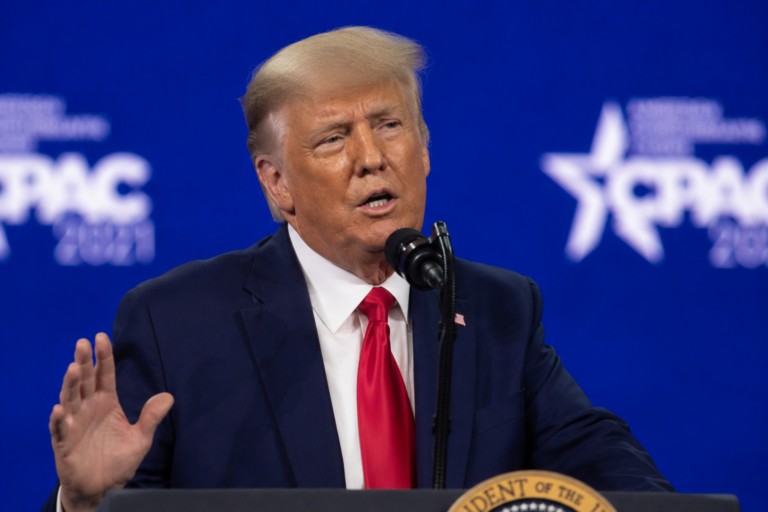
In a social media post, Trump urged Fed Chair Kevin Warsh and other policymakers to lower borrowing costs, saying, “LOWER THE RATE OR I’LL STOP TRADING WITH COUNTRIES WITH WHICH WE HAVE A DEFICIT.”

Trump argued that high interest rates put the US at a disadvantage and later said the country should have a policy rate of 1% or even 0.5%, rather than the current level near 4%.

The comments marked a renewed pressure campaign against the central bank.

Trump had eased his criticism of the Fed after Warsh replaced Jerome Powell as chair, but Friday’s remarks revived concerns about political pressure on monetary policy.

The president also defended his threat to restrict trade with countries including Switzerland, Mexico and the European Union, although such a move would likely face legal challenges.

August jobs report strengthens case for Fed Rate hike

The US economy added 162,000 nonfarm jobs in August, according to the Bureau of Labor Statistics, significantly exceeding the 53,000 increase economists surveyed by Dow Jones had expected.

The unemployment rate remained at 4.1%, in line with forecasts.

August recorded the strongest monthly employment increase since March, offering a more positive picture of the labor market following weaker hiring during the summer.

July’s employment figure was also revised sharply higher. The BLS said the economy added 21,000 jobs in July, compared with the previously reported loss of 23,000 positions.

However, wage growth remained a concern. Average hourly earnings rose 0.3% in August and were up 3.1% from a year earlier.

The stronger jobs data increased market expectations for a September rate hike. Traders were pricing in roughly a 60% probability of a hike, while later short-term interest-rate futures implied about a 65% chance.

Gold price falls as rate hike bets rise

Gold prices declined sharply after the employment report strengthened expectations for higher US interest rates.

Spot gold fell 0.79% to $4,437.61 an ounce and briefly dropped more than 2% to an intraday low of $4,364.99.

US gold futures for December delivery fell 1.35% to settle at $4,478.70.

Stronger employment data can reduce the appeal of non-yielding gold by increasing expectations for higher interest rates.

The US dollar also strengthened following the report, making dollar-denominated bullion more expensive for buyers using other currencies.

Independent analyst Tai Wong said in a Reuters report that gold had stumbled after the strong jobs report made a September rate hike more likely unless upcoming CPI data proved weak.

The market will now focus on next week’s consumer and producer inflation data for further clues about the Fed’s policy path.

Oil price gains

Oil prices reversed losses on Friday and remained on course for strong weekly gains as renewed US-Iran military exchanges kept a risk premium in crude markets.

Brent crude futures were up 0.79% at $96.27 a barrel, while West Texas Intermediate crude gained 0.20% to $91.48.

Brent was up 7.6% for the week and WTI had gained 9.58%.

Norbert Rucker, head of economics and next-generation research at Julius Baer, told Reuters that oil appeared to be in a phase where recurring hostilities were repeatedly reviving a risk premium in prices.

He added that there was no indication the latest escalation had materially affected Middle Eastern oil exports, describing the rally as largely driven by market sentiment and fear.

Citi raised its third-quarter average Brent forecast to $86 a barrel from $80, while ANZ lifted its short-term Brent forecast to $95 and warned of further upside if the Middle East conflict intensifies.

The post Evening digest: Trump pressures Fed as US jobs rise, gold falls appeared first on Invezz

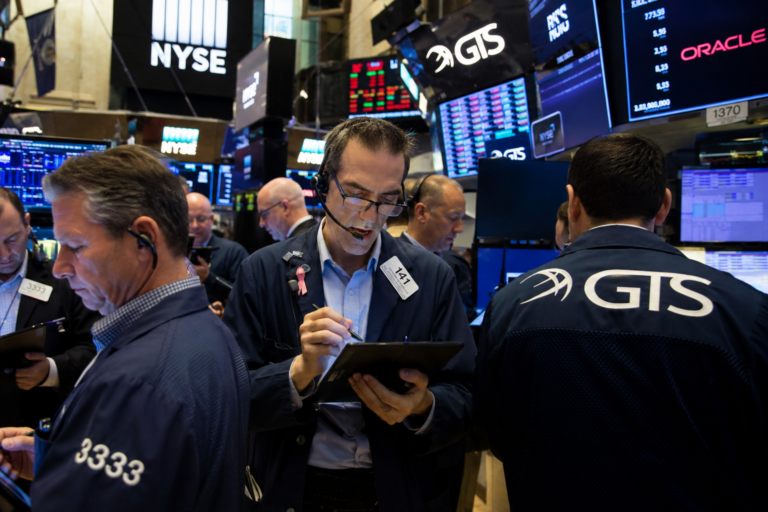
US stocks ended lower on Friday after stronger-than-expected August employment data increased expectations that the Federal Reserve could raise interest rates at its September meeting.

The Dow Jones Industrial Average fell 0.5% or 279.20 points, while the S&P 500 declined 0.38% and the Nasdaq Composite lost 0.3%.

The selling came ahead of the three-day Labor Day weekend as investors reassessed the outlook for monetary policy following the latest labor market data.

The August jobs report showed that nonfarm payrolls increased by 162,000, nearly three times the consensus estimate of 56,000 cited by Reuters.

The unemployment rate remained at 4.1%, while employment figures for June and July were revised higher by a combined 55,000 jobs.

Strong jobs data raises Fed hike expectations

The stronger employment figures increased expectations that the Federal Reserve could raise interest rates at its Sept. 15-16 meeting.

According to the CME FedWatch tool, markets were pricing in a 58.4% probability of a 25-basis-point rate increase, up from 49.4% on Thursday.

Treasury yields also moved higher following the jobs report, with the two-year Treasury yield reaching its highest level since January 2025.

The stronger labor market data has complicated the Fed’s policy outlook.

While resilient employment supports economic activity, it could also make it more difficult for policymakers to ease inflationary pressures, particularly as energy prices remain elevated amid the US-Iran conflict.

Attention now turns to upcoming inflation data, including consumer and producer price reports, which could provide additional guidance on the Fed’s next policy decision.

The latest move also followed a weaker session in the bond market earlier in the week.

On Thursday, the major US indexes gained after Federal Reserve Governor Christopher Waller indicated support for keeping rates within the current 3.5%-3.75% target range at the September meeting.

Adobe, Lululemon falls

Despite Friday’s losses, the three major indexes posted mixed weekly performances. The Dow had a 0.3% weekly decline, while the S&P 500 was broadly flat and the Nasdaq posted a 0.3% gain.

Sector performance was mixed. Semiconductor stocks outperformed on Friday, although the sector remained down about 18% for the quarter. Software and services stocks lagged after gaining about 25% over the same period.

Individual stocks also contributed to the market’s decline.

Lululemon Athletica dropped after cutting its full-year revenue and profit forecasts. Adobe fell following the announcement that longtime CEO Shantanu Narayen would be succeeded by company insider Anil Chakravarthy.

Credit firms slide as housing policy changes

Credit reporting companies also declined after Federal Housing Finance Agency Director Bill Pulte said he had directed Fannie Mae and Freddie Mac to approve all lenders to use VantageScore’s credit scoring system.

Shares of Fair Isaac, TransUnion and Equifax all closed sharply lower following the announcement.

The broader market remains focused on how incoming economic data could influence the Federal Reserve’s policy path.

The latest employment report provided evidence that the labor market remains resilient despite a slowdown in hiring momentum earlier in the summer.

For investors, the combination of stronger employment, higher Treasury yields and shifting rate expectations has increased the importance of next week’s inflation readings.

US markets will be closed Monday for the Labor Day holiday, with trading resuming afterward as investors continue to assess the outlook for interest rates and the economy.

The post Dow closes 270 pts lower as strong jobs report lifts September Fed rate-hike bets appeared first on Invezz