Arbitrum price prediction has gained fresh attention after Standard Chartered outlined a potential path toward $10 by 2030, placing the Ethereum layer-2 network at the center of the institutional blockchain and tokenization narrative. The forecast arrives as ARB attempts to recover from an extended downtrend, with its latest breakout pushing the token toward a crucial …
The crypto market is facing renewed pressure ahead of the FED’s FOMC decision after the US Senate failed to advance the CLARITY Act in a 49-50 procedural vote. Bitcoin price briefly dropped below $75,000 while Ethereum dropped toward $2,358 amid the regulatory setback. Yet the Arbitrum (ARB) price and Zcash (ZEC) price show notable resilience …
Story Highlights The live Price of the SKY token is SKY could target the $0.10 price level by 2026. By 2030, SKY may hit $7.92 levels. MakerDAO has completed its Endgame transformation, operating under the Sky brand with SKY replacing MKR as the network’s governance token. MKR holders can still convert their tokens into SKY …
Internet Computer is drawing fresh attention after ranking first in a 24-hour Web3 transaction comparison with 134.5 million transactions, surpassing Solana’s 123.4 million. Despite this activity advantage, ICP’s price continues to trade below the critical $3 mark, reflecting the resistance faced during its recent recovery. Investors are now watching whether the support structure can hold …
Being “open to US traders” and being open on every platform a firm sells are two different claims, and most roundups only check the first one. A firm can answer yes to the country dropdown and still lock a US applicant out of the specific platform its marketing leads with. This piece checks that second …
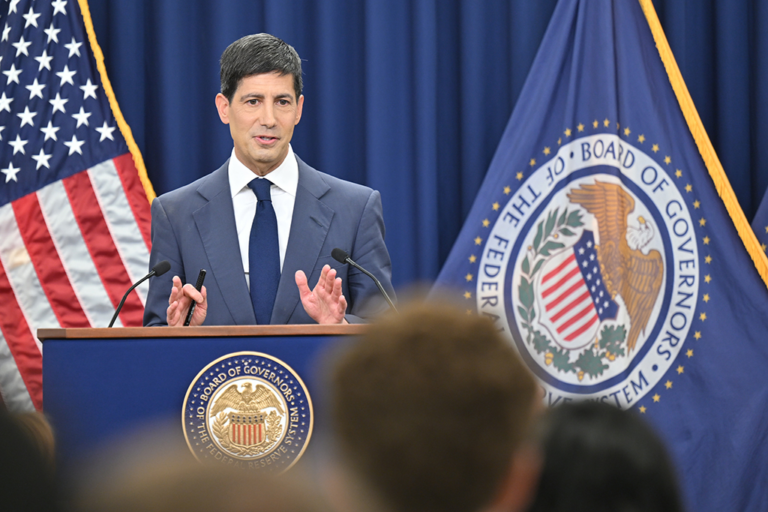
The Federal Reserve is increasingly expected to raise interest rates by 25 basis points on Wednesday, after hotter-than-expected inflation and higher energy prices forced markets to rethink the path for monetary policy.
Goldman Sachs, J.P. Morgan, HSBC and Deutsche Bank are among major banks forecasting a hike at the Federal Open Market Committee’s September 15-16 meeting.
CME FedWatch puts the probability of a quarter-point hike at about 90%.
A hike accompanied by hawkish guidance could put upward pressure on Treasury yields and the dollar, while weighing on rate-sensitive stocks.
But some market strategists argue that a well-telegraphed move could instead reduce uncertainty, stabilize bonds and leave equities supported by strong corporate earnings and investment.
The latest shift toward tighter policy follows stronger US consumer and producer inflation readings for August and a renewed increase in oil prices amid tensions in the Middle East.
“Lack of inflation progress has tipped the balance,” HSBC economist Ryan Wang said in a note, backing a September rate hike.
J.P. Morgan economists led by Michael Feroli also turned more hawkish after the latest data, saying rising bond yields, higher energy prices and firm inflation readings made a September hike “more likely than not.”
The change marks a sharp turnaround from earlier in the year, when many economists expected the Fed to remain on hold after keeping rates unchanged through 2026 following a quarter-point cut in December 2025.
Inflation and oil are driving the Fed debate
David Russell, Global Head of Market Strategy at TradeStation Group, said energy and tariff-related price pressures are increasingly important drivers of interest rates.
Higher diesel means higher prices for many goods and services. Last week’s PPI report already showed inflation spreading from fuel, and that is likely to spread as businesses raise prices to cover costs. An inflationary cycle is taking hold. Bigger forces are leading, and the Fed is following.
That creates a difficult backdrop for policymakers.
Even if the Fed raises rates as expected, investors will be looking for evidence that officials believe inflation is moving back toward the central bank’s 2% target quickly enough.
Russell expects Kevin Warsh to reinforce the hawkish message heading into the decision.
“Kevin Warsh has laid the groundwork for a rate hike with hawkish rhetoric, and investors expect him to deliver,” Russell told Invezz.
“The market will anticipate more stern messaging and higher inflation estimates in the SEP. The dot plot might be less important given fast-moving events in the Middle East and Warsh’s own skepticism toward forward guidance.”
The Summary of Economic Projections could become an important market signal, particularly if policymakers raise their inflation assumptions or show wider support for keeping rates higher.
Treasury market may matter more than the hike
The bond market could provide an important signal of how investors interpret the decision.
The 10-year Treasury yield briefly moved above 5% on Tuesday, reaching 5.041%, its highest level since 2007.
JP Morgan has argued that the rise in long-term yields is no longer simply a Federal Reserve story.
Since the July FOMC meeting, the biggest contributor to higher Treasury yields has been a rise in the term premium, followed by robust economic activity, while the bank said more hawkish monetary policy had not been a meaningful driver.
Energy prices are adding to that pressure.
J.P. Morgan said Brent crude has risen about 13% since the July meeting, while diesel and jet fuel have risen 50% and 60%, respectively.
That makes the reaction at the long end of the Treasury curve especially important.
In a September 11 Goldman Sachs discussion, Jonathan Shugar, head of cross-asset sales, described the back end of the rate curve as one of the largest market risks, citing global fiscal deficits and heavy AI investment.
Shugar said Goldman analysts estimate hyperscaler capital expenditure at about $800 billion this year and $1.2 trillion next year.
He added that equities can tolerate higher rates, but “it’s really just the pace of change that has the biggest impact.”
That is an important distinction heading into Wednesday.
A modest increase in short-term rates that is already priced into markets may have limited impact on stocks.
A fresh jump in long-term yields, however, could put more pressure on valuations.
Equities face competing signals from rates and growth
The expected equity reaction is far from unanimous.
Brian Allen, Chief Investment Officer at C.S. McKee, said the market impact of a rate hike would depend on the Fed maintaining a hawkish tone and showing broader committee support for higher rates.
“A rate hike this year is necessary, but its credibility and impact depend on the Fed Chair maintaining a hawkish tone and the revised Summary of Economic Projections (SEP) showing broader committee support for higher rates,” Allen told Invezz.
He expects that combination to stabilize and flatten the yield curve, modestly lower longer-maturity bond yields and mortgage rates, support the US dollar and slow Treasury sales by foreign investors and central banks.
Allen also expects US equities to rally on the news, with small-cap and large-growth stocks performing particularly well.
That view is consistent with a broader argument that markets could absorb higher policy rates if economic growth and corporate investment remain resilient.
UBS said the market reaction to a Fed hike would depend heavily on the economic backdrop.
In a September 14 note, UBS said Fed hikes alone do not undermine equity fundamentals, and that resilient growth and earnings should continue to support stocks, even as tighter policy contributes to volatility.
“Historical market data show that Fed hikes typically become a concern for stocks only when economic growth begins to falter,” the UBS analysts said.
Retail traders could add to post-Fed volatility
Stephen Callahan, Trading Behavior Analyst at Firstrade, expects the Fed decision to produce another form of market volatility as retail investors respond to the first rate increase in three years.
“The big thing to watch following the Fed’s decision is how retail traders will react to the first rate increase in three years,” Callahan said.
If Warsh's tone Wednesday echoes his hawkish Jackson Hole speech, we could see elevated trading volume and volatility carry into the back half of the week as retail portfolios get repositioned, especially as many are still leaning heavily into this year's AI-driven rally.
Callahan said retail engagement typically rises during major policy events, with more logins, more trades per active user and shorter holding periods as investors respond to the initial headline.
One hike or the start of a longer cycle?
Carl Tannenbaum, Chief Economist at Northern Trust, expects the Fed to raise rates by 25 basis points, arguing that the move would reinforce its commitment to price stability.
“The ‘right’ decision from the Fed is far from obvious, and debate is likely to be vigorous,” Tannenbaum told Invezz.
“Chairman Warsh wanted a ‘good family fight’ on the Committee, and whatever the outcome, I expect at least some dissenting votes.”
Tannenbaum said Warsh needs to maintain credibility early in his tenure, while a rate increase would reinforce the FOMC’s commitment to price stability.
But he also raised the question that markets will confront after Wednesday: whether one increase is enough.
“If bond yields stabilize as investors regain confidence, a single move could be sufficient,” Tannenbaum said.
That question is central to pricing across markets. CME FedWatch already showed investors pricing a high probability of another increase later this year.
Additional rate increases would remain important for the outlook for the front end of the Treasury curve and other interest-rate-sensitive assets.
At the same time, the long end may continue to respond to forces beyond the Fed’s direct control, including fiscal concerns, energy prices and hyperscaler issuance.
Goldman’s Shugar made that point in his discussion, saying the press conference would be more consequential than the hike itself if policymakers deliver the expected move.
For investors, Wednesday’s decision therefore comes down to more than 25 basis points.
The key signals will be the SEP’s inflation and rate projections, how firmly Warsh addresses persistent inflation, and how the bond market responds to the Fed’s guidance on the path ahead.
Those signals will shape the market reaction across Treasury yields, the dollar, and equities, with AI and other rate-sensitive stocks remaining in focus as borrowing costs adjust.
Solana activated its Transaction V1 format on the mainnet on September 15, increasing the network’s maximum transaction size from 1,232 bytes to 4,096 bytes.
The upgrade enables developers to build more complex and data-intensive applications, including those using zero-knowledge proofs, larger multisignature configurations, and advanced decentralized-finance operations.
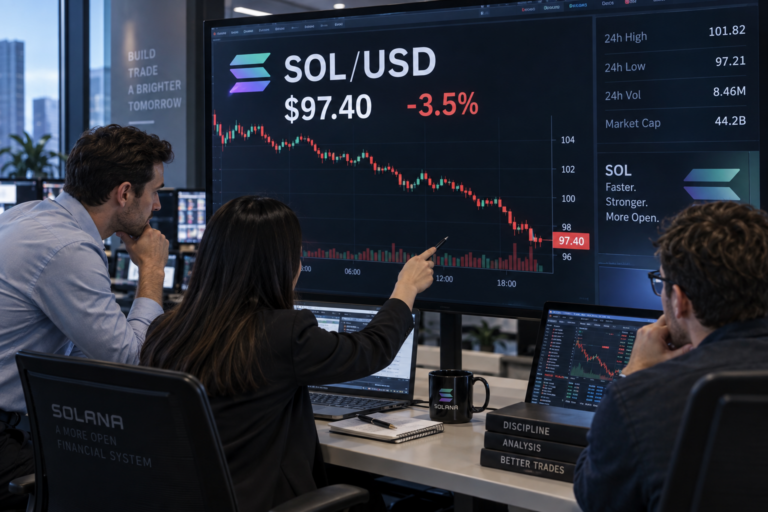
Despite the technical improvement, SOL remains under short-term selling pressure, with several indicators pointing to a possible retest of support at $94.16.
Transaction V1 raises Solana’s limit to 4,096 Bytes
Solana’s new Transaction V1 format more than triples the maximum amount of data that can be included in a single transaction.
The previous 1,232-byte limit restricted the number of instructions, signatures, and other data developers could package together. Increasing the maximum size to 4,096 bytes allows applications to execute more complex operations without dividing them across multiple transactions.
The additional capacity could support privacy applications using zero-knowledge proofs, sophisticated DeFi transactions and multisignature arrangements involving more participants.
While the upgrade broadens Solana’s technical capabilities, it did not produce an immediate positive reaction in SOL’s price.
SOL trades below short-term moving averages
Solana is trading below its 20-period and 50-period moving averages on the hourly chart, signaling continued weakness across intraday and short-term timeframes.
However, SOL remains above its 200-day moving average. Holding above this longer-term indicator preserves the broader market structure despite the current correction.
Immediate resistance sits close to the $98.77 level. SOL must reclaim this level to strengthen the case for a short-term recovery.
A higher resistance level stands at approximately $99.42, which marks the upper boundary of the projected consolidation range.
Several momentum indicators continue to produce bearish signals. The Moving Average Convergence Divergence indicator shows a strong sell signal, while the Average Directional Index supports the negative momentum outlook.
Bull/Bear Power also indicates that sellers remain in control. The Awesome Oscillator, however, provides no decisive directional signal.
Meanwhile, the Relative Strength Index and Stochastic RSI have moved into the negative territory on the daily chart. These readings reflect intense selling pressure but also raise the possibility of a temporary relief bounce if buyers return near support.
Short-term scenario analysis expects SOL to trade between $94.16 and $99.42. The forecast assigns a 76% probability to further downward movement and a 24% probability to a rebound.
These probabilities represent one analytical model rather than guaranteed outcomes. A sustained break above $98.77 could improve momentum and allow SOL to challenge the upper boundary at $99.42.
Conversely, failure to defend $94.16 would confirm additional weakness and could accelerate the decline as stop-loss orders and leveraged liquidations enter the market.
Analysts are confident that the Transaction V1 is an important foundation for Solana’s future adoption, even though its immediate effect on market sentiment has been limited.
The upgrade expands what developers can build on the network and could support more demanding applications over time.
However, technical improvements do not necessarily translate into immediate token-price appreciation.
For now, SOL’s outlook remains divided between improving network fundamentals and bearish short-term price momentum.
Bubblemaps, an onchain intelligence platform, has launched a major update to its platform, including a new feed focused on memecoin discovery and token research.
The company said the feed screens tokens before displaying them to users, filtering out those showing insider clusters and bundles, which it identifies as onchain indicators of coordinated activity.
A bundle refers to multiple wallets buying a token within the same block or within seconds of its launch.
According to Bubblemaps, such activity can indicate sniping bots or coordinated buying by a project team.
A cluster refers to wallets connected through common funding sources or transfer patterns, potentially indicating that multiple addresses are controlled by the same entity.
Bubblemaps said the new feed applies its wallet-clustering and bundle-detection tools during token discovery, allowing users to identify these signals before trading rather than analyzing them after a token has already gained activity.
“People have been using Bubblemaps for years to understand tokens before they buy. Now we’re taking the next step: helping them discover tokens, analyze them, and trade them directly from the same platform,” said Nicolas Vaiman, CEO and co-founder of Bubblemaps
The revamp also adds a Bubblemaps score to each token in the feed, giving users a visual indication of insider concentration without requiring them to review a full bubble map.
An integrated swap feature also allows users to trade tokens without leaving the platform.
Bubblemaps said the additions are intended to make onchain signals such as insider concentration and coordinated buying easier to assess during token discovery, including when evaluating potential rug-pull risks.
The launch comes as scrutiny of memecoin launches continues to increase.
Bubblemaps has previously used its onchain analysis tools to examine the distribution and trading activity surrounding major memecoin launches, including claims about concentrated ownership and coordinated buying.
The company said the new feed extends that analysis into the token-discovery stage, allowing users to assess these signals before trading.
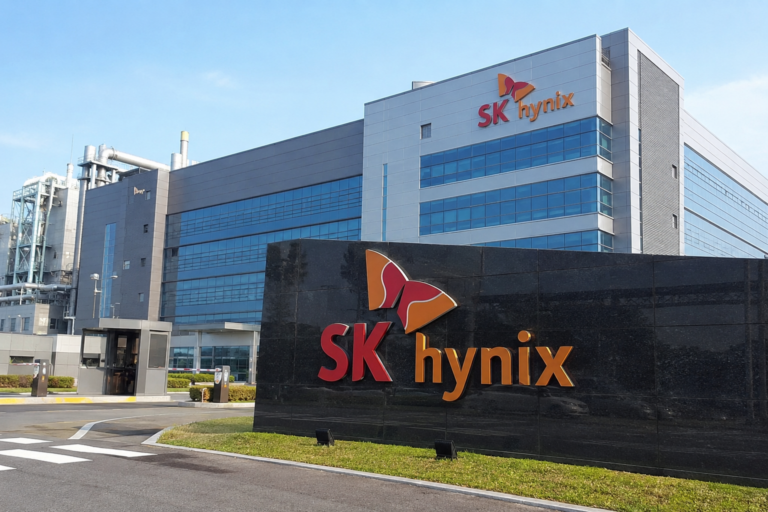
“No decisions have been made regarding the two scenarios mentioned in the article,” SK Hynix said.
The deal under discussion
Reuters, citing three people familiar with the discussions, said SK Hynix and Intel were in talks over a deal that could mark the first time SK Hynix produces memory chips on US soil.
One scenario under discussion would see SK Hynix lease part of Intel’s long-planned semiconductor facility in Ohio.
A second scenario involves a joint venture between SK Hynix, Intel, and major cloud companies looking to secure their own memory supplies.
Intel has committed to developing its Ohio site, though construction delays have pushed the planned start of production to 2030 and 2031.
A deal with SK Hynix could help ease some of the financial pressure on Intel, according to Reuters.
Intel did not immediately respond to a request for comment from Investing.com.
Shares rose despite the denial
Even with SK Hynix’s pushback, both stocks moved higher.
In premarket trading, Intel traded 2.82%, while SK Hynix’s US-listed shares rose 3.43%.
SK Hynix’s Korea-listed shares had also gained in the prior session, outperforming the broader KOSPI index.
The stock ended the day around 4% higher.
Why Seoul is watching closely
Any move to produce advanced memory such as HBM or DRAM in the US could face scrutiny from South Korean authorities, since the technologies are considered sensitive, according to the people cited by Reuters.
South Korea’s trade ministry told Reuters that the decision would ultimately be SK Hynix’s to make, but noted that projects involving nationally important technology could be subject to review under the country’s Industrial Technology Protection Act.
What’s driving the interest
The reported talks come as Washington presses semiconductor companies to expand US manufacturing amid a memory-chip shortage driven by AI and data center demand.
SK Hynix already has a chip-packaging facility under construction in Indiana and recently completed a secondary Nasdaq listing.
Chairman Chey Tae-won said in July that the company needed to build a factory in the United States if possible, suggesting the broader ambition remains alive even as SK Hynix declines to confirm specifics of this particular report.
The talks also arrive at a pivotal moment for Intel, which has struggled to keep pace with rivals in advanced chipmaking and has leaned on government and industry partnerships to fund its expansion plans.
Bringing in SK Hynix, one of the world’s largest memory chip makers alongside Samsung, would give Intel a way to fill capacity at its delayed Ohio site while tapping into surging global demand for AI-related memory chips, a segment currently dominated by South Korean and US suppliers.
US stocks opened higher on Wednesday as investors awaited a Federal Reserve interest-rate decision that could shape expectations for monetary policy in the coming months.
The Nasdaq Composite advanced 0.46%, and the S&P 500 gained 0.24%. The Dow Jones Industrial Average on the other hand, fell 34 points.
The move followed a two-day decline for the major indexes.
The Federal Reserve’s decision is due at 2 p.m. ET, with investors also watching Fed Chair Kevin Warsh’s remarks for clues about the inflation outlook and future rate moves.
Markets price in Fed rate hike
Futures markets were pricing in a 92.7% probability of a quarter-point rate increase on Wednesday, according to the CME FedWatch tool. The current target range is 3.5% to 3.75%.
Markets were also pricing in a 41% chance of another quarter-point increase at the Fed’s October meeting and a 27% probability of a further hike in December.
The rate decision comes as inflation remains above the Fed’s target.
Consumer prices rose 3.4% year over year in August, down from the recent high of 4.2% recorded in May.
Monthly CPI increased 0.4%, in line with expectations, while core inflation rose 0.3%, exceeding expectations.
The central bank is also facing pressure from the White House to keep rates unchanged.
However, the possibility of a rate increase has grown as energy prices have climbed and inflation concerns have persisted.
Oil prices ease as supply concerns moderate
Oil prices fell on Wednesday after reports that Saudi Arabia was offering additional crude cargoes through Oman, easing concerns about the scale of supply disruptions in the Middle East.
Brent crude futures declined 1.7% to $106.88 a barrel, while US West Texas Intermediate crude fell 2.7% to $103.
Crude prices remained above $100 despite retreating from recent highs. The elevated oil market has contributed to inflation concerns, particularly as diesel prices have also risen.
US diesel prices reached $6 per gallon for the first time on Friday amid supply constraints linked to the wars in Ukraine and Iran.
Treasury yields also remained elevated, with the 10-year yield slightly below 5% and the 30-year yield at 5.346%.
Tech stocks mixed ahead of Fed decision
Technology stocks were mixed in trading.
Nvidia and Meta gained nearly 1% each, while Microsoft edged lower and Apple gained 0.9%.
Intel rose 5.3% after reports of talks with SK Hynix over potential US memory-chip production, although SK Hynix said no plans had been confirmed.
The technology sector has also faced pressure from concerns that major artificial intelligence companies could slow the pace of model development and product releases.
Semiconductors, cloud service providers and other technology stocks were mostly lower during Tuesday’s session.
The S&P 500 fell 0.45% on Tuesday, while the Nasdaq Composite declined 0.78%, extending recent losses as investors assessed higher yields, oil prices and the outlook for AI-related spending.