Author

admin

Browsing

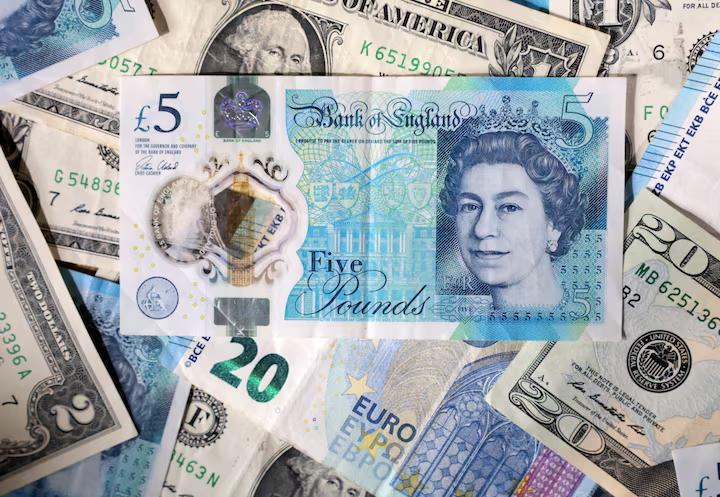
The British pound was on track to record its biggest weekly gain against the US dollar in 12 weeks on Friday.

The currency was supported by easing domestic political concerns and weaker-than-expected US labour market data, which weighed on the dollar.

Sterling rose 0.1% to $1.3357 during the session.

The move brought its weekly gain to 1.2%, marking its strongest weekly performance against the dollar since early April.

The dollar came under pressure after the latest US employment data showed that the economy added fewer jobs than expected last month.

The softer labour market figures reduced expectations that the US Federal Reserve would continue raising interest rates.

Political concerns begin to fade

Earlier in the week, British financial markets showed signs of unease after Andy Burnham, the only Labour lawmaker to publicly express interest in replacing outgoing Prime Minister Keir Starmer, gained support for a potential leadership challenge.

Burnham had previously said that the country needed to get “beyond this thing of being in hock to the bond markets.”

His remarks raised concerns among some investors, who feared that he could move away from the government’s existing borrowing commitments.

However, market sentiment improved after Burnham reaffirmed his commitment to the country’s current fiscal rules.

Those rules include balancing day-to-day government spending through tax revenues and reducing debt as a share of economic output.

His reassurance helped ease investor concerns over fiscal discipline.

Pound slips slightly against the Euro

Against the euro, sterling edged lower to 85.73 pence.

The previous day, the British currency had touched 85.47 pence against the single currency, its strongest level in a year.

Despite easing hostilities in Iran and the gradual resumption of oil supplies from the Middle East, financial markets continue to assign a greater probability to a Bank of England interest rate hike than a rate cut later this year.

Bank of England signals remain in focus

Attention also remained on comments made by Bank of England rate-setter Catherine Mann on Thursday.

Mann said that looser financial conditions since the Bank’s June policy meeting would be an important factor when policymakers meet again in July.

She also stated that she would be prepared to support a rate increase if higher inflation expectations following the US-Iran war reduce the likelihood of inflation returning to the Bank’s 2% target.

Money market futures currently imply around a 70% chance of a Bank of England rate hike by the end of the year.

Before the Middle East conflict, investors had expected the central bank to deliver two interest rate cuts during 2026.

Recent developments, however, have prompted markets to reassess that outlook in favour of tighter monetary policy.

The post British pound extends weekly rally as Fed Rate expectations ease appeared first on Invezz


The US Dollar Index (DXY), which measures the US Dollar against a basket of six major currencies, edged higher during Asian trading hours on Monday.

The index traded around the 101.00 level after remaining largely unchanged in the previous session.

Market participants continued to assess the outlook for US monetary policy.

Expectations of further Federal Reserve interest rate hikes later this year helped support the Greenback, even as recent economic data painted a mixed picture.

Fed expectations support the Dollar

The US Dollar remained resilient as traders continued to price in the possibility of additional interest rate increases before the end of the year.

According to the CME FedWatch tool, financial markets are currently pricing in a 77.3% probability of Federal Reserve interest rate hikes by year-end. That expectation has continued to provide support for the US currency.

At the same time, easing global inflation pressures have also shaped market sentiment.

The moderation in inflation has been supported by the return of normal oil shipping volumes through the Strait of Hormuz, reducing concerns over supply disruptions.

Investors are now looking ahead to a series of key US economic releases that could influence expectations for future monetary policy.

OCBC strategists see the labour market remaining tight

Despite the weaker payrolls report, OCBC strategists said the decline in the US unemployment rate continued to point towards a tight labour market.

According to the strategists, the lower unemployment rate should help keep expectations for further Federal Reserve tightening intact.

Their assessment suggested that markets may still have to consider the possibility of additional policy action from the US central bank despite softer employment growth.

The differing interpretations of the latest labour market data highlighted the uncertainty surrounding the Federal Reserve’s next policy move.

Yen stays in focus as intervention concerns persist

The Japanese yen remained one of the most closely watched currencies in the market.

It traded at 161.57 per US dollar.

That was not far from the 1986 low of 162.84 reached last week.

Traders continued to monitor the possibility of intervention by Japanese authorities. Concerns intensified after a sudden surge in buying briefly lifted the yen on Thursday.

Despite the market’s focus on possible official action, analysts questioned whether any intervention by Tokyo would provide lasting support to the Japanese currency.

The continued weakness of the yen kept investors cautious as they assessed the likelihood of further volatility in the foreign exchange market.

South Korean won begins historic trading phase

South Korean won strengthened slightly on the first day of its historic 24-hour onshore spot dollar-won trading.

The currency was trading at 1,534 per US dollar.

The development marked the beginning of round-the-clock onshore spot trading for the dollar-won market.

At the same time, broader currency movements continued to be driven by expectations surrounding US monetary policy and developments in Japan.

The post US dollar gains slightly despite softer labour market signals appeared first on Invezz

Global markets began the week on a cautious note as investors awaited the return of normal trading conditions following the three-day weekend in the United States.

Market participants remained focused on a series of scheduled economic releases and speeches from major central bank officials later in the day.

The Bank of Canada is also set to release its Business Outlook Survey, providing investors with additional insights into business sentiment.

Dollar holds gains after weak weekly performance

The US Dollar Index posted modest gains during European trading on Monday, hovering around the 101.00 mark.

The rebound followed a weak performance in the previous week, when the index declined by around 0.5%.

The earlier losses came after disappointing US labour market data for June weighed on the greenback.

Despite Monday’s recovery, investor sentiment remained cautious.

US stock index futures traded on a mixed note, reflecting uncertainty ahead of fresh economic data and policy commentary.

Oil prices edge higher on Iran shipping remarks

Crude oil prices moved higher at the start of the week following comments from Iran regarding the Strait of Hormuz.

Speaking at the World Peace Forum over the weekend, Iran’s ambassador to China, Abdolreza Rahmani Fazli, said Tehran is considering introducing new service fees for ships passing through the Strait of Hormuz.

He also said countries that supported Iran during the recent conflict could receive “special” treatment.

Following the remarks, the price of West Texas Intermediate (WTI) crude rose modestly.

The benchmark was last seen trading at around $69 per barrel.

The euro holds above the key level despite the pullback

The euro weakened slightly against the US dollar in early Monday trading but remained above the 1.1400 level.

Investors also monitored fresh economic data from Europe.

Germany reported that factory orders increased by 1.9% month-on-month, exceeding market expectations for a 1.2% rise.

Attention later in the session will shift to the release of the Eurozone’s Producer Price Index and Retail Sales data for May, both of which could provide further direction for the common currency.

Yen weakens as dollar advances

The US dollar strengthened against the Japanese yen during Monday’s session.

USD/JPY gained around 0.5% on the day, trading slightly above the 162.00 level.

The move reflected renewed demand for the US dollar following its modest recovery in early European trading.

Pound gives back recent gains

The British pound retreated against the US dollar after posting strong gains in the previous week.

GBP/USD traded below the 1.3341 mark, correcting lower after advancing by more than 1% during the previous week.

Meanwhile, the Canadian dollar traded slightly weaker against its US counterpart.

USD/CAD edged higher and remained above the 1.4200 level as investors looked ahead to the Bank of Canada’s Business Outlook Survey for fresh cues on the country’s economic outlook.

Overall, financial markets remained in a holding pattern as investors awaited key economic indicators and remarks from central bank officials that could shape expectations for the global economic and policy outlook in the coming sessions.

The post Markets hold steady as investors await US data and central bank signals appeared first on Invezz

The NZD/USD exchange rate pulled back a bit on Tuesday, reacting to more weak US macro data, and as traders refocused on the upcoming Reserve Bank of New Zealand (RBNZ) interest rate decision. It retreated to 0.5693 from last week’s high of 0.5725.

RBNZ expected to hike interest rates

The New Zealand dollar, commonly known as the kiwi, retreated as traders waited for the upcoming RBNZ interest rate decision. Market participants expect that the Anna Breman-led bank will decide to hike interest rates by 0.25%. 

The bank will do that to combat elevated inflation. Recent data showed that the headline CPI rose 3.1% in the first quarter, remaining above its target of 2.0%, as energy prices jumped. 

Ideally, the rate hike should be bullish for the kiwi as it will make it more attractive to investors. However, it could also be bearish, especially if the bank signals that it will not hike again since crude oil and natural gas prices are falling during the US-Iran ceasefire.

This view likely explains why New Zealand’s bond yields are falling. The ten-year yield dropped to 4.45% from last week’s high of 4.485%. Similarly, the rate-sensitive two-year fell to 3.348%.

The RBNZ decision comes at a time when New Zealand’s economy is doing well. A recent report showed that the economy expanded by 1.5% YoY in the first quarter.

It was the third consecutive quarter of gains, with manufacturing serving as the largest contributor to growth. Goods-producing industries expanded by 0.4%, helping offset weakness in the construction sector, which contracted by 1.0%.

FOMC minutes ahead

The NZD/USD pair will react to the upcoming FOMC minutes, which will provide more information on Kevin Warsh’s first meeting. In it, officials left interest rates unchanged between 3.50% and 3.75%, with the dot plot showing that hawks were in ascendance. 9 members hinted that they would support tightening later this year.

Still, it is unclear whether the recent developments will change their outlooks. For example, jobs numbers released last week showed that the economy added 57k jobs last month, lower than the expected 114k. The BLS also revised the previous month’s jobs report lower from 172k to 129k.

Recent PMI numbers also came lower than expected. The ISM non-manufacturing PMI and the S&P Global services PMI fell to 54 and 51.2, respectively. Last week’s manufacturing PMI figure also came short of expectations. 

NZD/USD technical analysis

NZD/USD chart | Source: TradingView

Technicals suggest that the recent NZD/USD pair uptrend may be losing steam as the Average Directional Index (ADX) has dropped from 38.4 on July 1 to 35 today. The pair has also remained below the 50-day moving average, and has formed a bearish flag pattern. 

These technicals point to more downside in the near term. If this happens, it will drop to the key support level of 0.5621, its lowest level in June this year. A drop below that price will signal that bears have prevailed and push it lower, potentially to 0.5600. A clear bullish breakout will be confirmed if it moves above the 50-day moving average level.

The post NZD/USD forecast: bearish signals emerge ahead of RBNZ decision appeared first on Invezz

Markets remained cautious on Tuesday as investors closely monitored developments in the Middle East while awaiting fresh economic data from the United States.

With no major high-impact data releases scheduled for the early part of the day, market participants focused on geopolitical headlines and remarks from central bank officials.

Later in the session, attention is expected to shift to the release of the US Goods Trade Balance data for May, along with the Automatic Data Processing’s (ADP) Employment Change 4-week Average, both of which are featured on the day’s economic calendar.

US Dollar holds steady after early gains

The US Dollar (USD) began the week on a stronger footing, advancing against most major currencies during the first half of Monday’s session. However, improving investor risk appetite, reflected in gains on Wall Street, prevented the currency from extending its advance.

As a result, the US Dollar Index surrendered its earlier gains and finished Monday’s session broadly unchanged. During European trading on Tuesday morning, the index fluctuated around the 101.00 level as investors awaited fresh catalysts.

Middle East developments keep markets alert

Geopolitical developments also remained a key driver of market sentiment.

Reports indicated that Iran’s Islamic Revolutionary Guard Corps (IRGC) attacked a commercial vessel sailing near the Strait of Hormuz on Monday.

Meanwhile, US President Donald Trump told reporters that the United States would either reach a deal or “finish the job.”

Following limited movement during Monday’s session, crude oil prices edged higher early Tuesday.

West Texas Intermediate (WTI) crude rose more than 1% on the day, trading near $69.50 per barrel as investors assessed the latest geopolitical developments.

Indian rupee weakens while euro holds steady

The Indian Rupee (INR) extended Monday’s losses against the US Dollar during early trade on Tuesday, with the USD/INR pair holding firm near 95.36.

The domestic currency remained under pressure after renewed geopolitical tensions in the Middle East raised concerns over global energy supplies.

The euro remained broadly stable against the US dollar, with EUR/USD trading in a narrow range below 1.1450 after ending Monday’s session virtually unchanged.

Sterling extends recovery while Yen pauses

The British pound continued its recent recovery against the US dollar. GBP/USD extended Monday’s rebound and climbed to its highest level since mid-June, approaching 1.3400 during the Asian session on Tuesday.

The pair later eased modestly during European trading, slipping below 1.3380.

Investors are also awaiting the Bank of England’s Financial Stability Report, scheduled for release later in the day.

Meanwhile, USD/JPY, which gained more than 0.4% on Monday to finish above 162.00, traded sideways on Tuesday morning.

The pair struggled to maintain its upward momentum and remained slightly below Monday’s closing level as markets awaited fresh economic and geopolitical developments.

The post Markets stay cautious as Middle East developments and Fed signals hold focus appeared first on Invezz

Palo Alto Networks stock continues its strong uptrend this week and is now hovering at its all-time high. PANW jumped by 156% from its lowest point this year, with analysts expecting more gains. 

BNP Paribas predicts that PANW will jump from the current $357 to $380, while Wells Fargo sees it soaring to $420. Other analysts who are bullish on the company are from BTIG and Arete Research. 

Palo Alto Networks stock faces technical stocks

The general view among analysts is that Palo Alto Networks will continue doing well in the coming years because of the AI boom. The theory is that, as AI agents become more common, companies will need defensive measures.

All these points are valid. However, technicals suggest that the stock may experience a brief retreat in the coming weeks or months. For one, the stock has become extremely overbought, with the Relative Strength Index (RSI) soaring to 80. Baring a minor retreat in June, it has remained in the overbought zone since May. 

Notably, the RSI indicator has formed a double-top pattern with a neckline at 57. This pattern suggests that it will reverse in the near term. 

At the same time, the current PANW stock has deviated substantially from its historical moving averages. The 50-day moving average is at $265, much lower than the stock’s price of $357. 

As such, there is a risk that the stock will go through a situation known as mean reversion. This is a situation where an asset drops back to its historical moving averages as investors book profits. 

Therefore, these technicals point to a short-term reversal, potentially to the psychological level of $300. Such a pullback will not be new for the stock. For example, after rising to $222.85 in October 25, the stock retreated by 37% to $139.1 in February and then bounced back. 

PANW stock chart | Source: TradingView

Palo Alto Network’s business is doing fairly well

Palo Alto Network’s business is expected to keep doing well in the coming years, especially now that it has acquired CyberArk. CyberArk gave it CORA AI, the central hub for identity security-focused AI capabilities. 

Yahoo Finance data shows that the average view is that its revenue will jump by 24% this year to $11.4 billion. It is expected to rise by 20% in the next financial year to nearly $14 billion. Similarly, its earnings per share are expected to hit $3.77.

Based on Palo Alto’s history, chances are that it will do better than what analysts expect. It has beaten forecasts in the past 7 consecutive quarters.

Still, in addition to its risky technicals, PANW stock’s other risk is its valuation. SeekingAlpha data shows that it has a forward price-to-earnings ratio of 92.25, higher than the sector median of 24. Its PE multiple is much higher than the five-year average of 57.

This valuation multiple suggests that the company is priced for perfection and that its next earnings report will be crucial. If the earnings and guidance are not all that strong, there is a risk that it may retreat as it did after the last earnings report when it fell to $250 from $305.

READ MORE: PANW stock dubbed ‘double table pounder’ despite muted outlook

The post Here’s the key risk facing the Palo Alto Networks stock today appeared first on Invezz

Crinetics Pharmaceuticals shares surged after Vertex Pharmaceuticals announced an agreement to acquire the endocrinology-focused biotech companyin a deal valued at approximately $10 billion.

The all-cash transaction values Crinetics at $85 per share and is expected to close during the current quarter, subject to customary conditions.

The acquisition sparked a sharp rally in CRNX stock.

CRNX shares climbed nearly 100% in pre-market trading on Tuesday to around $83.69.

Vertex shares, meanwhile, declined modestly following the announcement.

The transaction comes amid a wave of pharmaceutical industry acquisitions, as large drugmakers seek to strengthen their development pipelines by acquiring smaller biotechnology companies with promising therapies.

Vertex targets endocrinology growth

According to a joint press release, Vertex expects Crinetics’ portfolio, including its approved acromegaly treatment Palsonify and investigational therapy Atumelnant, to contribute an estimated $5 billion in peak annual sales.

Crinetics focuses on therapies for endocrine disorders.

The company markets Palsonify, a once-daily oral treatment approved by the US Food and Drug Administration in September for acromegaly, a rare hormonal disorder caused in most cases by a noncancerous pituitary gland tumour that leads to excessive growth hormone production during adulthood.

The disease can result in enlargement of the face, jaw, hands, and feet, along with symptoms including joint pain, headaches, and nausea.

Crinetics said Palsonify works by lowering insulin-like growth factor to help alleviate these symptoms.

The company’s pipeline also includes Atumelnant, a once-daily oral treatment under development for congenital adrenal hyperplasia (CAH), a group of inherited disorders affecting the adrenal glands.

The condition leads to excessive production of male sex hormones known as androgens.

Patients with CAH are commonly treated with high-dose glucocorticoids, which are associated with multiple side effects.

Crinetics is developing Atumelnant as an alternative treatment approach.

The company also said the therapy has demonstrated potential in treating Cushing’s syndrome, a rare hormonal disorder characterised by excessive cortisol levels that can cause rapid weight gain, muscle weakness, bruising and high blood pressure.

CEO highlights strategic fit

Vertex Chief Executive Officer Reshma Kewalramani described the acquisition as strategically aligned with the company’s long-term growth plans.

“Its focus on serious diseases in specialty markets with significant unmet need, well-understood causal human biology, and potentially best-in-class medicines could deliver transformative benefit to patients,” she said in a statement.

Kewalramani added that Vertex intends to build on its experience in rare genetic diseases to continue expanding the commercial potential of Palsonify.

Vertex has established its business around treatments for cystic fibrosis and has also expanded into gene-editing therapies through its partnership with CRISPR Therapeutics.

Premium reflects pipeline potential

Crinetics closed at slightly above $42 per share before the announcement, meaning Vertex’s offer represents a premium of more than 100%.

According to the companies, the acquired portfolio could generate approximately $5 billion in peak annual sales.

Vertex reported total revenue of $12 billion last year, making the acquisition a significant addition to its long-term growth strategy.

Market analysts also viewed the strategic rationale positively.

Citi analyst Geoff Meacham said the acquisition aligns well with Vertex’s existing strengths in specialty diseases and biologically targeted medicines.

“The fit is clear, given existing expertise in specialty markets, serious diseases, causal biology, and measurable biomarkers. The $5 billion peak sales framing adds another route to sustain double-digit topline growth.”

Meacham maintained a Buy rating on Vertex and set a price target of $585, indicating further upside from the stock’s previous closing level.

The post Crinetics stocks surge after Vertex agrees to $10B cash buyout appeared first on Invezz

Dow Jones opened higher on Tuesday even as the Nasdaq came under pressure from another broad selloff in semiconductor stocks, highlighting a divergence in US equity markets ahead of the second-quarter earnings season.

The Dow Jones Industrial Average gained about 160 points, or 0.3%, while the Nasdaq Composite fell around 0.7%.

The S&P 500 slipped 0.25% as weakness in chipmakers weighed on the broader technology sector.

The mixed performance follows Monday’s session, when the Dow briefly crossed the 53,000 mark for the first time and closed above the milestone, while the S&P 500 and Nasdaq Composite posted solid gains led by a rebound in semiconductor stocks.

Dow outperforms as chip stocks pressure Nasdaq

The Dow’s relative strength contrasted with declines across major semiconductor names in trading.

Micron Technology fell about 6.9%, while KLA, Marvell Technology, Broadcom and Advanced Micro Devices also traded lower.

Nvidia lost more than 1.4% after a Reuters report said Chinese startup DeepSeek is developing its own artificial intelligence chip, a move that could reduce its reliance on chips from Nvidia and Samsung.

Memory stocks were among the biggest decliners.

Western Digital dropped more than 6%, while SanDisk also fell 8% as investors continued to take profits after the sector’s strong rally over the past year.

Dow was supported by gains in software companies including Microsoft, Salesforce and IBM, helping the blue-chip index outperform despite broader weakness in technology hardware stocks.

Meanwhile, SpaceX was set to join the Nasdaq-100 on Tuesday, with its shares trading modestly higher ahead of the index inclusion after the industry’s mandatory quiet period expired.

Samsung selloff weighs on global chip sector

The latest wave of selling began in Asia after South Korea’s Kospi index dropped nearly 5%, driven by heavy losses in semiconductor companies.

Samsung Electronics fell nearly 7% despite reporting a 19-fold increase in second-quarter operating profit.

Investors appeared to focus instead on concerns about spending, demand and elevated expectations following the stock’s strong rally.

SK Hynix also declined sharply, extending weakness across the memory-chip industry.

The company is scheduled to begin trading on the Nasdaq later this week, giving investors another closely watched event for the semiconductor sector.

The weakness spread into Europe, where the STOXX 600 index edged lower, before reaching US markets.

Analysts said the market reaction reflects heightened expectations heading into earnings season after semiconductor stocks led much of this year’s rally.

Earnings and Fed remain in focus

Investors are now turning their attention to the second-quarter earnings season, which is expected to test whether artificial intelligence-related companies can justify their elevated valuations.

Market participants are also awaiting minutes from the Federal Reserve’s latest policy meeting on Wednesday, the first under Chair Kevin Warsh.

According to LSEG data, traders currently expect at least one 25-basis-point interest rate increase before the end of the year.

Outside the technology sector, Fiserv rose after reports that the payments company had discussed selling its debit card payments infrastructure business to major US banks, including JPMorgan Chase and Bank of America.

Rivian shares fell more than 10% after the electric vehicle maker launched an offering of 75 million shares despite forecasting second-quarter revenue above analysts’ estimates.

Oil prices also moved higher following reports of attacks on vessels near the Strait of Hormuz, adding another factor for investors to monitor as markets head into a busy week of earnings and monetary policy updates.

The post Dow gains 160 points as chip selloff drags Nasdaq ahead of earnings season appeared first on Invezz

Shares of SanDisk Inc. (SNDK) fell sharply in trading on Tuesday as a broad selloff in memory-chip stocks spread from South Korea to US markets despite strong preliminary earnings from Samsung Electronics.

SanDisk shares declined 8% after falling 23% over the previous three trading sessions.

The stock has been one of the strongest performers in the US technology sector this year, gaining about 635% year to date and more than 3,750% over the past 12 months.

The decline came as investors took profits across the memory-chip sector following steep gains in semiconductor stocks driven by artificial intelligence demand.

Samsung results fail to lift memory stocks

The selling pressure followed Samsung Electronics’ preliminary second-quarter earnings announcement.

The South Korean technology company projected operating profit of 89.4 trillion won ($58.44 billion), representing a 19-fold increase from the same period a year earlier. Samsung also forecast revenue of 171 trillion won, up 129% year over year.

Despite the stronger-than-expected results, Samsung shares fell 6.9% in South Korean trading as investors appeared to lock in gains after a prolonged rally. The stock has risen about 380% over the past year.

SK Hynix also declined 6.1%, with the two companies together accounting for more than half of the Kospi index’s market capitalization.

The broader South Korean market came under pressure as heavy selling in chipmakers pushed the Kospi down as much as 8.2% during the session, briefly placing the index in bear market territory before trimming some losses.

US memory stocks follow global decline

The weakness in South Korea quickly spread to US semiconductor stocks.

Micron Technology and Western Digital fell 7.3% and 8.14% respectively in trading.

The Roundhill Memory ETF (DRAM), whose largest holdings include Samsung, SK Hynix and Micron, dropped 6.2%.

The selloff extended beyond memory-chip companies. Intel and Advanced Micro Devices each declined more than 6%, while Nvidia slipped 1.5%.

Investors appeared to be taking profits after a prolonged rally in semiconductor shares, particularly in companies benefiting from growing demand for AI-related memory and storage products.

Profit-taking follows strong rally

SanDisk’s recent decline comes after an extended period of exceptional gains.

Although the stock has fallen more than 20% over the past three trading sessions, it remains one of the best-performing US technology stocks over the past year.

The company has previously experienced similar pullbacks, including a four-day losing streak in May and a five-day decline in March before resuming its broader upward trend.

Profit-taking was also evident across the memory sector.

Micron and SanDisk are now trading well below the highs they reached last month, while the Roundhill Memory ETF has declined 19% from its June 22 peak.

Investors are also preparing for another potential catalyst later this week, with South Korean memory-chip maker SK Hynix scheduled to begin trading on the Nasdaq on Friday.

The upcoming listing could keep attention focused on the memory-chip sector as investors continue to assess whether recent declines represent a pause in the AI-driven rally or the beginning of a broader correction following months of outsized gains.

The post SanDisk stock drops as Samsung-led chip selloff hits memory sector appeared first on Invezz

KuCoin, a cryptocurrency exchange, has announced a partnership with UAE Team Emirates–XRG, a professional cycling team.

The partnership will make its public debut at the 2026 Tour de France, with KuCoin branding displayed on the team’s buses, support vehicles, and fleet cars throughout the three-week race.

Under the agreement, KuCoin will become the team’s exclusive partner in the cryptocurrency exchange, blockchain trading platform, and crypto wallet services categories.

The partnership brings together two organizations that share a focus on innovation, precision, and long-term development.

According to KuCoin, the partnership reflects similarities between professional cycling and the digital asset industry, where success depends on coordination, discipline, and long-term planning.

“We are incredibly proud to partner with UAE Team Emirates – XRG and launch this collaboration on cycling’s grandest stage,” said BC Wong, CEO of KuCoin.

“World-class achievements are never solitary; they require a dedicated team moving in unison toward a shared vision. These are the very values that have fueled KuCoin’s growth, and we look forward to empowering the team as they chase victory at the Tour de France.”

The company said these principles also guide its efforts to build a global digital asset infrastructure.

UAE Team Emirates–XRG, which includes riders such as multiple Tour de France champion Tadej Pogačar, is one of the leading teams in professional cycling.

The partnership expands KuCoin’s sports sponsorship portfolio and increases its brand visibility through international cycling events.

KuCoin said additional initiatives involving UAE Team Emirates–XRG and Tadej Pogačar will be announced later this season.

The post KuCoin partners with UAE Team Emirates–XRG ahead of 2026 Tour de France appeared first on Invezz